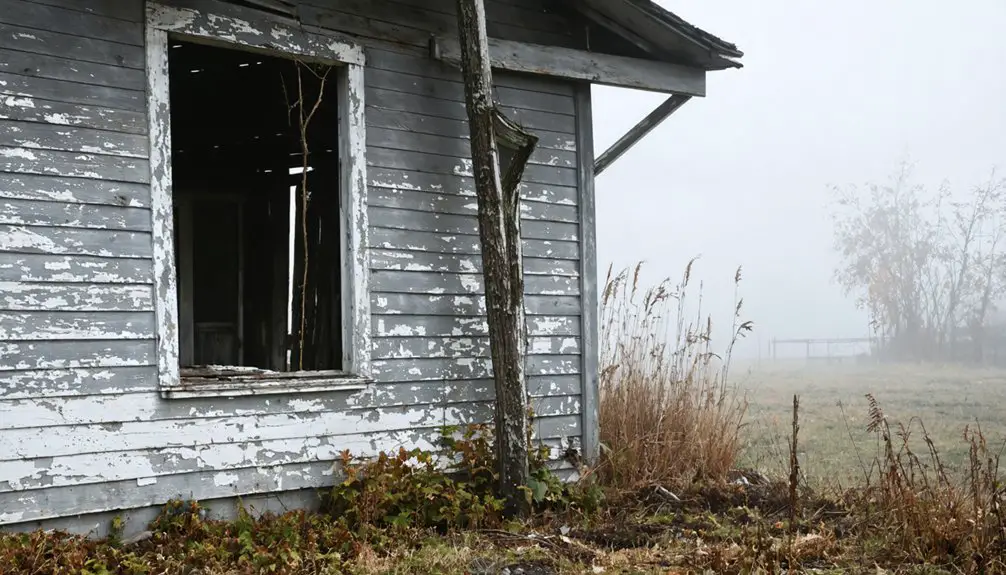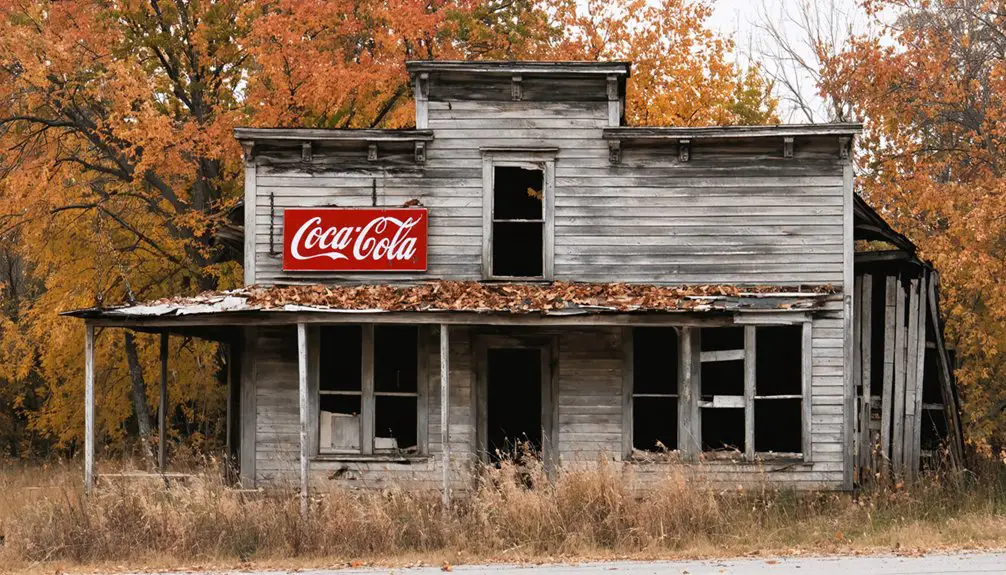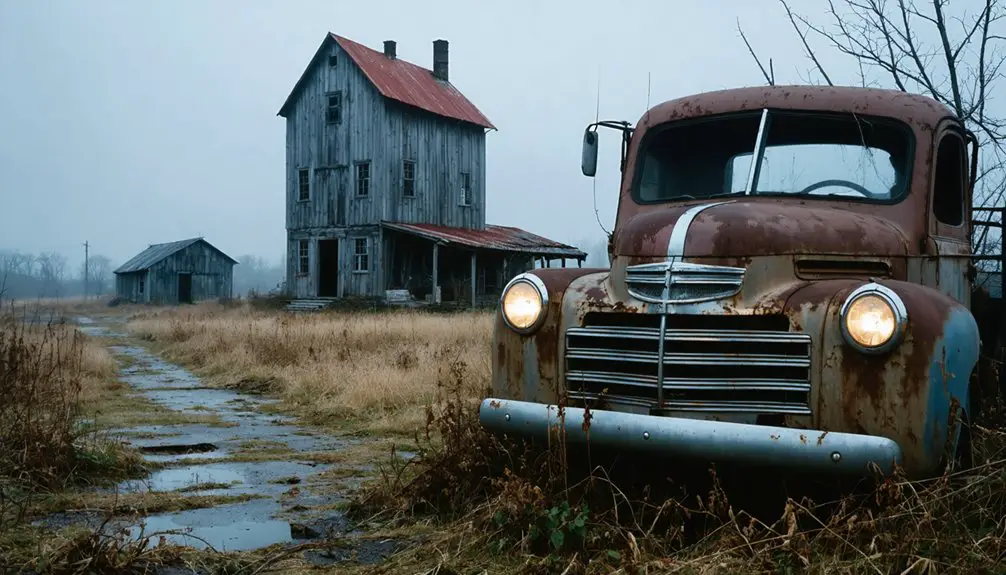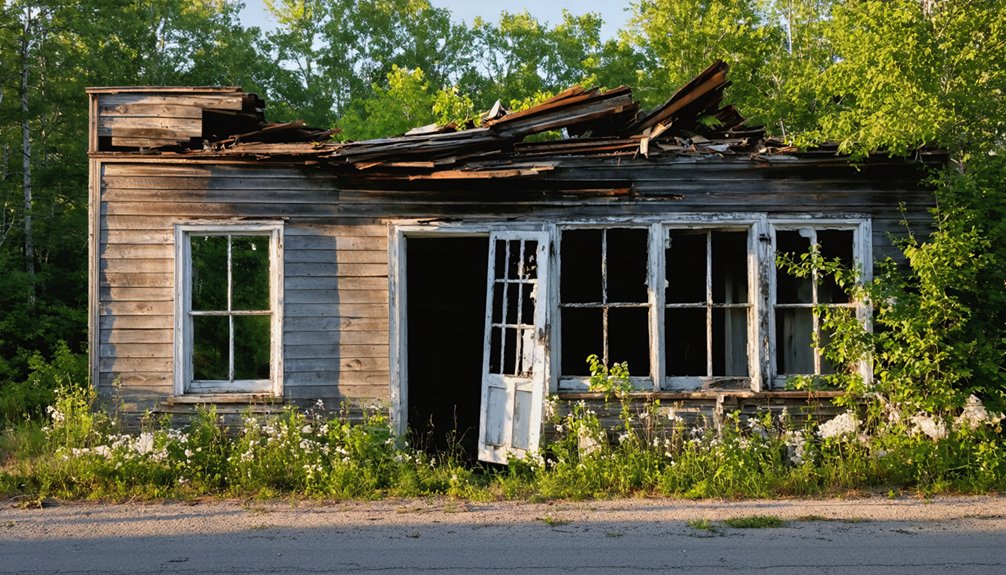
Planning a ghost town road trip to Colonville, Michigan means heading into mid-state lumber country near Freeland, where a once-thriving 1870s logging community quietly collapsed after its timber ran out. You’ll find abandoned mill foundations, a weathered cemetery, and traces of old railroad lines hidden beneath decades of overgrowth. Start in Saginaw, take County Road 125, and download offline maps before you go. There’s far more to uncover about what awaits you there.
Key Takeaways
- Colonville, a ghost town near Freeland, Michigan, was founded in the 1850s and abandoned by 1903 after timber depletion caused economic collapse.
- Access Colonville via County Road 125, using offline maps since cell service is unreliable, with summer and fall offering the best road conditions.
- Explore abandoned mill foundations, a historic cemetery, and old railroad remnants that reflect Colonville’s once-thriving logging industry.
- Extend your road trip by visiting Hatton in Clare County and Amble in Montcalm County, or head north to Fayette State Park.
- Carry water, a first aid kit, and navigation tools, while respecting private property boundaries and avoiding unstable structures during exploration.
Why Colonville Is One of Michigan’s Most Historically Layered Ghost Towns?
When you trace Colonville’s origins back to the 1850s, you uncover a town that didn’t just rise and fall — it lived through overlapping eras of ambition, industry, and inevitable collapse. Named after settler James Colon, this Saginaw County settlement built its identity around a powerful lumber legacy that transformed raw wilderness into a buzzing mill town along the Tittabawassee River.
You’ll find that Colonville legends aren’t just folklore — they’re embedded in the abandoned foundations, old cemetery headstones, and railroad remnants still scattered across the landscape.
The town peaked during the 1870s and 1880s logging boom, then quietly surrendered once the timber ran dry. Every crumbling structure tells you something raw and honest about what happens when an entire economy vanishes beneath your feet.
How Colonville Became: and Stopped Being: a Michigan Lumber Town
Lumber shaped Colonville’s entire existence — from its first breath to its last. The lumber industry drove settlers here in the 1850s, transforming raw wilderness into a functioning town with mills, stores, and a hotel.
You’d have witnessed a community built entirely on timber’s promise.
That promise didn’t last. By 1900, economic decline had gutted Colonville after decades of aggressive logging stripped the forests bare. The post office closed in 1903, and people simply left.
Three forces collapsed the town:
- Timber depletion eliminated the primary economic engine
- Mill closures removed jobs and commerce simultaneously
- Fires and market shifts accelerated the community’s final abandonment
What remains today is a quiet warning about building everything on a single, exhaustible resource.
How to Get to Colonville Near Freeland, Michigan?
Reaching Colonville takes just a few simple steps once you’re near Freeland, Michigan — head to County Road 125, which runs close to the Tittabawassee River and puts you within striking distance of the site.
For directions navigation, use Freeland as your anchor point, since most mapping apps recognize it easily. From there, follow local landmarks like the M-84 corridor and nearby railroad remnants that once served the lumber trade.
You’ll know you’re close when the landscape opens into surrounding forests with river access nearby. Keep your eyes sharp — Colonville doesn’t announce itself with signage.
Cell service can be spotty, so download offline maps beforehand. Summer and fall offer the best road conditions on unpaved stretches, giving you the smoothest, most rewarding approach to this forgotten corner of Michigan.
What Can You Still See at Colonville Today?
Though Colonville won’t greet you with preserved buildings or posted historical markers, you’ll still find tangible remnants of its 19th-century past scattered across the site.
Your remnants exploration reveals layers of historical significance hiding beneath the overgrowth along the Tittabawassee River.
Here’s what you can still discover:
- Abandoned mill foundations – Stone and brick bases mark where lumber operations once drove the entire local economy
- An old cemetery – Weathered grave markers connect you directly to the settlers who built this community from nothing
- Railroad remnants – Overgrown rail corridors trace the routes that once carried timber out of the region
Bring sturdy footwear, a camera, and respect for the land.
Some areas border private or tribal property, so stay aware of boundaries while you explore.
What Is the Best Time of Year to Visit Colonville?
When you visit Colonville matters almost as much as where you go once you’re there.
Timing your Colonville visit isn’t an afterthought — it’s half the experience.
Summer and early fall offer the best conditions for exploring this forgotten place. Dirt roads stay passable, daylight stretches long, and the surrounding forests frame the ruins beautifully, amplifying the Colonville Mystique that draws curious travelers seeking something real.
Avoid winter visits entirely. Snow buries remnants, roads become impassable, and the site’s Historical Significance becomes difficult to appreciate when you’re battling frozen ground and limited visibility.
Spring can work, but muddy roads may strand your vehicle.
If you’re chasing that perfect ghost town experience, aim for August through October. You’ll move freely, see clearly, and feel the full weight of what Colonville once was.
What You Need to Know Before Setting Foot in Colonville?
Before you set foot in Colonville, you’ll want to brush up on a few key rules that keep both you and the site safe.
Some areas fall under private or tribal ownership, so you’ll need to secure permission before wandering beyond public access points.
Summer and fall offer the most reliable road conditions for traversing the dirt paths leading into the site, making those seasons your best bet for a smooth, hazard-free visit.
Safety And Access Rules
Exploring Colonville means traversing a mix of private property, tribal lands, and unstable remnants that demand your respect and caution before you take a single step.
Access limitations are real here — you’ll need permission before entering certain areas, particularly the nearby Saginaw Chippewa Tribal site. Ignore these boundaries, and you’re risking legal consequences that’ll cut your adventure short.
Follow these essential safety precautions:
- Watch your footing — crumbling mill foundations and deteriorating structures can collapse without warning.
- Respect posted boundaries — trespassing on private or tribal land carries serious penalties.
- Travel prepared — bring water, a first aid kit, and a charged phone since help isn’t nearby.
Your freedom to explore depends entirely on how responsibly you exercise it.
Best Visiting Seasons
Timing your visit to Colonville correctly can mean the difference between a rewarding exploration and a miserable, mud-soaked slog. Seasonal weather plays a decisive role here.
Summer and early fall offer the most reliable conditions — dirt roads stay firm, vegetation stays manageable, and daylight stretches long enough for thorough exploration. You’ll navigate County Road 125 with confidence rather than anxiety.
Spring thaws turn unpaved access routes into vehicle-swallowing mud traps, so avoid April and May entirely.
Winter brings frozen ground but brutal exposure and reduced visibility among the ruins.
Late September hits the sweet spot — cooler temperatures, stunning fall color framing abandoned foundations, and minimal peak traffic from other visitors.
You’ll have the site largely to yourself, exactly the kind of unfiltered freedom ghost town exploration deserves.
Michigan Ghost Towns Near Colonville Worth Adding to Your Route
Once you’ve wandered Colonville’s overgrown foundations and quiet cemetery, Michigan’s backroads have plenty more ghost towns worth chasing.
Each site carries its own ghost town attractions and historical significance, making every detour worthwhile.
Every ghost town tells a different story — each crumbling wall and forgotten road a detour history made worthwhile.
Consider adding these stops to your route:
- Hatton – Just 8 miles south of Harrison in Clare County, this fire-destroyed town from 1910 offers eerie, open exploration.
- Fayette – Michigan’s most impressive ghost town, now a state park with 500 residents at its peak and remarkably preserved structures.
- Aral – A Benzie County lumber town abandoned in 1911, sitting quietly near forests and Lake Michigan’s shoreline.
String these together heading northwest, and you’ve built a genuinely unforgettable Michigan road trip.
How Colonville Fits Into a Michigan Ghost Town Road Trip Loop?
Colonville sits at the heart of a natural road trip loop through mid-Michigan’s forgotten lumber country, and you can build a full itinerary around it without much backtracking.
Start in Saginaw, head north to Colonville for its historical significance as a once-thriving mill settlement, then push toward Clare County to explore Hatton’s fire-destroyed remains.
From there, swing west through Montcalm County to visit Amble before looping south again. Each stop adds layers of ghost stories tied to Michigan’s logging collapse, giving your journey real narrative depth.
If you’ve got extra days, extend northward toward the Upper Peninsula to reach Fayette State Park. Colonville anchors the southern portion of this loop perfectly, making it your logical starting point before heading deeper into Michigan’s abandoned past.
What to Bring When Visiting Colonville and Michigan’s Abandoned Sites?

Packing the right gear makes the difference between a rewarding explore and a frustrating one when you’re visiting abandoned sites like Colonville. You’ll want practical camping gear alongside tools suited for remote, unstructured exploration.
The right gear transforms an abandoned site visit from frustrating ordeal to rewarding adventure.
Essentials to pack include:
- Navigation tools: Offline maps and a compass, since cell service near Colonville’s rural roads is unreliable.
- Photography tips gear: A wide-angle lens captures sprawling mill foundations, while a tripod steadies low-light cemetery shots.
- Safety supplies: Sturdy boots, first aid kit, and water, since unstable structures and private property boundaries demand caution.
Dress in layers for Michigan’s unpredictable weather, especially during fall visits.
Carry cash for fuel on remote stretches, and always respect posted boundaries. Freedom thrives when you’re prepared.
Frequently Asked Questions
Was Colonville Ever Considered for Revival After the Lumber Industry Collapsed?
There’s no record of Colonville history showing revival attempts after lumber decline. Once the timber vanished, you’d find the town simply faded, leaving only ruins, an old cemetery, and forgotten foundations behind.
Are There Any Documented Paranormal Reports or Legends Associated With Colonville?
Sure, because every abandoned town *needs* ghost sightings! You won’t find documented paranormal reports, but local folklore whispers of restless lumberjack spirits haunting Colonville’s crumbling mill ruins — perfect fuel for your adventurous, freedom-seeking imagination.
Did Any Notable Historical Figures Ever Live or Work in Colonville?
You won’t find famous names tied to Colonville’s legacy, but James Colon’s pioneering settlement shaped its historical significance. His vision attracted determined mill workers and lumber entrepreneurs who carved this Michigan community from wilderness, leaving enduring marks.
How Many People Were Living in Colonville at Its Absolute Peak Population?
Unfortunately, you won’t find an exact figure recorded, but during Colonville history’s peak economy in the 1870s-1880s logging boom, you’d have encountered enough residents to support multiple mills, stores, and even a hotel!
Are Guided Tours of Colonville or Nearby Ghost Towns Currently Available?
Ironically, ghost town tours aren’t officially available — these abandoned places are *too forgotten* for that! You’ll explore Colonville’s historical significance independently, discovering crumbling remnants yourself. Nearby Fayette State Park does offer structured ghost town tours worth visiting.
References
- https://99wfmk.com/hattonmichigan/
- https://www.youtube.com/watch?v=6wxzbfrg_Qo
- https://clare.migenweb.org/clarecities.html
- https://en.wikipedia.org/wiki/List_of_ghost_towns_in_Michigan
- https://kids.kiddle.co/List_of_ghost_towns_in_Michigan
- https://books.google.com/books/about/Ghost_Towns_of_Michigan.html?id=3dzhAAAAMAAJ
- https://books.google.co.in/books?id=3dzhAAAAMAAJ&cad=4