Planning a ghost town road trip to Wildman, Oklahoma means chasing the ghost of a gold rush that burned bright and died fast. Founded after the Wichita Mountains opened to mineral mining in 1900, Wildman grew overnight with hotels, a newspaper, and a cyanide mill — then vanished just as quickly. You’ll reach it easily from Mountain Park via U.S. Highway 183. Stick around, and Wildman’s full story gets even more fascinating.
Key Takeaways
- Wildman, Oklahoma, founded in the early 1900s during a gold rush, features a cyanide mill and cooling tower as key historical landmarks.
- Access Wildman via 2WD vehicle from Mountain Park: head north on U.S. Highway 183, turn left on E1540 Road, cross railroad tracks, then turn right.
- Explore forgotten foundations, ruins, and overgrown remnants that reflect Wildman’s brief but ambitious mining history.
- Visit in spring or fall for mild temperatures; avoid summer heat and mosquitoes, and wear sturdy shoes while carrying water.
- Combine your Wildman visit with nearby ghost towns like Ingalls, Cement, and Quay for a fuller Oklahoma ghost town road trip.
What Was the Wildman Ghost Town?
Once a hard-edged mining settlement carved out of Oklahoma’s Kiowa County wilderness, Wildman was founded in the early 1900s after the federal government opened the Wichita Mountains to mineral mining in the fall of 1900.
Frank R. Wildman established this community, leaving behind a Wildman heritage rooted in grit and ambition. Miners employed hard-rock mining techniques, driving shafts into granite hills around Nest Egg Mountain, chasing gold through cyanide processing.
Frank R. Wildman carved ambition into granite, chasing gold through shafts and cyanide deep in Oklahoma’s hills.
Community life thrived briefly — hotels, grocery stores, a newspaper, and a drug store defined its cultural impact. Yet economic struggles proved relentless, and the post office closed by 1904.
Today, ghost town myths surround a rumored Boothill cemetery, while archaeological findings at the old mill foundation confirm this town’s quiet but undeniable historical significance.
The Gold Rush That Built Wildman Overnight
When the federal government threw open the Wichita Mountains to mineral mining in the fall of 1900, fortune-seekers didn’t walk — they ran. That gold rush energy transformed raw Oklahoma wilderness into a living, breathing town almost overnight.
Frank R. Wildman saw the opportunity and seized it, lending his name to a community that quickly sprouted grocery stores, hotels, a drug store, and a cyanide mill capable of processing the gold pulled from granite hills near Nest Egg Mountain.
The mining boom gave birth to The Otter Creek Miner newspaper, an assayer’s office, and a post office that opened its doors on May 3, 1901.
Wildman wasn’t just surviving — it was thriving. Hard men chasing harder dreams built something real out of nothing but ambition and rock.
How to Get to Wildman Ghost Town
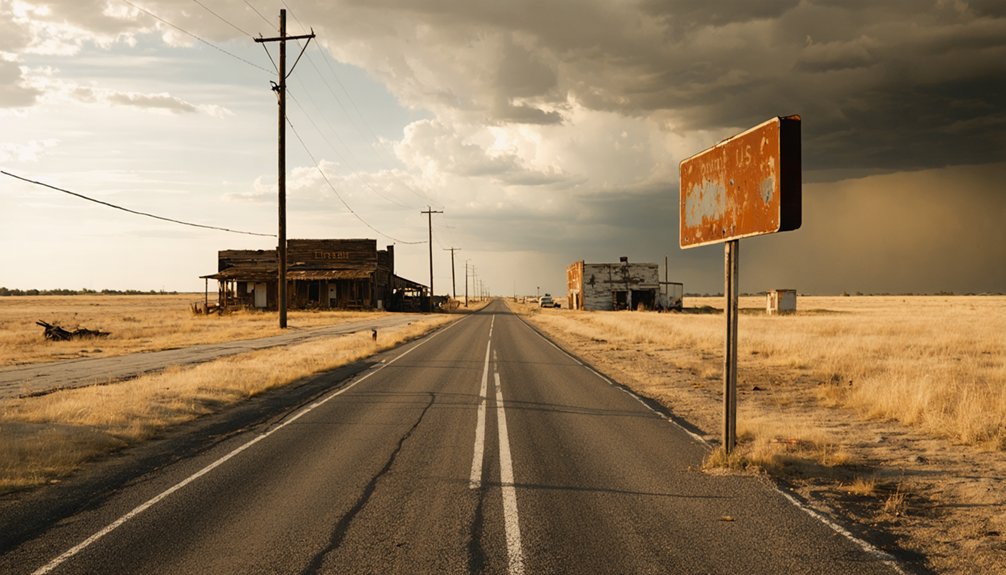
Finding Wildman today means retracing the footsteps of those original fortune-seekers, though the journey’s considerably easier now than it was in 1901.
Ghost town accessibility here is genuinely straightforward — your everyday 2WD vehicle handles it fine.
Head north from Mountain Park on U.S. Highway 183 until you reach E1540 Road. Turn left, cross the railroad tracks, then take your next available right.
Suddenly, the mining community legacy materializes before you — the old cyanide mill and cooling tower rising against the Oklahoma skyline, silent monuments to vanished ambition.
You can actually spot the site directly from the highway, making even a slow drive-by worthwhile.
But stop. Walk the foundation. Stand where hardrock miners once sweated over gold-bearing ore. That connection’s worth every mile.
What’s Left at Wildman Ghost Town Today
Most of Wildman’s original buildings are gone now, cleared away for agricultural land long after the miners packed up and moved on.
But the ghost town exploration isn’t over yet. The old cyanide mill and gold processing plant still stand as silent monuments to Wildman’s rough-and-tumble past. You can climb the mill’s foundation and cooling tower, touching the same structures that once drove a booming economy fueled by gold and granite.
The old cyanide mill still stands — a silent monument to the gold rush that built and buried Wildman.
A few forgotten foundations peek through the overgrowth nearby. The historical significance of what remains is undeniable — these ruins represent an entire community that rose and vanished within a handful of years.
Walk carefully, soak it in, and let the landscape tell its story. Freedom feels real out here.
The Legend of Wildman’s Lost Boothill Cemetery
Somewhere beneath the tangled brush and forgotten soil near Wildman lies what explorers believe could be a Boothill cemetery — though no one’s confirmed it yet.
Hard mining towns bred hard endings, and Wildman was no exception. Cemetery myths surrounding this site suggest miners, drifters, and roughnecks who met violent fates may rest unmarked somewhere nearby.
Boothill legends typically follow boom towns like shadows, and Wildman earned its rough reputation honestly.
If you’re the type who roams freely and chases history off the beaten path, this mystery’s worth your attention. No headstones have surfaced yet, but the possibility lingers. You might just be the explorer who finally pieces together where Wildman buried its dead.
When to Visit Wildman Ghost Town (And When to Avoid It)
When you visit Wildman matters almost as much as whether you visit at all. The best seasons reveal this forgotten place at its most evocative — and its most forgiving.
- Spring brings mild temperatures and seasonal flora that softens the ruins beautifully.
- Fall offers cooler air, golden light, and clear sightlines through thinning vegetation.
- Summer punishes explorers with brutal heat and aggressive mosquito swarms near Tom Steed Lake.
- Winter keeps crowds away entirely, delivering a stark, hauntingly quiet experience.
You’re free to roam here year-round, but choosing wisely means more time exploring and less time retreating.
Wildman rewards patience — it always has.
Wildman Visitor Tips: What to Know Before You Go
Bring a 2WD vehicle; the roads don’t demand anything more rugged.
Wear sturdy shoes if you’re climbing the cyanide mill foundation or cooling tower — history’s edges are rough.
For ghost town photography, morning light hits the old stonework beautifully before the Oklahoma heat flattens everything.
Respect the local wildlife sharing this forgotten landscape; you’re a guest in their territory now.
Carry water, especially in summer. The mill structures are explorable, but they’re also aging — move carefully and read the site before you touch it.
Wildman doesn’t need much from you except attention.
Come curious, come prepared, and let the silence of a vanished mining town do the rest.
Why Tom Steed Lake Makes This Trip Worth the Drive
Tucked against the northwest corner of Tom Steed Lake, Wildman doesn’t exist in isolation — the water beside it transforms a ghost town visit into something richer.
Tom Steed’s shoreline rewards those who wander freely.
Lake exploration here opens four distinct experiences:
- Scan the glassy water where miners once hauled gold from surrounding granite hills.
- Access the nearby boat ramp for fishing or kayaking at your own pace.
- Watch the horizon shift between prairie sky and quiet reservoir stillness.
- Follow the shoreline toward remnants of the mill foundation visible from the bank.
The lake carries its own quiet history — filled long after Wildman’s abandonment, it swallowed surrounding land whole.
Filled long after Wildman vanished, Tom Steed Lake swallowed the surrounding land — and its secrets — whole.
That contrast between industrial ruin and natural reservoir makes this stretch of Oklahoma genuinely unforgettable.
Other Oklahoma Ghost Towns Worth the Drive
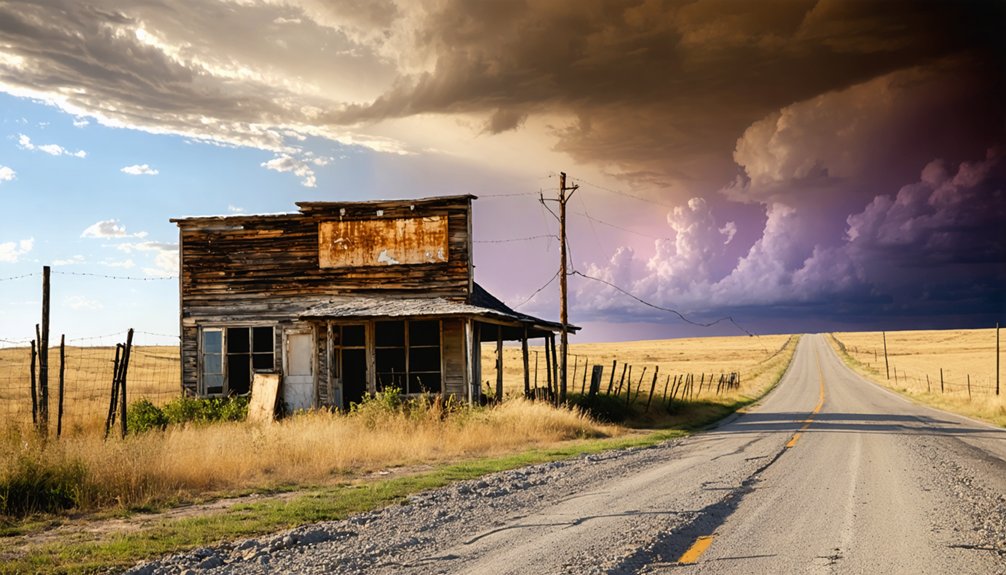
Oklahoma’s ghost towns stretch across the state like a map of forgotten dreams, each one holding its own story of boom, bust, and abandonment.
Once you’ve walked the ruins of Wildman, you’ll want to track down places like Ingalls, where the Dalton Gang‘s legend still haunts the landscape, or Cloud Chief, a vanished county seat that once buzzed with territorial ambition.
Pack your camera, fuel your curiosity, and let Oklahoma’s back roads pull you deeper into the past.
Notable Oklahoma Ghost Towns
While Wildman beckons with its mining-era ruins and lakeside solitude, it’s far from Oklahoma’s only ghost town worth chasing down a forgotten road. The state holds countless abandoned communities, each carrying ghost town legends and deep mining heritage waiting for you to uncover.
Consider adding these to your road trip itinerary:
- Ingalls – Outlaws and lawmen clashed violently here in 1893.
- Cement – Once boomed on oil wealth, now eerily quiet.
- Quay – A forgotten railroad stop swallowed by the prairie.
- Elmore City – Known for defying Oklahoma’s dance prohibition laws.
Oklahoma rewards the curious traveler who ventures beyond the interstate.
Every crumbling foundation and overgrown street tells a story of ambition, hardship, and the relentless passage of time.
What Makes Them Special
Each of Oklahoma’s ghost towns carries its own particular ache — a different story of rise and collapse that sets it apart from every other forgotten settlement.
Guthrie whispers of territorial ambition. Picher screams of industrial ruin. Coal, Cement, and Ingersoll each hold ghost town charm rooted in industries that briefly made them indispensable, then expendable.
What draws you to these places isn’t just curiosity — it’s the pull of lives lived hard and fast, then abandoned.
Wildman’s mining heritage gives it a raw, industrial soul you won’t find in agricultural ghost towns. Foundation stones, mill ruins, and collapsed tunnels speak directly to you across a century.
Every Oklahoma ghost town rewards the traveler willing to slow down, look closely, and listen.
Planning Your Next Visit
After Wildman pulls you into its industrial past, Oklahoma’s ghost town circuit has plenty more stops worth your time. Each site carries its own ghost town legends, forgotten mining techniques, and raw frontier spirit.
Pack your map and hit these destinations next:
- Ingalls — outlaw country where the Dalton Gang once roamed free
- Cleo Springs — salt mining heritage etched into the landscape
- Cement — oil boom remnants scattered across quiet prairies
- Elmore City — small-town resilience frozen in cultural memory
You don’t need a tour guide or a rigid itinerary. Oklahoma’s back roads reward the curious and the independent.
Each crumbling foundation tells a story nobody officially recorded. You just have to show up and listen.
The Mining History That Makes Wildman Unique
When you stand among Wildman’s crumbling mill foundations, you’re touching the remnants of a fever that swept across Oklahoma in fall 1900, when the federal government threw open the Wichita Mountains to mineral mining and prospectors flooded in overnight.
Frank R. Wildman saw the opportunity, built a town around that rush, and anchored it to a cyanide mill and gold processing plant that transformed raw ore from granite hill shafts into something worth chasing.
That industrial backbone—rare for such a small, short-lived settlement—is precisely what separates Wildman from a dozen other forgotten Oklahoma towns, giving you a tangible connection to the boomtown hunger that briefly made this corner of Kiowa County roar.
Federal Mining Boom Origins
Before the turn of the twentieth century, the Wichita Mountains sat largely untouched—a rugged, mineral-rich landscape the federal government had kept closed to prospectors. That changed in fall 1900, when Washington opened the region to mineral mining, triggering a rush that transformed Oklahoma’s frontier.
Frank R. Wildman seized that freedom immediately, founding a town that reflected the era’s raw ambition. The economic impact rippled quickly:
- Gold extraction through advanced mining techniques drove commerce
- Cyanide milling became the town’s industrial backbone
- Shafts and tunnels carved deep into granite hills around Nest Egg Mountain
- A post office, newspaper, hotels, and businesses followed prosperity
Gold Processing Operations
Two industrial operations defined Wildman’s economic heartbeat: a cyanide mill and a gold processing plant that transformed raw ore pulled from Nest Egg Mountain’s granite shafts into something worth chasing across the frontier.
These weren’t primitive operations — they represented serious mining innovations driving real economic impact across the territory.
Today, you can walk those same grounds and touch industrial archaeology firsthand. The cyanide mill foundation and cooling tower still stand, inviting you to climb them and imagine the roar of gold extraction that once echoed off granite hills.
That historical significance shaped everything — community development, commerce, and ultimately, environmental effects that stripped the land bare once profits dried up.
Wildman didn’t just mine gold. It mined ambition.
And you can still feel that restless hunger standing among its ruins.
Before You Go: Safety at Abandoned Sites
Ghost town structures have stood without maintenance for decades. Floors, stairs and roof timbers fail without warning, and a building that looks solid from outside may not hold your weight. Stay out of standing structures unless the site is actively maintained and open to visitors.
Mine workings are the more serious hazard. Vertical shafts can be hundreds of feet deep, are often unfenced, and may be hidden by brush or capped with rotted boards. Never enter an adit, tunnel or shaft: abandoned workings can hold oxygen-poor or toxic air that gives no warning before you lose consciousness.
Enclosed spaces with rodent droppings carry a risk of hantavirus, which is contracted by breathing contaminated dust. Do not sweep or stir up dust inside old cabins and outbuildings.
Cell coverage at these sites is usually poor or absent. Tell someone your route and expected return time, and carry more water than you think you need.
Frequently Asked Questions
Was Frank R. Wildman Related to Anyone Famous in Oklahoma History?
No confirmed connections exist in the available Wildman History records. You’ll find Ghost Town Legends swirl around Frank R. Wildman himself — a founder who carved, built, and shaped an entire Oklahoma mining community from raw wilderness alone.
Are There Any Guided Tours Available at Wildman Ghost Town?
No guided tours are available, so you’ll explore Wildman’s ghost town history entirely on your own terms. Embrace that freedom during your guided exploration — wander the old cyanide mill ruins and let history’s whispers lead you.
Is There an Admission Fee to Visit Wildman Ghost Town?
You don’t need to swipe your credit card — Wildman’s ghost town history and local legends are yours to explore freely! Just roll up, soak in the atmosphere, and let Oklahoma’s wild past speak for itself.
Can You Camp Overnight Near the Wildman Ghost Town Site?
The knowledge doesn’t confirm official camping regulations or overnight amenities near Wildman. You’ll want to contact Kiowa County authorities before you bed down where gold-hungry miners once dreamed beneath Oklahoma’s wide, starlit skies.
Are Pets Allowed When Visiting the Wildman Ghost Town Area?
Ironically, the knowledge base doesn’t specify pet policies, but you’re free to explore! Practice ghost town etiquette, prioritize pet safety near old foundations, and let your furry companions roam where miners once chased golden dreams.
References
- https://www.ghosttowns.com/states/ok/wildman.html
- https://www.youtube.com/watch?v=LNAm0sZuNyw
- http://okietreasurehunter.blogspot.com/2008/04/wildman-oklahoma-ghost-town.html
- https://en.wikipedia.org/wiki/List_of_ghost_towns_in_Oklahoma
- https://www.youtube.com/watch?v=CYSGQsnt_FY
- https://www.travelok.com/articles/oklahomaghosttowns
- https://www.youtube.com/watch?v=5XQUmVjjrZw
- https://www.onlyinyourstate.com/trip-ideas/oklahoma/ghost-towns-road-trip-ok
- https://www.youtube.com/watch?v=V0TWPUBvJZk