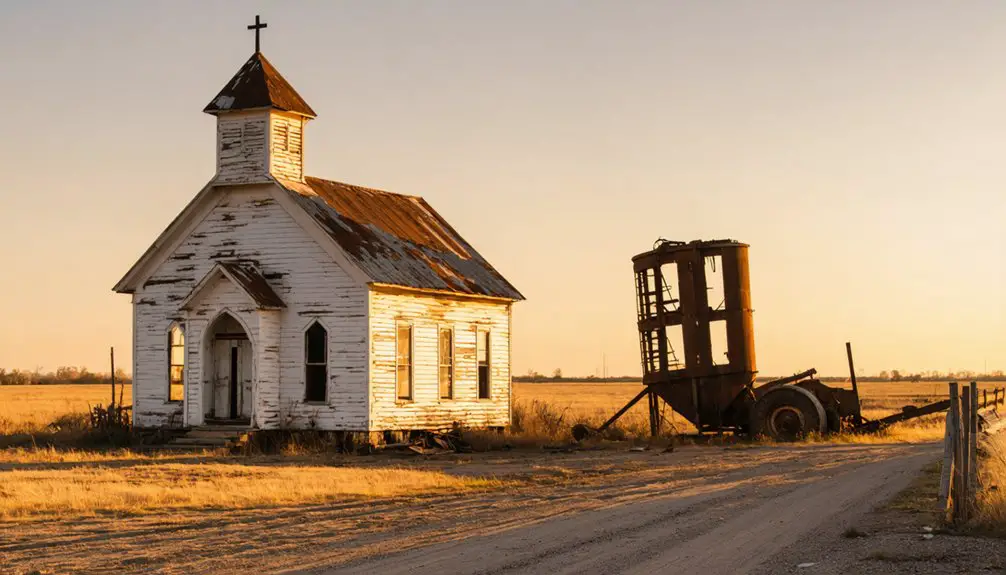
You’ll find Conditville hidden among northeastern Oklahoma’s toxic mining ghost towns, a place that doesn’t appear on official maps yet haunts Ottawa County’s poisoned landscape. Start in Picher or Cardin—themselves abandoned—then navigate by historical coordinates through a constellation of vanished zinc camps where 14,000 mine shafts pockmark the earth. Pack emergency supplies, offline maps, and three days’ water for gravel roads threading through apocalyptic chat piles. The real challenge isn’t just reaching these sites—it’s piecing together their shifting identities and forgotten stories.
Key Takeaways
- Conditville is an unmapped ghost town in Ottawa County’s northeastern Oklahoma mining region, existing between legend and documented history.
- The area contains numerous abandoned zinc mining camps within 10 miles, including Peoria, Commerce, Cardin, Quapaw, and Douthat.
- Expect hazardous conditions: 14,000 abandoned mine shafts, collapsible ground, toxic dust, and crumbling structures across an apocalyptic landscape.
- Navigate using historical coordinates and county archives, as most sites have vanished with Douthat having the most remnants.
- Prepare with high-clearance vehicle, offline maps, three days’ water, first-aid kit, and emergency supplies for remote terrain.
Understanding the Mystery Behind Conditville’s Identity
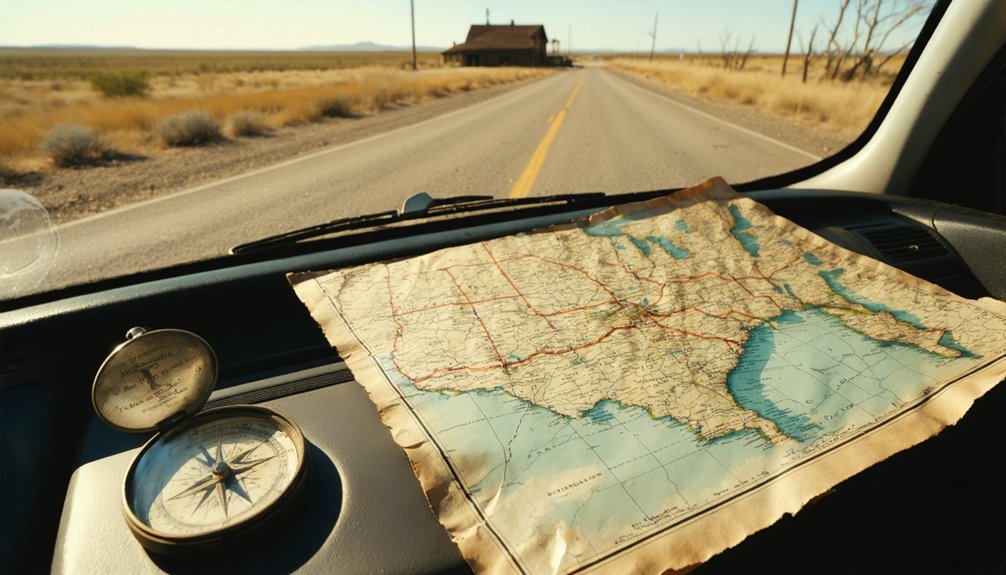
The ghost town you’re searching for doesn’t appear on any official map. Conditville exists somewhere between legend and reality in northeastern Oklahoma’s mining country, where name origin confusion runs deep as the abandoned zinc shafts themselves. You’ll find Cardin was once Douthat, then Carden. Zincville bore St. Louis’s name before miners renamed it. This regional folklore integration creates a maze of identities—towns morphing, merging, disappearing into collective memory.
Conditville might be a forgotten moniker for Cardin, a mispronunciation of another settlement, or something locals whispered about entirely different ruins. What matters isn’t pinning down exact coordinates. It’s understanding that out here, where 2,000 ghost towns haunt Oklahoma’s landscape, names shift like chat pile dust in the wind. You’re chasing something beautifully uncertain.
Exploring Northeast Oklahoma’s Mining Ghost Town Cluster
Northeast Oklahoma’s mining heartland sprawls across Ottawa County like a graveyard of American ambition, where ghost towns cluster so thick you can’t drive ten miles without passing through another skeleton of industrial glory. The Tri State mining legacy left behind a constellation of abandoned camps—Peoria, Commerce, Cardin, Quapaw, and Lincolnville—each one a monument to boom-and-bust freedom.
Ghost towns cluster thick across Ottawa County—each abandoned camp a monument to boom-and-bust industrial glory and vanished American fortunes.
Your route reveals the scale of abandoned mill operations that once dominated this landscape:
- Over 200 mills processing 10 million pounds of ore daily at peak production
- More than 14,000 miners extracting zinc and lead from beneath your feet
- Supply lines that fed over 50% of America’s WWI munitions
Picher anchored this industrial empire as the central hub, where fortunes rose from earth and vanished just as quickly.
What to Expect When Visiting Abandoned Mining Communities
When you roll into Picher and its neighboring ghost towns, you’ll confront an apocalyptic landscape where mountains of gray chat dwarf the remaining structures. These aren’t ordinary ruins—you’re traversing structural hazards including 14,000 abandoned mine shafts and ground that could collapse beneath your boots without warning.
The crumbling buildings missing walls and windows tell stories of sudden abandonment, while that eerie red-stained creek reveals the toxic legacy still seeping from underground mines.
Managing contaminated site dangers means understanding the invisible threats: wind-blown dust carries lead, arsenic, and cadmium from those towering chat piles residents once used as playgrounds. You’ll spot foundations leading nowhere, overgrown street grids, and the iconic water tower standing sentinel over devastation. This isn’t sanitized tourism—it’s raw, unfiltered evidence of industrial collapse.
Mapping Your Route Through Ottawa County’s Ghost Towns
Planning your ghost town circuit through Ottawa County requires accepting hard truth: most sites have vanished so completely that you’ll navigate by historical coordinates rather than visible landmarks. Uncovering Conditville’s untold history demands old survey maps and property records—the ground reveals little.
Ghost town exploration here means searching for what isn’t there—armed with maps showing communities that left no trace.
Navigating Ottawa County’s ghost town network becomes manageable when you prioritize:
- Douthat (formerly Century) – the county’s most documented ghost town with traceable remnants
- Historical mining district boundaries where communities clustered near lead and zinc operations
- County archives and historical societies holding location data unavailable online
You’ll spend more time researching than driving. These communities didn’t fade—they evaporated. Your adventure lies in forensic reconstruction, piecing together where people once lived, worked, and abandoned their dreams to Oklahoma’s relentless reclamation.
Essential Preparations for Your Ghost Town Adventure
Your maps may pinpoint where Conditville once stood, but surviving the journey there demands more than navigation skills. Vehicle maintenance becomes critical—inspect tires for gravel roads, check fluids, and pack spare equipment since roadside help may be 30+ miles away. Cell service contingencies matter equally: download offline maps, carry a compass, and print topographic guides before signal dies in abandoned mining territory.
Pack three days’ water, first-aid supplies, and tools for unexpected hazards. Equip your vehicle with high-clearance tires for neglected terrain. Bring flashlights for dim structures, emergency blankets against Oklahoma’s volatile weather, and bear spray despite sparse wildlife.
Research Cardin’s 2009 closure and Douthat’s abandonment. These ghost towns reward the prepared explorer, not the reckless wanderer.
Frequently Asked Questions
Are There Any Guided Tours Available for Oklahoma Ghost Towns?
You’ll find guided tours availability scarce for Oklahoma’s forgotten ghost towns like Conditville. Your best bet? Check local tourism information centers, then chart your own course through these windswept ruins—true adventure awaits the independent explorer.
What Is the Best Season to Visit Ghost Towns in Oklahoma?
Fall’s your ideal season—autumn foliage frames crumbling structures while cool temperatures let you explore freely. Dry roads grant access to remote sites, and historic preservation efforts shine through cleared vegetation, revealing Oklahoma’s forgotten past without summer’s heat or spring’s floods.
Can I Camp Overnight Near the Ghost Town Sites?
You’ll find over 1,800 campsites near ghost towns, from free dispersed spots in national grasslands to lake campgrounds. Just respect private property rules and local regulations—stick to marked federal land for your overnight adventures.
Are There Restaurants or Gas Stations Near These Abandoned Towns?
You’ll find gas station availability in nearby towns like Marlow and Commerce, just miles away. Dining options nearby include Sonic, Pizza Hut, and local cafes—perfect pit stops while you’re exploring Oklahoma’s abandoned landscapes and chasing freedom.
Do I Need Special Permits to Photograph the Remaining Structures?
“Look before you leap”—you’ll need private property permission for Conditville’s structures. No statewide permit exists, but trespassing concerns are real. Check local jurisdiction first, respect boundaries, and you’ll capture those hauntingly beautiful ruins freely.