To plan your ghost town road trip to Coolidge, Montana, take the Pioneer Mountains Scenic Byway between Wise River and Polaris into Beaverhead-Deer Lodge National Forest. You’ll hike just 10-15 minutes from the trailhead to reach the ruins of a once-thriving silver boomtown that peaked at 350 residents before collapsing in the 1920s. Visit between late June and early September for the best conditions. There’s far more to this forgotten silver empire than you’d expect.
Key Takeaways
- Coolidge is located along the Pioneer Mountains Scenic Byway between Wise River and Polaris, within Beaverhead-Deer Lodge National Forest in Montana.
- A short 10-15 minute hike from a marked trailhead leads to the ghost town, requiring no technical skills, just proper footwear.
- Key attractions include a massive silver mill, scattered foundations, old railroad ties, and an interpretive kiosk providing historical context.
- The best time to visit is late June through early September, when trails are dry and skies are clear for exploration.
- Pack outdoor essentials, prepare for varying road conditions, and watch for afternoon thunderstorms that can create hazardous driving conditions in summer.
What Makes Coolidge, Montana Worth the Drive?
When you turn off the Pioneer Mountains Scenic Byway and follow the trail into the lodgepole pines, you’re stepping into Montana’s last chapter of large-scale silver mining.
Coolidge isn’t just another crumbling settlement — it’s a place of genuine historic significance, where ambition, boom, and collapse left remarkable physical evidence behind.
Coolidge isn’t a ghost town — it’s a monument to ambition, where boom and collapse carved history into the landscape.
You’ll find the massive mill still standing, foundations scattered through the forest, and old railroad ties marking where ore once traveled down the mountain.
This mining heritage runs deep, connecting you directly to the dreams of Lieutenant Governor William R. Allen and the 350 souls who once called this remote valley home.
The drive is easy. The history is extraordinary.
Coolidge rewards every traveler who values authentic, unfiltered American frontier stories.
How to Get to Coolidge Ghost Town
Finding Coolidge means following the Pioneer Mountains Scenic Byway, a winding two-lane road threading between the towns of Wise River and Polaris in southwestern Montana.
This road trip takes you deep into the Beaverhead-Deer Lodge National Forest, where lodgepole pines crowd glaciated mountain slopes and the air carries that unmistakable high-elevation bite.
Pull off at the marked trailhead along these scenic routes and you’ll find an interpretive kiosk orienting you before the walk begins.
From there, it’s a straightforward 10-15 minute hike into the ghost town itself. No technical skills required—just your curiosity and a decent pair of shoes.
The site sits quietly off the byway, waiting for travelers willing to trade pavement for a short trail into Montana’s silver-mining past.
How Did Coolidge Go From Boomtown to Ghost Town?
Coolidge’s rise was dizzying and brief. By 1922, you’d have found 350 residents, a functioning mill, a company store, and electricity humming through the mountains.
Then reality struck hard. Silver prices collapsed through the 1920s, the Great Depression gutted what remained, and families quietly packed up and left. A dam failure on the Wise River destroyed roads and bridges, severing the town’s lifeline. The post office closed in 1932, officially sealing Coolidge’s fate as a ghost town.
William R. Allen kept fighting these economic challenges until his death in 1953, but the dream died long before he did.
Today, Coolidge stands as Montana’s most significant mining legacy — a place where ambition met its limits, and the wilderness slowly reclaimed what humans abandoned.
What You’ll Actually See at Coolidge Ghost Town
After all that history of boom and bust, standing at the Coolidge trailhead puts it in sharp physical focus. A 10-15 minute walk through lodgepole pines delivers you straight into Montana’s mining heritage.
What greets you isn’t romanticized ruins — it’s raw ghost town remnants actively returning to earth. The massive mill dominates the landscape, its scale revealing exactly how ambitious Allen’s vision was.
Building foundations emerge from the forest floor, telling you where families once lived, worked, and gathered. Old railroad ties mark where narrow gauge cars once hauled silver ore downhill.
An interpretive kiosk at the trailhead gives context before you explore. The mine itself stays permanently closed — six miles of underground workings deemed too dangerous — but everything above ground is yours to discover.
When Should You Visit Coolidge Ghost Town?
Summer and early fall are your best windows to visit Coolidge, when the Pioneer Mountains Scenic Byway is fully passable and the lodgepole pine forests are alive with color.
Spring snowmelt can leave roads muddy and unstable, while winter closes the byway entirely, locking this forgotten silver town beneath feet of mountain snow.
Plan your trip for July through September if you want reliable access, comfortable hiking conditions, and the clearest views of the crumbling mill that once anchored Montana’s last great silver operation.
Best Seasons To Visit
Though Coolidge Ghost Town sits at high elevation in the lodgepole pine forests of the Pioneer Mountains, its best visiting window runs from late June through early September, when the snowpack has melted and the Pioneer Mountains Scenic Byway is fully accessible.
Summer delivers clear skies, dry trails, and the freedom to explore crumbling mill structures and railroad ties without fighting mud or ice. Among the best activities during this window, wildflower hiking and photography rank at the top.
Fall brings stunning golden larches before early snows close access roads again. Watch for seasonal events in nearby Wise River that complement your ghost town detour.
Winter buries the site entirely, so don’t gamble on shoulder-season visits unless you’ve confirmed road conditions beforehand.
Weather And Road Conditions
Planning your window carefully matters when Coolidge sits locked beneath several feet of Montana snow for nearly half the year. Weather patterns here follow mountain rhythms—brutal winters surrender slowly, leaving Pioneer Mountains Scenic Byway accessible primarily between late June and September.
Road safety demands attention even in summer. Afternoon thunderstorms roll across high-elevation lodgepole forests with little warning, turning dirt sections slick and treacherous. Check conditions before departing from nearby Wise River or Polaris.
September offers arguably the most vivid experience—crowds thin, aspens shift golden, and the crumbling mill stands against crystalline skies.
You’re fundamentally retracing William Allen’s doomed railway route through glaciated terrain. Respect the elevation, carry extra layers, and you’ll reach this forgotten silver dream completely on your own terms.
Ideal Trip Planning Times
When you choose to visit Coolidge shapes everything—the roads beneath your tires, the light hitting the crumbling mill, even whether you’ll reach the site at all.
Summer opens the Pioneer Mountains Scenic Byway fully, delivering long golden hours perfect for photographing remnants of Montana’s last great silver operation. July and August bring reliable access but also crowds following seasonal festivals scattered across nearby Beaverhead County.
For genuine freedom, aim for late June or early September. Off peak travel rewards you with solitude among the lodgepole pines, quieter trailheads, and an almost eerie stillness that matches Coolidge’s abandoned character.
You’ll walk those ten minutes toward the crumbling mill feeling like the only person who remembers William Allen’s unfulfilled dream—because, standing there, you truly are.
What Else to See Along the Pioneer Mountains Scenic Byway
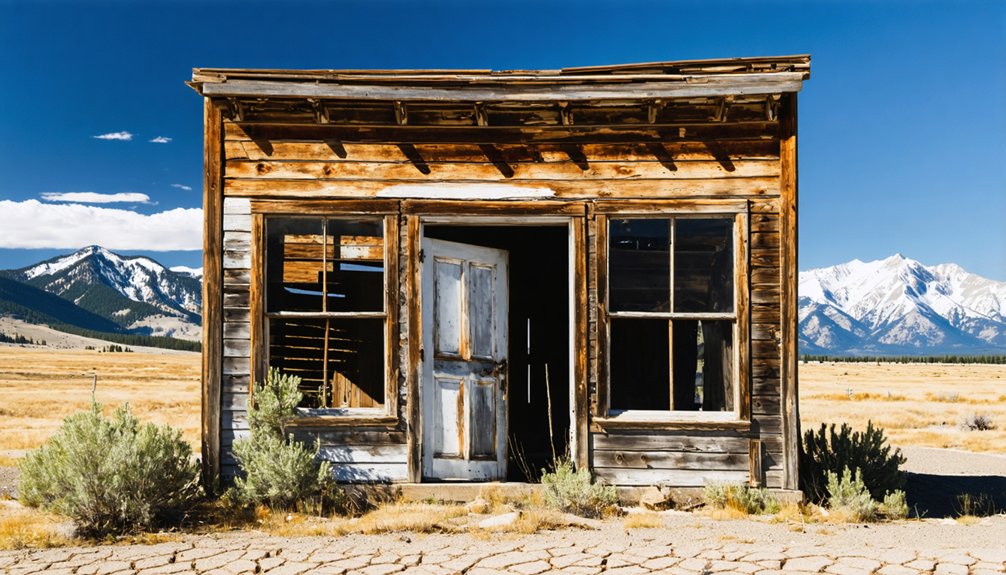
Once you’ve explored the haunted remnants of Coolidge, the Pioneer Mountains Scenic Byway has plenty more to offer along its 45-mile stretch between Wise River and Polaris.
Pull over at scenic overlooks to soak in the glaciated Pioneer Mountains, where lodgepole pine forests stretch endlessly beneath dramatic peaks.
The Pioneer Mountains rise in jagged silence, their glaciated peaks towering above an endless sea of lodgepole pine.
Keep your eyes open for local wildlife — elk, deer, and pronghorn frequently roam these high-elevation landscapes.
The Beaverhead-Deer Lodge National Forest surrounds you with opportunities for hiking, fishing crystal-clear streams, and genuine solitude.
Polaris sits at the southern end with its own quiet character, while Wise River anchors the north with rustic charm.
This byway isn’t just a road — it’s a corridor through Montana’s raw, untamed history.
Frequently Asked Questions
Is There a Fee to Visit Coolidge Ghost Town in Montana?
You won’t pay any entry fees to explore Coolidge’s haunting remains! Located in Beaverhead-Deer Lodge National Forest, you’ll roam freely through Montana’s rich historical significance, discovering crumbling mill structures and railroad ties that whisper forgotten silver-mining dreams.
Are Pets Allowed on the Trail to Coolidge Ghost Town?
The knowledge doesn’t specify pet-friendly policies for the trail, so check with Beaverhead-Deer Lodge National Forest directly. For trail safety, keep your adventurous spirit—and any pets—prepared for rugged, high-elevation pioneer terrain.
Who Named the Ghost Town After Calvin Coolidge?
William R. Allen named it! When you explore Coolidge history and town origins, you’ll discover this former Montana Lieutenant Governor honored President Calvin Coolidge in 1913 after forming the Boston Montana Mining Company.
How Long Did It Take to Build the Narrow Gauge Railroad?
The narrow gauge railroad construction took four years to complete, finishing in 1918. You’d have marveled at its historical significance — workers practically Instagrammed their grit into every spike, carving freedom through Montana’s rugged Pioneer Mountains wilderness.
Can You Legally Take Artifacts or Souvenirs From Coolidge Ghost Town?
You can’t take artifacts from Coolidge — ghost town regulations protect everything here. Respect artifact preservation, leaving history untouched for future adventurers. This sacred slice of Montana’s silver-mining soul belongs to everyone’s freedom to discover.
References
- https://www.youtube.com/watch?v=YHbTh5p0Vkk
- https://silverbowclub.com/coolidge-ghost-town/
- https://www.youtube.com/watch?v=pjVA0g6_0A4
- https://nbcmontana.com/news/montana-moment/coolidge-the-boomtown-that-never-boomed
- https://www.legendsofamerica.com/mt-coolidge/
- https://ghosttownshistoryofmontana.wordpress.com/2025/05/07/creating-coolidge/
- https://nfsl.contentdm.oclc.org/digital/api/collection/p17053coll2/id/377280/download