Planning a ghost town road trip to Argyle, South Dakota means exploring a barren but historically rich site in Custer County’s Black Hills. You won’t find standing structures, but the open landscape along the Mickelson Trail tells the story of a once-thriving mining settlement. Pair Argyle with nearby ghost towns like Ardmore and Rockerville for a two-day itinerary. Careful planning, seasonal awareness, and respect for land boundaries will make your adventure unforgettable — and there’s much more to uncover ahead.
Key Takeaways
- Argyle is a barren ghost town in Custer County, South Dakota, with no remaining structures, established during the post-1874 Black Hills gold rush.
- Access Argyle via the 109-mile George S. Mickelson Trail, ideal for hiking, biking, and ATV riding alongside historic Burlington railroad tracks.
- Spring and fall offer the best visiting conditions, with mild temperatures, manageable trails, and fewer crowds than summer or winter.
- Nearby ghost towns Alta, Apex, Bakerville, Ardmore, and Awanka can be strategically mapped for a two-day road trip itinerary.
- Research land ownership beforehand, as boundaries shift between public and private property, and always respect preservation laws protecting historical remnants.
What Is Argyle, South Dakota’s Ghost Town?
Argyle is a ghost town in Custer County, South Dakota, that’s earned the rare classification of “barren” — meaning there’s absolutely nothing left to see. No crumbling foundations, no weathered timber, no rusted remnants. Just open land carrying the weight of Argyle history beneath its surface.
Named after an early settler to the Custer County area, Argyle emerged during the Black Hills mining boom following the 1874 gold rush. Like hundreds of similar settlements, it rose quickly and vanished just as fast when the mining industry declined.
Born from gold rush ambition, Argyle rose fast — and disappeared just as quickly when the mining boom faded.
Today, the site sits adjacent to the George S. Mickelson Trail, making it accessible for adventurers seeking authentic ghost town experiences beyond the typical tourist stops.
You won’t find dramatic ruins here — but you’ll find something rarer: untouched, unfiltered history.
Why Did Argyle Boom, Then Vanish Completely?
Like so many Black Hills settlements, Argyle didn’t grow slowly — it exploded into existence the moment gold fever gripped the region after 1874.
Mining prosperity pulled settlers westward fast, building communities almost overnight. When the ore ran dry, those same communities collapsed just as quickly.
Here’s why Argyle followed that boom-bust pattern:
- Gold drove everything — No mineral wealth meant no economic reason to stay.
- No industry replaced mining — Unlike towns that pivoted to ranching or tourism, Argyle had nothing waiting in the wings.
- Isolation sealed its fate — Remote location made rebuilding impractical once miners left.
Its historical significance isn’t in what remains standing — it’s in what Argyle represents: the raw, unfiltered ambition of the American frontier, lived hard and abandoned fast.
Where Is Argyle in Custer County and How Do You Find It?
You’ll find Argyle tucked away in Custer County, nestled in the southwest corner of South Dakota’s Black Hills region, where it sits quietly beside the old Burlington railroad tracks.
The George S. Mickelson Trail runs adjacent to the site, giving hikers and bikers a natural access point as they explore the area.
Pin the location before you go, because Argyle’s completely barren landscape means you won’t spot a single standing structure to guide you in.
Custer County Location Details
Tucked into the western edge of South Dakota, Custer County holds the ghost town of Argyle alongside the George S. Mickelson Trail, where old Burlington railroad tracks once ran.
You’ll find this area rich with scenic routes that connect multiple ghost towns in a single drive.
Here’s what to know before you go:
- Trail Access – The Mickelson Trail runs directly next to Argyle, making it reachable by foot, bike, or ATV.
- Nearby Towns – Alta, Apex, and Bakerville sit close by, letting you hit several sites on one route.
- Land Rules – Private property and Forest Service regulations govern parts of Custer County, so research access points before exploring.
Plan your route carefully and you’ll move through history freely.
Nearby Trail Access Points
Finding Argyle means knowing the Mickelson Trail is your best compass. This 109-mile converted railroad corridor runs directly alongside the old Burlington tracks where Argyle once stood, giving hikers and bikers a natural route straight to the site.
You’ll want to follow trail safety tips before heading out — carry water, check weather conditions, and let someone know your planned route through Custer County’s remote terrain.
As you travel the trail, you’ll encounter scenic viewpoints overlooking the Black Hills landscape that once drew miners westward.
ATV riders can access Argyle through designated Black Hills trail systems connecting nearby ghost towns like Alta and Apex.
Download offline maps beforehand since cell coverage gets spotty in these western South Dakota corridors. Your freedom to explore starts with solid preparation.
Finding Argyle’s Exact Site
Where exactly does Argyle sit within Custer County’s sprawling terrain? It’s tucked alongside the old Burlington railroad tracks, right next to the George S. Mickelson Trail.
Mining impact shaped this entire corridor, leaving ghost town history scattered across the landscape. You won’t find buildings here — Argyle’s completely barren — so pinpointing the site demands preparation.
Use these three navigation strategies:
- Follow the Mickelson Trail — Argyle sits directly adjacent, making the trail your clearest physical reference point.
- Research Burlington railroad routes — Old track alignments confirm the settlement’s former position.
- Cross-reference ATV trail maps — Black Hills ATV guides specifically list Argyle among accessible destinations.
Respect Forest Service boundaries and private property rules before you explore.
Come prepared, stay aware, and you’ll locate this elusive site successfully.
How Do You Reach Argyle on the Mickelson Trail?
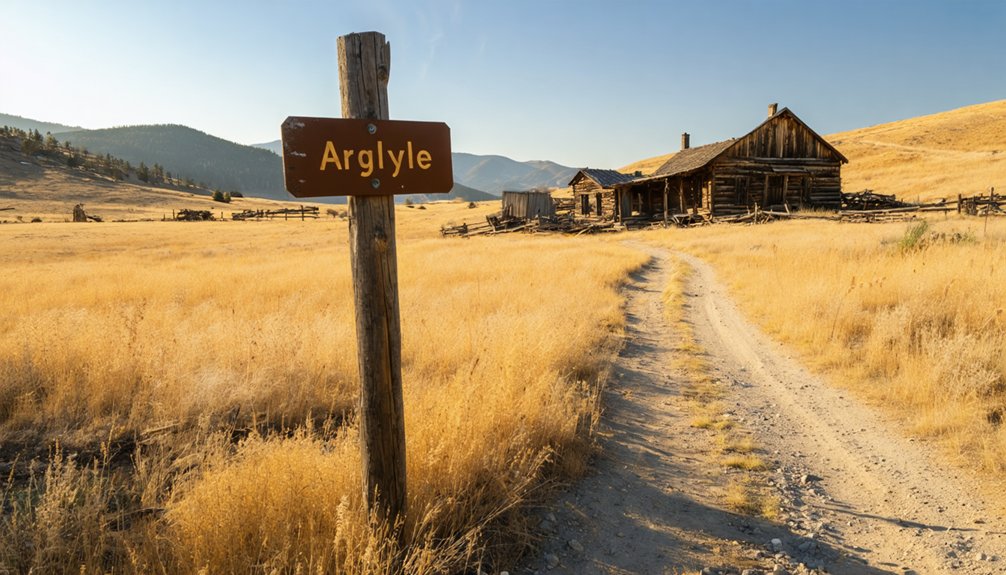
Reaching Argyle via the George S. Mickelson Trail puts you on one of South Dakota’s most scenic rail-to-trail conversions. This 109-mile corridor follows the old Burlington Northern tracks straight through Custer County, giving you direct Mickelson Trail access to Argyle’s former townsite.
You’ll travel through ponderosa pine forests and open meadows, covering terrain that once carried ore and supplies during the Black Hills mining boom.
Pack your mountain bike or lace up your hiking boots before heading out. The trail’s well-maintained surface makes navigation straightforward, though you should confirm the exact mileage from your chosen trailhead beforehand.
Grab your bike or boots — the Mickelson Trail’s well-maintained surface makes the ride to Argyle refreshingly straightforward.
Understanding Argyle history deepens the journey — you’re riding through a corridor that once connected thriving mining communities now completely vanished.
Bring water, a trail map, and a sense of adventure.
What Will You Actually See at the Argyle Site?
When you arrive at the Argyle site, you won’t find standing buildings, foundations, or ruins — the town has completely vanished from the landscape.
What you’ll encounter instead are subtle historical traces, like the adjacent Mickelson Trail running along the old Burlington railroad bed, quietly echoing the area’s mining-era past.
Nature has fully reclaimed the site, leaving a peaceful, open landscape that rewards visitors who appreciate history without needing visible monuments to feel its presence.
No Structures Remain
Although Argyle earned its place on the map during the Black Hills mining boom, you won’t find a single standing structure when you arrive at the site today. The land sits completely barren, yet its ghost town legends and historical significance make the journey worthwhile.
Here’s what you’ll actually encounter:
- Open terrain — No buildings, foundations, or ruins mark the landscape.
- Mickelson Trail access — The adjacent trail offers context and a tangible connection to the old Burlington railroad corridor.
- Raw atmosphere — The silence and open land tell Argyle’s story better than any structure could.
You’re walking ground where a real community once thrived. Bring your curiosity, respect private property boundaries, and let the landscape speak for itself.
Historical Traces Only
Stepping onto the Argyle site means accepting that the historical record here lives entirely in the ground beneath your feet rather than in walls or windows. You won’t find signage explaining what stood here or markers celebrating its historical significance.
What you’ll discover instead is open land carrying the quiet weight of a community that once existed, breathed, and eventually disappeared.
Ghost town exploration at Argyle demands a different kind of attention. You’re reading subtle landscape shifts, unnatural ground depressions, and the way vegetation clusters differently where structures once stood.
The Mickelson Trail running alongside gives you geographical orientation, connecting you to the same corridor early settlers once traveled. Bring curiosity rather than expectations, and Argyle rewards you with something more lasting than photographs — genuine historical perspective.
Natural Landscape Preserved
What greets you at the Argyle site isn’t ruins or remnants — it’s the Black Hills landscape reclaiming its own. Nature has erased nearly every trace of human settlement, leaving behind raw, unfiltered natural beauty that speaks louder than crumbling walls ever could.
The ghostly allure here isn’t visual — it’s atmospheric.
Here’s what you’ll actually encounter:
- Dense ponderosa pine forest rolling across terrain where miners once worked and lived
- The Mickelson Trail corridor cutting alongside the old Burlington railroad grade, offering context for the town’s former purpose
- Open sky and quiet wilderness that rewards explorers willing to use their imagination
You’re not reading history here — you’re standing inside it, breathing it in.
Can You Legally Explore Argyle, or Is It Off-Limits?
Whether you can legally explore Argyle depends largely on where exactly you’re standing. Some sections fall under U.S. Forest Service jurisdiction, which generally welcomes respectful visitors.
Legality at Argyle shifts with every step — Forest Service land welcomes you, but boundaries here are easily crossed.
Others sit on private property, where trespassing laws apply without exception. Legal considerations matter here, so research land ownership before you go.
The George S. Mickelson Trail runs nearby, giving you legitimate access to the surrounding corridor without crossing into restricted zones.
Exploration etiquette is equally important. Even on public land, you’re expected to leave everything undisturbed. Don’t dig, collect artifacts, or remove anything from the site.
Federal and state preservation laws protect historical remnants, even when nothing visible remains.
Stay on established trails, respect posted boundaries, and you’ll experience Argyle’s haunting emptiness without legal complications.
Which Ghost Towns Near Argyle Are Worth the Detour?
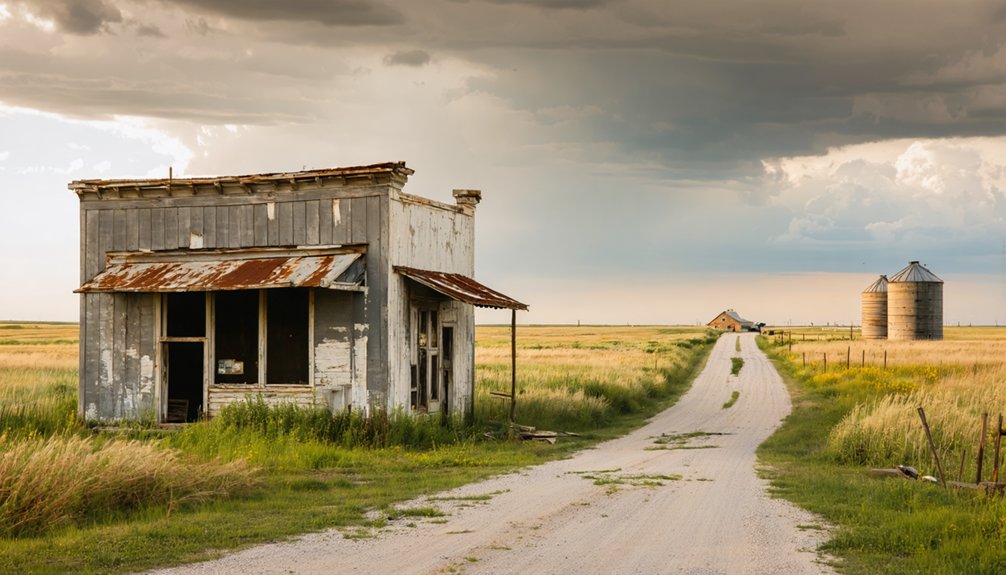
If you’re already making the trek to Argyle, you’d be foolish not to swing by a few neighboring ghost towns that add serious depth to your road trip.
Ardmore, founded in 1889 and finally abandoned in 2004, and Awanka, settled in 1888 with a single full-time resident still holding on, offer two very different stories of small-town survival and decline.
Mapping a route that strings these sites together keeps your drive tight and purposeful, especially since they all cluster within southwest South Dakota’s ghost town corridor.
Nearby Ghost Towns Worth Visiting
Since Argyle leaves nothing standing to photograph or explore, the ghost towns nearby more than make up for it. Each stop adds layers of ghost town mysteries and historical significance to your route through Custer County.
- Ardmore – Founded in 1889 and abandoned as recently as 2004, this town offers a rare modern ghost town experience with visible remnants still standing.
- Awanka – Settled in 1888, this nearly deserted community still claims one full-time resident, making it a fascinating living relic of the past.
- Rockerville – Revived in the 1950s as a tourist destination just off Highway 16, this spot blends Old West charm with accessible exploration for history enthusiasts.
Plan your route strategically, and you’ll hit all three without backtracking.
Ardmore And Awanka Highlights
Both Ardmore and Awanka bring something distinct to your ghost town road trip that Argyle simply can’t — visible history you can actually see and feel.
Ardmore, founded in 1889 and abandoned as recently as 2004, carries fresh historical significance. It’s practically a modern ghost town, making its silence even more striking.
You’ll sense the weight of lives recently lived there.
Awanka, settled in 1888, takes a different turn — it’s technically still inhabited by one full-time resident, which adds fascinating local legends and a living, breathing layer to your exploration.
Together, these two stops give your road trip real depth.
You’re not just chasing empty coordinates; you’re uncovering stories that range from frontier beginnings to near-present abandonment, each stop rewarding your curiosity differently.
Planning Your Detour Route
Now that you’ve got Ardmore and Awanka on your radar, the next step is mapping out which ghost towns actually deserve a detour versus which ones you can skip.
Prioritizing your detour routes saves time and keeps the adventure moving.
Here are three scenic stops worth adding:
- Rockerville – A revived 1950s tourist destination just off Highway 16, offering tangible history you can actually walk through.
- Bakerville – Clustered near Argyle in Custer County, making it an efficient add-on without backtracking.
- Spokane – Founded in 1890 for quartz mining, sitting conveniently along Route 385 for riders and hikers alike.
Each stop delivers distinct Black Hills character, letting you experience the region’s gold rush legacy on your own terms.
Is Visiting Argyle Worth It If Nothing Is Left Standing?
Why visit a ghost town when there’s nothing left to see? That question actually reveals the ghost town significance of places like Argyle. You’re not chasing buildings — you’re chasing history embedded in the landscape itself.
Your exploration motivations matter here. Standing where miners once hustled during the Black Hills Gold Rush connects you to something raw and unscripted. No tourist infrastructure, no admission fees, no crowds — just open terrain along the Mickelson Trail and the quiet weight of a forgotten era.
Argyle won’t reward passive visitors. It rewards the curious, the independent, and those who find meaning beyond the obvious. If you respect private property boundaries and Forest Service rules, you’ll discover that sometimes the most powerful historical experiences happen exactly where nothing remains standing.
How Do You Plan a Two-Day Black Hills Ghost Town Route?
Once you’ve felt that pull toward Argyle’s empty terrain, you’re ready to string together a full ghost town circuit through the Black Hills.
Once that pull toward empty terrain grabs hold, a full Black Hills ghost town circuit becomes impossible to resist.
Two days give you enough room to move freely without rushing past sites carrying real historical significance.
Day 1 – Southern Cluster:
1. Start at Argyle for ghost town exploration along the Mickelson Trail, then push toward Alta, Apex, and Bakerville nearby.
Day 2 – Extended Loop:
2. Head toward Ardmore, founded in 1889 and abandoned as recently as 2004, before rolling through Rockerville off Highway 16.
3. Finish near Awanka, where one full-time resident keeps the town technically alive.
Keep I-90 as your spine, respect private property boundaries, and carry trail maps for ATV-accessible stretches throughout the route.
When Is the Mickelson Trail Open and Is Argyle Accessible Year-Round?
Timing your visit matters more than most travelers expect, especially when a trail’s accessibility determines whether you reach a ghost town at all.
The George S. Mickelson Trail stays open year-round, giving you flexibility across seasons. However, winter snow and ice create genuine hazards, particularly for bikers and ATV riders. Mickelson Trail hours allow dawn-to-dusk access daily, so early starts maximize your exploration window.
Argyle accessibility remains relatively straightforward since no standing structures complicate entry. You’re fundamentally visiting an open landscape beside old Burlington tracks.
Spring and fall offer ideal conditions — mild temperatures, manageable trail surfaces, and fewer crowds. Summer works well too, though heat demands extra water.
Always verify current Forest Service guidelines before heading out, since regulations occasionally shift without much public notice.
Frequently Asked Questions
What Gear Should You Pack for a Black Hills Ghost Town Trip?
Pack your essential hiking gear: sturdy boots, water, and a map. You’ll want a camera for ghost town photography, capturing Argyle’s haunting landscape. Don’t forget sunscreen, layers, and a compass—you’re exploring freedom’s forgotten frontier!
Are There Camping Spots Near Argyle for an Overnight Stay?
You’ll find camping spots near Argyle along the Mickelson Trail, offering rustic camping amenities perfect for freedom seekers. Embrace the wilderness, but watch for local wildlife roaming Custer County’s stunning Black Hills landscape overnight.
Can Kids Safely Join a Ghost Town Exploration in Custer County?
Yes, kids can safely join you! Prioritize family safety by staying on trails and respecting boundaries. Argyle’s barren landscape offers fascinating historical education, letting your children connect with the Old West’s adventurous, freedom-filled spirit firsthand.
What Is the Best Time of Year to Visit Argyle?
You’ll find summer’s truly the best season to uncover Argyle’s historical significance and local legends. Warm trails invite your free spirit to explore where miners once roamed, making every step feel like living history.
Are Guided Ghost Town Tours Available in the Black Hills Region?
You’ll find guided ghost town tours available throughout the Black Hills region! Local guides bring historical significance to life, sharing local legends that’ll ignite your adventurous spirit as you explore over 600 abandoned towns freely dotting this remarkable landscape.
References
- https://en.wikipedia.org/wiki/List_of_ghost_towns_in_South_Dakota
- https://www.youtube.com/watch?v=_0WNYsFLSLA
- https://www.powderhouselodge.com/black-hills-attractions/fun-attractions/ghost-towns-of-western-south-dakota/
- https://www.blackhillsbadlands.com/blog/post/old-west-legends-mines-ghost-towns-route-reimagined/
- https://blackhillsatvdestinations.com/ghost-towns/
- https://myxoadventures.com/the-ghost-town-of-spokane-south-dakota/
- https://www.sdhspress.com/journal/south-dakota-history-2-2/some-black-hills-ghost-towns-and-their-origins/vol-02-no-2-some-black-hills-ghost-towns-and-their-origins.pdf