Afognak Ghost Town isn’t your typical road trip — there are no roads leading here. You’ll reach this remote Alutiiq village off Kodiak Island by water taxi, private skiff, or floatplane, crossing Marmot Bay in under two hours. Buried under volcanic ash from the catastrophic 1912 Novarupta eruption, an entire civilization lies preserved just beneath your feet. Plan your visit between May and September for the best conditions, and everything you need to know is just ahead.
Key Takeaways
- Afognak Island has no roads, so access requires a water taxi, private skiff, or floatplane departing from Kodiak across Marmot Bay.
- Visit between May and September, with July and August offering the calmest waters, clearest trails, and peak wildlife activity.
- Secure landing permits from the Kodiak Historical Society before visiting, as camping is prohibited and day-use rules strictly apply.
- Pack bear spray, waterproof boots, layered clothing, sufficient food and water, and a satellite communicator for wilderness safety.
- The buried Alutiiq village, preserved under volcanic ash from the 1912 Novarupta eruption, makes Afognak historically unique among ghost towns.
What Makes Afognak Ghost Town Unlike Any Other Alaska Ruin
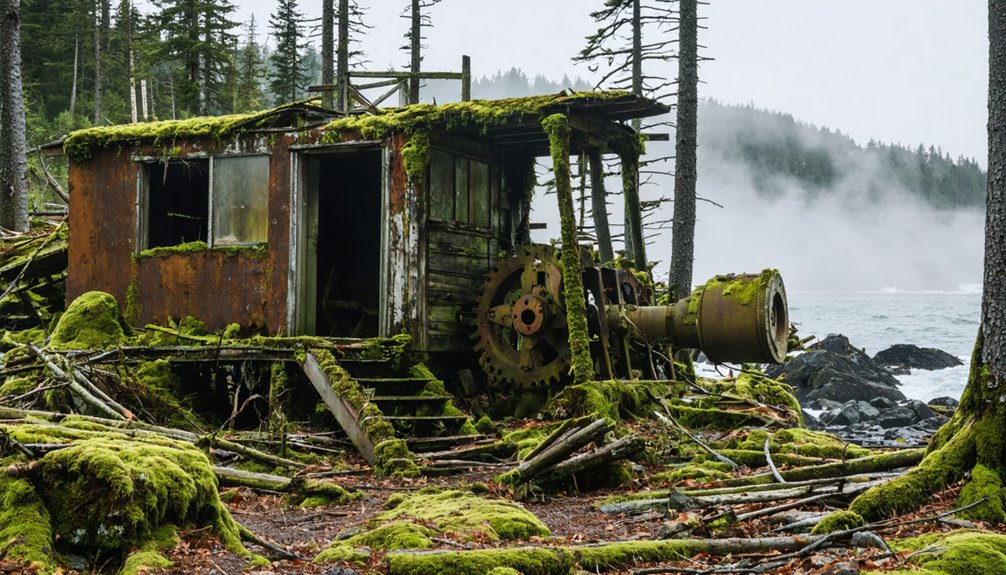
When you think of Alaska ghost towns, crumbling gold rush shacks and abandoned mining camps likely come to mind — but Afognak breaks that mold entirely.
This Alutiiq village wasn’t abandoned by choice; the 1912 Novarupta eruption buried it under feet of volcanic ash, freezing it in time beneath the earth.
Unlike surface ruins exposed to decades of weather and looters, Afognak’s unique artifacts remain sealed underground, protected by the very catastrophe that ended the village.
Ongoing geological studies continue revealing new structures as erosion slowly peels back ash layers, meaning the site actively unfolds before you.
You’re not just walking through history here — you’re walking over it, with an entire civilization preserved inches beneath your boots.
What Wiped Out This Thriving Alutiiq Village in 1912?
Beneath your boots lies a civilization frozen mid-life by one of history’s most violent geological events — but understanding what actually happened in 1912 makes the ground beneath you feel even more remarkable.
The Novarupta volcanic eruption didn’t just shake the earth; it erased an entire world. Releasing 3.2 cubic miles of magma, it blanketed Afognak under 6–12 feet of ash, making survival impossible.
Within days, 163 Alutiiq people evacuated aboard the USS Manning, leaving behind centuries of cultural heritage — homes, tools, traditions — buried indefinitely.
What’s striking is the eruption’s scale. It remains the largest volcanic event of the 20th century, yet Afognak rarely appears in history books.
Walking these grounds, you’re standing inside a story most people never get to read.
Getting to Afognak Ghost Town: Boat, Floatplane, or Skiff
Getting to Afognak isn’t a casual drive — there are no roads here, and the island’s remoteness is exactly what’s kept it so hauntingly intact.
You’ll launch from Kodiak, crossing 15 miles of Marmot Bay by water taxi or private skiff. Boat rentals give you flexibility, though you’ll need landing permits before departing. Expect a one-to-two-hour crossing, weather permitting — Marmot Bay doesn’t negotiate.
If you’d rather fly, floatplane options from Kodiak Airport put you over the island in 20 to 30 minutes, costing $200 to $400 per person. It’s faster and offers breathtaking aerial views of ash-blanketed terrain below.
Stick to summer travel between May and September. Winter seas and ice make access genuinely dangerous, not just inconvenient.
When Is the Best Time to Visit Afognak Island?
You’ll want to plan your visit between May and September, since rough seas and winter ice cut off access to Afognak Island entirely during the colder months.
July and August offer the calmest water crossings and the clearest trails, though you should always check weather forecasts before booking your water taxi or charter flight, as conditions on Marmot Bay can shift fast.
Bears and eagles are most active in summer too, so you’ll get the richest wildlife experience while traversing the overgrown volcanic terrain with better visibility through the tundra growth.
Summer Access Window
Visiting Afognak Island isn’t something you can plan for any time of year — the remote site opens only from May through September, when calmer seas make the 15-mile boat ride across Marmot Bay manageable.
Winter brings brutal conditions, freezing the access routes and making travel dangerous even for experienced mariners.
During this summer window, you’ll find the island at its most alive.
Summer activities include exploring overgrown ruins, spotting eagles, and traversing tundra trails reclaiming the volcanic ash beneath your boots.
The season also reveals exceptional fishing opportunities in surrounding waters, letting you combine historical exploration with some of Alaska’s most rewarding catches.
Plan your trip between June and August for the longest daylight hours and the most favorable weather conditions.
Weather and Sea Conditions
Weather on Kodiak Island’s waters can shift from glassy calm to whitecapped chaos within hours, so timing your trip to Afognak takes more than just checking a calendar.
Weather patterns in the Gulf of Alaska breed unpredictability, especially during shoulder seasons when storms roll in fast and hard.
June through August offers your best window, when sea currents stabilize and swells typically stay manageable across Marmot Bay’s 15-mile crossing.
Even then, morning conditions can deteriorate by afternoon, so you’ll want an early departure.
Check NOAA forecasts obsessively before booking your water taxi or charter flight.
Wind speeds above 20 knots will ground floatplanes and strand boats at the dock.
Building flexibility into your schedule isn’t optional — it’s survival planning for reaching this remote volcanic relic.
Wildlife and Trail Visibility
Beyond sea conditions, the island itself dictates when your visit pays off. June through August delivers the clearest wildlife sightings — bears forage actively, bald eagles circle overhead, and Afognak’s forests buzz with life.
You’ll spot more without fighting dense overgrowth that swallows trails by late summer. Trail maintenance here is fundamentally nonexistent, so visibility matters enormously. By September, vegetation chokes paths that were walkable in June, making navigation genuinely difficult.
Spring arrivals face muddy, waterlogged terrain from snowmelt. July hits the sweet spot — growth hasn’t overtaken the trails yet, wildlife remains abundant, and daylight stretches past 10 p.m., maximizing your exploration window.
Carry bear spray regardless of when you go. You’re moving through their territory, and Afognak’s remoteness means help is hours away.
What You’ll See at Afognak Ghost Town
Once you set foot on Afognak Island, the ghost town reveals itself gradually through the overgrown tundra and forest that’s slowly reclaimed the volcanic ash layers beneath your boots.
The site’s historical significance hits hard when you spot sunken foundations emerging from the earth, silent reminders of the 163 Alutiiq people who once called this place home.
The volcanic impact reshaped everything here. Ash buried structures under six to twelve feet of debris, yet the church bell tower remnant still stands prominently, demanding your attention against the wild Alaskan skyline.
You’ll trace buried home outlines and crumbling walls, each telling a story of sudden abandonment.
Bring your camera—these weathered ruins, framed by eagles soaring overhead, create moments you won’t find anywhere else.
Permits and Rules for Visiting Afognak Island
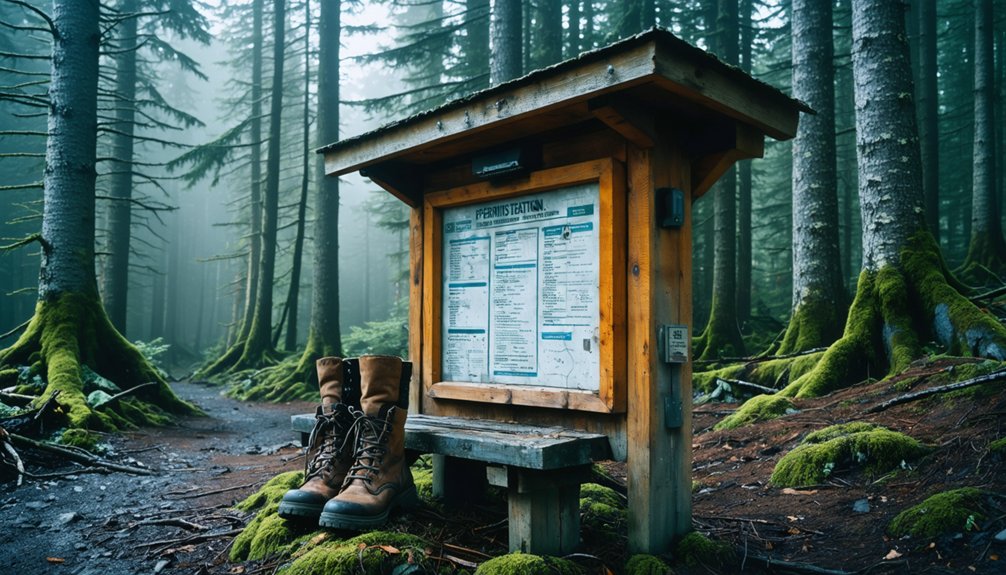
Before you set foot on Afognak Island, you’ll need to sort out the proper permits, since landing on this protected site requires authorization from the Kodiak Historical Society.
Permit requirements are straightforward — contact them before your trip to secure landing rights and receive visitor guidelines for the island.
Once you’re cleared, respect the rules that keep this ghost town intact. Don’t disturb ruins, remove artifacts, or stray from marked trails.
The state’s 1977 historical designation carries real teeth, so violations aren’t worth the risk. Camping isn’t permitted; you’re limited to day-use only.
Pack out everything you bring in, carry bear spray, and stick to designated paths.
These guidelines protect both the site’s integrity and your safety in genuinely wild Alaskan terrain.
What to Pack for a Day on Afognak Island
Packing right can make or break your day on Afognak Island, where there are zero facilities waiting to bail you out.
The volcanic terrain stays muddy, unpredictable, and wild, so your essential gear needs to match that reality.
Follow these safety tips by prioritizing three non-negotiables:
- Bear spray and a whistle — wildlife roams freely, and encounters happen fast
- Sturdy waterproof boots — ash-layered mud will swallow anything less
- Enough water and food — no stores, no vendors, no shortcuts
Beyond those, layer your clothing for shifting coastal weather, carry a physical map from the Kodiak Historical Society, and bring a fully charged satellite communicator.
You’re visiting a preserved wilderness, not a managed attraction, so own your preparedness completely.
How to Spend One Day at Afognak Ghost Town
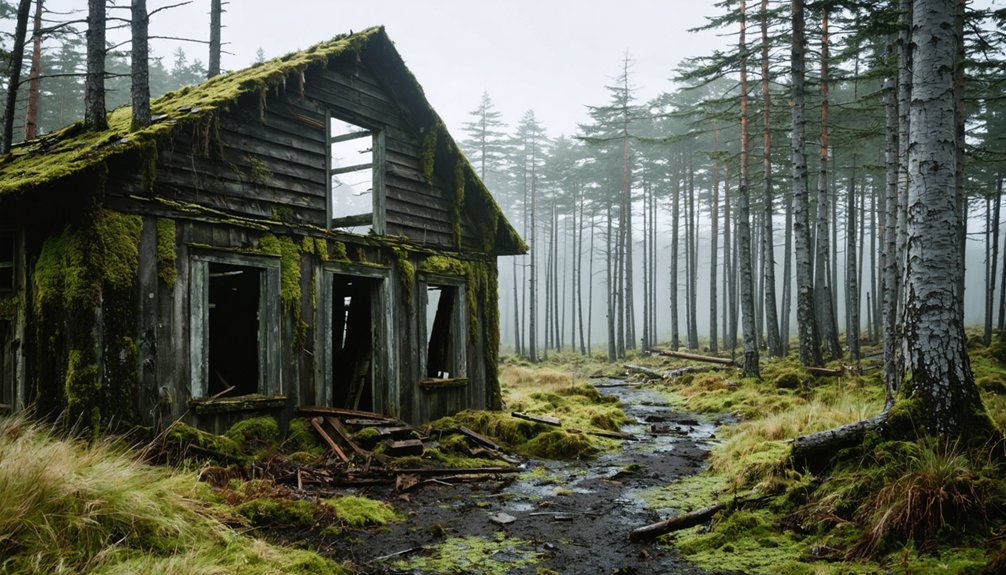
How you structure your single day at Afognak Ghost Town determines everything, because there’s no coming back for what you missed.
Arrive early, while morning light cuts through the spruce and illuminates the church bell tower’s weathered remnant — your most striking introduction to the site’s cultural significance.
Move deliberately through overgrown trails, reading the volcanic history written into every ash-buried foundation beneath your boots. The preserved ruins speak quietly; slow down enough to listen.
Every ash-buried foundation tells a story — but only to those patient enough to kneel down and read it.
Photograph collapsed structures before midday haze softens the contrast.
Keep one eye on wildlife — bears move through here freely.
Save your final hour for reflection near the shoreline before your water taxi returns. This place rewards the prepared and punishes the rushed, so move with purpose from the moment you land.
Frequently Asked Questions
Is Afognak Ghost Town Wheelchair Accessible for Visitors With Mobility Limitations?
Afognak Ghost Town isn’t wheelchair accessible—you’ll navigate overgrown, muddy volcanic terrain with no paved paths. Mobility aids won’t function effectively here, as the rugged, uneven landscape demands sturdy boots and physical agility to explore freely.
Can Visitors Legally Collect Volcanic Ash or Artifacts Found on the Surface?
You can’t collect a single grain—volcanic ash collection and artifact preservation laws strictly prohibit removing anything. Alaska’s 1977 historical designation protects every relic, so you’ll leave with memories, not souvenirs.
Are There Emergency Medical Services Available Near Afognak Island?
You won’t find nearby emergency response or medical facilities on Afognak Island’s remote shores. Kodiak’s closest hospital sits miles away, so you’ll want to carry a satellite communicator and extensive first-aid kit always.
Does Cell Phone Service Work on Afognak Island During Visits?
Like a ghost itself, cell coverage vanishes on Afognak Island. You’ll find service providers’ signals don’t reach this remote wilderness, so you’re truly off-grid—embrace the freedom and pack a satellite communicator instead.
Can Children Safely Visit Afognak Ghost Town Given the Terrain?
Children can visit, but you’ll navigate real terrain challenges requiring caution. Muddy volcanic paths, dense undergrowth, and wildlife demand child safety measures—bring bear spray, sturdy boots, and keep kids close on every overgrown trail.
References
- https://www.alaska.org/detail/kennicott-mine-ghost-town-walking-tour
- https://getlostinamerica.com/alaska-ghost-towns/
- https://thealaskafrontier.com/ghost-towns-in-alaska/
- https://www.gi.alaska.edu/alaska-science-forum/ghost-towns-scattered-across-alaska-map
- https://www.youtube.com/watch?v=P1ZqxD5x478