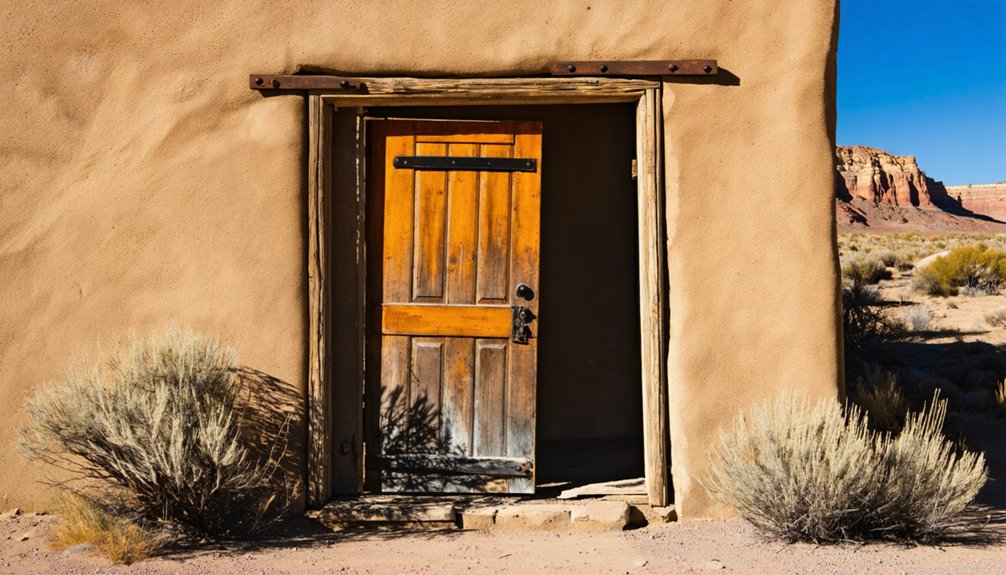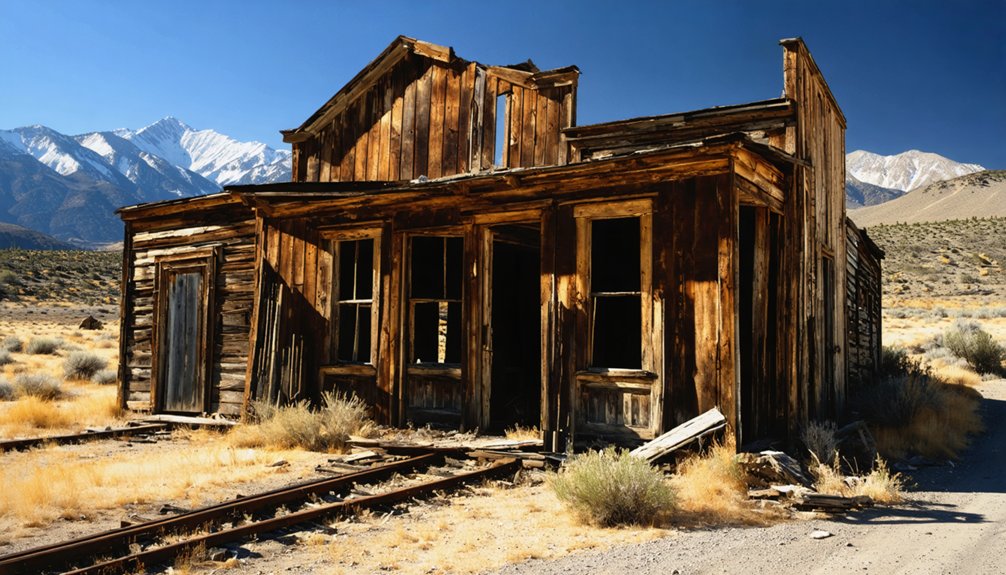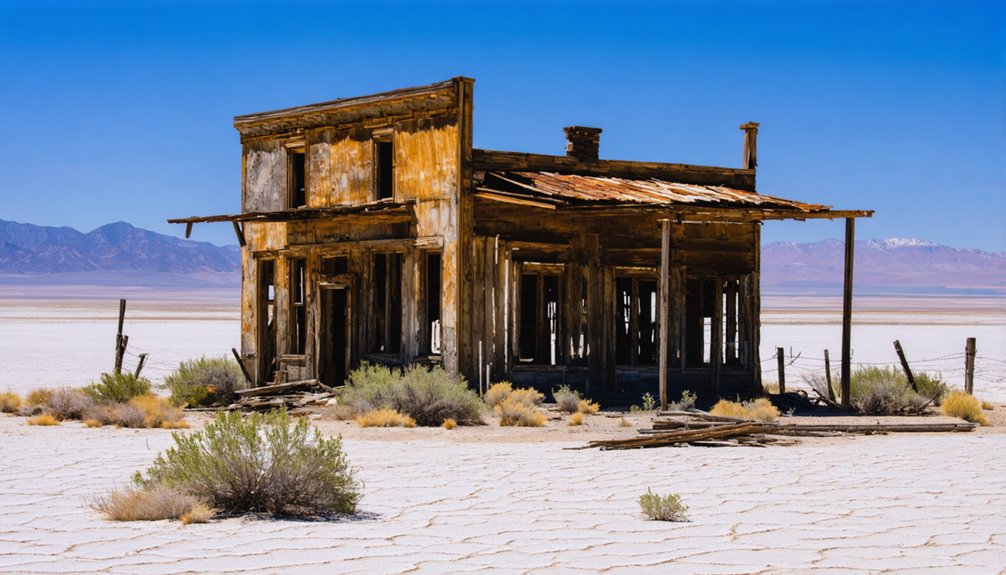
To plan your ghost town road trip to Delle, Utah, take I-80 to milepost 49 in Tooele County. You’ll find a forgotten railroad water stop that once kept steam engines alive across the Bonneville Salt Flats. Bring your own water, fuel up in Tooele or Grantsville, and arrive in the cool morning hours. Delle doesn’t offer much—but what it does offer is raw, quiet history worth chasing. There’s far more to this desert relic than first appears.
Key Takeaways
- Delle, Utah, is a ghost town accessible from I-80 near milepost 49, offering easy access for road trippers exploring Utah’s desert.
- The town was originally a railroad water stop established in 1880, giving it rich historical significance worth exploring.
- Key attractions include a mysterious cement wall, scattered foundations, and remnants of water infrastructure from the railroad era.
- No services are available in Delle, so pack sufficient water and fuel up beforehand in Tooele or Grantsville.
- Visit during cooler morning hours to avoid brutal summer heat across the surrounding Bonneville Salt Flats.
Why Delle, Utah Belongs on Any Utah Ghost Town List
Because it sits quietly beside Interstate 80 with almost nothing left to announce its existence, Delle, Utah hits harder than most ghost towns on the map. That silence carries weight.
Delle history stretches back to 1880, when railroad workers and immigrant families built an entire community around a single, essential resource: water. Steam engines couldn’t cross the Bonneville Salt Flats without it, and Delle delivered.
When diesel replaced steam, that purpose evaporated. Houses came down. People left. The railroad walked away.
What remains now carries real ghost town significance — not manufactured nostalgia, but honest evidence of a place that mattered and then didn’t.
If you crave open roads, raw history, and spaces untouched by tourism, Delle belongs on your Utah itinerary without question.
How the Railroad Put Delle on the Map
When you pull off I-80 and step into Delle’s eerie quiet, you’re standing in what was once a lifeline for the Western Pacific Railroad, founded in 1880 to keep steam engines hydrated before the punishing Bonneville Salt Flats crossing.
Water piped from springs twelve miles away in the nearby mountains fed the tower and reservoir here, making Delle an indispensable stop on a brutal stretch of track.
When diesel engines made those water stops obsolete, the railroad pivoted Delle into a maintenance station for the corridor between Wendover and Salt Lake City — a ghost of its former purpose, but still breathing.
Railroad Village Origins
Long before asphalt and diesel engines reshaped the American West, a single railroad line quietly stitched Delle into existence. In 1880, the Western Pacific laid tracks through this remote Utah stretch, and railroad history took root in the salt-crusted desert.
Steam engines crossing the Bonneville Salt Flats needed water desperately, and Delle answered that call.
Originally called Dalles Spring, a French-derived name honoring its water source, the name was shortened purely for telegraph efficiency. Springs twelve miles away in the nearby mountains fed the site through pipes, enabling village development that otherwise wouldn’t have survived here.
Workers arrived, families settled, and infrastructure followed. You can almost feel that original urgency standing among the remnants today, knowing that survival, not ambition, built this place.
Steam Engine Water Stops
Steam engines didn’t just pass through Delle — they depended on it. Before tackling the brutal expanse of the Bonneville Salt Flats, locomotives needed water, and Delle delivered. Engineers piped it twelve miles from mountain springs specifically for steam engine maintenance, keeping the Western Pacific line alive across Utah’s most unforgiving terrain.
Those historical water sources weren’t accidental — they were engineered necessity. A reservoir, water tower, and supporting infrastructure transformed a desert outpost into an indispensable railroad lifeline. Without Delle, westward progress stalled.
When you stand here today, you’re standing where iron horses once drank deeply before crossing salt and silence. That dependence built this town, and understanding it makes the ruins around you feel earned rather than abandoned.
Track Maintenance Legacy
Even after steam engines gave way to diesel, Delle didn’t disappear — it simply changed jobs. The railroad repurposed the site as a maintenance station, keeping crews busy with track upkeep between Wendover and Salt Lake City.
Workers replaced water tower duties with wrench-and-rail work, preserving Delle’s relevance long after the steam whistles went silent.
That maintenance history stretched into the mid-20th century, giving the town a second life before the railroad finally walked away.
When you stop here today, you’re standing on ground that railroad workers crossed daily, tools in hand, keeping one of Utah’s most essential corridors running.
The desert doesn’t erase that story — it preserves it. Look around, and you’ll feel it beneath your boots.
How to Find Delle on Your Utah Road Trip
Tucked along Interstate 80 in Tooele County, Delle sits roughly halfway between Salt Lake City and Wendover, making it an easy pull-off on a cross-state drive.
Watch for the exit near milepost 49, where the remnants of this former railroad village quietly wait beside the freeway’s south shoulder. You’ll spot the old foundations and the mysterious cement wall on the north side almost immediately.
Park near the abandoned structures and let your ghost town exploration begin against the stark backdrop of the Bonneville Salt Flats stretching westward.
This desert adventure rewards the curious traveler who slows down long enough to read the landscape. Delle doesn’t announce itself loudly — it simply stands there, sun-bleached and spare, daring you to piece together its story.
What Still Stands at Delle Today
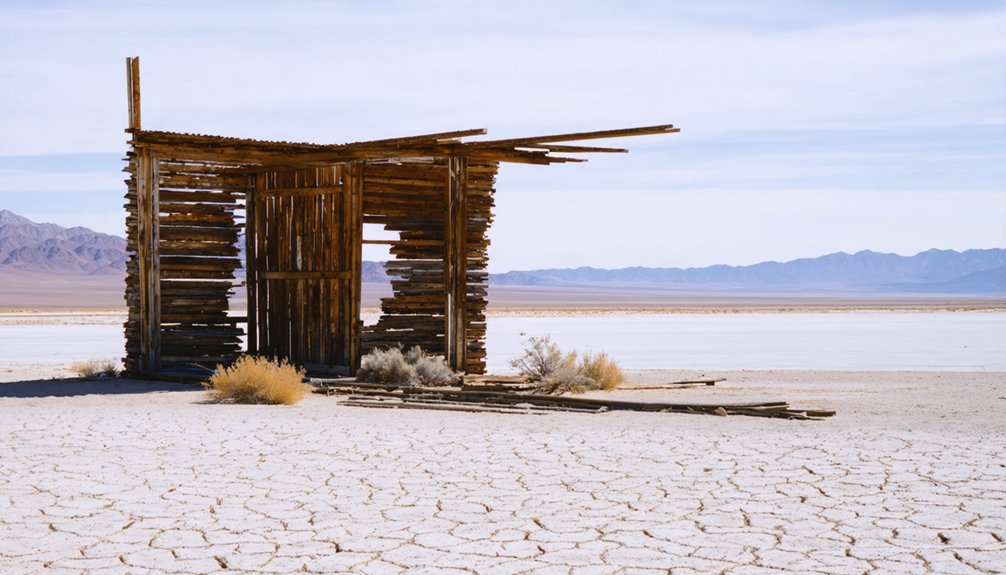
When you pull off at Delle today, you’ll find silence doing most of the talking. A mysterious cement wall still stands on the north side, its purpose lost to history, alongside scattered foundation traces where railroad families once built their lives.
You’re walking through what’s left of a community that once kept transcontinental trains running across the unforgiving salt flats.
Cement Wall Remnants
Among the sparse remnants scattered across Delle’s desert floor, a cement wall on the north side of the site stands as the town’s most mysterious survivor. Nobody’s cracked its cement wall history — railroad infrastructure, storage facility, or something else entirely — and that ambiguity makes it compelling.
Its architectural significance lies less in grandeur than in endurance; while wooden homes and water towers surrendered to time and demolition crews, this structure simply refused to disappear.
When you stand beside it, you’re touching something that outlasted an entire community’s purpose. Run your hand along its surface and consider what it witnessed — steam engines, immigrant families, diesel transformations, and eventual abandonment.
Delle doesn’t offer easy answers, and this wall embodies that perfectly. Some mysteries deserve to stay unsolved.
Old Foundation Traces
Beyond the cement wall, the ground itself tells Delle’s story. Scattered foundation remnants outline where railroad families once lived, worked, and waited.
You’re walking over historical significance hiding in plain sight—concrete edges swallowed by salt-dusted earth. Read the landscape carefully, and Delle speaks:
- Railroad home footprints mark where workers sheltered between grueling track maintenance shifts
- Water infrastructure outlines trace the pipeline system that made desert survival possible
- Station platform edges hint at where steam engines once paused before the salt flats crossing
- Demolished motel foundations remind you that briefly, travelers stopped here by choice
Each outline represents lives briefly rooted in one of America’s harshest environments.
You don’t need walls to feel Delle’s weight beneath your boots.
The Bonneville Salt Flats Are Minutes From Delle
Just a few miles from Delle’s crumbling foundations, the Bonneville Salt Flats stretch endlessly toward the horizon, a vast white expanse that’s drawn speed demons, adventurers, and dreamers since long before Interstate 80 cut through the desert.
This iconic desert adventure destination sits practically at Delle’s doorstep, making your ghost town stop doubly rewarding.
You’ll feel the scale of this ancient lakebed the moment you step onto its blinding white crust. The Salt Flats have witnessed land speed records shattered and human limits tested beneath an unrelenting sun.
After wandering Delle’s quiet remnants, drive the short distance east and let the emptiness recalibrate your sense of space. Few landscapes anywhere communicate raw freedom quite like this one.
Ghost Towns Near Delle Worth Adding to Your Route
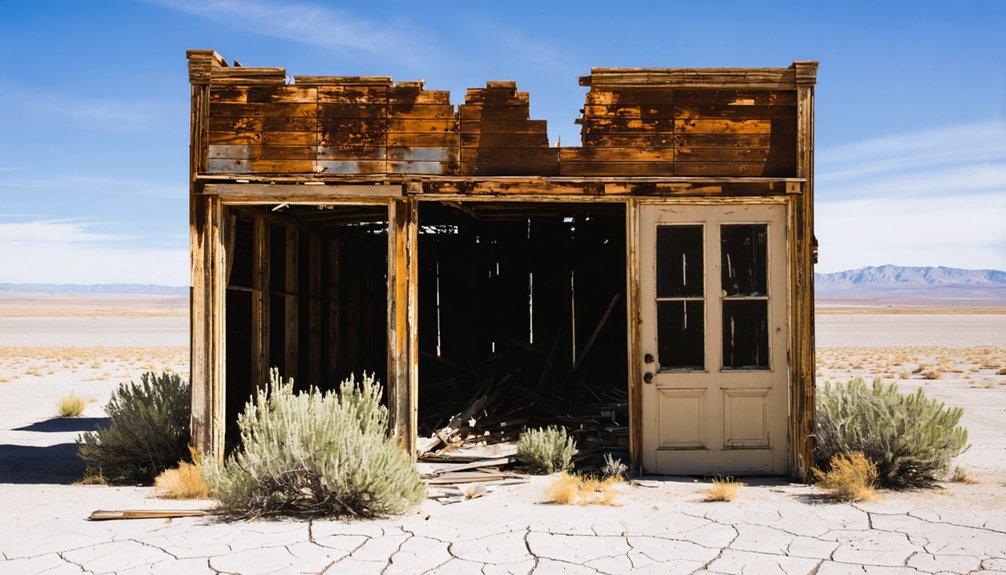
Delle doesn’t stand alone in this stretch of Utah desert — the region harbors several ghost towns worth threading into your route. Each carries abandoned buildings and local legends that deepen your understanding of the American West’s raw, restless history.
- Iosepa – A Hawaiian immigrant settlement with a haunting, unlikely story etched into Skull Valley.
- Aragonite – A former mining camp where industrial ambition met desert indifference.
- Rowley – A quiet railroad remnant echoing Delle’s own trajectory toward silence.
- Topliff – A barely-remembered stop where foundations outlasted every soul who once called it home.
String these stops together and you’re not just road-tripping — you’re recovering forgotten chapters of Utah’s past, mile by deliberate mile.
What to Know Before You Make the Stop
Before you point your vehicle toward any of these forgotten outposts, a few ground-level realities will save you from turning a memorable detour into a frustrating one.
Delle sits exposed along I-80, offering no services, shade, or cell signal worth trusting. Pack water, since the desert doesn’t negotiate.
Travel tips worth heeding: fuel up in Tooele or Grantsville before heading out, and visit during cooler morning hours. Summer heat across the salt flats turns brutal fast.
Local legends whisper about the cement wall on the north side — nobody’s confirmed its original purpose, which makes it worth photographing.
You’re not walking into a curated attraction; you’re walking into genuine abandonment. Respect what’s standing, leave everything untouched, and let the silence do the talking.
Frequently Asked Questions
What Immigrant Communities Lived in Delle Between 1920 and 1940?
Between 1920 and 1940, you’d have found Irish, Scot, and Greek immigrants shaping Delle’s cultural influences through their community contributions, weaving diverse heritage into this rugged, remote railroad outpost you’re now free to explore.
Who Owned Delle During the 1970S and How Was Water Supplied?
In the 1970s, Karl Wm. Winsness Jr. shaped Delle’s ownership history, trucking water from Grantsville across 12 parched miles. You’d marvel at this rugged water management keeping a ghost town’s last flicker alive.
What Does the Name Delle Originally Mean and Where Did It Originate?
You’ll discover Delle’s history holds a poetic Name origin — it’s derived from “Dalles,” a French word meaning water. Railroad telegraphers shortened it for efficiency, connecting you to a trail of immigrant voices crossing Utah’s vast, untamed desert.
How Far Was the Original Water Source From Delle’s Railroad Village?
You’d marvel knowing the original water source sat 12 miles away in nearby mountains, piped directly to the village. That engineering feat defines Delle’s railroad history, fueling steam engines before they’d brave the vast salt flats.
What Was Delle’s Recorded Population During the 1950 Census?
Ironically, Delle’s 1950 Population barely filled a schoolbus — Census Records show just 174 souls called this desert outpost home. You’d find more freedom chasing tumbleweeds across the salt flats than neighbors on these lonely, windswept tracks.
References
- https://www.youtube.com/watch?v=AuIj2U_st1k
- https://jacobbarlow.com/2018/08/16/delle-utah/
- https://kids.kiddle.co/Delle
- https://www.visitutah.com/things-to-do/history-culture/ghost-towns