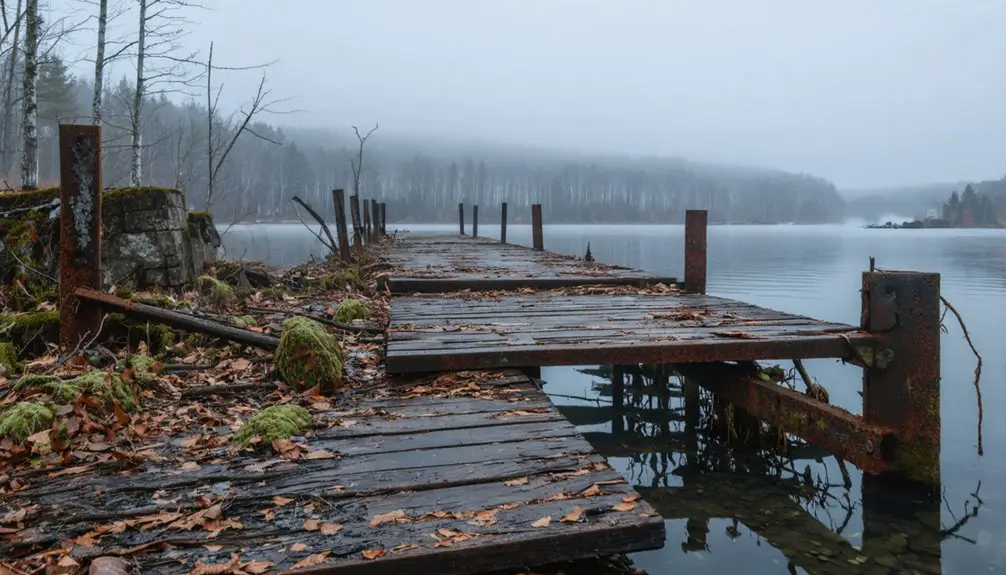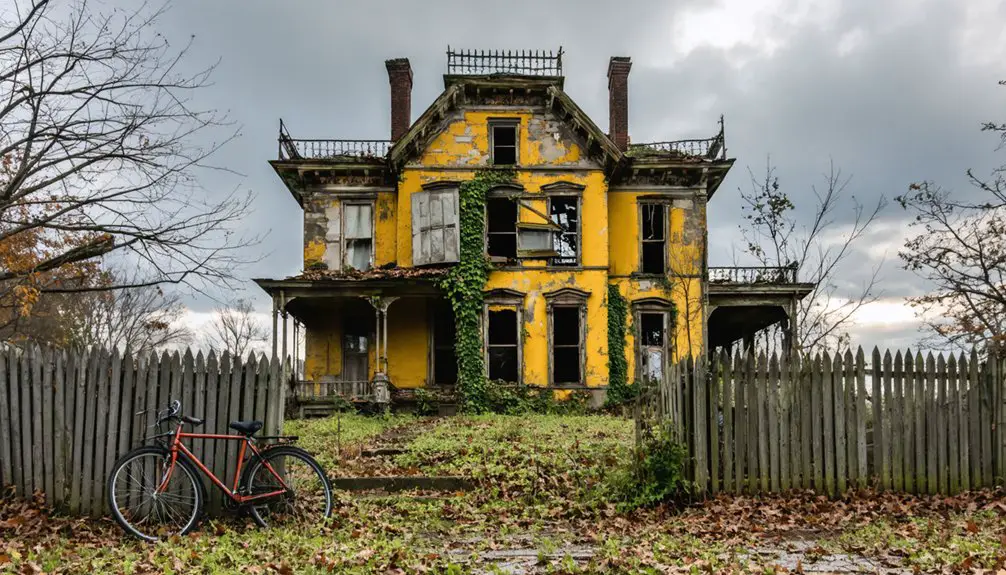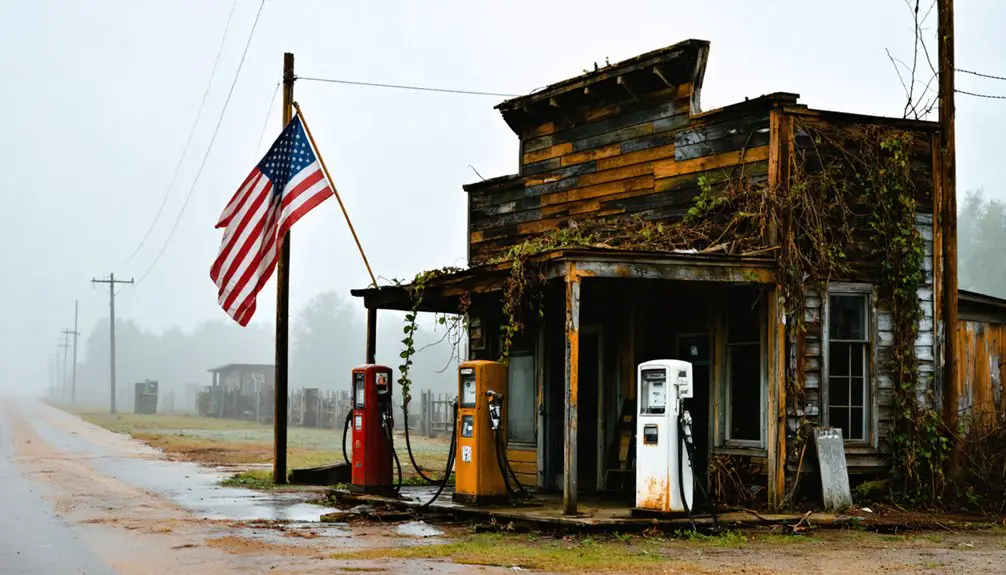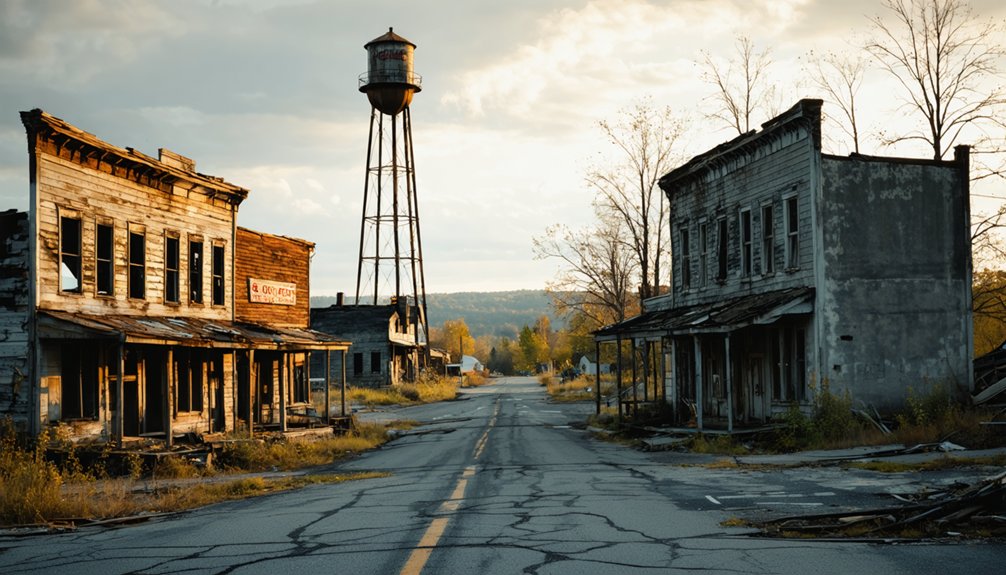
Planning a ghost town road trip to Dicktown, New York means chasing a settlement that’s almost entirely reclaimed by nature. Tucked between Carmel and Fishkill in Putnam County, this vanished community sits near Sagamore Lake at approximately 41.476°N, 73.775°W. You won’t find road signs or parking lots here, so download offline GPS coordinates before you go. Sturdy boots, a camera, and patience are non-negotiables. Everything you need to plan the perfect elusive adventure is just ahead.
Key Takeaways
- Dicktown is a ghost town in Putnam County, New York, located near Sagamore Lake between Carmel and Fishkill.
- No road signs or markers exist, so bring offline GPS coordinates (41.476°N, 73.775°W) for reliable navigation.
- Virtually no standing structures remain, making research and imagination essential for appreciating the site’s history.
- Pack sturdy footwear, weather gear, a camera, and a portable power bank for this challenging, remote exploration.
- Nearby ghost towns like Doodletown and Doanesburgh offer visible remnants, making excellent additions to your road trip itinerary.
What Is Dicktown and Why Does It Exist?
Tucked halfway between Carmel and Fishkill in Putnam County, New York, Dicktown is a ghost town that’s nearly impossible to find today — and that’s not an exaggeration.
The settlement history traces back to the 18th or 19th century, when a cluster of residents sharing the name Richard established roots here. “Dick,” a common nickname for Richard, gave the town its memorable name.
Local legends suggest the community thrived briefly before economic collapse and dwindling population sealed its fate. No official charter ever governed it, no municipal structure ever formalized it — Dicktown existed purely on its own terms.
Today, almost nothing physical remains at the site. It’s fundamentally invisible, swallowed by time and nature, leaving only coordinates and curiosity for those bold enough to seek it out.
Where Exactly Is Dicktown Located in New York?
Pinpointing Dicktown on a map takes a little patience, but the coordinates — approximately 41.476°N latitude and 73.775°W longitude — place it squarely in Putnam County, New York, roughly halfway between the towns of Carmel and Fishkill.
Sagamore Lake sits nearby, and Clarence Fahnestock State Park borders the area to the west.
Dicktown history ties directly to this tucked-away landscape, where Richard settlers once carved out a quiet community far from urban noise.
The name itself reflects that heritage — “Dick” being a common diminutive for Richard, and early residents apparently shared that name in remarkable numbers.
You won’t find road signs guiding you there.
Instead, you’ll rely on coordinates, a good map app, and your own curiosity to track down this nearly invisible chapter of New York’s past.
How Dicktown Went From Settlement to Ghost Town
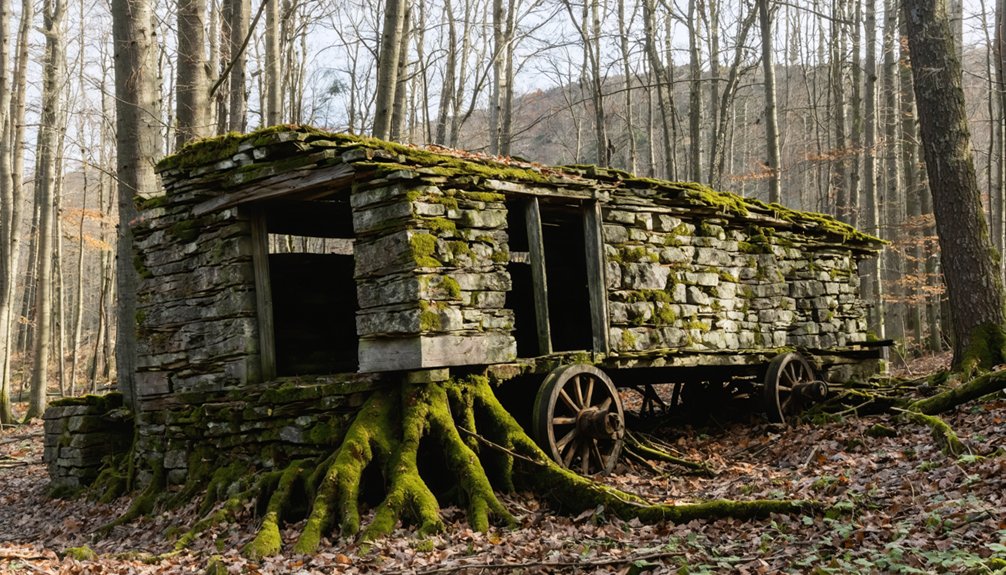
When you look into what brought Dicktown to its knees, you’ll find a familiar ghost town story: economic collapse triggered a chain reaction that no small settlement could survive.
Failed mining or agricultural ventures stripped residents of their livelihoods, leaving them with no reason to stay. As jobs vanished, people followed, and the population drop that sealed Dicktown’s fate turned a once-active community into nothing more than a name on an old map.
Economic Collapse Drives Abandonment
Like many ghost towns scattered across America, Dicktown didn’t vanish overnight — it collapsed under the weight of economic failure. When the economic factors sustaining the settlement dried up — whether failed mining operations, collapsed agriculture, or dwindling trade — residents had no reason to stay.
Without income, people packed up and moved on, leaving behind whatever couldn’t travel with them.
Understanding these economic factors adds real historical significance to your visit. Dicktown wasn’t abandoned through carelessness; it was surrendered to necessity. The same freedom that drew settlers westward also gave them the liberty to leave when a place stopped working.
That cycle of boom and bust shaped countless American communities, and Dicktown stands as a quiet reminder of how quickly economic collapse can erase a settlement from the map.
Failed Industries End Settlement
Though the exact industry that sealed Dicktown’s fate remains unclear, the pattern is familiar: failed industries in mining or agriculture stripped the settlement of its economic backbone, and without work, residents left.
Settlement decline rarely happens overnight — it’s a slow unraveling, where empty storefronts follow empty homes until nothing remains worth staying for.
You can picture it: families who’d built their lives around a single industry suddenly facing zero prospects. No alternatives, no safety nets, no reason to hold on.
They packed up and moved toward opportunity elsewhere, leaving Dicktown to nature’s reclamation.
That freedom to leave — to chase something better — ultimately erased the town entirely. What once represented community and livelihood vanished, leaving behind only a name and coordinates on a map.
Population Drop Seals Fate
Once the jobs dried up, people followed — and that population drop is what truly turned Dicktown from a struggling settlement into a ghost town. When livelihoods vanished, families packed up and moved toward opportunity elsewhere, leaving behind an already fragile community with no foundation to stand on.
Population decline doesn’t happen overnight, but in small settlements like Dicktown, it snowballs fast. Lose enough residents, and you lose the social fabric — the neighbors, the trade, the reason to stay.
Settlement history shows this pattern repeating across hundreds of American ghost towns.
For Dicktown, there was no recovery. No new industry arrived, no settlers refilled the gap. The land simply went quiet. What was once a living community became nothing more than a name on historical records.
What’s Left to See at Dicktown Today?
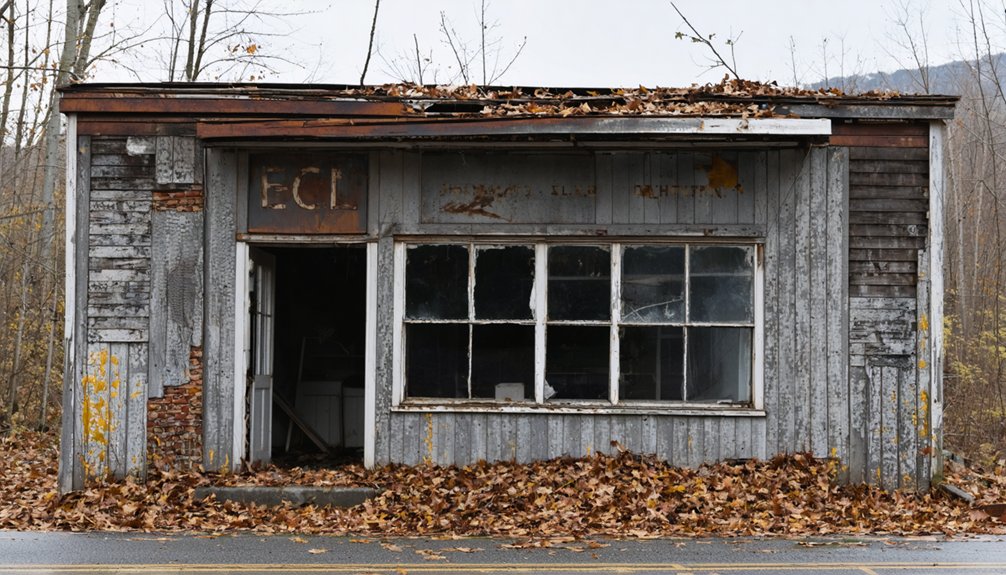
If you’re hoping to walk through Dicktown and soak in its history, you’ll be disappointed — virtually nothing remains of the original settlement.
You won’t find standing structures, marked trails, or any signage pointing you toward the past, making the site fundamentally invisible to modern visitors.
Scattered debris may still exist somewhere beneath the overgrowth, but nothing you’d recognize as the bones of a former community.
No Visible Remains
While Dicktown carries a rich backstory, it offers virtually nothing to see today. Its invisible landmarks make it one of New York’s most elusive ghost towns, despite its historical significance. You won’t find trails, signage, or preserved structures marking the spot.
Here’s what you’re actually dealing with when you visit:
- No standing buildings – The settlement has completely vanished, leaving behind zero recognizable architecture.
- Scattered debris only – Any remaining fragments blend invisibly into the surrounding landscape.
- No visitor infrastructure – Expect no parking areas, interpretive signs, or guided paths to orient you.
If you crave a hands-on ghost town experience, Dicktown will likely disappoint. It’s a place best appreciated through research rather than boots-on-the-ground exploration.
Scattered Historical Debris
Although Dicktown has faded almost entirely from the physical world, scattered debris still hides somewhere beneath the undergrowth — you just won’t recognize it as anything historical.
Broken fragments, buried foundations, and decayed remnants blend seamlessly into the forest floor, stripping away any obvious historical significance the site once carried.
If urban exploration excites you, Dicktown presents a uniquely humbling challenge.
There’s no dramatic crumbling architecture or rusted machinery to photograph — just nature quietly swallowing whatever the settlement left behind.
You’ll need sharp eyes, patience, and a genuine appreciation for subtlety to find anything worth noticing.
Think of it less as a discovery and more as an exercise in imagination.
The debris isn’t a display; it’s a whisper from a community that vanished without ceremony.
Invisible To Visitors
Visiting Dicktown today means confronting an almost total absence — there’s genuinely nothing left to see. The hidden history here isn’t preserved in crumbling walls or rusted relics; it’s buried beneath overgrowth and silence.
You won’t find trails, signage, or any landmark confirming you’ve arrived somewhere meaningful. The forgotten stories of Richard after Richard who once called this place home exist only in records, not reality.
When you visit, expect:
- No recognizable structures — the landscape offers zero architectural evidence of past settlement
- No tourist infrastructure — no signs, pathways, or designated viewing areas guide your exploration
- No clear boundaries — you can’t physically walk through what no longer physically exists
Dicktown demands imagination far more than observation.
Which Ghost Towns Near Dicktown Are Worth the Detour?
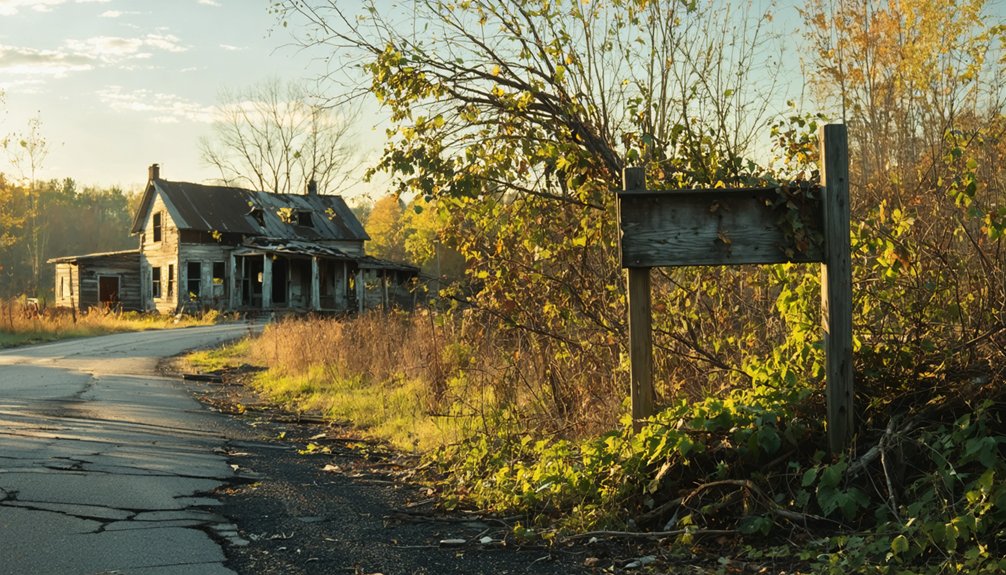
Once you’ve made the trek out to Dicktown, why stop there? The surrounding region holds several ghost towns worth exploring for a deeper exploration into regional history.
Doanesburgh, also in Putnam County, offers another layer of forgotten settlement stories just miles away.
Head south into Westchester County and you’ll find Kensico, a ghost town now submerged beneath a reservoir — a haunting reminder of how government decisions reshape landscapes.
Doodletown, tucked within Bear Mountain State Park, actually retains visible remnants that Dicktown completely lacks, making it a rewarding contrast stop.
These ghost towns collectively paint a vivid picture of New York’s abandoned past.
Chasing them back-to-back transforms a single curiosity into a full road trip through layers of forgotten American freedom and resilience.
How Does Dicktown Compare to Other New York Ghost Towns?
How does Dicktown stack up against New York’s other ghost towns? Honestly, it’s one of the most elusive.
While places like Doodletown still offer walkable ruins and visible remnants, Dicktown history leaves almost nothing standing. That invisibility actually defines its ghost town significance — it’s a true erasure.
Dicktown’s ghost town significance lies in its erasure — where Doodletown offers ruins, Dicktown offers nothing but absence.
Here’s how Dicktown compares:
- Visibility: Kensico lies submerged underwater, Doodletown has trails, but Dicktown has virtually zero physical presence.
- Accessibility: You can walk through many New York ghost towns freely; Dicktown offers no such experience.
- Mystery factor: Dicktown’s near-total disappearance makes it arguably the most hauntingly complete ghost town in the state.
If you crave raw, unfiltered abandonment without guardrails or signage, Dicktown delivers something no polished heritage site ever could.
How to Get to Dicktown, NY
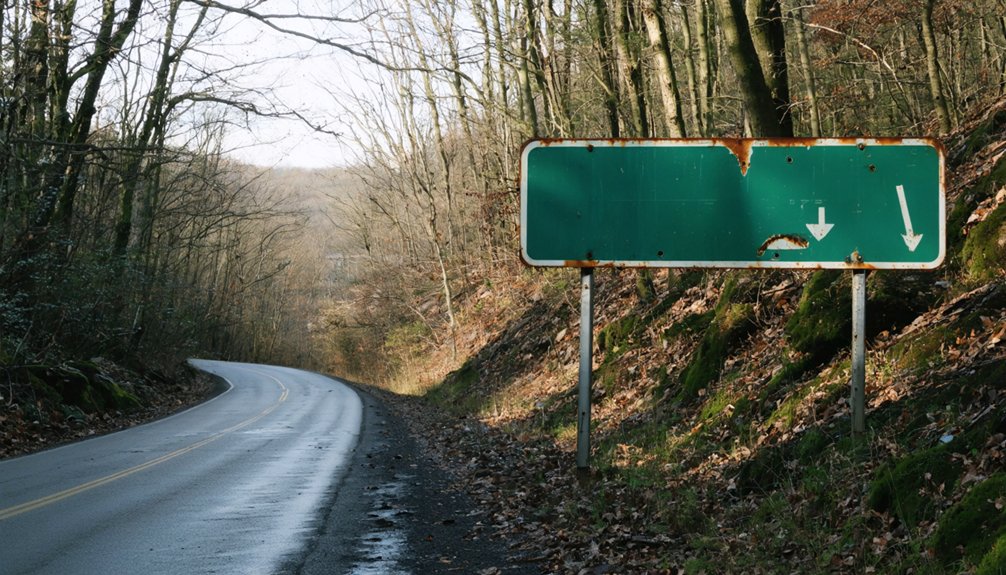
So you know what Dicktown is and why it matters — now let’s talk about actually getting there. The site sits in Putnam County, New York, roughly halfway between Carmel and Fishkill, near coordinates 41.476°N and 73.775°W.
No signage marks the location, and no trails guide you in. You’re basically finding your way on your own terms — which fits perfectly for anyone chasing ghost town legends off the beaten path.
Head east of Clarence Fahnestock State Park and keep Sagamore Lake as your landmark reference.
Fair warning: the historical significance of this place doesn’t come with infrastructure. You won’t find parking lots or welcome signs.
Load the coordinates into your GPS, embrace the adventure, and respect the land as you explore what remains of Dicktown’s forgotten past.
What Should You Bring on a New York Ghost Town Road Trip?
Planning a ghost town road trip means packing smart before you head out. Road trip preparation separates an unforgettable adventure from a frustrating detour.
Pack smart before you head out — road trip preparation separates an unforgettable adventure from a frustrating detour.
Dicktown leaves almost nothing behind, so you’re relying entirely on your own supplies and instincts.
Your ghost town essentials should include:
- Navigation tools – GPS coordinates (41.476°N, 73.775°W) saved offline, since cell service can disappear fast in Putnam County
- Sturdy footwear and weather gear – The terrain around Sagamore Lake isn’t forgiving, and conditions shift quickly
- Camera and portable power bank – Document everything; there’s no signage or infrastructure to guide you once you’re there
Pack light but pack right. Freedom on the open road starts with knowing you’ve got everything you need before you leave the driveway.
Why Dicktown Still Matters in New York’s Ghost Town Record
Even though Dicktown leaves almost nothing to see, it still holds a firm place in New York’s ghost town record. Its Dicktown significance goes beyond visible ruins — it represents how communities rise and collapse under economic pressure, failed industry, and population loss.
You’re looking at a settlement that never held an official charter yet shaped the character of Putnam County’s early history. That historical impact reminds you that freedom and survival drove people to build lives in remote places, and sometimes those lives simply didn’t last.
Among the estimated 17 to 23 ghost towns scattered across New York, Dicktown stands as proof that a place doesn’t need standing walls to carry real weight. Its story deserves your attention, even from a distance.
Frequently Asked Questions
Is Dicktown Accessible to Visitors With Physical Disabilities or Mobility Challenges?
You won’t find accessible routes or accommodations for mobility aids at Dicktown, as it’s fundamentally invisible today with no trails, signage, or physical remains to explore, making it challenging for visitors with mobility challenges.
Are There Any Ghost Town Tours That Officially Include Dicktown on Their Itinerary?
You won’t find official tours featuring Dicktown’s ghost town legends or historical preservation efforts — but that’s your freedom! You can craft your own road trip and uncover this mysterious, nearly invisible New York relic independently.
Has Dicktown Ever Appeared in Films, Documentaries, or Television Productions?
You won’t find Dicktown’s film appearances or documentary features in any known productions. Its near-invisible remains offer little visual appeal for filmmakers, yet that raw, forgotten mystery makes it uniquely intriguing for freedom-seeking explorers like you.
Are There Local Historians or Guides Specializing Specifically in Dicktown’s Forgotten History?
You won’t find guides specializing specifically in Dicktown, but you can connect with Putnam County historians who’ll share local folklore and uncover historical artifacts, helping you piece together this forgotten settlement’s mysterious, freedom-inspiring past.
Can Visitors Legally Access the Dicktown Site Without Trespassing on Private Property?
Ironically, you can’t freely roam this ghost town that’s already vanished! Property rights and visitor regulations make legal access unclear, so you’ll want to verify land ownership before exploring Dicktown to avoid trespassing.
References
- https://en.wikipedia.org/wiki/Dicktown
- https://wpdh.com/ghost-towns-new-york-state/
- https://mynewyorkstateonline.com/ghost-towns-in-new-york/
- https://hudsonvalleypost.com/new-york-state-is-home-to-nearly-20-ghost-towns/
- https://en.wikipedia.org/wiki/Category:Ghost_towns_in_New_York_(state)
- https://a-z-animals.com/blog/deserted-and-forgotten-towns-in-new-york/
- https://hudsonvalleypost.com/new-york-ghost-towns-hiding-in-plain-sight-uncovered/
- https://en.wikipedia.org/wiki/List_of_ghost_towns_in_New_York
- https://www.ghosttowns.com/states/ny/ny.html