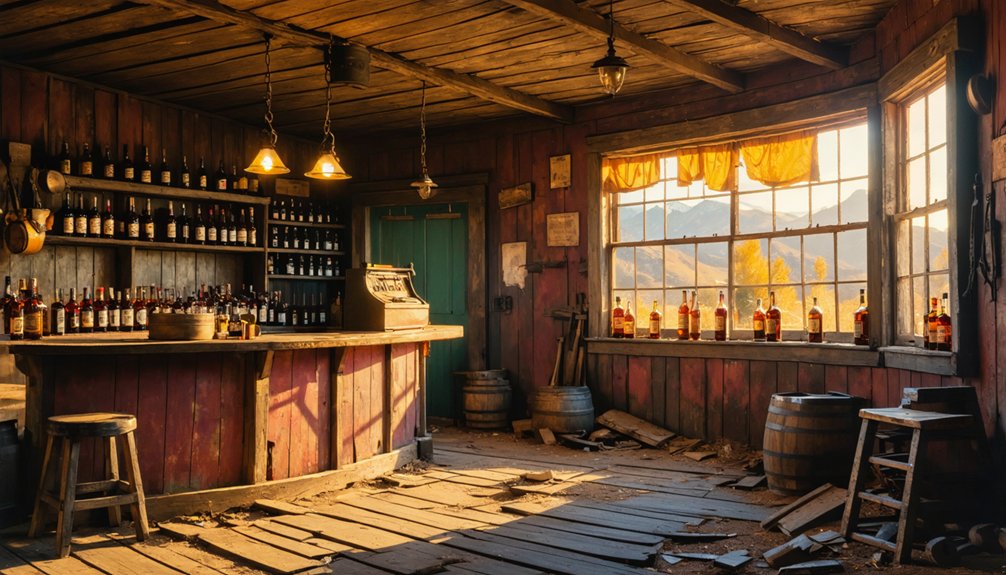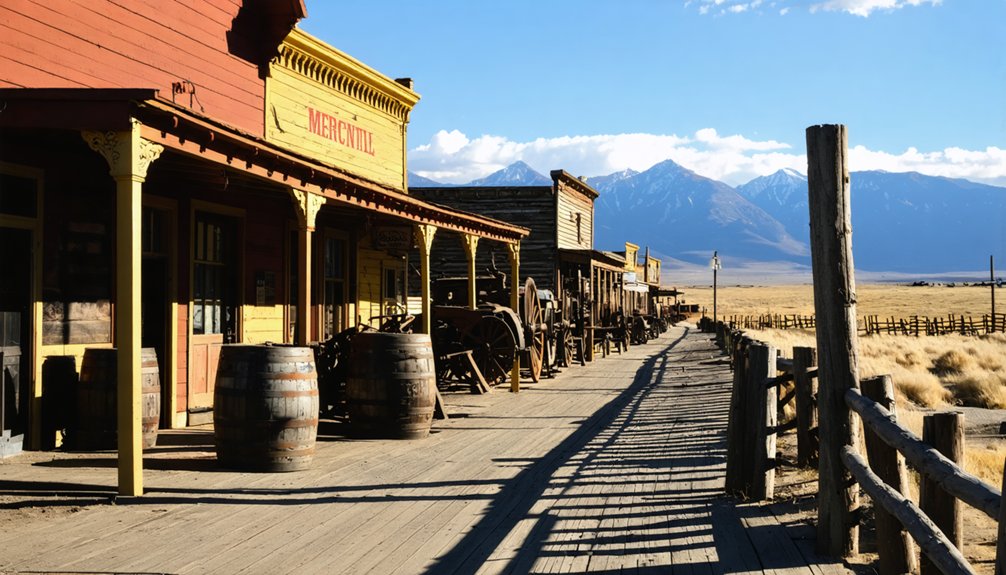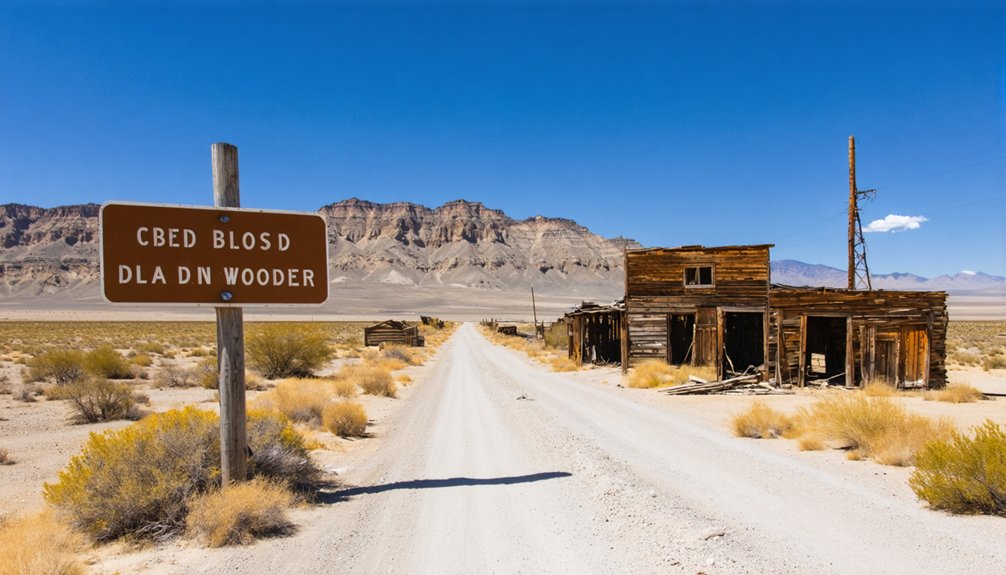
Planning a ghost town road trip to Dog Town, California means starting where the eastern Sierra Nevada’s gold rush actually began. Founded around 1857 near Bridgeport in Mono County, this historic placer mining camp sparked discoveries at Bodie, Aurora, and Masonic. You’ll find stone ruins, mining fields, a fenced cemetery, and even active gold panning along Dog Creek. Everything you need to explore this landmark site and build your perfect route is just ahead.
Key Takeaways
- Dog Town, California, is located in Mono County near Bridgeport, accessible via Highway 395 with standard 2WD vehicles.
- Visit during summer for the best weather, road conditions, and visibility when exploring the historic gold mining site.
- Key attractions include stone wall ruins, dugout foundations, a fenced cemetery, gravel fields, and a roadside historical placard.
- Gold panning is still permitted along Dog Creek, letting visitors experience original 1857 placer mining techniques firsthand.
- Respect private property boundaries, preserve ruins, and treat the Peter Johann Anderson gravesite with appropriate care and mindfulness.
What Is Dog Town, California?
When you picture a ghost town, you might imagine dramatic ruins or a bustling history of lawless frontier life — and Dog Town, California delivers on both counts.
Tucked into Mono County near Bridgeport, this forgotten settlement carries enormous historical significance as the first gold rush site on the eastern Sierra Nevada slope, predating even the famous Bodie.
Carl Norst established the placer mining camp around 1857, and by 1859, roughly 100 miners had flooded the area. They employed mining techniques ranging from simple gold panning to hydraulic operations, eventually unearthing the largest nugget ever found on the Sierra’s eastern slope.
Though the deposits ran thin, Dog Town sparked a chain reaction that led prospectors toward richer strikes in Bodie, Aurora, and Masonic.
Why Dog Town Came First: and What It Led To
Before Bodie became a household name among California gold rush enthusiasts, Dog Town quietly ignited the eastern Sierra Nevada’s first gold fever. When Carl Norst established this placer mining camp around 1857, prospectors flooded in, drawn by rumors of gold near Mono Lake.
By 1859, Mormons had joined the ranks, swelling the community to roughly 100 miners. The community dynamics were raw and fluid — people arrived chasing freedom, fortune, and independence.
Mining techniques here included basic placer panning and hydraulic methods, eventually yielding the largest gold nugget ever found on the Sierra’s eastern slope.
Dog Town’s deposits didn’t last, but they pointed the way forward. Miners pushed outward, discovering the richer strikes at Bodie, Aurora, and Masonic — none of which might’ve happened without Dog Town’s restless beginning.
Dog Town’s Gold Rush History
The gold that slipped through Dog Town’s creek beds didn’t just enrich a handful of miners — it set an entire region in motion. Carl Norst established this placer camp around 1857, and by 1859, nearly 100 miners were working the gravels alongside Mormon settlers.
Dog Creek showed real color, even producing the largest gold nugget ever found on the Sierra Nevada’s eastern slope — a feat carrying serious historical significance.
The gold mining here wasn’t destined to last, though. Deposits ran shallow and profits dried up fast.
But that scarcity pushed prospectors outward, triggering discoveries at Monoville, Bodie, Aurora, and Masonic. Dog Town fundamentally launched a regional gold rush.
When you stand at this site today, you’re standing at the starting point of something much bigger than itself.
Where Dog Town Is and How to Get There
Tucked into Mono County, California, Dog Town sits at an elevation of 7,057 feet near the junction of Clearwater and Virginia Creeks, roughly six to seven miles south-southeast of Bridgeport.
You’ll find it along State Highway 395 at post mile 69.5, making directions refreshingly simple. No rugged four-wheel drive required — your standard 2WD vehicle handles the route easily.
Once you arrive, you’ll spot the roadside placard, creek, ruins, and fenced cemetery without much searching.
The placard, creek, ruins, and fenced cemetery reveal themselves almost effortlessly upon arrival.
Dog Town pairs naturally with nearby attractions like Bodie and Aurora, so you can stretch a single day into a rewarding ghost town circuit.
Plan your visit during summer to enjoy pleasant weather and maximum visibility of the crumbling stone walls and scattered foundations that define this historic site.
What’s Left to See at Dog Town Today?
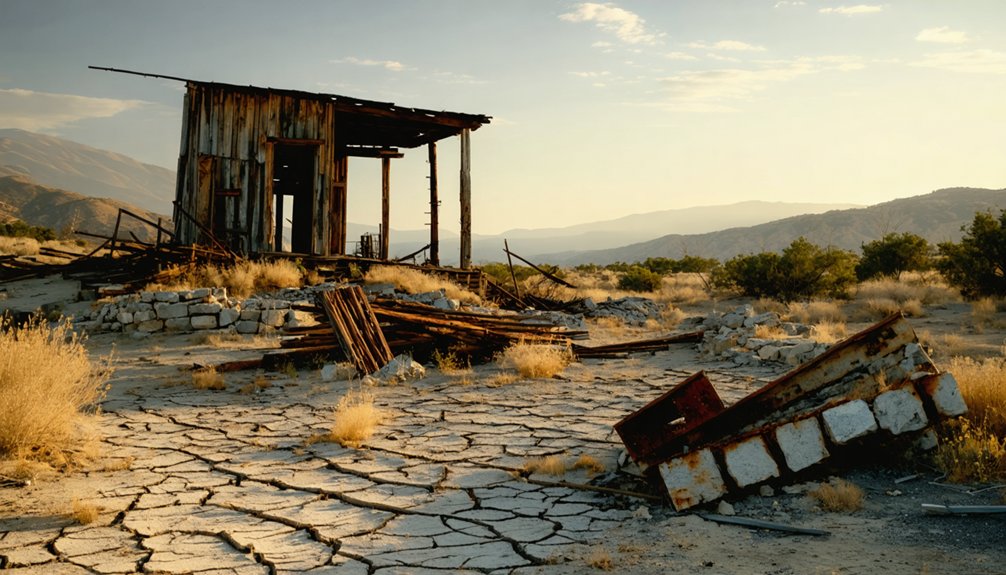
Once you’ve pulled off Highway 395 and stepped onto the site, Dog Town’s quiet ruins speak louder than any placard. This ruins exploration rewards curious travelers with raw, unfiltered history dating back to 1857.
The historical significance here is undeniable — this was California’s first gold rush on the Sierra Nevada’s eastern slope.
Here’s what you’ll find:
- Partial stone walls and dugout foundations from miners’ makeshift huts, still standing against time
- A fenced gravesite bearing Peter Johann Anderson’s marble marker, a sobering personal connection to the past
- Visible gravel fields left behind by placer and hydraulic mining operations
Some areas touch private property, so stay aware. A roadside placard provides context, but walking the grounds makes Dog Town’s story genuinely yours.
Can You Still Pan for Gold at Dog Town?
Believe it or not, gold panning still happens at Dog Town today, keeping a 160-year-old tradition alive along Dog Creek. The same creek that once yielded the largest gold nugget on the Sierra Nevada’s eastern slope still draws adventurous visitors willing to try their luck.
You can bring a pan and work the gravel beds using the same basic mining techniques the original forty-niners relied on. The deposits were never extensive enough for large-scale operations, which actually works in your favor — nobody’s stripped the creek bare.
Before you wade in, though, check land ownership carefully, as some areas border private property. Combining gold panning with exploring the nearby ruins makes Dog Town one of the most hands-on ghost town experiences in Mono County.
When Is the Best Time to Visit Dog Town?
When you visit Dog Town matters almost as much as where you find it. Weather considerations can make or break your experience, and this high-desert site sits at 7,057 feet.
Winters bring heavy snow that buries ruins and closes access roads entirely.
Summer’s your best bet for seasonal activities like exploring the stone walls, reading the roadside placard, and panning Dog Creek for color.
Plan around these conditions:
- Summer (June–September): Warm, pleasant, accessible roads, ideal for exploration
- Spring/Fall: Unpredictable weather, possible snow, shorter daylight windows
- Winter: Heavy snowfall, impassable conditions, site effectively closed
Pack layers regardless of season—mountain temperatures drop fast after sunset, even in July.
Add Bodie and Aurora to Your Route
Dog Town sits at the starting line of a ghost town circuit that stretches across the eastern Sierra, so don’t stop there when Bodie and Aurora are within easy reach.
Bodie highlights include a state historic park frozen in “arrested decay,” where weathered saloons, a stamp mill, and a church still stand untouched. It’s the most complete gold rush town left in California.
Push northeast into Nevada, and Aurora attractions pull you into a rougher, rawer ruin field — crumbling brick buildings where Mark Twain once prospected. Aurora requires a high-clearance vehicle and more grit, but rewards you with genuine solitude.
Together, these three sites trace the region’s first gold rush story from humble placer diggings to boomtown glory, giving you a road trip worth every mile.
What to Know About Access, Private Property, and Site Rules
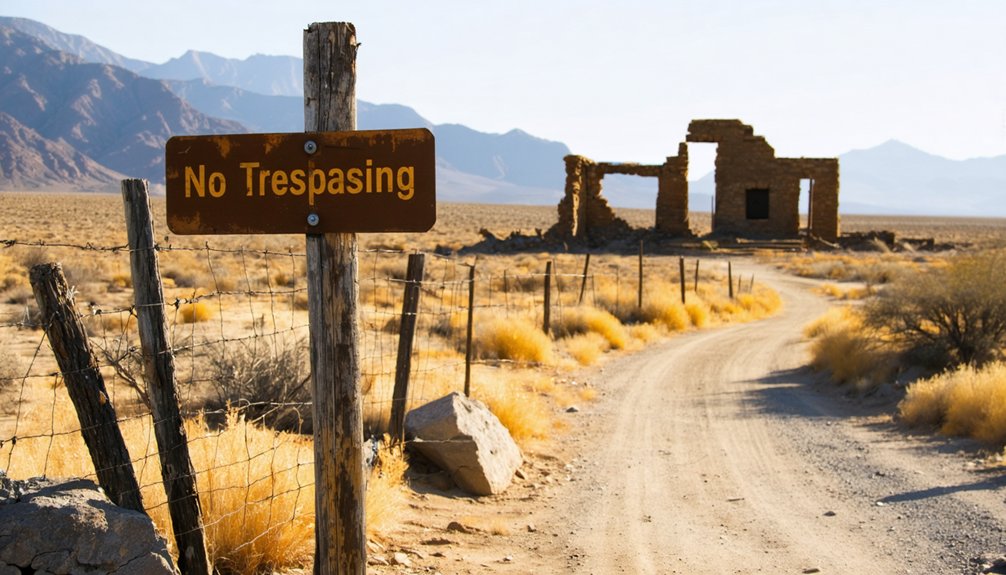
Dog Town sits along Highway 395 about six to seven miles south-southeast of Bridgeport, making it an easy 2WD accessible stop on your road trip.
You’ll want to keep an eye out for private property boundaries near the ruins, as some explorations have noted privately held elements within the site.
Stick to the roadside placard, the creek-side ruins, and the fenced gravesite, and you’ll stay on the right side of both the law and common courtesy.
Getting There Safely
Reaching Dog Town is invigoratingly straightforward — you don’t need a four-wheel drive or a high-clearance vehicle, since the site sits right along Highway 395, about six to seven miles south-southeast of Bridgeport.
Your travel routes couldn’t be simpler: drive south from Bridgeport and watch for the roadside placard near Dog Town Creek.
Before you arrive, keep these safety tips in mind:
- Stay on public areas — some surrounding land is private property, so respect boundaries
- Watch your footing near crumbling stone walls and deteriorating wooden structures
- Check seasonal conditions — winters bring heavy snow, making summer the ideal window for exploration
The ruins, cemetery, and gravel fields are yours to discover freely — just tread responsibly and leave everything exactly as you found it.
Respecting Private Property
Although Dog Town is a California Historical Landmark with freely accessible ruins and a registered gravesite, you’ll want to stay sharp about where public access ends and private land begins. Surrounding ranches border the site, so respect boundaries and stick to the creek-side ruins, cemetery, and roadside placard.
Don’t cross fences or wander onto adjacent property without permission.
The ruins themselves deserve careful handling. Touch nothing, take nothing, and leave every stone wall, roof timber, and foundation exactly as you found it. Vandalism has already left its mark here, so be part of the solution.
Peter Johann Anderson’s fenced gravesite is sacred ground — treat it accordingly. Mindful visitors keep sites like Dog Town accessible for everyone who follows.
Frequently Asked Questions
Who Was Peter Johann Anderson Buried at the Dog Town Cemetery?
You’ll find Peter Johann Anderson’s marble-marked grave standing as the sole fenced burial in Dog Town’s cemetery history — he’s the only known soul laid to rest at this rugged, forgotten California ghost town.
Why Is the Site Sometimes Spelled “Dogtown” Instead of “Dog Town”?
Ironically, there’s no wrong answer here — spelling variations like “Dogtown” and “Dog Town” both capture the site’s historical significance. You’ll find the California Office of Historic Preservation officially prefers “Dog Town,” yet both versions remain widely accepted.
How Did Dog Town Compare in Size to Nearby Bodie at Its Peak?
You’ll find Dog Town’s population dynamics were far smaller than Bodie’s peak of 10,000 residents — it’s community topped just 100 miners, though its mining operations pioneered the region’s gold rush legacy.
What Is the Elevation Difference Between Dog Town and Bodie?
You’ll find ghost town geography fascinating — Dog Town sits at 7,057 feet, while Bodie stands higher at 8,379 feet, making elevation measurements reveal a striking 1,322-foot difference between these legendary California mining destinations.
Was Carl Norst Involved in Any Other Mining Camps in the Region?
the records don’t reveal Carl Norst’s involvement beyond Dog Town. Yet his 1857 founding shaped regional history and pioneered mining techniques that sparked discoveries across Bodie, Aurora, and Masonic.
References
- https://en.wikipedia.org/wiki/Dog_Town
- https://nvtami.com/2023/09/28/dog-town-california/
- https://www.ghosttowns.com/states/ca/dogtown.html
- https://ohp.parks.ca.gov/listedresources/Detail/792
- https://www.youtube.com/watch?v=QcUls7J8WFQ
- https://www.youtube.com/watch?v=0iNmSpfEKJM
- https://sierranevadageotourism.org/entries/dog-town-no-792-california-historical-landmark/8e9174f3-7591-4711-9aa7-1df65dbe0a15