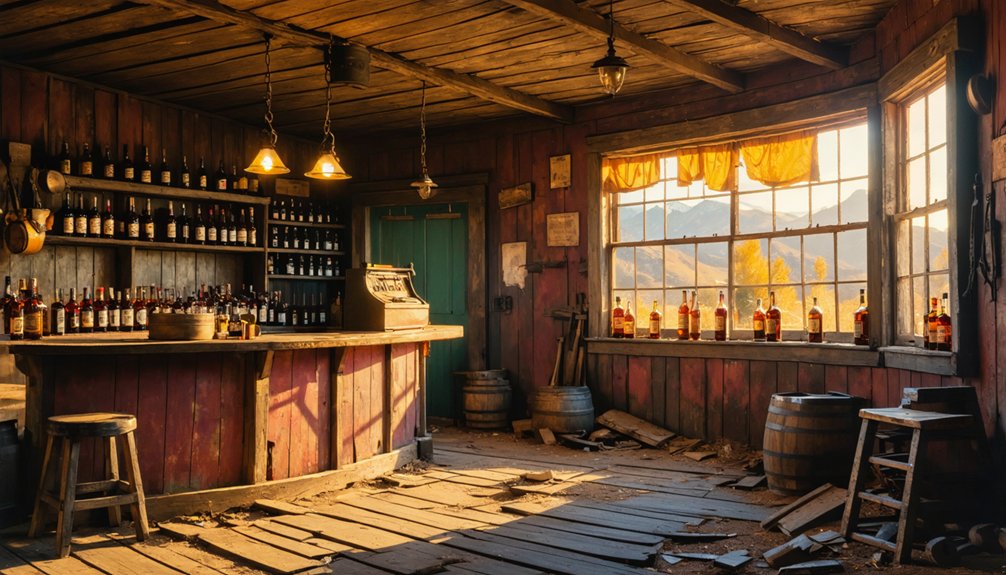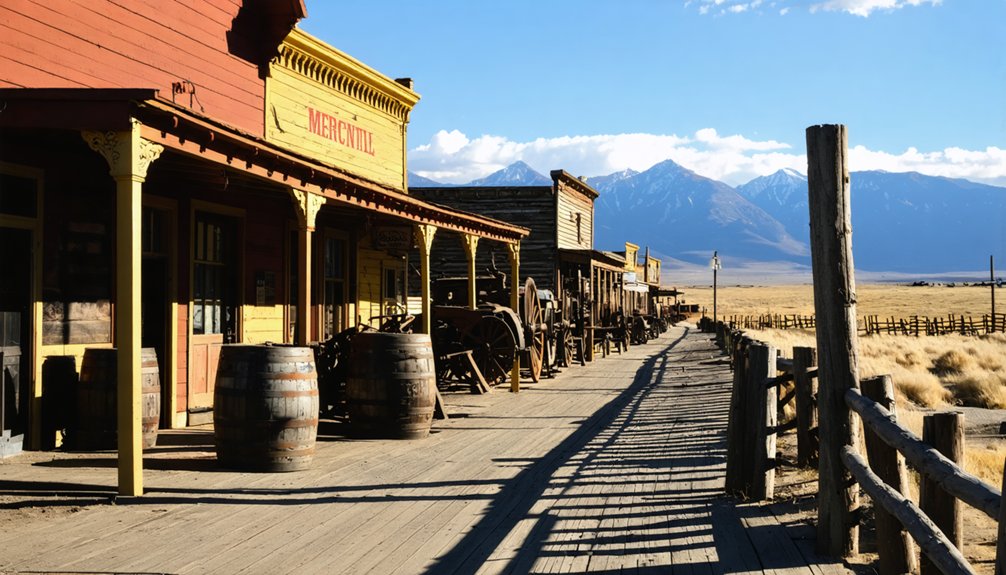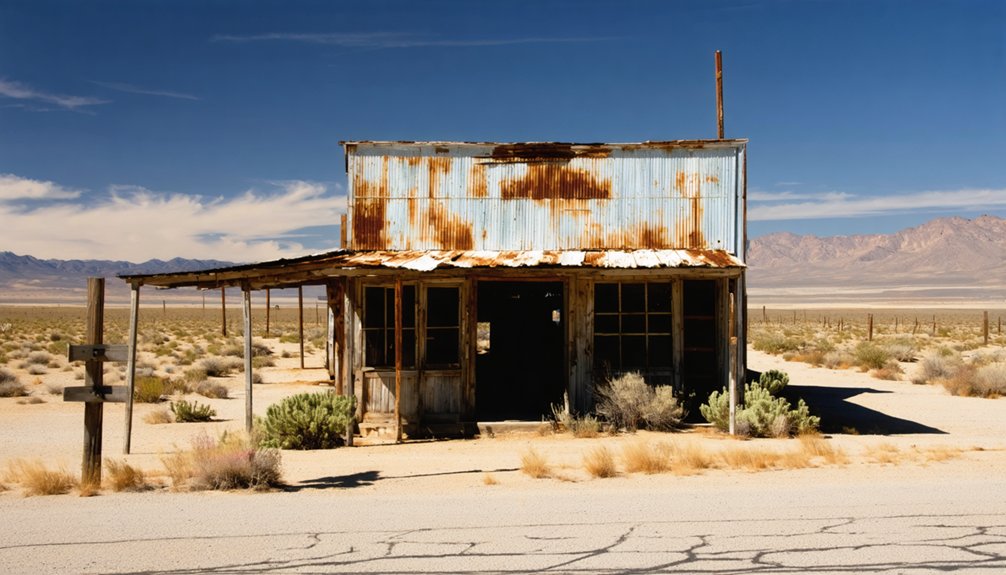
If you’re planning a ghost town road trip to Eightmile, California, you’ve got the wrong state. Eightmile sits in White Pine County, Nevada, on the Goshute Indian Reservation, where access is restricted and public exploration isn’t permitted. It’s also not a traditional ghost town — it was a Pony Express relay station that quietly faded. California’s ghost towns, from Bodie to Calico, offer the open-road adventure you’re actually after, and there’s plenty more to uncover ahead.
Key Takeaways
- Eightmile is located in Nevada’s White Pine County, not California, so adjust your road trip plans accordingly.
- Eightmile sits within the Goshute Indian Reservation, making access restricted and not open for public exploration.
- Instead, consider California ghost towns like Bodie and Calico, which are publicly accessible and well-preserved.
- A nearly 700-mile California route covering Shasta, Columbia, Cerro Gordo, and Calico offers a comprehensive ghost town experience.
- Always verify site access beforehand and carry emergency supplies, offline maps, and a full fuel tank.
Why Eightmile Is in Nevada: Not on Your California Road Trip
Although the name Eightmile might spark curiosity for California ghost town hunters, you’ll want to recalibrate your maps before hitting the road — this historic site sits firmly in eastern White Pine County, Nevada, not California.
Despite its evocative name, Eightmile belongs to Nevada — not California’s ghost town trail.
Positioned at coordinates 39°58′16″N 114°04′33″W, Eightmile rests at 5,541 feet along Spring Creek, well within Nevada’s borders.
Beyond the geography correction, you’ll face another obstacle: the U.S. Government acquired this land in 1938, placing it within the Goshute Indian Reservation. That means access is restricted, and historical preservation here operates under Native American lands jurisdiction — not California State Parks.
Unlike freely explorable sites like Bodie, Eightmile isn’t open for wandering. Adjust your adventure plans accordingly, and save this fascinating Pony Express relic for research rather than boots-on-ground exploration.
What Made Eightmile a Pony Express Station, Not a Ghost Town
While most ghost towns earned their haunted reputations through boom-and-bust mining cycles, Eightmile carved out its place in history through speed, horsepower, and mail delivery. Established in 1860, Eight Mile Station served Pony Express riders pushing hard between St. Joseph, Missouri and Sacramento, California. You’re not dealing with silver strikes or collapsed economies here — you’re looking at a communication lifeline.
That distinction matters when geographic confusion clouds your planning. Jurisdictional boundaries place Eightmile firmly in Nevada’s White Pine County, not California, making it fundamentally different from mining ghost towns that drew desperate fortune-seekers. Eightmile never boomed, so it never busted.
It simply served its purpose, faded quietly by the 1930s, and eventually became part of the Goshute Indian Reservation. That’s not a ghost town story — that’s a relay station‘s quiet retirement.
The California Ghost Towns Worth Road Tripping Instead
Since Eightmile sits on a restricted reservation in Nevada, you’ll want to redirect your ghost town adventure toward California’s legendary sites instead.
Bodie State Historic Park lets you wander through a hauntingly preserved 1859 boomtown frozen in “arrested decay,” while Calico Ghost Town pulls you into a silver-mining legacy that produced over $20 million in ore from 500 mines.
You can hit both stops on an epic California road trip that kicks off at Shasta State Historic Park and wraps up at Calico’s dusty, sun-bleached streets.
Bodie’s Preserved Ghost Town
If you’re chasing authentic California ghost town history, Bodie delivers like few places can. Founded in 1859, this remarkably intact boomtown sits under California State Parks‘ careful historical preservation, frozen in a state of “arrested decay” that lets you walk through time freely.
Here’s what makes Bodie worth your detour:
- Authentic atmosphere — Over 100 original structures remain standing without reconstruction
- Tourist accessibility — Open year-round with minimal entry fees and self-guided exploration
- Raw, unfiltered history — No staged exhibits, just genuine frontier remnants telling real stories
- Remote adventure — The drive through high desert terrain builds anticipation before arrival
You’ll leave Bodie understanding exactly why California’s ghost towns earn their legendary reputation among freedom-seeking road trippers.
Calico’s Silver Mining Legacy
Where Bodie froze in quiet decay, Calico exploded with industrial ambition. Founded in 1881 during a massive silver strike, this San Bernardino County boomtown pulled over $20 million worth of ore from 500 mines across twelve relentless years.
You’ll walk through abandoned infrastructure that once supported an entire economy — rickety tramways, collapsed shaft houses, and crumbling stone walls that whisper of backbreaking labor.
Calico sat strategically along historical trade routes connecting desert miners to coastal markets, making it a genuine commercial artery of the Old West. Unlike Eightmile’s quiet relay function, Calico roared.
Today, you can actually visit it freely, exploring preserved buildings and mining exhibits without reservation restrictions blocking your path. It’s raw, accessible history you can touch.
Top California Road Trips
Because Eightmile sits on a restricted Native American reservation in Nevada — not California — the real ghost town road trip starts elsewhere. You’ll find richer, more accessible mining history along California’s open roads. Here’s where to point your wheels:
- Shasta State Historic Park — Start here among Gold Rush-era courthouse ruins and crumbling brick facades.
- Bodie State Historic Park — Walk through 100+ preserved structures frozen in “arrested decay” since 1859.
- Cerro Gordo — A remote silver and zinc mining powerhouse that once supplied Los Angeles.
- Calico Ghost Town — Finish strong at this 1881 silver boomtown, where 500 mines pulled $20 million in ore.
These destinations respect both your freedom and Native American lands — no restricted access required.
Drive the California Ghost Towns Route: Shasta to Calico
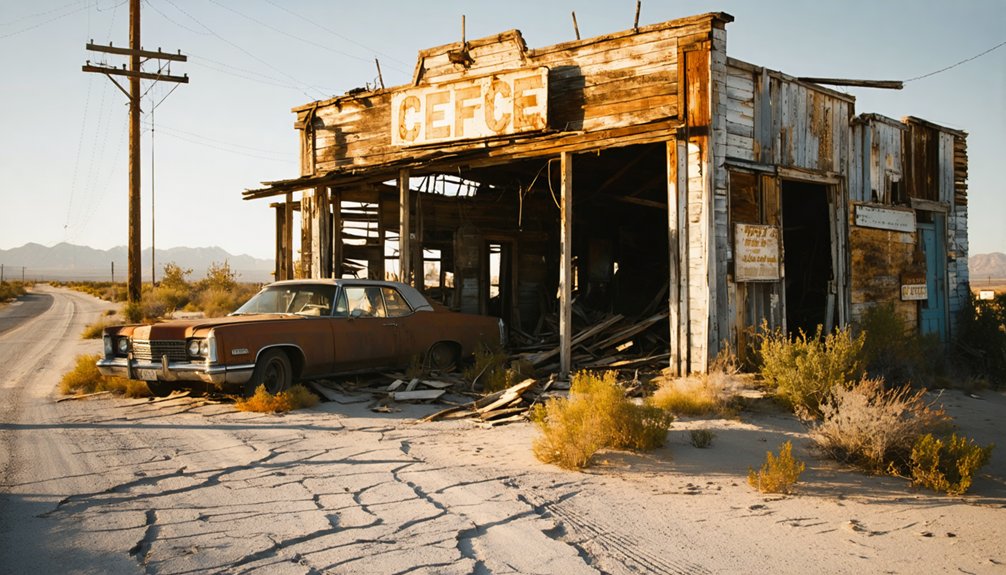
You’ll kick off your California ghost town adventure at Shasta State Historic Park in the north, winding south through some of the state’s most storied boomtowns before reaching the sun-baked desert of Calico.
Each stop along this route tells a raw, unfiltered story of Gold Rush ambition, silver strikes, and the towns that boomed and busted in their wake.
Pack your map, fuel up, and prepare for a road trip that stretches from the fog-laced hills of Northern California all the way to the Mojave’s edge.
Route Overview And Highlights
Starting in the far north at Shasta State Historic Park, your California ghost towns road trip sweeps south through the Sierra Nevada foothills, across the Mojave Desert, and finally lands at Calico Ghost Town near Barstow. You’ll witness urban decay frozen in time alongside remarkable historic preservation efforts spanning centuries.
Here’s what makes this route unforgettable:
- Shasta State Historic Park – Crumbling courthouse ruins reveal California’s Gold Rush origins
- Bodie State Historic Park – 170 weathered structures preserved in “arrested decay” since 1859
- Cerro Gordo – A remote mining settlement perched dramatically above Owens Valley
- Calico Ghost Town – Over 500 mines once producing $20 million in silver ore
Each stop delivers raw, unfiltered history across nearly 700 miles of open road.
Key Stops Along The Way
Four anchor stops define this ghost town road trip, each separated by hours of open highway and each delivering something the last one couldn’t.
Start at Shasta State Historic Park, where historical artifacts from Gold Rush-era commerce line crumbling brick storefronts.
Push south toward Columbia State Historic Park, a living museum battling preservation challenges while keeping 1850s streetscapes intact.
Continue through the Central Valley heat to Cerro Gordo, perched high above Owens Lake, where mining infrastructure clings stubbornly to desert slopes.
Your final destination, Calico Ghost Town, closes the loop with 500 mines, reconstructed saloons, and silver-boom energy frozen in time.
Each stop reveals how differently communities collapsed — some gracefully, some violently — and why preserving what’s left demands constant, deliberate effort.
Bodie vs. Calico: Crowds, Costs, and What You’ll Actually See
When choosing between Bodie and Calico, you’ll quickly discover two ghost towns that couldn’t feel more different despite sharing the same gold rush era roots.
Historical preservation shapes each experience dramatically, while access restrictions vary between them.
Historical preservation defines what you’ll see and touch—or won’t—at each ghost town.
- Bodie: Expect sparse crowds on weekdays, a $8 entry fee, and weathered authenticity frozen in “arrested decay” since 1859.
- Calico: Busier, more commercialized, with admission around $8, featuring reconstructed buildings rather than original structures.
- What you’ll see at Bodie: Abandoned homes, rusting machinery, and untouched interiors visible through dusty windows.
- What you’ll see at Calico: Gift shops, staged gunfights, and polished presentations drawing family-oriented crowds.
Bodie rewards adventurous souls craving raw history. Calico suits travelers wanting comfort alongside their ghost town experience.
Which Ghost Town Fits Your Road Trip Style
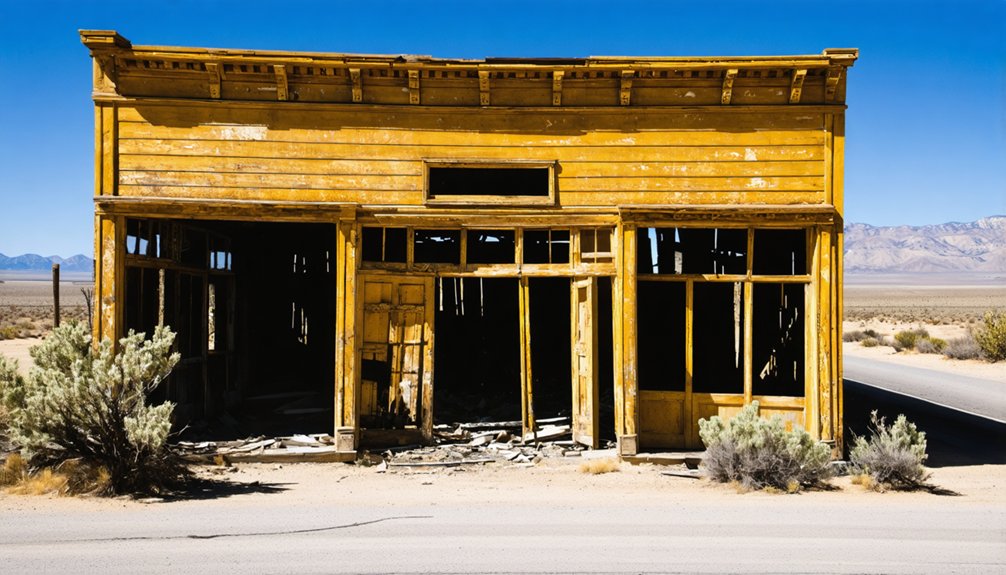
Knowing the differences between Bodie and Calico sets you up perfectly to match a ghost town to your travel personality.
If historical preservation matters most to you, Bodie delivers raw, untouched authenticity — crumbling structures frozen in time without commercial polish. You’ll feel the weight of genuine history there.
Calico suits the traveler craving energy, color, and hands-on exploration. Shops, demonstrations, and dramatic desert scenery fuel that adventurous spirit.
Before you finalize your route, remember that Eightmile sits on Native American lands within Nevada’s Goshute Indian Reservation — not California. Access is restricted, and no public road trip reaches it.
Choose Bodie or Calico instead, where open roads and real ghost town experiences actually await you. Your freedom-driven adventure deserves destinations you can truly reach.
How to Road Trip California Ghost Towns Without Getting Stranded
Stranding yourself in remote California desert isn’t part of any good ghost town adventure, so smart preparation separates a legendary road trip from a frustrating breakdown.
Historical preservation sites often sit miles from reliable services, and modern accessibility varies dramatically between locations.
Pack smart before rolling out:
- Fuel up completely before leaving major highways — gas stations disappear fast in remote territories
- Download offline maps since cell signals vanish near desert ghost towns like Bodie and Calico
- Carry emergency supplies including water, food, and basic tools for at least 48 hours
- Verify site access beforehand, because some locations sit on restricted or private land requiring permits
Freedom means moving confidently through wild terrain, not waiting roadside for a tow truck.
Frequently Asked Questions
Can You Visit Eightmile’s Original Pony Express Station Ruins Today?
You can’t freely explore Eightmile’s original Pony Express station ruins today. Access is restricted since it’s on the Goshute Indian Reservation. Historical preservation limits tourist attractions here, but the adventurous spirit of those legendary riders lives on!
What Elevation Is the Eightmile Ghost Town Site Located At?
You’ll find Eightmile’s ghost town history unfolding at approximately 5,541 feet above sea level — those elevation details place you high along Spring Creek, breathing crisp Nevada air where Pony Express riders once thundered through.
Who Currently Owns and Manages the Land Where Eightmile Sits?
The Goshute people own and manage Eightmile’s land today! You won’t find it among typical tourist attractions, but its historic preservation tells a powerful story of freedom, resilience, and Native American sovereignty you’ll deeply respect.
When Did the U.S. Government Acquire Eightmile for Native American Use?
In 1938, you’ll discover the U.S. government completed its Native American land acquisition, transferring Eightmile’s grounds to the Goshute people. This bold Government acquisition reshaped the site’s destiny, securing indigenous freedom across this remote Nevada territory forever.
How Many Mines Did Calico Ghost Town Operate During Its Peak?
Strike while the iron’s hot — Calico’s mining history boasts 500 mines at its peak! You’ll uncover ghost town preservation at its finest, where silver riches once fueled an adventurous era of freedom and fortune.
References
- https://secretlosangeles.com/cerro-gordo-run-ghost-town/
- https://www.facebook.com/californialandmarkfoundation/videos/california-ghost-town-bodie-california-is-one-of-the-best-preserved-boomtowns-fr/1639090977198276/
- https://californiathroughmylens.com/calico-ghost-town/
- https://www.destination4x4.com/eightmile-nevada-white-pine-county-ghost-town/
- https://www.visitcalifornia.com/road-trips/ghost-towns/
- https://www.youtube.com/watch?v=_HzKTSRR7IQ
- https://www.californiahauntedhouses.com/real-haunt/east-8-mile-road.html