Planning a ghost town road trip to Elgin, Kansas means stepping into a town frozen in frontier history. You’ll find crumbling storefronts, a brick-lined main street once packed with cattle drives, and outlaw legends like the Dalton Gang still haunting the silence. With fewer than 87 residents, Elgin’s atmosphere is raw and unforgettable. Pack water, download your maps, and bring your curiosity — there’s far more to this forgotten boomtown than first meets the eye.
Key Takeaways
- Elgin, Kansas, sits on southern Kansas backroads; approach from Chautauqua (8 miles west) or Oklahoma’s Highway 99 (6 miles northwest from Boulanger).
- Pack water, download offline maps, and fill your gas tank before arriving, as cell service is extremely limited.
- Explore the brick-lined main street, Cedar Creek Rainbow Arch Bridge, and Elgin Cemetery for rich frontier history.
- Combine Elgin with nearby Chautauqua to experience the region’s shared cattle ranching boom-and-bust history comprehensively.
- With fewer than 87 residents, Elgin offers an authentically atmospheric ghost town experience rooted in outlaw legends and frontier commerce.
Elgin’s Wild Past: From Cattle Boomtown to Ghost Town
When the Santa Fe railroad rolled into Elgin, Kansas in 1890, it transformed this small frontier settlement into the world’s largest cattle shipping point almost overnight.
Historical cattle drives poured through town, fueling nine saloons, five general stores, and two livery stables at peak operation.
At its peak, Elgin buzzed with nine saloons, five general stores, and two livery stables fed by relentless cattle drives.
But Elgin’s wild reputation wasn’t built on livestock alone. Outlaw legends like the Dalton Gang and “Dynamite” Dick called this border town their personal playground. You’re walking ground where real desperados roamed freely.
The boom couldn’t last. Once Indian Territory opened for settlement and railroads pushed further south, Elgin’s economy collapsed.
A brief oil discovery in 1902 bought some time, but resources depleted quickly. What once roared with frontier energy now stands nearly silent, frozen in a fascinating, forgotten past.
What’s Left of Elgin, Kansas Today?
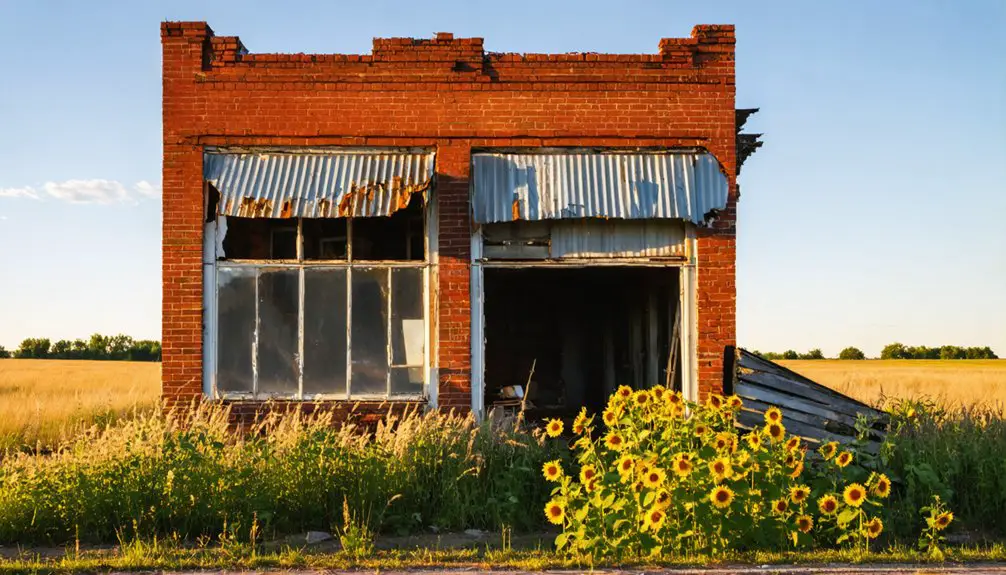
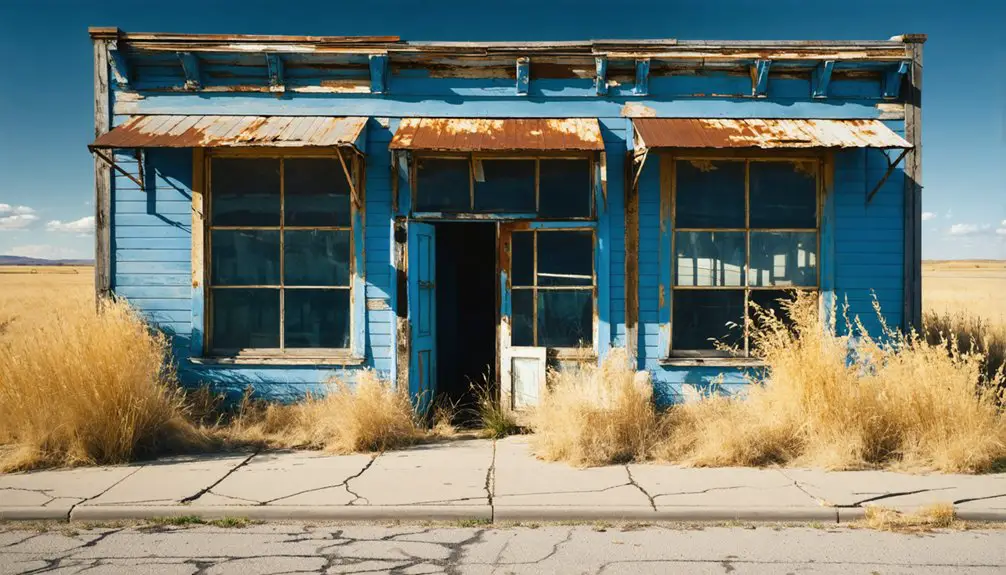
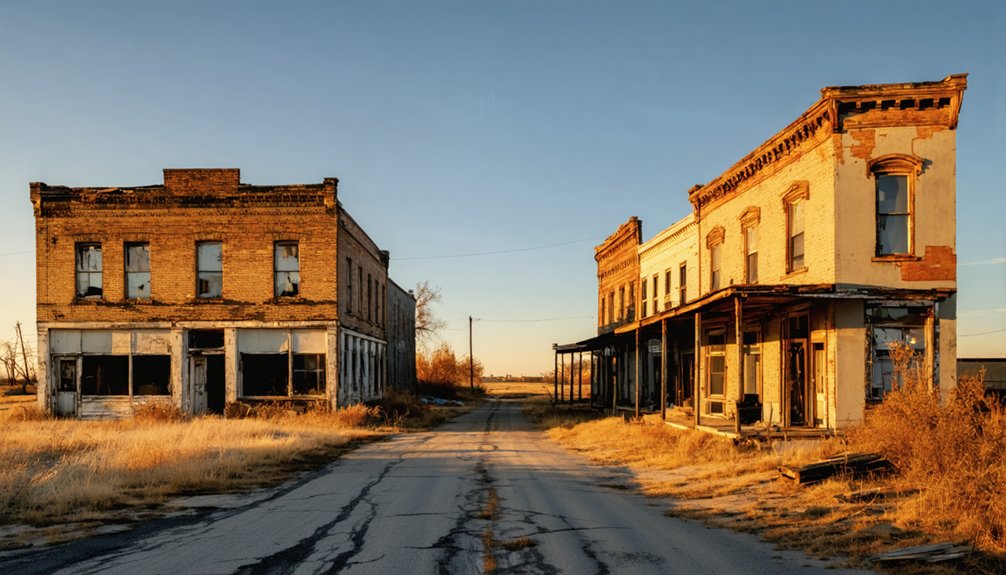
Walking into Elgin today, you’ll find a skeleton of that once-roaring frontier town. The historic brick-lined main street still stretches before you, but empty, broken buildings now stand where nine saloons and five general stores once buzzed with cattle traders and outlaws.
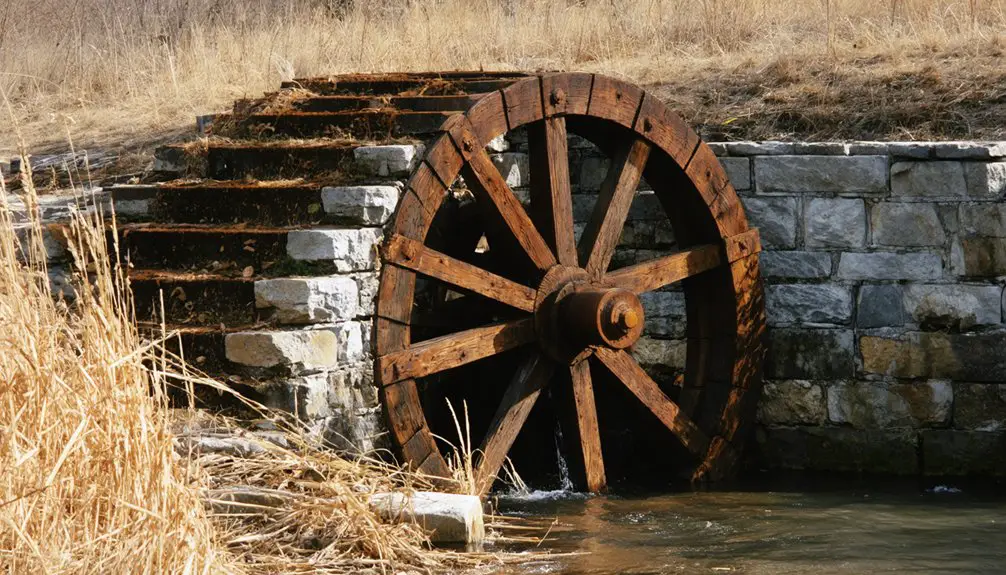
You’ll want to explore the Cedar Creek Rainbow Arch Bridge nearby — one of the area’s most striking historical artifacts worth photographing. Local legends about the Dalton Gang and “Dynamite” Dick still echo through these weathered streets, giving the town an eerie, untamed atmosphere.
The Methodist Church and Community Center remain active on west Grand Street, and the Elgin Cemetery sits north of town on Caney Road. With fewer than 87 residents remaining, Elgin rewards the bold traveler willing to venture off the beaten path.
The Landmarks Still Worth Seeing in Elgin
Though Elgin’s commercial days are long gone, a handful of landmarks still make the journey worthwhile. The historic brick-lined main street tells its own story through crumbling facades and empty storefronts, each one packed with historical anecdotes of outlaws, cattle drives, and booming frontier commerce.
Crumbling facades and empty storefronts line Elgin’s brick main street, each one whispering tales of outlaws and frontier commerce.
You’ll also want to visit the Cedar Creek Rainbow Arch Bridge, a striking piece of engineering that’s weathered decades despite preservation challenges threatening its future.
The Methodist Church and attached Community Center on west Grand Street remain active, quietly anchoring what little community life survives.
Head north on Caney Road and you’ll find the Elgin Cemetery, where the town’s earliest settlers rest. It’s a sobering, powerful stop that connects you directly to the people who built and lost this place.
How to Find Elgin, Kansas on Your Road Trip
Finding Elgin takes some commitment—this isn’t a town you’ll stumble across on a major highway. You’re heading deep into southern Kansas backroads, where freedom feels earned.
From Chautauqua, drive 8 miles west on a county road. Alternatively, approach from Oklahoma via Highway 99, traveling 6 miles northwest from Boulanger.
At 784 feet elevation, the landscape opens wide around you. Once you arrive, historical anecdotes surface everywhere—from cattle-drive legends to outlaw hideouts—if you know what you’re looking for.
The brick-lined main street tells those stories silently through crumbling facades.
Preservation challenges are immediately visible; only a handful of structures still stand. Bring water, a full tank, and curiosity.
Cell service gets spotty out here, so download your maps before you leave civilization behind.
Ghost Towns Near Elgin Worth Adding to Your Route
Elgin doesn’t have to be your only stop—southern Kansas and the Oklahoma border region hold several forgotten towns worth folding into your route. Chautauqua sits just 8 miles east and shares a deeply intertwined history with Elgin, its own population now hovering around 150 combined.
Chautauqua sits just 8 miles east of Elgin—two forgotten towns, one intertwined history, and a combined population of 150.
Both towns once rode the wave of cattle ranching prosperity before railroads and settlement shifted everything south.
Push into northeastern Oklahoma and you’ll find additional communities tied to outlaw legends, where figures like the Dalton Gang once moved freely across unmarked territorial lines. These borderland towns share Elgin’s DNA—boom, bust, and beautiful decay.
Traveling them back-to-back gives you a fuller picture of how the American frontier collapsed quietly, leaving only brick, rust, and silence behind.
Frequently Asked Questions
Is It Safe to Explore the Abandoned Buildings in Elgin, Kansas?
You shouldn’t enter Elgin’s crumbling structures—they’re dangerously unstable. While haunted stories make abandoned buildings tempting to explore, poor building safety means collapsing walls and rotting floors could seriously injure you. Admire them from outside instead!
What Is the Best Time of Year to Visit Elgin?
Spring and fall offer you the best visits, with mild temperatures perfect for exploring Elgin’s historical significance and capturing stunning photography opportunities. You’ll love the golden light illuminating those hauntingly beautiful, crumbling brick streets on crisp, clear days.
Are There Any Accommodations or Camping Options Near Elgin, Kansas?
Like tumbleweeds drifting freely, you’ll find no accommodations in Elgin itself. Camp nearby, explore historical landmarks, and discover local eateries in Chautauqua, just 8 miles east, fueling your untamed spirit of adventure.
Can Visitors Access Elgin Year-Round Despite Its Remote Backroad Location?
You can visit Elgin year-round, but you’ll want to check road conditions before heading down those backroads. Explore its historical preservation and uncover local legends whenever freedom calls, though spring and fall offer the most comfortable adventures.
Is There an Admission Fee or Permit Required to Visit Elgin?
You don’t need an admission fee or permit to explore Elgin’s historical significance freely. Simply drive in, wander the ghost town’s empty streets, and seize incredible photography opportunities among its hauntingly beautiful, abandoned brick buildings.
References
- https://www.youtube.com/watch?v=HlZ1QnI6h0E
- https://www.chautauquacountyks.com/city-elgin
- https://slbishopphotography.wordpress.com/2015/11/21/elgin-kansas/
- https://www.facebook.com/LegendsOfKansasLOK/posts/once-known-as-one-of-the-largest-cattle-shipping-sites-today-the-schoolhouses-ar/1250206763777135/