Planning a ghost town road trip to Rayner, Texas means stepping into a place where history stands quietly in ruin. You’ll find an abandoned stone courthouse, a forgotten cemetery, and nothing else but open sky and silence. Start from Aspermont, drive eight miles east on U.S. Highway 380, then turn south. Visit in fall or spring for the best experience. Stick around, and you’ll uncover everything you need to explore Rayner’s haunted past confidently.
Key Takeaways
- Start your road trip from Aspermont, driving 8 miles east on U.S. Highway 380, then turning south toward Rayner.
- Visit during fall or spring for comfortable temperatures, better lighting, and wildflowers surrounding the historic ruins.
- Rayner’s main attraction is an abandoned stone courthouse, accompanied by a historically significant nearby cemetery.
- Bring water, charged devices, and wear sturdy footwear, as no visitor amenities or guided tours exist on-site.
- Combine your visit with nearby ghost towns Old Glory and Rath City for a fuller Stonewall County experience.
What’s Left to See at Rayner, Texas Today?
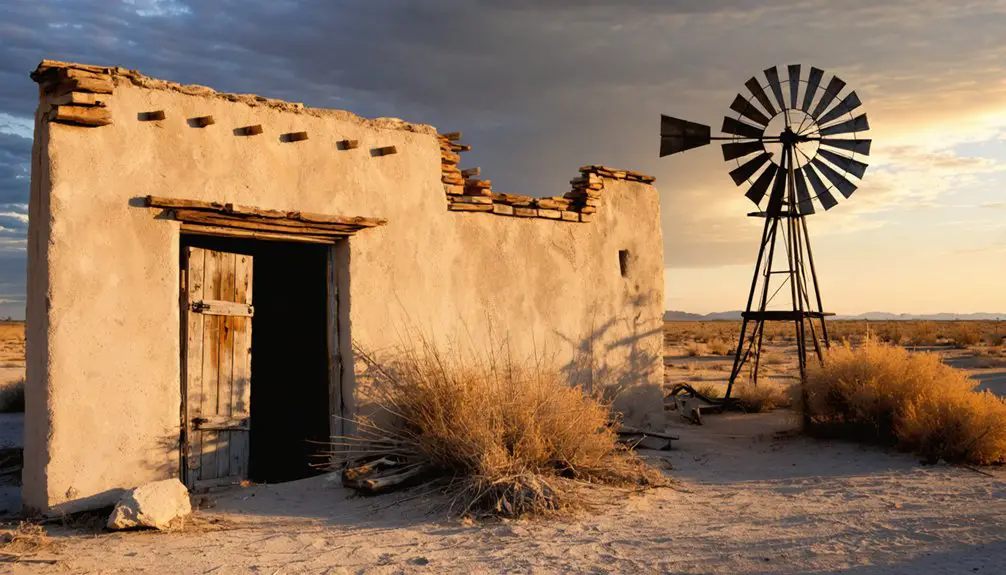
Though little remains of Rayner’s former life as Stonewall County’s original seat of power, what’s survived tells a compelling story. The old stone courthouse stands as the centerpiece of historical preservation here — abandoned, weathered, yet undeniably present. It once housed county government, then sheltered a private family, and now it waits in silence for curious travelers like you.
Alongside the courthouse, you’ll find a cemetery that carries its own quiet weight. These two remnants anchor the site and reward those willing to seek them out.
Don’t expect visitor amenities — there aren’t any. No signage, no services, no guided tours. What you get instead is raw, unfiltered history on your own terms, exactly the kind of freedom that makes ghost town exploration worthwhile.
The Best Time of Year to Visit Rayner?
When you’re planning a trip to Rayner, timing matters more than you’d think. Historical weather patterns show brutal summers that’ll drain your energy before you reach the courthouse steps. Smart seasonal travel means choosing cooler months to fully absorb what remains of this forgotten county seat.
Timing your visit to Rayner isn’t optional — summer heat will steal the experience before history gets a chance.
The best times to visit Rayner include:
- Winter – crisp air, manageable temperatures, peaceful solitude
- Spring – mild warmth, wildflowers framing the old stone ruins
- Fall – golden light that makes the courthouse feel alive again
- Avoid summer – oppressive heat turns exploration into endurance
You came for history, not heat exhaustion. Give yourself the freedom to wander the cemetery, study the stonework, and feel the weight of Rayner’s past without the Texas sun cutting your visit short.
How to Find Rayner From Aspermont?
Finding Rayner means retracing a road that history nearly erased. From Aspermont, the current county seat, you’ll head eight miles east along U.S. Highway 380, one of your most reliable local landmarks for orientation.
Once you’ve spotted your bearings, turn south — Rayner waits quietly off the main corridor, tucked into the landscape like a secret the prairie kept.
You’ll want a 2WD vehicle; the roads are manageable but deserve respect. These travel tips matter: bring water, charge your phone, and note your mileage from Aspermont before you leave.
No signs celebrate Rayner’s existence anymore. What guided settlers here was purpose; what guides you now is curiosity.
Trust the route, follow the highway, then turn toward the silence.
Which Other Ghost Towns Are Worth Adding to Your Route?
Rayner doesn’t have to be your only stop — Stonewall County rewards the curious traveler with more than one forgotten chapter. Two nearby ghost towns deserve a place on your route, each carrying its own historical anecdotes and quiet evidence of lives once fully lived:
Stonewall County holds more than one forgotten chapter — and the curious traveler will want to find them all.
- Old Glory – Start here before heading to Rayner; it sets the tone for the region’s layered past.
- Rath City – A former settlement where preservation efforts remain minimal, letting raw history speak for itself.
- Aspermont – Use the current county seat as your base between stops.
- Stonewall County’s back roads – The connecting routes themselves tell a story of abandonment and resilience.
Together, these stops transform a single visit into a genuinely meaningful journey through Texas’s forgotten frontier.
How to Explore Rayner Safely Without Trespassing or Getting Hurt?
Exploring a site like Rayner means walking carefully through layers of history that nobody’s maintained for you. The old stone courthouse once anchored an entire county seat, and that weight still lingers in its walls. Respect that history by following basic visitor guidelines: don’t enter structurally unstable buildings, stay mindful near the cemetery, and observe any posted property boundaries.
Historical preservation here depends entirely on how you treat what remains. There’s no ranger station, no guided tour, no safety net. You’re free to roam, but that freedom carries responsibility. Watch your footing around the ruins, visit during cooler months like fall or winter, and bring water.
Rayner rewards the respectful traveler who understands that these crumbling walls are irreplaceable pieces of Texas heritage.
Frequently Asked Questions
Was Rayner the Original County Seat of Stonewall County?
Yes, Rayner was the original county seat of Stonewall County! You’d find it among Texas county seats lost to time—one of those historical ghost towns where freedom once thrived, now echoing nostalgia through its abandoned stone courthouse.
What Type of Vehicle Do I Need to Reach Rayner?
You don’t need vintage vehicles or off-road capabilities to reach Rayner — a standard 2WD car handles the journey just fine, rolling you freely across history’s open roads toward this forgotten Texas treasure.
How Far Is Rayner Located From Present-Day Aspermont, Texas?
Eight miles east, eight miles back in time — you’ll find Rayner that close to Aspermont. Pack your road trip essentials, chase these historical landmarks, and let freedom guide you through Stonewall County’s forgotten, nostalgic past.
What Is the Current Population of Stonewall County Today?
You’ll find Stonewall County’s current population stands at 1,245 residents — a small, freedom-loving community where historical landmarks whisper local legends of a proud past, evoking nostalgia for the days when Rayner thrived as county seat.
Has the Rayner Stone Courthouse Ever Been Actively Restored?
No active restoration efforts have touched Rayner’s stone courthouse. You’ll find it standing in its raw, natural state, a hauntingly preserved piece of ghost town history, where time’s frozen grip keeps the past achingly, beautifully intact.
References
- https://www.tshaonline.org/handbook/entries/rayner-tx
- https://www.ghosttowns.com/states/tx/rayner.html
- https://www.facebook.com/groups/allthingsabandoned/posts/412817395745590/
- https://www.youtube.com/watch?v=9ownvlrnDG4