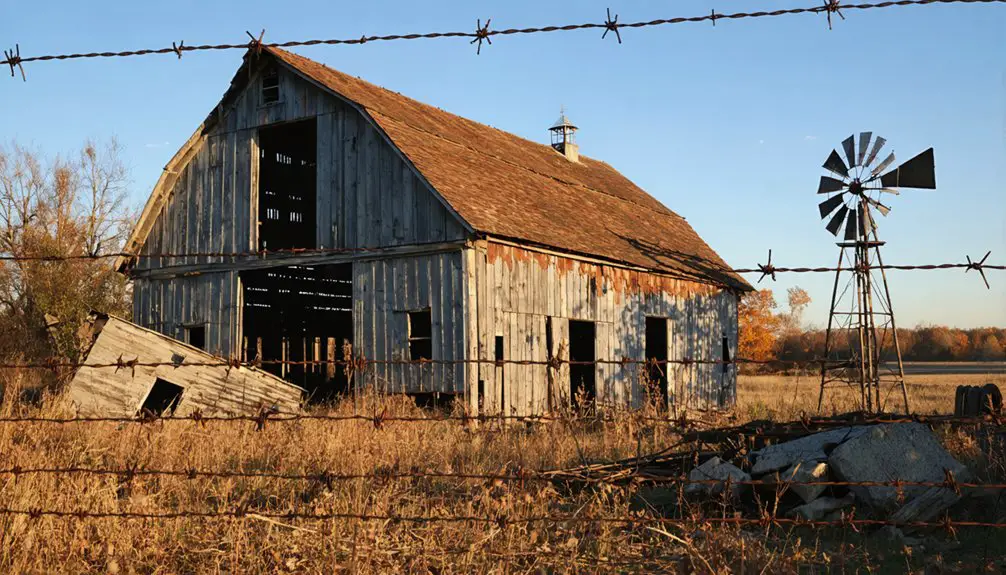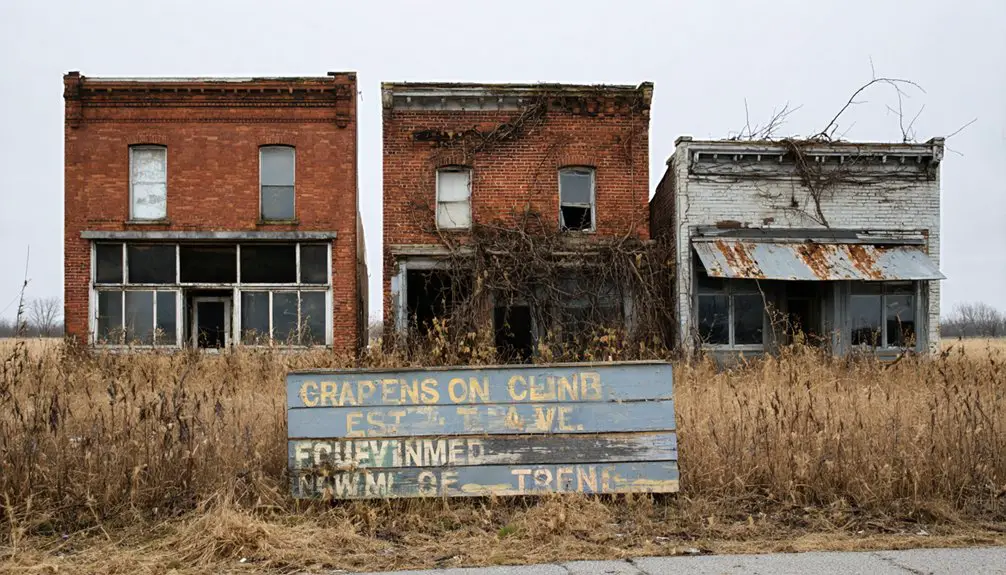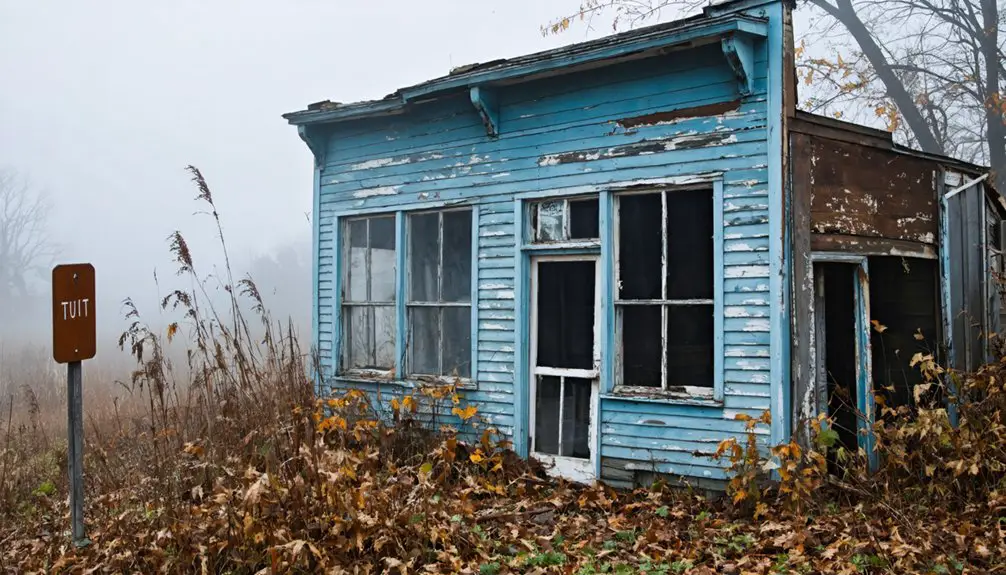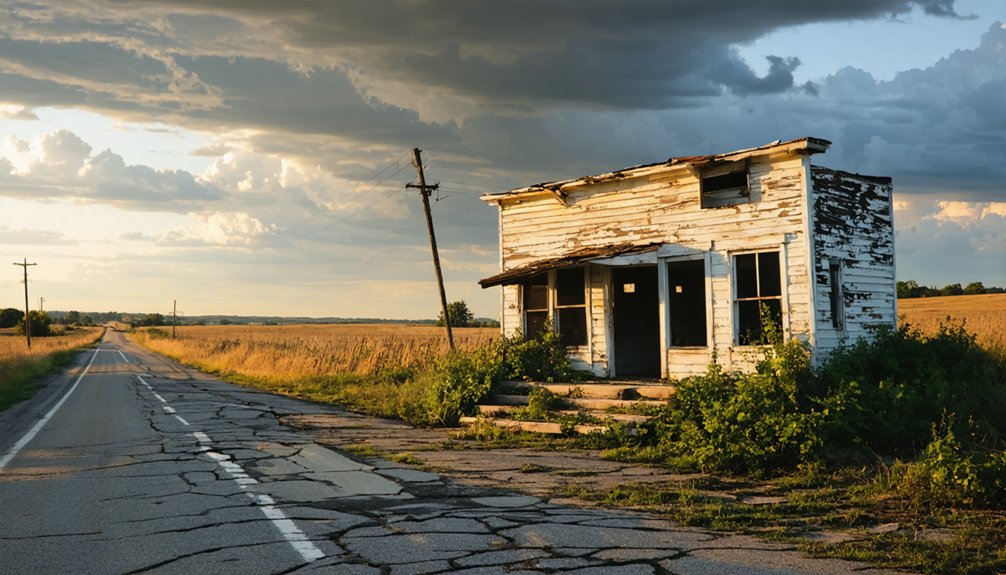
You’ll find Elk Lick, Ohio beneath the quiet waters of William H. Harsha Lake, where an entire submerged ghost town waits beneath East Fork State Park. Founded in 1802, this forgotten community never gained official incorporation, survived arson, and ultimately disappeared underwater in 1978. You can still explore shoreline trails, cemetery grounds, and remnants above the waterline. Pack sturdy boots, charge your devices, and plan around spring or fall weather for the best experience — there’s far more to this haunting story than you’d expect.
Key Takeaways
- Elk Lick, Ohio, is now submerged beneath William H. Harsha Lake, making East Fork State Park the destination for ghost-town exploration.
- Trails, shoreline access, and open parkland mark the original town boundaries, with submerged foundations adding to the ghost-town atmosphere.
- Stay in nearby Batavia or Milford, and find dining options along SR-125 for convenient trip planning.
- Visit during spring or fall on early weekdays to avoid crowds and access the Old Bethel Methodist Cemetery easily.
- Bring waterproof boots, a camera, a field notebook, and charged devices with offline maps due to limited cell coverage.
What Was Elk Lick, Ohio?
Once a small frontier settlement tucked into the valleys of Tate Township, Clermont County, Ohio, Elk Lick earned its name from the natural salt and mineral licks that drew elk and deer to the area long before European settlers arrived. Reverend John Collins and his wife Sarah founded the community in 1802, shaping its early identity through faith, land, and hard work.
Local legends and historical myths surrounding the town paint a vivid picture of frontier ambition. Collins purchased 300 acres in 1803, and the community slowly grew around mills, churches, and family homesteads.
Though Elk Lick never incorporated or claimed a county seat, it thrived quietly for generations. Today, the reservoir created by William H. Harsha Lake has swallowed much of what once stood.
How Elk Lick Got Its Name?
When you look into how Elk Lick got its name, you’ll find a straightforward story rooted in the land itself — a natural salt and mineral lick once drew elk and deer to the area in striking numbers.
Early settlers noticed this wildlife gathering spot and, following a common frontier tradition, named the place after what they observed there.
It’s the kind of honest, practical naming that defined countless American settlements, where the landscape spoke first and the people simply listened.
A Natural Salt Lick
Before the town had a name, the land itself had a story. Tucked into the Ohio frontier, a natural landmark drew elk and deer from the surrounding wilderness — a salty mineral deposit embedded in the earth that animals instinctively sought out. These mineral licks were common across early America, and settlers paid attention to them.
Where wildlife gathered, the land was rich, and opportunity followed.
When Reverend John Collins and his wife Sarah arrived in 1802, they recognized what the land was already offering. The lick gave the settlement its identity before a single building went up.
You’re fundamentally visiting a place named by nature itself — a raw, unfiltered piece of frontier history that still echoes through the valley today.
Wildlife Shaped The Name
Elk and deer didn’t wander into this valley by accident — they came for the salt. Natural mineral licks drew wildlife habitats full of animals to this spot long before settlers arrived.
When Reverend John Collins founded the community in 1802, he recognized what the land already advertised through generations of animal behavior.
The name “Elk Lick” directly honors that wildlife legacy. Elk and deer gathering at the lick gave early settlers an unmistakable landmark to reference, and the name stuck.
It’s a frontier naming tradition rooted in observation rather than invention.
Today, historical preservation efforts keep this origin story alive even as the town itself has disappeared.
When you visit, you’re stepping into a name that wildlife literally wrote into the landscape.
Frontier Naming Traditions
Frontier settlers didn’t name places with poets in mind — they named them with their eyes open. What they saw, they recorded. A salt lick drawing elk and deer from the surrounding wilderness became the town’s identity — simple, direct, and rooted in the land itself. You won’t find urban legends or ghost stories behind this name. You’ll find practical people marking their world with observable facts.
That tradition ran across the frontier, turning natural landmarks into lasting place names. Creeks, ridges, hollows, and licks all entered the map through firsthand observation. When Reverend John Collins and his family settled here in 1802, they followed that same instinct. The land spoke plainly, and they listened.
Elk Lick was never a mystery — it was a description.
The Collins Family and the Founders Who Shaped Elk Lick
When you trace Elk Lick’s origins back to 1802, one family name surfaces above all others: Collins. Reverend John Collins and his wife Sarah didn’t just settle here — they built something lasting.
John purchased 300 acres in the Elk Lick Valley in 1803, anchoring the community’s early growth.
Their son Richard carried that legacy forward. A War of 1812 veteran turned wealthy lawyer, Richard commissioned a striking 37-room mansion in the early 1850s.
Local legends paint him as a dominant figure whose ambitions shaped the town’s identity.
John and Sarah now rest in the Old Bethel Methodist Cemetery, where historical artifacts and grave markers connect you directly to the founders.
Walking that ground, you feel the Collins family’s imprint on everything Elk Lick became.
Why Elk Lick Never Became a Real Town?
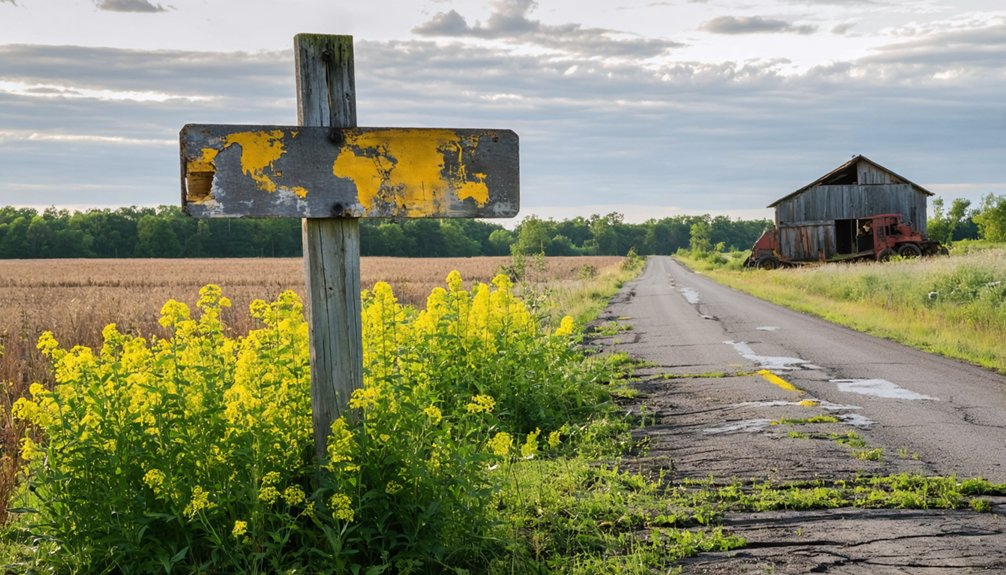
Despite its promising start, Elk Lick never crossed the threshold into official incorporation — and a few key failures sealed that fate. Efforts to relocate Clermont County’s seat to Elk Lick fell flat, stripping the settlement of political momentum it desperately needed. Without that institutional anchor, growth stalled.
Then, in 1931, arson destroyed the local school, gutting community infrastructure and morale simultaneously.
You’ll find that urban legends and folklore traditions still swirl around why Elk Lick couldn’t hold itself together — some locals blamed geography, others pointed to politics. The honest answer is simpler: no incorporation, no county seat, no school. Each loss compounded the last.
What Wiped Elk Lick Off the Map?
The slow death of Elk Lick wasn’t a single dramatic event — it was a long unraveling that ended with the town literally sinking underwater. The community’s school burned down in an arson fire in 1931, stripping away one of its last functioning institutions.
Then, between 1970 and 1978, construction of William H. Harsha Lake sealed the town’s fate permanently. The rising reservoir swallowed what remained of the townsite, burying historical artifacts and local legends beneath cold water.
You won’t find standing buildings or bustling streets when you visit — just the quiet surface of a lake where a community once lived. East Fork State Park now occupies the surrounding land, reclaiming the space that Elk Lick once called home.
Bethel Methodist Church: Elk Lick’s Last Standing Landmark
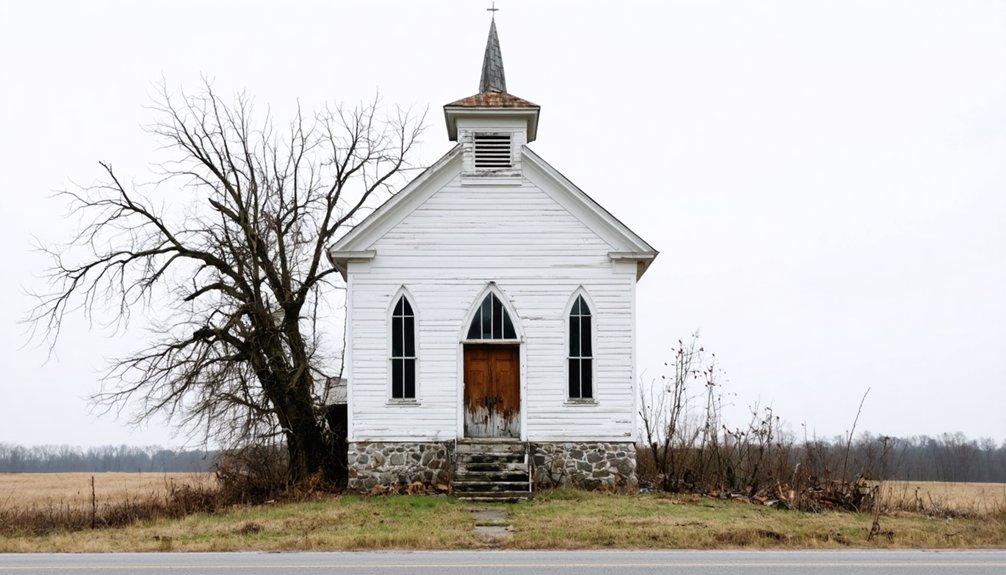
How does a town vanish while one of its buildings keeps standing? At Elk Lick, the answer walks you straight to Bethel Methodist Church. Originally built as a humble log cabin called Collins’ Chapel in 1805, the church evolved through two rebuilds, with its current structure dating to 1867.
It’s a rare, tangible example of historical preservation in a landscape now dominated by Wildlife habitats and East Fork State Park‘s open terrain. When you visit, you’ll also find the Old Bethel Methodist Cemetery nearby, where founders John and Sarah Collins rest.
These two sites give you something concrete to stand beside, photograph, and reflect on. In a ghost town where the reservoir swallowed most evidence, this church quietly refuses to disappear.
What’s Left to See at the Elk Lick Townsite?
When you arrive at the former Elk Lick townsite, you’ll find a landscape that gives more to imagination than to visible ruins. East Fork State Park now blankets most of the settlement, and William H. Harsha Lake swallowed what the years hadn’t already claimed.
Don’t expect rows of abandoned structures or dramatic crumbling facades — the reservoir erased most of that. What you’ll discover instead are subtle terrain features, local legends tied to Richard Collins’ grand 37-room mansion, and the quiet atmosphere of a place that once thrived.
The Old Bethel Methodist Cemetery offers the most tangible connection to Elk Lick’s past. Walk the park trails, read the headstones, and let the surrounding landscape fill in the rest of the story.
How East Fork State Park Now Covers the Old Elk Lick Townsite
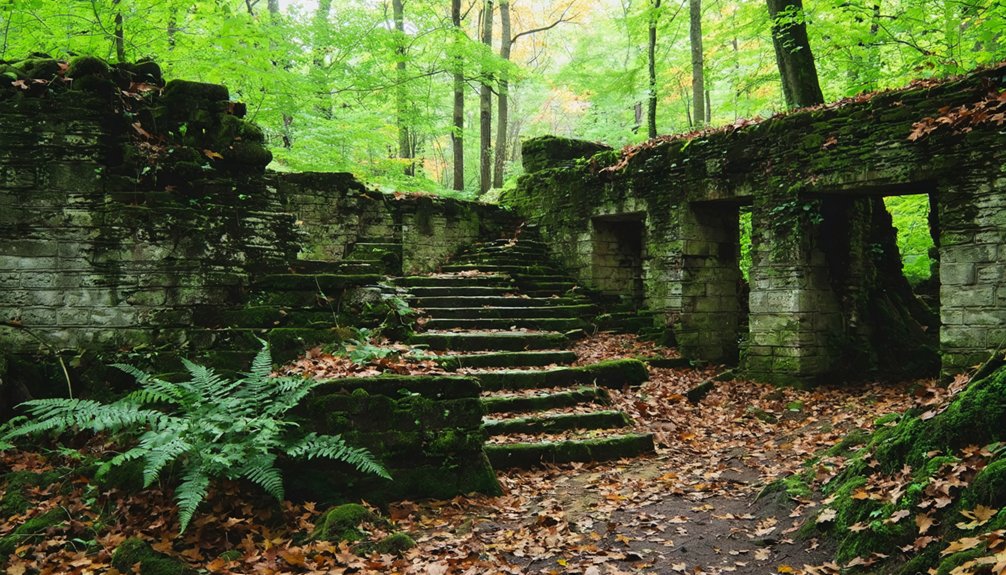
Where Elk Lick once stood, East Fork State Park now stretches across thousands of acres of rolling Ohio terrain. It absorbs the former townsite into its trail systems, campgrounds, and shoreline.
William H. Harsha Lake swallowed much of the land after construction finished in 1978, turning a living community into submerged history.
When the dam finished in 1978, William H. Harsha Lake rose and quietly erased a living community from the map.
You’ll find the experience layered with urban legends, whispered stories about foundations lurking beneath the waterline, and scattered historical artifacts embedded in the landscape.
Here’s what the park now offers over the old townsite:
- Miles of trails crossing former settlement ground
- Shoreline access above the submerged reservoir sections
- Open parkland where the town’s edges once extended
Explore it as both a recreation destination and a quiet, haunting chapter of Ohio’s frontier past.
How to Get to Elk Lick, Ohio?
You’ll find nearby accommodations in Batavia and Milford, both within comfortable driving distance.
After exploring the park’s ghost-town landscape, you can sample local cuisine at small-town diners and family restaurants scattered along SR-125.
Plan your timing around daylight hours — the park terrain rewards explorers who arrive early and leave with a full appreciation of what once stood here.
Best Time to Visit and What to Bring to Elk Lick
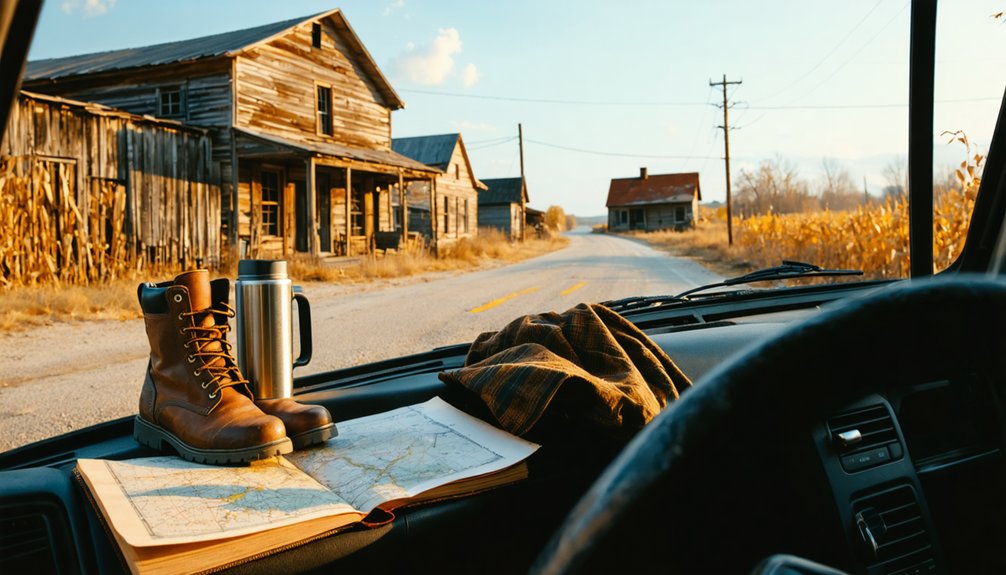
Once you’ve sorted out your route and lodging, timing your visit well can make all the difference between a rewarding experience and a muddy slog. Spring and fall offer the clearest conditions for exploring East Fork State Park’s ghost-town remnants — no brutal heat, no frozen ground.
Pack strategically:
- Sturdy waterproof boots — trails near the former townsite get soggy, and you won’t find medieval architecture here to shelter under when rain hits.
- A camera and field notebook — document foundations and landscape traces before light fades.
- Charged devices with offline maps — cell coverage drops like a signal lost in space exploration territory out here.
Avoid weekends in peak summer if solitude matters to you. Weekday visits reward you with quieter trails and unobstructed access to the cemetery and church.
Frequently Asked Questions
Is There an Admission Fee to Visit East Fork State Park?
You’ll find no admission fee to explore East Fork State Park’s historical landmarks and soak in local folklore! It’s free, open land where you can roam freely, uncovering Elk Lick’s ghostly past at your own pace.
Are Pets Allowed at the Old Bethel Methodist Cemetery?
Pet policies aren’t confirmed in cemetery history records, so you’ll want to verify directly with local authorities before bringing your furry friend to explore Old Bethel Methodist Cemetery’s fascinating, freedom-filled grounds steeped in rich, reverential history.
Is the Elk Lick Site Accessible for Visitors With Mobility Limitations?
The site’s accessibility features vary across East Fork State Park’s terrain. You’ll find some paved paths, but mobility assistance may be needed for uneven, rural areas near the cemetery and former townsite, so plan accordingly.
Can You Camp Overnight Near the Former Elk Lick Townsite?
You can camp overnight at East Fork State Park, which covers the former townsite. Follow camping regulations, embrace nature’s freedom, and you’ll likely experience wildlife encounters that echo Elk Lick’s frontier past!
Are Guided Ghost Town Tours Available at East Fork State Park?
No formal guided ghost town tours exist, but you’ll uncover haunted history and ghostly legends on your own terms — East Fork State Park’s open trails let you freely explore Elk Lick’s sunken, silent past independently.
References
- https://ohioghosttowns.wordpress.com/clermont-county/
- https://www.youtube.com/watch?v=q-_mnf-hp7A
- https://www.facebook.com/100091592894862/posts/elk-lick-was-a-small-settlement-in-clermont-county-ohio-now-classified-as-an-ext/685067501223007/
- https://en.wikipedia.org/wiki/List_of_ghost_towns_in_Ohio
- https://en.wikipedia.org/wiki/Elk_Lick
- https://www.youtube.com/watch?v=FDIcXLqUnmw
- https://www.facebook.com/brandon.c.severn/posts/beneath-the-waters-of-east-fork-lake-lies-a-forgotten-townbefore-this-lake-becam/10230220479949463/
- https://heritagevillagecincinnati.org/wp-content/uploads/2023/03/Elk-Lick-House-Handbook-Narrative.doc
- https://www.youtube.com/watch?v=TaElTDywdzY
- https://www.lickingtwplc.gov/documents/history/GhostTowns.pdf