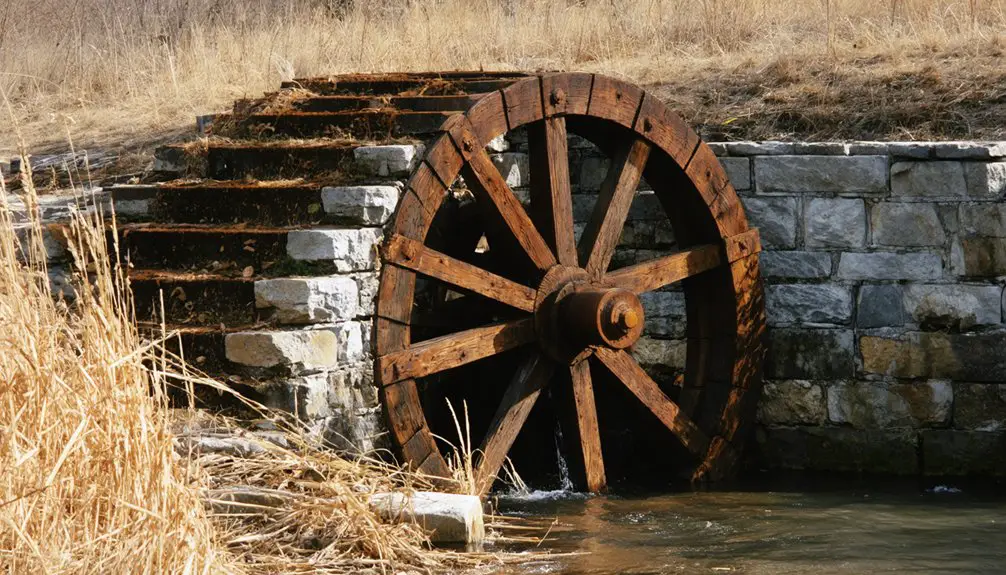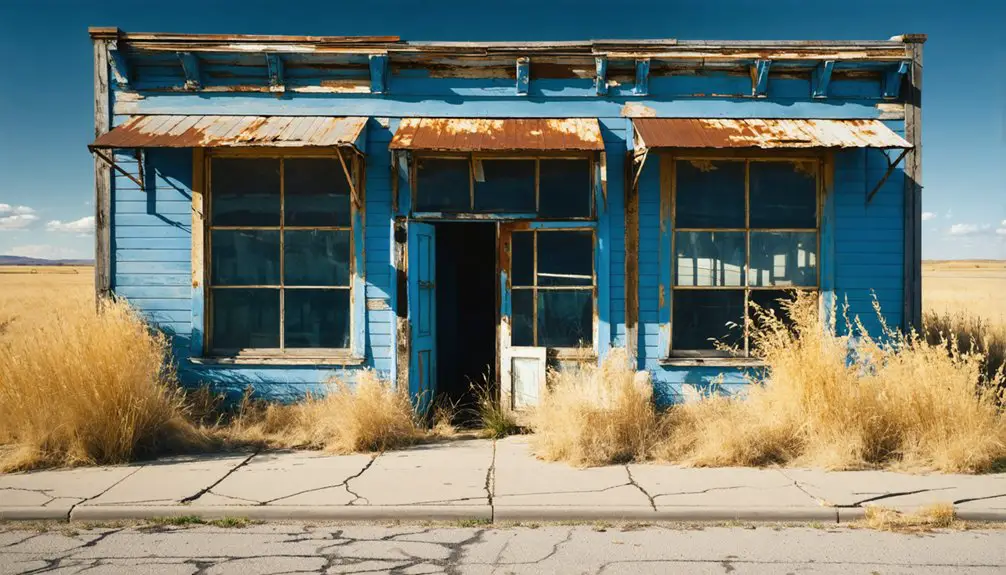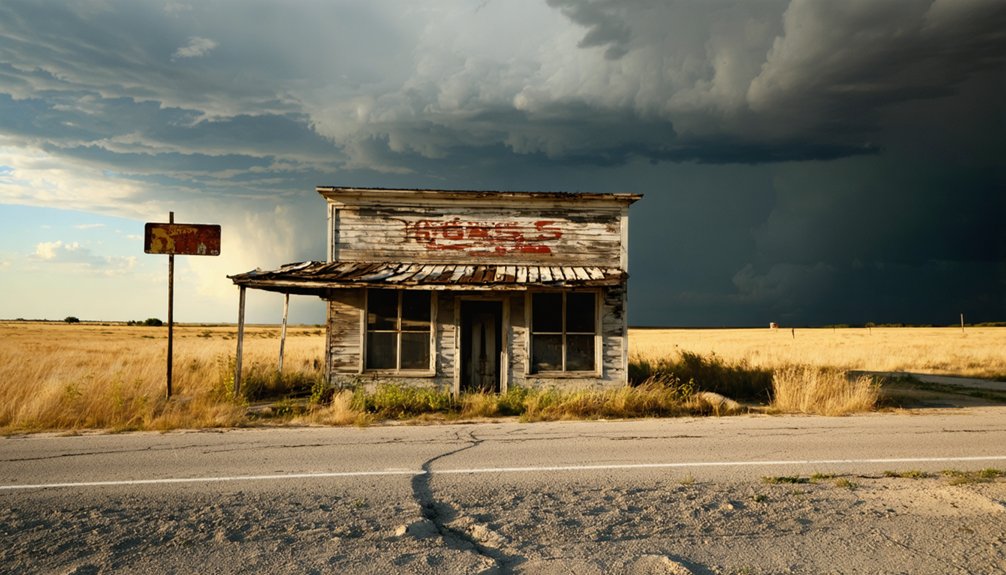
Planning a ghost town road trip to Elm Mills, Kansas means heading 4.5 miles south of Sawyer into Barber County’s open prairie. You’ll find scattered foundations and weathered remnants where a thriving agricultural hub once stood. Kansas officially classifies it as extinct, making it one of the region’s most authentically abandoned sites. Visit in spring or fall for the best conditions, and pack water, a paper map, and sturdy boots. There’s much more to uncover about this forgotten frontier town.
Key Takeaways
- Elm Mills is an extinct unincorporated community in Barber County, Kansas, 4.5 miles south of Sawyer, accessible via county roads.
- The site features scattered foundations and weathered structures on open prairie, with no interpretive signs or formal landmarks.
- Visit during April-May or September-October to avoid extreme summer heat and enjoy favorable travel conditions.
- Pack water, snacks, fuel, a paper map, sturdy boots, a camera, and a first-aid kit due to remote conditions.
- Nearby destinations like Medicine Lodge, Sun City, and Flint Hills complement Elm Mills within a broader Kansas ghost town road trip.
Why Elm Mills Qualifies as an Official Kansas Ghost Town?
Elm Mills earns its ghost town status through a straightforward but telling combination of factors: it’s an unincorporated community with no post office, no census population count, and no modern village infrastructure to speak of.
Elm Mills checks every ghost town box: no post office, no population count, no community infrastructure left standing.
Kansas officially recognizes communities like Elm Mills as extinct when they lose their post office designation, and Elm Mills fits that criteria completely.
Dig into the ghost town history here, and you’ll find a settlement that once thrived as a key agricultural processing hub in Barber County’s southern plains.
Agricultural decline gradually stripped away the economic foundation that kept the community alive. Without that economic pulse, residents left, services disappeared, and Elm Mills faded into the landscape.
Today, you’re looking at a location that exists on maps but not in modern community life.
What Remains at the Elm Mills Site Today?
When you pull up to the Elm Mills site today, the landscape tells the story more honestly than any historical record could. You’ll find open Kansas prairie stretching in every direction, quietly reclaiming what agriculture and ambition once built here.
The ghost town remnants are subtle — scattered foundations, weathered traces of structures that once supported a working rural community.
Don’t expect polished historical landmarks with interpretive signs. Elm Mills rewards visitors who appreciate raw, unfiltered history written in silence and soil.
The absence of post office, infrastructure, and residents makes the emptiness itself the exhibit. You’re standing on land that once processed grain and sustained livelihoods. That context transforms an otherwise unremarkable stretch of southern Kansas into something genuinely worth stopping for on your road trip.
How Do You Get to Elm Mills From Sawyer, Kansas?
Once you’ve taken in the quiet emptiness of the Elm Mills site, getting there from Sawyer is straightforward — it’s a short 4.5-mile drive south.
Head south out of Sawyer on the local county roads, and you’ll reach the unincorporated community without much trouble. The travel routes through this part of Barber County are open and uncrowded, giving you the kind of unhurried drive that suits a ghost town expedition perfectly.
While you’re exploring local attractions in the area, consider pairing your Elm Mills stop with a broader tour of southern Kansas’s forgotten settlements.
Pair your Elm Mills visit with a wider tour of southern Kansas’s quietly fading, long-forgotten ghost towns.
The landscape is flat, wide, and honest — exactly what you’d expect from this corner of the Great Plains.
Pack water, check your fuel, and enjoy the freedom of the open road.
How Farming Built Elm Mills: and Why It Didn’t Last
When you look at Elm Mills today, it’s hard to imagine that farming once gave this tiny community its entire reason for existing.
The settlement took root as a key agricultural processing hub, drawing activity and settlers to this stretch of southern Kansas.
But the land’s promise didn’t hold, and without a sustainable economic foundation, Elm Mills gradually faded into the ghost town you’re visiting now.
Agricultural Roots of Elm Mills
Farming didn’t just shape Elm Mills — it created it. Long before the community faded into a ghost town, settlers built their lives around agricultural processing, turning raw Kansas land into a productive hub. The town’s very name hints at its agricultural heritage — mills were the heartbeat of rural communities like this one, grinding grain and sustaining families across Barber County’s southern plains.
You can almost feel that historical significance when you stand in the area today, imagining wagons rolling in from surrounding homesteads.
But farming alone couldn’t anchor Elm Mills permanently. Shifting economic tides, modernized transportation, and consolidating markets slowly drained the community’s purpose. What once fed a region eventually couldn’t sustain even a post office. The land remembers, even if the town doesn’t.
Why Farming Failed Here
Agriculture built Elm Mills, but it couldn’t save it. The same land that once promised prosperity eventually turned against its settlers. Crop failures hit hard across southern Kansas, stripping small communities like Elm Mills of their economic foundation. When harvests collapsed, so did the people’s reasons to stay.
Economic decline crept in steadily. Without a post office, reliable infrastructure, or diversified industry, Elm Mills had no safety net. Farmers who’d staked everything on fertile soil found themselves with few options when conditions shifted.
Drought, market instability, and isolation proved too much to overcome.
You can still feel that tension when you visit — the silence speaks louder than any historical marker. This land gave everything it had, and then it simply gave out.
The Best Time of Year to Visit Elm Mills
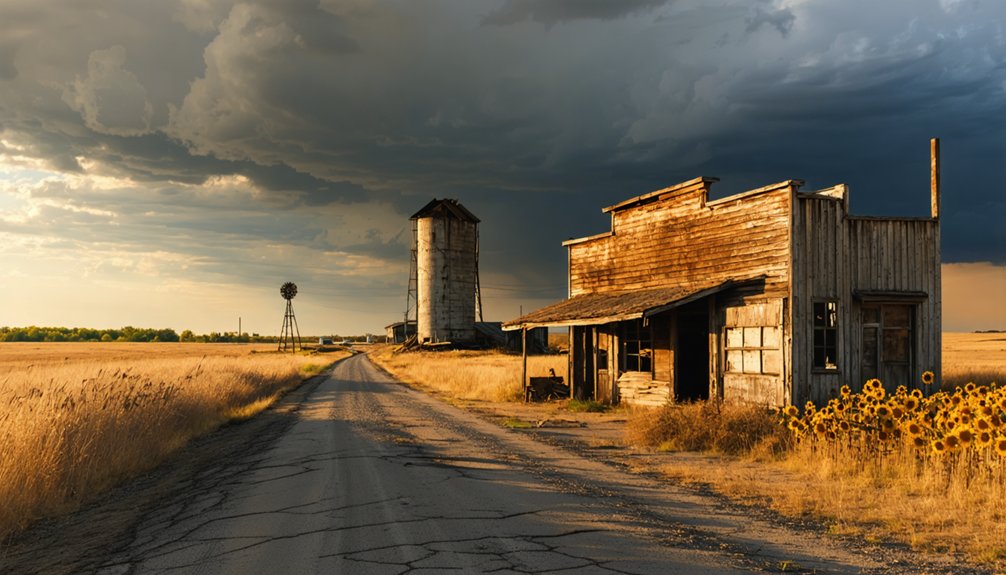
If you’re planning a road trip to Elm Mills, spring and fall offer the most comfortable conditions for exploring this quiet stretch of southern Kansas.
Summer heat can be brutal on the open plains, pushing temperatures well into the 90s and making a midday ghost town walk genuinely miserable.
You’ll get the best experience visiting between April and May or September and October, when cooler temps and clearer skies make the drive down from Sawyer far more enjoyable.
Ideal Visiting Seasons
Spring and fall are your best bets for visiting Elm Mills, when mild temperatures make exploring the open, windswept terrain of southern Kansas far more comfortable.
April through May brings green landscapes and cooler breezes, giving you ideal conditions for photographing this quietly forgotten ghost town.
September and October offer similar relief, with harvest-season light that adds dramatic warmth to your shots.
Avoid midsummer if you can — southern Kansas heat turns brutal, and there’s no shade or shelter in an unincorporated community like Elm Mills.
Winter visits are possible but unpredictable, with ice and wind making rural roads treacherous.
Smart travel planning means checking road conditions before heading out, since the area sits 4.5 miles south of Sawyer on open terrain.
Seasonal visits here reward those who prepare.
Weather Considerations For Travelers
Southern Kansas weather can make or break your Elm Mills experience, so timing your visit matters more than you might expect. Weather patterns here swing dramatically between seasons, and you’ll want to plan accordingly.
Spring brings mild temperatures and blooming landscapes, making it ideal for exploring the open countryside. However, severe thunderstorms and tornado activity peak during April and May, so monitor forecasts closely before heading out.
Summer delivers intense heat that can push past 100°F, turning your road trip into an endurance test.
Fall offers the most comfortable conditions — cooler temperatures, clearer skies, and lighter winds.
Winter remains unpredictable, with ice storms occasionally shutting down rural roads entirely.
Studying seasonal trends beforehand lets you choose the window that best suits your adventure style and keeps you moving freely.
What to Bring on Your Elm Mills Road Trip
Before heading out to Elm Mills, pack these 5 essentials to make your ghost town road trip through Barber County a success:
- Camera and extra batteries – Ghost town photography thrives in golden-hour light, so don’t let a dead battery cut your shoot short.
- Detailed paper map – Cell service is unreliable 4.5 miles south of Sawyer, making digital navigation risky.
- Water and snacks – Elm Mills has zero infrastructure, so you’re completely on your own once you arrive.
Beyond these road trip essentials, wear sturdy boots for uneven terrain and bring a first-aid kit.
Since Elm Mills is an unincorporated, extinct community, you won’t find convenience stores nearby.
Preparing thoroughly means you’ll explore freely and confidently without unexpected setbacks derailing your adventure.
How to Work Elm Mills Into a Longer Kansas Road Trip

Elm Mills fits naturally into a broader Kansas road trip because Barber County already sits within striking distance of several compelling destinations.
You’re already in southern Kansas, so use these road trip tips to maximize your drive. Head north toward Medicine Lodge, where you’ll discover genuine historical significance tied to the 1867 peace treaties that shaped the American West.
Southern Kansas rewards the curious traveler — Medicine Lodge and its landmark 1867 peace treaties wait just up the road.
Push further into the Flint Hills or swing west toward Meade, another region rich with outlaw history. Sawyer sits just 4.5 miles north of Elm Mills, making it a logical stopping point before continuing your route.
String these communities together deliberately, and you’ll experience Kansas beyond the interstate — raw, honest, and deeply layered. The freedom of the open road rewards those willing to explore its quieter chapters.
Other Ghost Towns Worth Combining With an Elm Mills Visit
Barber County and its surrounding region hide several ghost towns worth stitching into the same itinerary as Elm Mills. Each stop deepens your understanding of Kansas’s agricultural heritage and ghost town legends that shaped the southern plains.
- Sun City, Kansas – A faded trade hub just west of Barber County, offering crumbling storefronts and rich pioneer history.
- Aetna, Kansas – A quietly vanished settlement carrying its own ghost town legends and remnants of early farming culture.
- Hardtner, Kansas – A near-ghost community preserving agricultural heritage through weathered grain elevators and empty main street buildings.
Linking these stops creates a fuller picture of why settlements rose and collapsed across this region.
You’ll leave with stories, photographs, and a genuine sense of the open Kansas frontier.
Frequently Asked Questions
Is There an Entrance Fee to Visit Elm Mills Ghost Town?
You don’t need to pay an entrance fee to explore Elm Mills! It’s a free, open ghost town where you can uncover ghost stories and local legends that’ll ignite your adventurous, freedom-loving spirit.
Are Pets Allowed When Visiting the Elm Mills Area?
Elm Mills is your open road—bring your pets! No restrictions exist, but follow ghost town etiquette: keep them leashed. Seek pet friendly accommodations nearby in Sawyer to make your adventure comfortable and unforgettable.
Can You Camp Overnight Near the Elm Mills Site?
You’ll find camping regulations vary in the Barber County area, so check local guidelines before pitching your tent. Explore nearby attractions while embracing the freedom of overnight stays close to Elm Mills’ hauntingly beautiful ghost town landscape.
Is the Elm Mills Site Accessible for Visitors With Disabilities?
Like a page from the past, Elm Mills lacks guaranteed wheelchair access, but you can explore its historical significance on open rural terrain — just plan ahead, as unincorporated ghost towns don’t offer formal accessibility infrastructure.
Are Guided Tours of Elm Mills Available for Visitors?
No formal guided tours exist, but you’re free to explore Elm Mills independently! Uncover local history and ghost stories at your own pace, wandering this hauntingly beautiful Kansas ghost town whenever your adventurous spirit calls.
References
- https://legendsofkansas.com/barber-county-extinct-towns/
- http://iagenweb.org/mills/history/ghosttowns/1_indians.htm
- https://www.youtube.com/watch?v=8dtIPX7pIqI
- https://www.ksgenweb.org/KSBarber/towns/elmmills.html
- https://www.youtube.com/watch?v=dF7vGl5xasI
- https://www.hhhistory.com/2019/05/ghost-towns-of-kansas.html
- http://www.youtube.com/watch?v=alC1wDdSVvg
- http://www.kansastowns.us/hdkt/towne.html
- https://en.wikipedia.org/wiki/Elm_Mills
- https://en.wikipedia.org/wiki/List_of_ghost_towns_in_Kansas