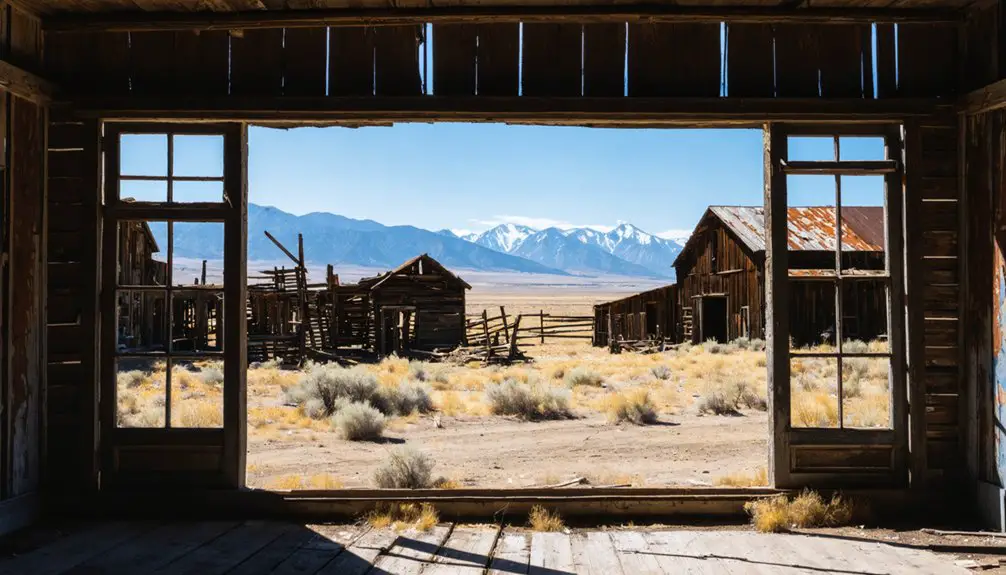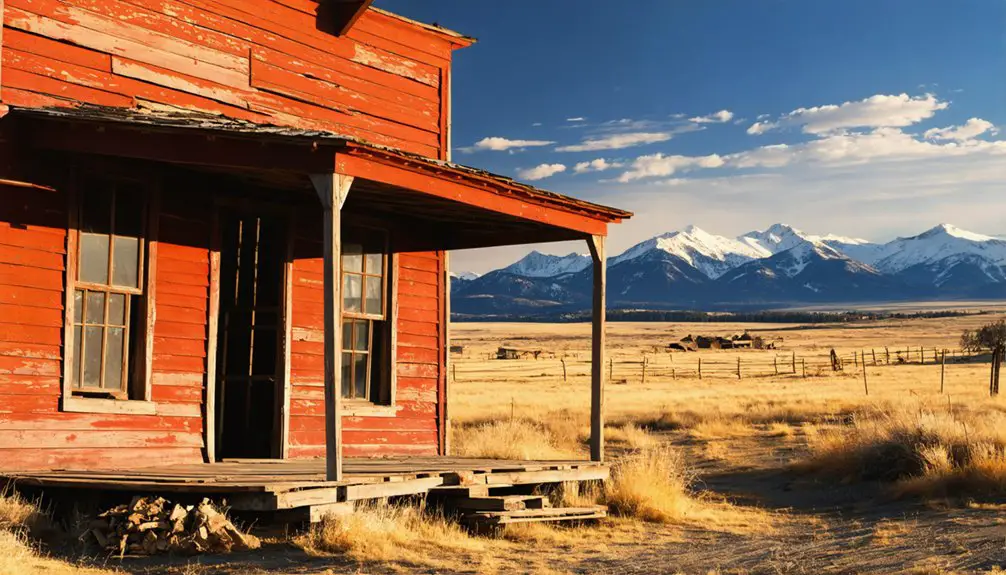
Montana’s ghost towns take you straight into the boom-and-bust cycle that defined the American frontier. You’ll find gold rush origins at Bannack, where strikes on Grasshopper Creek ignited Montana’s first territorial capital in 1862, and silver riches at Granite, once home to the world’s wealthiest silver mines. Well-preserved sites like Garnet and Elkhorn State Park offer authentic architectural remnants frozen in time. There’s far more to uncover about each town’s history, routes, and visiting details ahead.
Key Takeaways
- Bannack State Park is Montana’s best-preserved ghost town, featuring over 50 standing structures, including the Meade Hotel and Sheriff Plummer’s gallows.
- Montana’s ghost towns originated from gold discoveries beginning in 1852, with Bannack’s major boom starting after Grasshopper Creek strikes in 1862.
- Garnet Ghost Town offers remarkably intact frontier architecture from the 1860s, maintained without commercial influence for an authentic ghostly atmosphere.
- Virginia City and Nevada City provide immersive frontier experiences with restored buildings, stagecoach rides, reenactments, and a connecting train route.
- Granite’s silver mines were among Earth’s richest, while Bannack charges an $8 vehicle fee and Garnet operates seasonally from late May.
Montana’s Ghost Towns and How They Were Born
Montana’s ghost towns didn’t materialize overnight — they were born from one of the most frenzied periods of resource extraction in American history. Gold’s discovery at Gold Creek in 1852 ignited mining origins that reshaped the frontier landscape entirely.
By July 1862, Bannack’s boomtown culture exploded following strikes along Grasshopper Creek, drawing thousands chasing legends of instant wealth.
You’ll find that resource extraction drove every decision — settlement, governance, even outlaw activity under figures like Henry Plummer.
Economic decline followed just as swiftly once veins depleted. Copper, silver, zinc, and lead couldn’t sustain what gold initially promised.
Frontier life collapsed, families scattered, and towns froze mid-breath.
What remains today represents historical preservation at its rawest — ghost town mysteries suspended in arrested decay, demanding your serious analytical attention.
The Gold Rush Towns That Started It All
From the economic collapse of depleted veins came a clearer picture of which towns actually catalyzed Montana’s mining identity. Gold Rush fever transformed raw frontier land into thriving Boomtown Culture almost overnight, leaving behind a Mining Legacy that still defines the region’s Historic Preservation priorities.
Four towns shaped this arc decisively:
- Bannack (1862) — First territorial capital, birthplace of Montana’s gold boom, and ground zero for Outlaw Influence under Henry Plummer’s criminal network.
- Virginia City — Alder Gulch’s Economic Impact rivaled any western strike, generating millions in extracted ore.
- Garnet — Exemplifies Resource Depletion’s frozen aftermath through intact Frontier Architecture.
- Granite — Once housed Earth’s richest silver mines, cementing Montana’s Mining History as globally significant.
You’re witnessing freedom’s boom-and-bust cycle preserved in timber and stone.
Best-Preserved Mining Ghost Towns in Montana
When exploring Montana’s best-preserved mining ghost towns, you’ll find three sites that stand out for their architectural integrity and historical authenticity: Bannack State Park, Garnet Ghost Town, and Elkhorn State Park.
At Bannack, you can walk among over 50 standing structures, paying just eight dollars per vehicle if you’re a non-resident, while Montana residents enter free.
Each site presents a distinct character—Garnet offers a pristine mountain mining camp frozen in the 1860s, and Elkhorn showcases frontier architecture that remains unmatched across the region.
Bannack State Park Highlights
Bannack State Park stands as Montana’s best-preserved mining ghost town, offering visitors a rare, largely intact window into the state’s gold rush origins.
Bannack history traces back to 1862, when gold discovery on Grasshopper Creek triggered Montana’s first major rush. Ghost town preservation here remains exceptional, with over 50 structures still standing.
When you visit, you’ll encounter:
- Meade Hotel – a frontier architectural landmark frozen mid-decay
- Sheriff Henry Plummer’s gallows – a stark reminder of outlaw justice
- Over 50 original buildings – partially furnished and structurally intact
- Affordable access – free for Montana residents; $8 vehicle fee for non-residents
You can explore this non-commercial site independently, experiencing authentic frontier history without commercial distortion.
Garnet Ghost Town Features
Garnet Ghost Town ranks as Montana’s second best-preserved mining site, dating from the 1860s and sitting thirty miles east of Missoula along Garnet Range Road near Montana Route 200.
Garnet history reflects a classic boom-and-bust cycle driven by Garnet mining operations extracting gold and silver from surrounding peaks. You’ll find Garnet architecture remarkably intact, with partially furnished structures conveying authentic frontier conditions.
Garnet preservation efforts maintain this arrested decay deliberately, allowing you to witness Garnet ghostly atmospherics without commercial interference.
Garnet landscapes offer rugged mountain terrain that frames your Garnet exploration meaningfully.
The visitor center opens at 10 AM through 4:30 PM beginning late May, though roads close December through April.
Garnet activities remain non-commercial, rewarding independent visitors who value unmediated historical encounters.
Elkhorn’s Frontier Architecture
Elkhorn State Park stands among Montana’s most architecturally distinctive ghost towns, preserving frontier structures that reflect the region’s mining heritage in ways that differ markedly from Bannack and Garnet.
Elkhorn’s architecture reveals ghost town aesthetics rooted in authentic frontier preservation, offering you a direct encounter with cultural heritage rarely found elsewhere.
Consider these defining characteristics:
- Architectural styles blend Victorian and utilitarian mining-era construction, reflecting historical significance beyond simple resource extraction.
- Frontier preservation efforts maintain partially intact buildings that communicate community impact during Elkhorn’s boom years.
- Preservation challenges stem from weather exposure and structural deterioration affecting long-term cultural heritage sustainability.
- Ghost town aesthetics here differ visually from Bannack’s administrative buildings, showcasing residential and commercial Elkhorn architecture unique to this settlement’s social identity.
Bannack State Park: Montana’s Most Intact Ghost Town
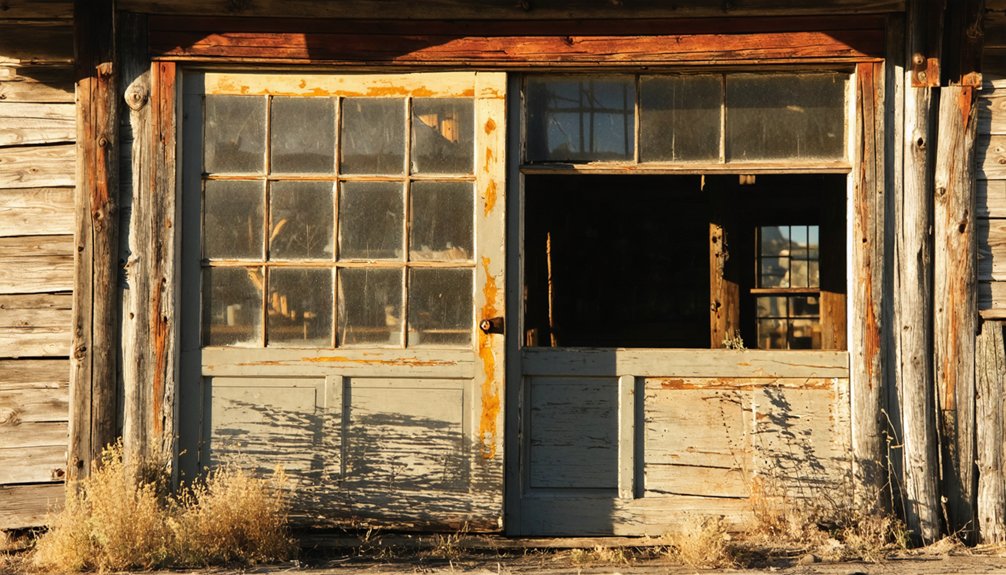
Nestled in Beaverhead County, Montana, Bannack State Park stands as the most intact ghost town in the state, preserving over 50 original structures that collectively chronicle the turbulent arc of Montana’s gold rush era.
Bannack history begins with gold’s 1862 discovery along Grasshopper Creek, triggering Montana’s first major rush and establishing the territorial capital.
You’ll find ghost town preservation here operating under an “arrested decay” philosophy, maintaining architectural features without aggressive restoration.
Mining heritage saturates every structure, reflecting both economic decline following resource exhaustion and the cultural impact of outlaw activity under Sheriff Henry Plummer.
Historical significance draws serious scholars and freedom-seeking explorers alike.
Montana residents enter free, while non-residents pay eight dollars per vehicle, making visitor experiences remarkably accessible across demographics.
Garnet Ghost Town: A Montana Mountain Camp Frozen in Time
Perched thirty miles east of Missoula along Garnet Range Road near Montana Route 200, Garnet Ghost Town ranks as the state’s second-best preserved mining settlement, its origins tracing back to the 1860s gold and silver extraction era.
You’ll encounter partially furnished buildings, historic artifacts, and ghost town legends embedded within the mountain landscape.
- Garnet history connects directly to Montana’s broader mining heritage and resource extraction economy.
- Preservation efforts maintain arrested decay across largely intact structures open year-round.
- Visitor experience includes a center operating 10 AM–4:30 PM late May, with roads closing December through April.
- Scenic photography and local wildlife encounters reward your exploration of this non-commercial, analytically significant frontier site.
Virginia City and Nevada City: Stay Overnight in a Ghost Town
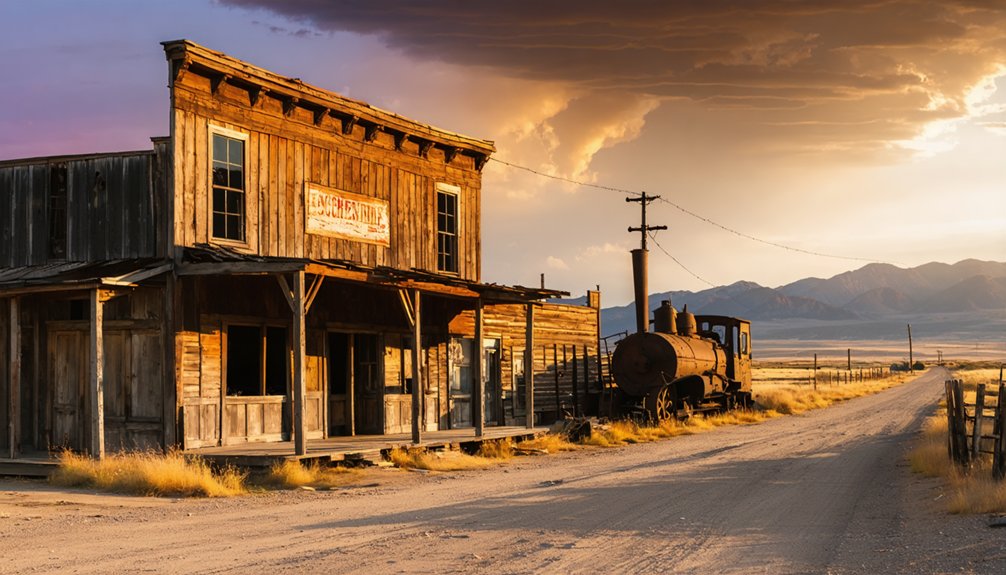
Unlike Montana’s non-commercial ghost towns, Virginia City and Nevada City offer you fully restored accommodations, letting you stay overnight within authentic 19th-century mining settlements.
You’ll find hotels, dining establishments, candy stores, and operational stagecoach rides connecting the two towns, alongside a train route running between them.
These restored attractions transform your visit from a brief historical survey into an immersive, multi-day experience within the heart of Montana’s Alder Gulch mining corridor.
Overnight Accommodations Available
Among Montana’s ghost towns, Virginia City and Nevada City stand apart as the only two sites where you can actually spend the night, transforming a day trip into a full historical immersion.
These sleepy retreats offer unique experiences rooted in local hospitality and authentic frontier atmosphere.
Overnight accommodations include:
- Historic lodgings inside restored 19th-century buildings, placing you directly within preserved architecture.
- Ghost town inns offering rustic accommodations that mirror the original mining-era aesthetic.
- Scenic camping options surrounding both towns for visitors preferring outdoor sleeping arrangements.
- Curated overnight stays combining dining, stagecoach rides, and train excursions between the two connected sites.
You’re fundamentally purchasing access to living history—an unfiltered, immersive engagement with Montana’s gold rush identity that no museum replicates.
Restored Town Attractions
Virginia City and Nevada City deliver what few ghost towns can credibly promise: a fully restored, walkable frontier environment where historical authenticity meets modern visitor infrastructure.
You’ll find operational hotels, restaurants, and candy stores embedded within historically preserved streetscapes. A stagecoach runs between both towns, and a train connects them, letting you move through the 1860s Alder Gulch corridor at a deliberate pace.
Historic reenactments animate the narrative beyond static architecture, while local folklore surrounding outlaw activity and gold fever deepens your contextual understanding.
Unlike Bannack or Garnet, these towns don’t ask you to imagine former life—they reconstruct it systematically. You’re not observing ruins; you’re walking through a functioning historical environment built for analytical engagement and genuine frontier immersion.
Elkhorn, Marysville, and Rimini: Helena’s Forgotten Mining Camps
Nestled within the mountain terrain surrounding Helena, Elkhorn, Marysville, and Rimini represent a distinct cluster of forgotten mining camps that shaped southwestern Montana’s economic identity. Each site carries distinct mining legacies worth your independent exploration.
Four Defining Characteristics of Helena’s Forgotten Camps:
- Elkhorn architecture showcases rare frontier structural design, distinguishing it among ghost town preservation sites statewide.
- Marysville history reflects silver and gold extraction cycles that drove regional population surges before inevitable economic collapse.
- Rimini mining operations extracted copper, lead, and zinc, demonstrating resource diversification beyond gold-centric camps.
- Helena exploration routes connect all three sites, giving you accessible pathways through historically significant southwestern Montana terrain.
Marysville and Rimini remain publicly accessible, while Elkhorn State Park formally protects its architectural remnants for those pursuing authentic historical significance.
Granite and Pony: Home to Montana’s Richest Silver Mines
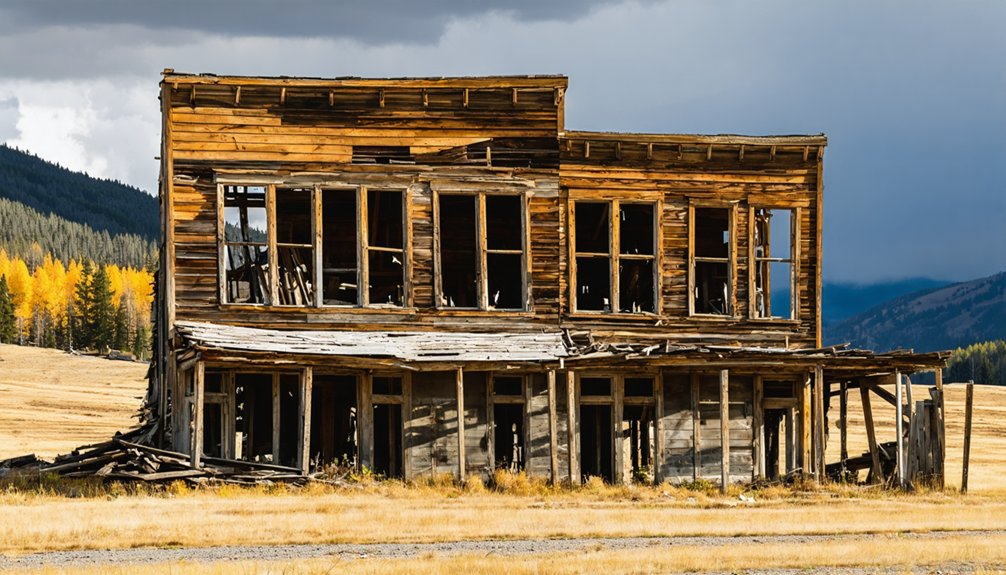
When you explore Montana’s ghost towns, Granite and Pony stand out as two of the state’s most historically significant silver mining sites, with Granite once hosting what historians identify as the richest silver mines on Earth.
You’ll find that Pony distinguished itself not merely through ore extraction but through an early technological sophistication that made it a regional powerhouse in the early 1900s.
Understanding both towns’ legacies requires you to examine how their economic trajectories—marked by explosive growth and inevitable collapse—shaped the broader narrative of Montana’s mining history.
Granite’s Silver Mining Legacy
Among Montana’s ghost towns, Granite and Pony stand apart as sites where silver mining once reached extraordinary heights. Granite’s history positions it as home to Earth’s richest silver mines, making it essential to your understanding of Montana’s mineral legacy.
Consider these defining facts about silver mining at Granite:
- Granite produced millions in silver ore during its peak operational years.
- The site now stands frozen in arrested decay, preserving its industrial past.
- You’ll find partially furnished, largely intact structures reflecting authentic frontier conditions.
- Silver mining’s collapse triggered complete town abandonment, ending its roaring era.
Visiting Granite connects you directly to an era when free enterprise and raw ambition carved wealth from mountain rock. This represents the unbridled economic independence that defined Montana’s territorial character.
Pony’s Early Tech Dominance
Pony distinguished itself from Montana’s other mining settlements by functioning as an early technological powerhouse during the first decades of the 1900s. Unlike contemporaries relying on rudimentary extraction, Pony’s innovations incorporated early machinery that mechanized ore processing, fundamentally reshaping workforce dynamics and accelerating community growth.
You’ll find that these tech advancements weren’t incidental—they drove measurable economic impact by maximizing yield while reducing manual labor dependency. Mining technology adopted in Pony represented forward-thinking industrial strategy rarely seen in frontier settlements.
This historical significance extends beyond extraction statistics; Pony demonstrated that remote mining communities could embrace modernization without sacrificing operational efficiency. Analyzing Pony’s trajectory reveals how technological adoption determined a settlement’s longevity, distinguishing it from towns that collapsed once surface-level resources disappeared.
Visiting These Ghost Towns
Granite and Pony stand as Montana’s most compelling silver mining legacies, and visiting them rewards you with direct, unfiltered access to the state’s industrial past.
Ghost town exploration here isn’t passive — you’re walking through arrested decay, where structures remain largely intact and partially furnished.
What you’ll encounter at these sites:
- Granite — Access richest silver mine ruins on Earth, preserved through historic site preservation efforts.
- Pony — Examine early electrical infrastructure that defined early 1900s innovation.
- Bannack State Park — Pay $8 per vehicle (free for Montana residents) for 50+ standing buildings.
- Garnet Ghost Town — Navigate seasonal road closures (December–April) via Garnet Range Road, thirty miles east of Missoula.
You control your own itinerary — research access restrictions before departure.
The Best Montana Ghost Town Road Trip Route
Whether you’re planning a weekend excursion or an extended road trip, Montana’s ghost towns cluster conveniently into geographic corridors that reward strategic routing.
Start your travel itinerary in Dillon, anchoring your adventure planning around Bannack State Park before heading northeast. Ghost town maps reveal a natural Helena corridor connecting Elkhorn, Marysville, Rimini, and Comet along scenic routes rich with mining heritage.
From Dillon’s Bannack State Park, follow ghost town maps northeast through the Helena corridor’s storied mining heritage.
Push west toward Philipsburg and Drummond, where hidden gems like Granite await photography tips enthusiasts capturing arrested decay.
Conclude near Missoula via Garnet Range Road, thirty miles east along historical landmarks tied to local legends of silver speculation and outlaw activity.
Road trip essentials include winter road awareness, as Garnet’s access closes December through April, demanding precise seasonal timing.
Fees, Hours, and Road Closures Before You Visit
Before you finalize any Montana ghost town itinerary, understanding site-specific fees, operating hours, and seasonal road restrictions is essential to avoiding wasted travel.
Road conditions and fees overview details vary considerably across sites, so plan accordingly.
- Bannack State Park charges Montana residents nothing but collects an $8 vehicle fee from non-residents; the visitor center operates May through October.
- Garnet Ghost Town remains accessible year-round, though its visitor center runs 10 AM to 4:30 PM starting late May.
- Garnet’s access roads close completely December through April due to harsh road conditions.
- Comet Ghost Town sits on private land, restricting independent exploration entirely.
Confirming current access details before departure protects your time and keeps your itinerary from unraveling unexpectedly.
Frequently Asked Questions
Are Guided Ghost Town Tours Available for Large Group Bookings?
The knowledge base doesn’t confirm guided group tour bookings, but you’ll find Bannack and Garnet offer rich historical significance worth exploring. Contact each site directly to investigate group tour options that suit your adventurous spirit.
Can Visitors Legally Collect Artifacts or Rocks at Ghost Town Sites?
While it’s tempting to take souvenirs, you can’t legally collect artifacts or rocks at protected sites like Bannack or Garnet. Artifact preservation laws safeguard historical significance, ensuring these irreplaceable remnants remain accessible for future generations to experience freely.
What Wildlife Species Commonly Inhabit Abandoned Montana Ghost Town Areas?
You’ll encounter diverse species thriving through natural habitat restoration at these sites — mule deer, raptors, black bears, and rattlesnakes dominate wildlife observation opportunities, reclaiming structures that humans abandoned, embodying nature’s unrestricted, sovereign reclamation of formerly industrialized landscapes.
Are Montana Ghost Towns Accessible and Accommodating for Disabled Visitors?
Accessibility varies across sites. Bannack’s visitor facilities offer some accommodations, but you’ll find uneven terrain challenging. Garnet’s rugged accessible trails remain limited. Virginia City’s restoration provides better disability-friendly options, so you’d benefit from contacting sites directly beforehand.
Do Any Ghost Towns Allow Overnight Camping Within Their Boundaries?
Under starlit skies echoing miners’ dreams, you can’t camp within Bannack or Garnet’s boundaries due to strict camping regulations prioritizing historical preservation. You’ll find nearby campgrounds that let you embrace that wild, untethered frontier spirit freely.
References
- https://www.greatfallstribune.com/story/life/my-montana/2018/06/28/these-12-best-ghost-towns-see-montana/736153002/
- https://ghosttownshistoryofmontana.wordpress.com/wp-content/uploads/2025/04/ghost-towns-history-of-mt-57print.pdf
- https://www.touristsecrets.com/destinations/united-states/montana/secrets-of-montanas-ghost-mining-towns/
- https://discoveringmontana.com/montana/ghost-towns/
- https://destinationmontana.com/ghost-towns/
- https://www.youtube.com/watch?v=gf-goCRb6NY
- https://www.legendsofamerica.com/mt-ghosttowns/
- https://southwestmt.com/pdfs/Southwest-Montana-Ghost-Towns-Printable-Map.pdf
- https://www.reddit.com/r/Montana/comments/2qzulj/ghost_towns/
- https://glaciermt.com/ghost-towns