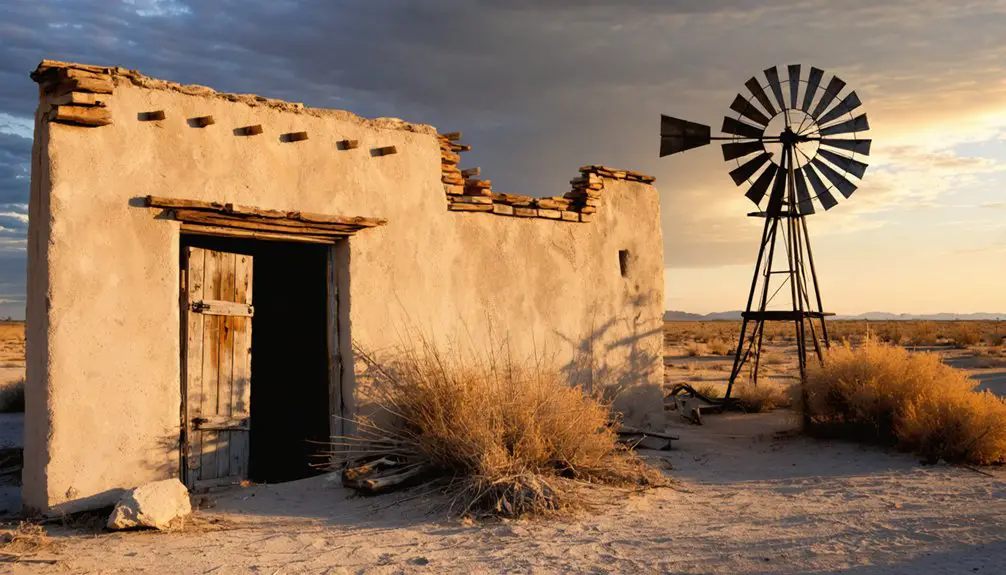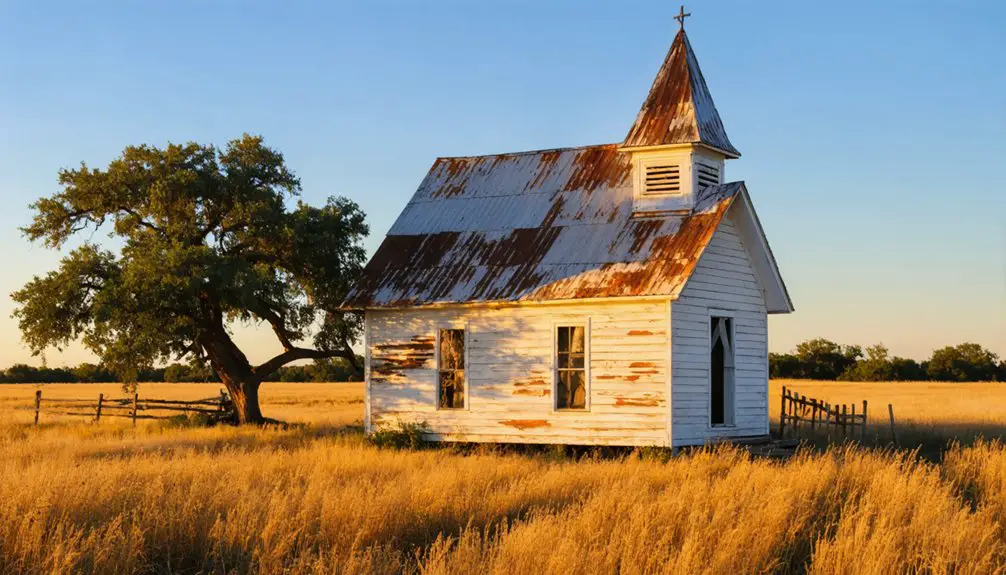
Planning a ghost town road trip to Fasken, Texas means heading into the raw, windswept heart of the Permian Basin, where a 1923 flood wiped out the railroad and sealed the town’s fate. You’ll approach via FM 1788, locally known as Telephone Pole Road, in a high-clearance vehicle. Fall and spring offer the best conditions. Ruins of a depot, hotel, and schoolhouse still stand, quietly waiting. There’s far more to this forgotten place than first meets the eye.
Key Takeaways
- Approach Fasken via FM 1788, known locally as Telephone Pole Road, accessible from either Seminole or Andrews, using a high-clearance vehicle.
- Visit during fall or spring for manageable temperatures, avoiding heavy rains that can quickly make roads impassable.
- Explore five main ruins including a depot, hotel, general store, schoolhouse, and two houses, plus weathered stock pens.
- Confirm the private land status before visiting, as the site offers unfiltered, unrestored historical exploration.
- Extend your trip by exploring nearby Andrews County ghost towns and forgotten settlements along FM 1788 and surrounding county roads.
Why Fasken, Texas Became a Ghost Town
When the rains came in 1923, they didn’t just flood the land — they erased Fasken’s future. The storm destroyed the railroad tracks connecting Fasken to the Texas and Pacific line in Midland, and that railroad impact sealed the town’s fate. Without rail service, residents had no practical reason to stay.
The truth is, few lot buyers had ever actually lived there. Fasken was always more promise than people. Once transportation vanished, population decline happened fast and hard.
By the early 1930s, the town had slipped into ghost town status, leaving behind only skeletal ruins of a depot, hotel, and schoolhouse.
You’re visiting a place that ambition built and nature dismantled — a quiet reminder that freedom sometimes means starting over somewhere else entirely.
What’s Left to See at Fasken Ghost Town?
Five ruins anchor what remains of Fasken: a one-story depot, a hotel, a general store, two dwelling houses, and a schoolhouse, along with the weathered bones of old stock pens.
These abandoned buildings carry real historical significance — they’re physical proof that someone once believed deeply enough in this place to build a town from scratch.
You’ll also find a historical marker that tells the story of Fasken’s notoriously irregular train schedules.
Legend has it the crew even shot coyotes from the moving train just to pass the time. That detail alone paints a vivid picture of life on the edge of civilization.
Don’t expect polished attractions.
What you’re stepping into is raw, unfiltered history — the kind that rewards curious travelers willing to explore on their own terms.
How to Get to Fasken, Texas
Getting to Fasken means committing to the kind of drive that feels intentional — no accidental tourists pass through Andrews County’s remote stretches of FM 1788.
You’ll approach from either Seminole to the south or Andrews to the north, both routes feeding into the same lonely corridor locals call Telephone Pole Road.
Road conditions here can shift fast. West Texas rains — the same kind that destroyed Fasken’s railroad in 1923 — still wash out unpaved stretches without warning.
Prioritize travel safety by bringing a high-clearance vehicle, extra water, and a fully charged phone. Cell service isn’t guaranteed.
Before you go, confirm the land’s private status. Fasken rewards the prepared traveler who respects both the landscape and its boundaries.
When to Go and What the Site Actually Looks Like
Timing your visit to Fasken matters more than you’d think. The best seasons are fall and spring, when temperatures stay manageable and muddy roads dry out.
Heavy rains—the same kind that destroyed the railroad in 1923—can make FM 1788 nearly impassable. Site conditions vary, but expect raw, weathered remnants of a forgotten dream.
Here’s what you’ll actually find standing:
- One-story depot ruins, slowly surrendering to West Texas wind
- Hotel and general store remains, stripped of everything but their bones
- Two crumbling dwelling houses, hinting at families who never truly settled
- A skeletal schoolhouse and stock pens, the last evidence of daily life
Nothing’s restored. Nothing’s curated. That’s exactly the point.
Ghost Towns Near Fasken Worth Adding to the Same Trip
Once you’ve walked Fasken’s skeletal grounds, it makes sense to push the trip further—Andrews County and its surrounding region hold several ghost towns that reward the same curiosity that brought you here.
The Permian Basin‘s open stretches hide abandoned structures that carry their own local legends, quiet places where failed ambitions left stone, timber, and rust behind. Communities that once chased railroad money or oil booms vanished just as Fasken did, leaving coordinates worth hunting down.
Map your route along FM 1788 and branch outward—Seminole sits nearby, and the surrounding county roads thread past forgotten settlements that don’t appear on tourist guides.
You’re already out here with a full tank and the right mindset. Keep driving.
Frequently Asked Questions
Was Fasken, Texas Ever Officially Incorporated as a Municipality?
Fasken history reveals no official municipality status — you won’t find incorporation records. It rose as real estate speculation, thrived briefly, then faded. Freedom seekers, you’re exploring a raw, unincorporated ghost town frozen in time.
Can You Legally Visit Fasken Since It May Be Private Land?
You’ll want to verify property access before venturing out, as legal considerations matter here. Fasken likely sits on private land, so always seek permission from landowners before you explore this hauntingly beautiful, forgotten Texas ghost town.
Did the Small Zoo at Fasken House Any Notable Animals?
Over 100 years later, Fasken’s animal history remains a mystery. The records don’t reveal any notable residents of that small zoo, but you can still imagine the wild curiosity it sparked in early settlers.
Are There Any Descendants of Original Fasken Lot Buyers Still Living?
There’s no documented record of descendants from original Fasken lot buyers, but you’d find that tracing your family lineage through Andrews County records could uncover surprising connections to this town’s historical significance.
Is There a Fee to Access the Fasken Historical Marker Site?
Like a forgotten trail open to wanderers, you’ll find no fee blocks your path to Fasken’s historical significance. Drive freely along FM 1788, where local legends whisper through ruins, welcoming every curious soul without cost.
References
- https://kids.kiddle.co/Fasken
- https://en.wikipedia.org/wiki/Fasken
- https://pboilandgasmagazine.com/the-century-mark-midland-based-fasken-oil-and-ranch-celebrates-a-momentous-milestone-in-may/
- https://texashighways.com/travel-news/four-texas-ghost-towns/
- https://en.wikipedia.org/wiki/List_of_ghost_towns_in_Texas