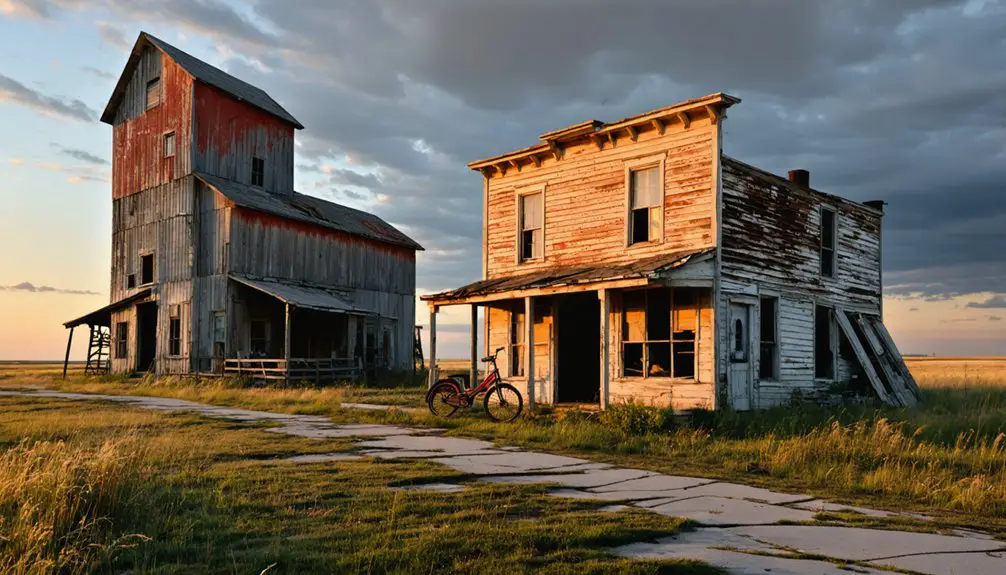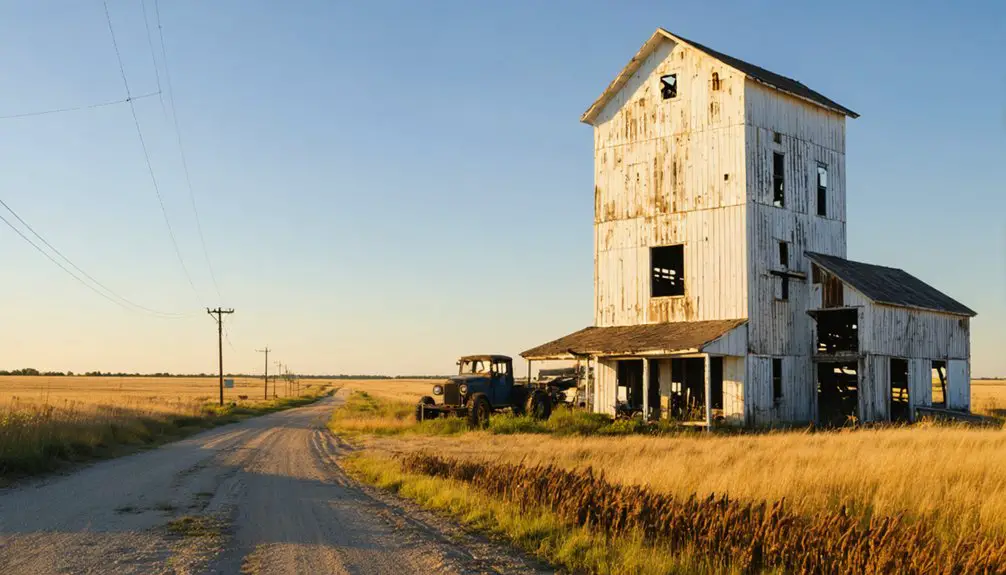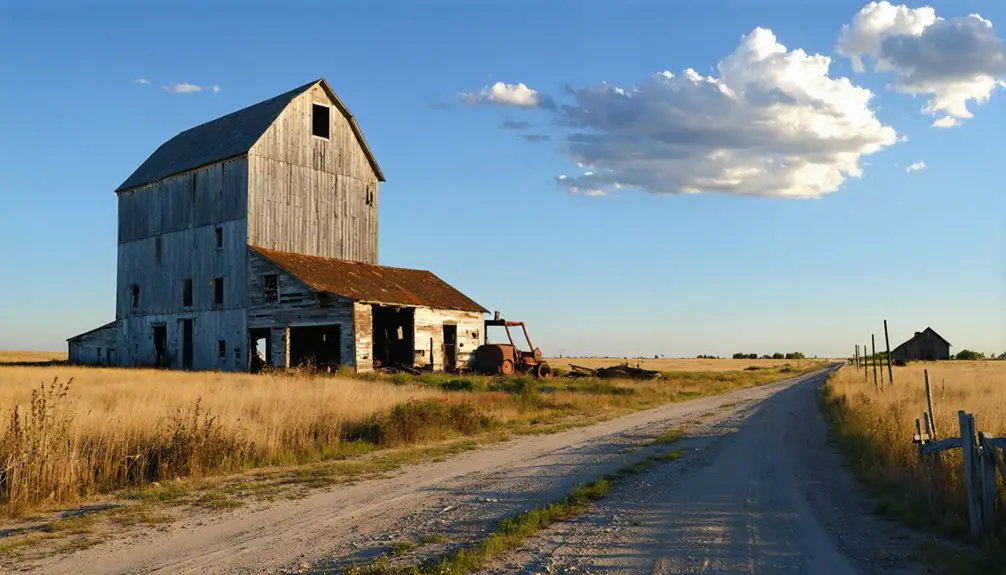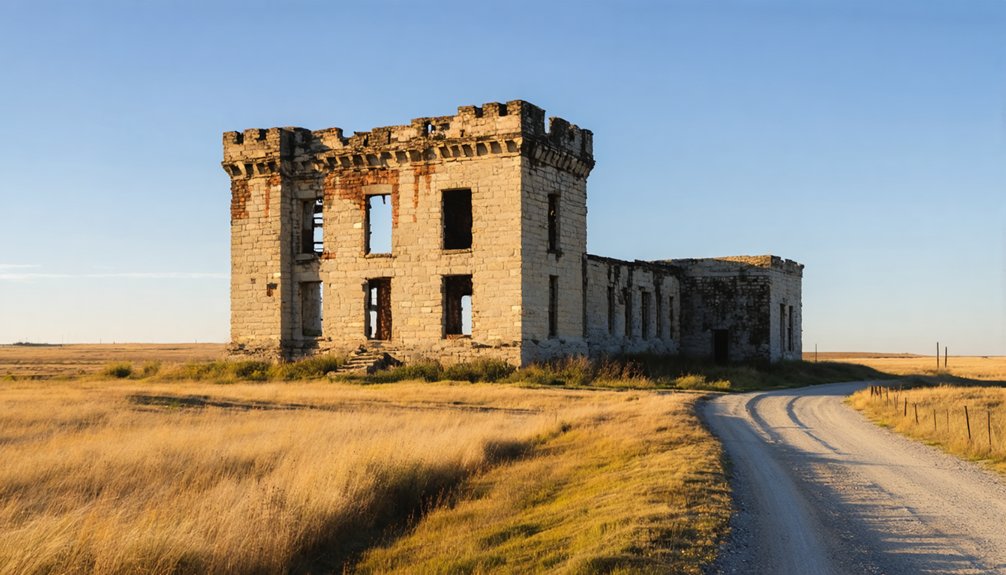
Fort Buford isn’t your typical ghost town—it’s where the American West’s most dramatic chapter came to a close when Sitting Bull laid down his rifle in 1881. You’ll find the site about 24 miles from Williston via Highway 1804, a scenic 30-to-40-minute drive through rolling bluffs and river views. Visit between Memorial Day and Labor Day for the full experience. There’s no entry fee, and the history waiting inside these preserved walls runs deeper than you’d expect.
Key Takeaways
- Fort Buford is located 24 miles from Williston via Highway 1804, with an estimated 30-40 minute drive under normal conditions.
- The best time to visit is between Memorial Day and Labor Day, when live interpretations and reenactments are fully operational.
- Pack water, wear comfortable shoes, and plan for heavy truck traffic and possible loose gravel on rural roads.
- Entry to Fort Buford is free, as the site was donated to North Dakota in 1927, making it easily accessible.
- Key attractions include the surrender room where Sitting Bull surrendered in 1881, a stone powder magazine, and a frontier military museum.
What Is Fort Buford and Why Does It Matter?
Perched near the confluence of the Missouri and Yellowstone rivers in present-day Williams County, North Dakota, Fort Buford stood as one of the frontier’s most strategically essential military installations from its establishment in 1866 until its abandonment in 1895.
Its fort history runs deep, protecting immigrant routes while shaping the region’s cultural impact forever.
You’ll discover its military significance through preserved structures, educational programs, and immersive visitor experiences that bring frontier life alive.
The site’s preservation efforts protect surviving buildings where Hunkpapa Sioux leader Sitting Bull surrendered in 1881, marking a pivotal moment in Native leadership history.
Archaeological findings continue revealing stories buried beneath the grounds.
When you visit, interpreters guide you through exhibits that connect the past directly to your own understanding of American westward expansion.
Getting to Fort Buford From Williston, North Dakota
If you’re planning a road trip to Fort Buford, Williston, North Dakota, is your natural jumping-off point, sitting just a short drive from the historic site.
You’ll head southwest out of Williston on Highway 1804, following the Missouri River through open prairie terrain for roughly 24 miles until the site comes into view.
The drive takes about 30 minutes under normal conditions, though you’ll want to check seasonal road conditions before heading out, especially during North Dakota’s unpredictable spring and winter months.
Williston Starting Point Basics
Williston, North Dakota serves as your natural jumping-off point for reaching Fort Buford State Historic Site, sitting just southwest of town near the confluence of the Missouri and Yellowstone rivers.
Before hitting the road, you’ll want to fuel up on more than just gas. Williston attractions include everything from outdoor recreation to local museums that give you solid context for the frontier history you’re about to explore firsthand.
Grab a meal at one of the local dining spots downtown before making the short drive west. The town’s got enough character to warrant an early arrival the day before.
That way, you’re rested, fed, and ready to absorb everything Fort Buford throws at you without rushing through one of North Dakota’s most historically significant sites.
Route And Road Conditions
The drive from Williston to Fort Buford covers roughly 24 miles and takes you west along Highway 1804, a route that hugs the Missouri River bottomlands and delivers some genuinely striking high plains scenery along the way.
Among North Dakota’s scenic routes, this one earns its reputation — expect rolling bluffs, wide river views, and open sky stretching in every direction.
Road conditions vary by season, so check ahead before departing. Spring thaws and winter storms can create rough patches, and rural roads like this don’t always get immediate attention.
Road safety means watching for loose gravel near shoulders and occasional farm equipment sharing the lane. The pavement is generally well-maintained during summer months, making it a smooth, straightforward drive you’ll actually enjoy before you even arrive.
Estimated Travel Time
Most drivers making the trip from Williston to Fort Buford can expect to spend roughly 30 to 40 minutes behind the wheel, covering the 24-mile stretch along Highway 1804.
That’s a manageable travel time, leaving you plenty of energy to explore once you arrive.
Keep in mind that North Dakota’s weather can shift quickly, particularly during spring and fall, so conditions along rural roads may extend your drive unexpectedly.
You’ll want to check forecasts before heading out.
The reward for your drive is stepping into a genuine ghost town atmosphere where frontier history feels almost tangible.
Pace yourself on the road, take in the wide-open prairie scenery, and you’ll arrive at Fort Buford feeling relaxed and ready to discover what this remarkable site has to offer.
The Best Time to Visit Fort Buford
If you’re planning a road trip to Fort Buford, you’ll get the most out of your visit by arriving between Memorial Day and Labor Day, when seasonal interpretation programs are in full swing.
During this peak window, you can watch 6th Infantry reenactors demonstrate military operations, experience History Alive programs depicting frontier soldier and laundress life, and take guided tours through the field officers’ quarters.
Outside this season, you’ll find the grounds and core structures accessible, but you’ll miss the living history experiences that truly bring the fort’s story to life.
Peak Season Visitor Benefits
Visiting Fort Buford between Memorial Day and Labor Day puts you right in the middle of the action. The peak season delivers an elevated visitor experience that’s hard to match during quieter months:
- Live interpretations — Costumed guides walk you through the field officers’ quarters, breathing life into frontier history.
- 6th Infantry reenactors — Watch soldiers demonstrate authentic military operations and daily fort routines firsthand.
- History Alive programs — Experience dramatic depictions of soldier and laundress life on the frontier.
- Flag ceremonies — Witness reenactors raise the flag on Memorial Day and lower it on Labor Day.
You’ll leave with a deeper connection to this pivotal piece of American history.
Plan your arrival during these months and make every minute count.
Seasonal Program Availability
Though Fort Buford welcomes visitors year-round, you’ll get the most out of your trip by timing it between Memorial Day and Labor Day. That’s when the site’s seasonal activities truly come alive.
During this window, you’ll experience the fort’s best program highlights, including History Alive performances that vividly depict soldier and laundress life on the frontier.
The 6th Infantry reenactors raise the flag on Memorial Day and ceremonially lower it on Labor Day, bookending a summer full of military demonstrations and guided interpretive tours.
These living history experiences transform a simple site visit into something genuinely immersive. You won’t just read about frontier life — you’ll watch it unfold before you.
Plan accordingly, and Fort Buford will reward you with its fullest, most authentic experience.
Sitting Bull’s Surrender at Fort Buford
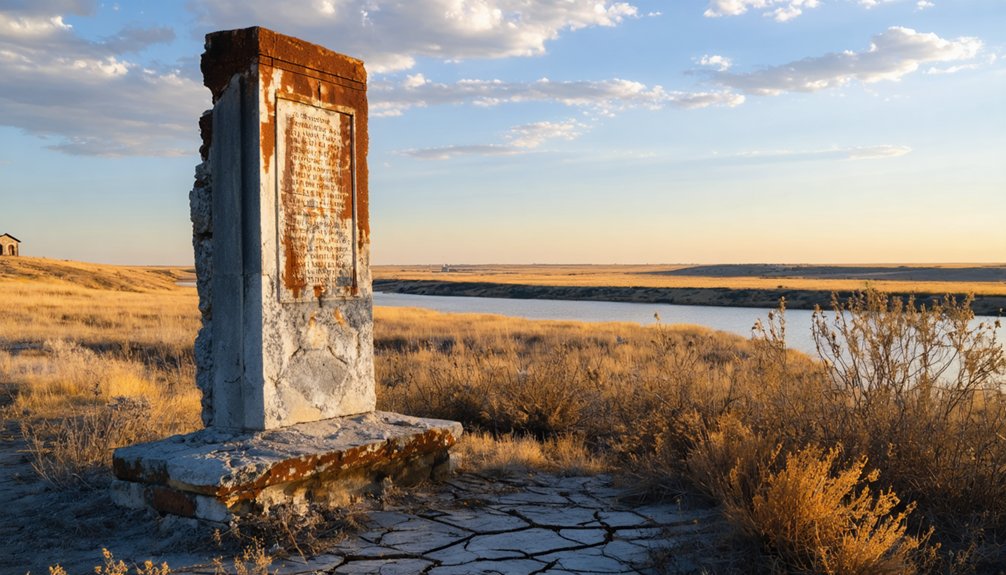
One of Fort Buford‘s most gripping historical moments unfolded in 1881, when Hunkpapa Sioux leader Sitting Bull surrendered his rifle to U.S. soldiers here. This surrender significance shaped the frontier’s historical legacy forever.
When you visit, you’ll walk through the exact room where it happened.
Here’s what makes this moment worth exploring:
- Sitting Bull led attacks on fort work parties as early as December 1866
- Post Surgeon James P. Kimball documented his leadership during those early raids
- His eventual surrender marked a pivotal turning point in Western expansion
- You can stand in the actual surrender room today
Standing there, you’ll feel the weight of history beneath your feet — raw, unfiltered, and undeniable.
Historic Structures Still Standing at Fort Buford
Few places let you touch history as directly as Fort Buford’s surviving structures. The stone powder magazine still stands as a reflection of the fort’s architectural significance, while the officer of the guardhouse remains intact for your exploration.
You’ll walk through the field officers’ quarters, now housing museum exhibits that bring frontier military life into sharp focus.
Metal framework outlines the original guardhouse foundation, helping you visualize the building’s true scale. Historic preservation efforts guarantee these remnants tell their stories clearly.
Notice how the grounds themselves become a map of the past, with each structure anchoring a different chapter of frontier history. The duplex building, destroyed by fire in 1937, reminds you how fragile this preservation work truly is.
What to See and Do at Fort Buford State Historic Site?
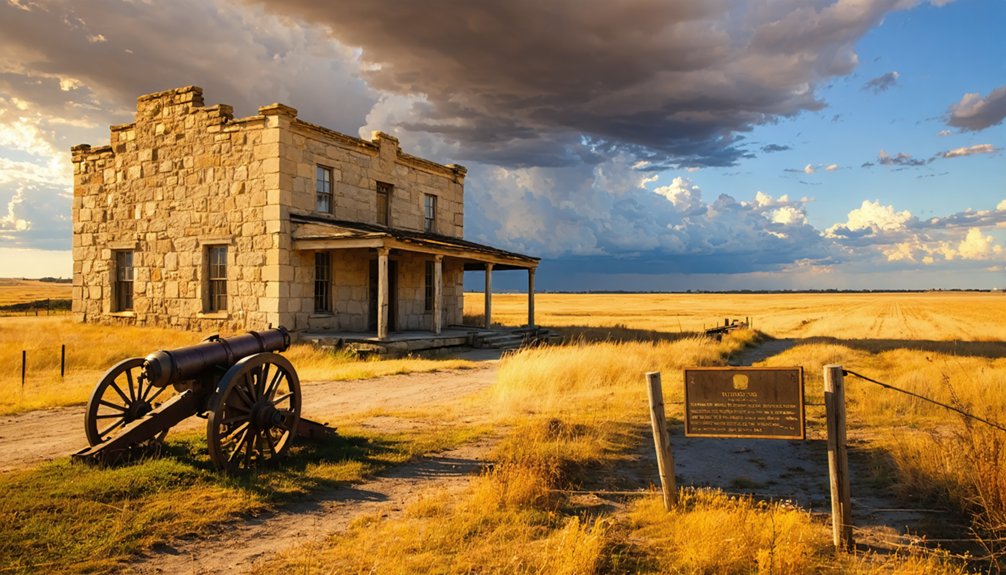
Fort Buford State Historic Site packs a surprisingly full itinerary into its compact grounds.
You’ll discover layers of frontier history around every corner.
Don’t miss these Fort Buford attractions:
- Surrender Room – Stand where Sitting Bull handed over his rifle in 1881.
- Museum & Interpretive Center – Explore artifacts and exhibits inside the field officers’ quarters.
- Historical Reenactments – Watch 6th Infantry reenactors demonstrate military life from Memorial Day through Labor Day.
- Grounds Exploration – Visit the stone powder magazine, guardhouse foundation, and post cemetery site.
History Alive programs bring soldier and laundress life vividly to the surface.
You’re free to roam at your own pace, soaking in stories that shaped the American frontier.
Inside the Fort Buford Museum and Living History Programs
Step inside the field officers’ quarters and you’ll find a museum exhibit that pulls frontier military history into sharp focus. Artifacts and displays tell the stories of soldiers who served here, and knowledgeable interpreters guide you through each room with context that breathes life into the past.
The living history programs run from Memorial Day through Labor Day, giving you a front-row seat to authentic frontier experiences.
History Alive programs depict both soldier and laundress life, showing you what daily survival actually looked like on the northern plains. On Memorial Day, 6th Infantry reenactors raise the flag in full ceremony, then lower it again on Labor Day.
These museum exhibits and hands-on demonstrations transform a quiet historic site into something genuinely worth the drive.
What to Know Before You Make the Drive?
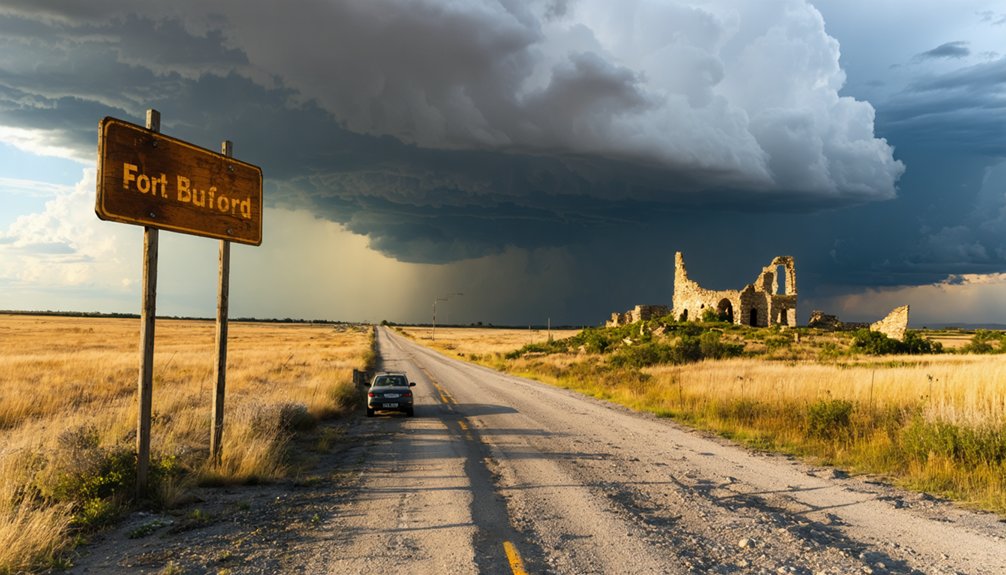
Before you load up the car and head toward Williston, North Dakota, there are a few practical details worth knowing. Fort Buford’s historical significance makes it well worth the drive, but preparation guarantees you’ll get the most from your visit.
- Location: Find it southwest of Williston in Williams County, near the Missouri and Yellowstone river confluence.
- Season: Interpretation programs run Memorial Day through Labor Day, so time your trip accordingly.
- Driving tips: Roads near Williston serve oil country traffic, so account for heavy trucks on rural routes.
- Admission: The state-operated site welcomes visitors on grounds donated to North Dakota in 1927.
Pack water, wear comfortable shoes, and arrive ready to explore a genuine piece of frontier history.
Frequently Asked Questions
Is Fort Buford Accessible for Visitors With Mobility or Disability Needs?
Fort Buford offers modern restroom and office facilities to support your visit. You’ll find wheelchair access available, and you can enjoy historical tours through the officers’ quarters museum and reconstructed barracks with interpreter guidance.
Are Pets Allowed on the Fort Buford State Historic Site Grounds?
Like Lewis and Clark’s expedition, you’re blazing new trails! The provided knowledge doesn’t specify pet policies for this ghost town site. Contact Fort Buford State Historic Site directly to confirm whether you can bring your furry companion.
Can Visitors Purchase Souvenirs or Books at the Fort Buford Museum?
The provided knowledge doesn’t confirm souvenir options or a book selection at Fort Buford’s museum. You’ll want to contact the site directly to explore what’s available before your visit, ensuring you don’t miss out!
Is Photography Permitted Inside the Fort Buford Museum and Historic Structures?
Don’t worry about leaving your camera behind—you’ll want it! Capture the photography etiquette-friendly museum and historic structures freely. Just respect the historical artifacts on display, and you’ll create unforgettable memories documenting this remarkable frontier landmark yourself.
Are There Nearby Campgrounds or Hotels Close to Fort Buford?
You’ll find camping options and lodging alternatives near Williston, North Dakota, the closest major town to Fort Buford. It offers hotels, motels, and campgrounds, giving you the freedom to choose your perfect basecamp for exploration.
References
- https://northernsentry.com/2025/06/26/north-dakota-ghost-towns/
- http://coloradosghosttowns.com/Fort Buford.html
- https://everafterinthewoods.com/these-forgotten-ghost-towns-in-north-dakota-are-eerily-fascinating/
- https://www.history.nd.gov/historicsites/buford/
- https://en.wikipedia.org/wiki/Fort_Buford
- https://www.ndtourism.com/williston/attractions-entertainment/hidden-gem-attractions/fort-buford-state-historic-site
- https://www.youtube.com/watch?v=ix0OFvVoGpM
- https://ghostsofnorthdakota892857007.wordpress.com/2015/05/29/abandoned-fort-buford/