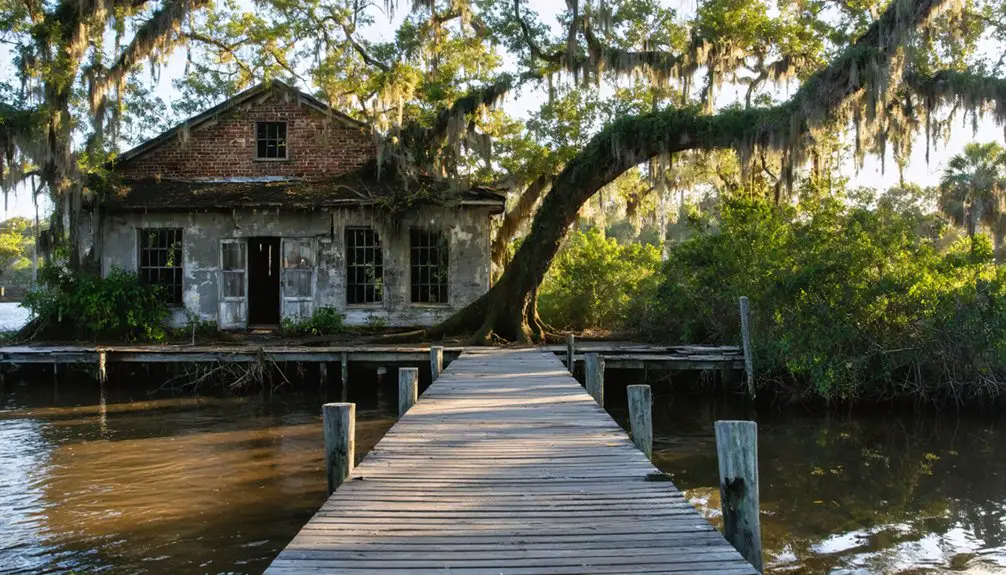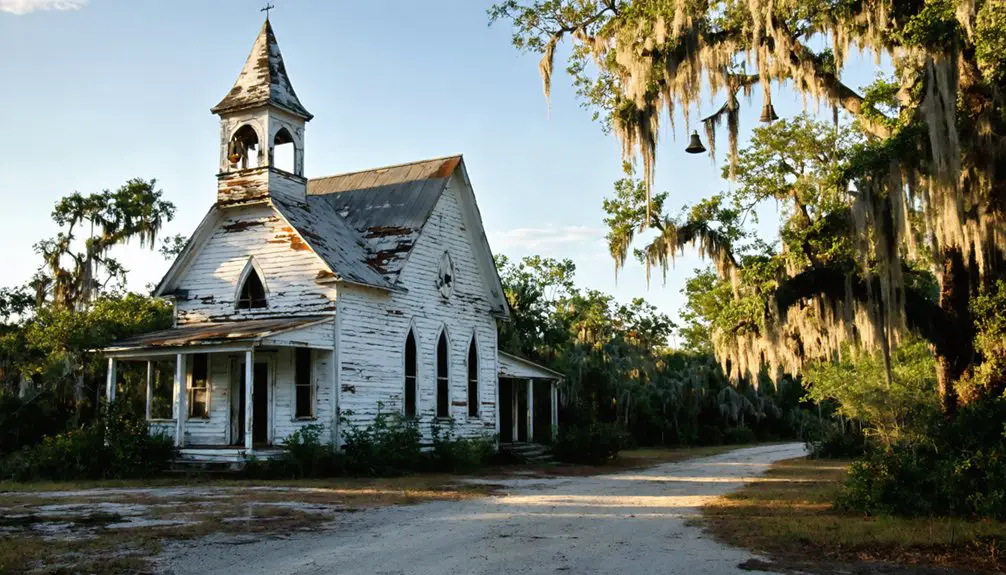
Planning a ghost town road trip to Fort Drum means chasing one of Florida’s quietest historical mysteries. You’ll exit the Florida Turnpike near Yeehaw Junction, fueling up before heading west through open ranchland and scrub flatlands. Fort Drum started as an 1840s Seminole War outpost, became a cattle community, then faded into palmetto silence. Today, a weathered cemetery and a few scattered remnants are all that’s left — and there’s far more to this forgotten story than first appears.
Key Takeaways
- Fort Drum, established in the 1840s during the Second Seminole War, is a ghost town with minimal physical remnants but rich historical significance.
- Access Fort Drum via the Florida Turnpike, heading west on Highway 441 South, then onto Highway 68 West from Yeehaw Junction.
- Key remaining attractions include a weathered cemetery and a repurposed schoolhouse now operating as an antiques and collectibles shop.
- Pack printed maps, extra water, sun protection, and a charged camera, as the area is remote with limited services.
- Respect private property, avoid removing artifacts, stay on accessible paths, and check local regulations before exploring conservation areas.
What Is Fort Drum and Why Does It Count as a Ghost Town?
Fort Drum doesn’t look like much today, and that’s exactly what makes it worth understanding. Built in the 1840s during the Second Seminole War, it served as a military outpost positioned where two old roads crossed. Soldiers came, the wars ended, and the fort faded.
Then cattle culture moved in. After the Civil War, ranchers and workers settled the area, drawn by open range and opportunity. A trading post followed, and for a time, Fort Drum functioned as a living community.
Today, a cemetery and a repurposed schoolhouse are nearly all that remain. No bustling streets, no preserved buildings.
That absence is precisely what earns Fort Drum its ghost town status. Its historical significance survives in memory and burial grounds, not brick and mortar.
The Seminole War History That Built Fort Drum
When you trace Fort Drum’s origins back to the 1840s, you find a Second Seminole War outpost deliberately placed at the crossing of two military roads, including the old wire road and a route connecting to Fort Basinger.
That strategic position made the fort a functional link in Florida’s frontier defense network, controlling movement through territory the U.S. Army was working hard to secure.
Once the wars ended and the military withdrew, the settlement lost its purpose and slowly faded, setting Fort Drum on the long road toward the ghost town you’re visiting today.
Fort Drum’s Military Origins
During the Second Seminole War in the 1840s, the U.S. Army constructed Fort Drum at a strategic crossroads where two military roads converged — the old wire road and a route connecting Fort Basinger.
The military architecture was deliberately practical, designed to project force across Florida’s remote frontier and control movement through contested territory.
You’re standing where soldiers once kept watch over a landscape that felt anything but settled.
That historical significance runs deeper than most visitors expect. Fort Drum wasn’t just a temporary outpost — it represented the federal government’s determined push into Florida’s interior, reshaping land that the Seminole people had called home.
Understanding that origin gives the ghost town a weight that no crumbling wall or rusted artifact could fully capture on its own.
Seminole War Strategic Placement
The Second Seminole War reshaped Florida’s interior with brutal efficiency, and Fort Drum‘s placement was no accident. Military planners chose this exact spot in the 1840s because two military roads converged here — the old wire road and a route connecting Fort Basinger.
That intersection gave Fort Drum its strategic importance, allowing troops to move quickly across unpredictable terrain while maintaining supply lines through hostile territory.
You’re standing where soldiers once made critical decisions about movement and survival. The land hasn’t forgotten that weight.
Those crossing roads weren’t just dirt paths — they were lifelines carved through a wilderness that resisted every effort to tame it. Fort Drum existed because controlling those routes meant controlling the region, and that purpose shaped everything that followed.
From Fort To Ghost Town
After the Seminole Wars quieted, Fort Drum lost the one thing that had given it purpose. Without soldiers to garrison it or military roads to maintain, the fort faded fast.
Post-Civil War cattle ranchers moved in, drawn by open range and opportunity. Henry Parker set up a trading post around 1870, and for a while, Fort Drum breathed again as a working settlement.
But small frontier towns live and die by economics, and Fort Drum eventually lost that fight too.
Today, Fort Drum’s ghost stories replace what history once built. The cemetery and a repurposed schoolhouse are the only historical landmarks still standing. You won’t find dramatic ruins here — just quiet land, buried memory, and the kind of freedom that comes from wide-open Florida cattle country.
How Fort Drum Became a Cattle Town and Then a Ghost Town
After the Civil War ended, Fort Drum‘s military purpose faded, but its open range and remote grasslands drew cattle ranchers looking for prime grazing land.
By around 1870, you’d have found Henry Parker running a store and trading post there, serving the settlers and cowboys who’d built a small community around the old fort’s bones.
Over time, though, even that modest life drained away, leaving Fort Drum to slip quietly into abandonment.
Post-War Cattle Settlement
When the Civil War ended, Fort Drum’s identity shifted from a military outpost to something far more alive — a cattle town drawing settlers enthusiastic to work the surrounding range.
The open Florida flatlands were perfect for cattle ranching, and settlement patterns followed quickly. Families and workers arrived, building something modest but real — a community rooted in land, livestock, and independence.
Decline Into Abandonment
Communities built on a single industry rarely survive when that industry fades, and Fort Drum was no exception. As cattle operations consolidated and modern transportation rerouted commerce elsewhere, the town’s economic foundation crumbled.
The decline factors were familiar across Florida’s frontier settlements — shifting trade routes, sparse population, and no industry stepping in to replace what was lost.
Ghost town evolution here wasn’t dramatic. Fort Drum didn’t burn or flood. It simply emptied, quietly surrendering to the surrounding flatlands.
Residents drifted toward growing towns with better opportunities, leaving behind a cemetery, a schoolhouse, and memories embedded in the soil.
What you find today isn’t ruins — it’s absence. That silence carries its own weight, connecting you directly to a way of life the land eventually reclaimed.
How to Get to Fort Drum From the Florida Turnpike
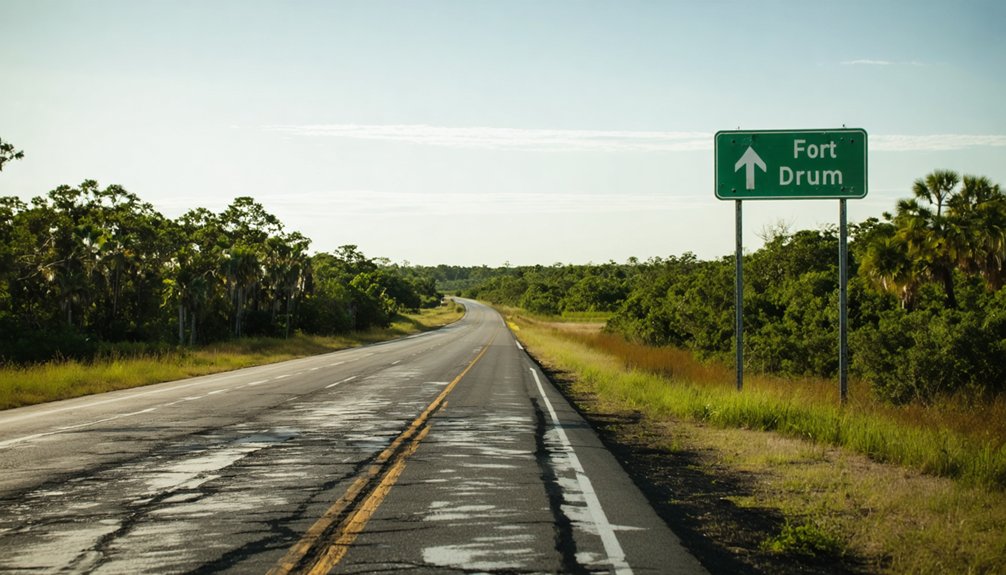
Getting to Fort Drum takes just a few simple turns off the Florida Turnpike, following the same rural corridors that cattle drivers and settlers once used to reach this forgotten frontier outpost.
Exit at Yeehaw Junction, then head west on Highway 441 South. From there, turn onto Highway 68 West toward Highway 98, using Fort Bassinger as your landmark.
These scenic routes cut through open ranchland and scrub flatlands that feel genuinely untouched by modern Florida.
Among the most useful driving tips: fill your gas tank before you leave the Turnpike corridor. Services get sparse quickly out here.
You’re entering a remote stretch of Okeechobee County where the road itself becomes part of the experience, connecting you to a landscape that history hasn’t entirely let go of.
What’s Actually Left to See at Fort Drum Today?
Once you pull off those quiet rural roads and reach Fort Drum, you’ll want to temper your expectations — but not your curiosity.
Very little physically survives here. The old fort itself is long gone, swallowed by time and Florida’s relentless landscape.
The fort is gone — consumed by time and the slow, indifferent hunger of the Florida wilderness.
What you’ll find are two tangible remnants: a weathered cemetery and the original Fort Drum schoolhouse, now repurposed as an antiques and collectibles shop.
They’re modest, but they carry real historical significance — quiet proof that people once built lives where cattle drives and Seminole War roads crossed.
Local legends add a haunted layer to the story, though no evidence backs them up.
Fort Drum rewards travelers who find meaning in absence — who can stand on unmarked ground and still feel the pull of history beneath their feet.
Fort Drum Marsh Conservation Area: Nature Stop Next Door
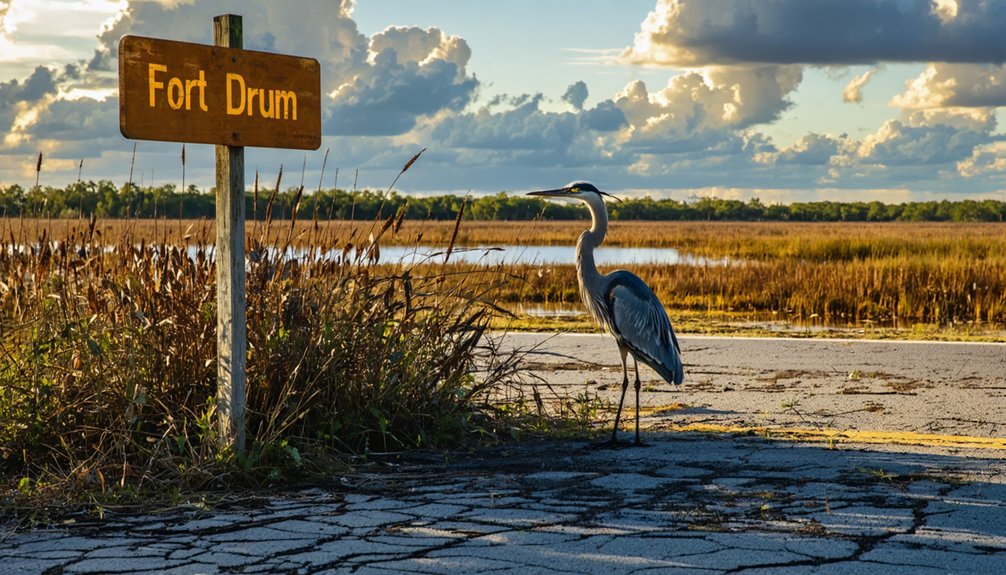
Just a short drive from the ghost town itself, Fort Drum Marsh Conservation Area offers a natural counterpoint to the historical weight you’ve just absorbed.
Located about 10 miles east of Yeehaw Junction, with access points along the south side of State Road 60, this quiet expanse rewards those who crave open land and unhurried exploration.
You’ll find hiking trails cutting through wetland habitats where wildlife observation becomes the main event.
Expect wading birds, alligators, and native flora reclaiming their territory without apology.
It’s the kind of place that reminds you why Florida’s backcountry still matters.
Pairing a stop here with your Fort Drum visit turns a simple ghost town detour into a fuller journey through history, wilderness, and the enduring freedom of Florida’s rural interior.
What to Pack for a Remote Florida Ghost Town Visit?
Heading into a remote stretch of Florida backcountry means you’ll want to pack with purpose. Fort Drum sits far from convenience stores and cell towers, so your packing essentials can make or break the trip.
- Printed maps or a downloaded offline GPS route
- Extra water and snacks for the long rural drive
- Sun protection — hat, sunscreen, and light layers
- A charged camera to document what little remains
- A respectful mindset for Ghost Town Etiquette — no removing artifacts, no trespassing
The land out here carries weight from Seminole War history and cattle-driving days.
You’re walking through memory more than ruins. Come prepared, move carefully, and leave everything exactly as you found it. That freedom you’re chasing? It starts with responsibility.
The Ghost Stories Around Fort Drum and What’s Actually True
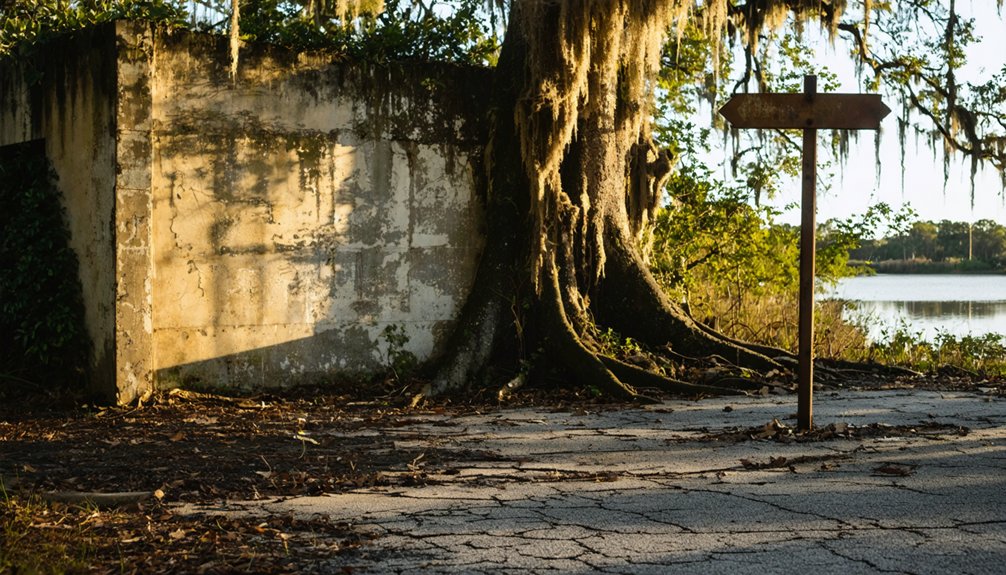
Every ghost town carries two histories — the documented kind and the whispered kind — and Fort Drum is no exception.
Every forgotten place holds two truths — the kind history records and the kind it never quite buries.
Ghost stories and urban legends have followed this old Seminole War outpost for years, painting it as a haunted stretch of forgotten Florida. You’ll find tales tied to the cemetery, the abandoned grounds, and the weight of lives lost during frontier conflicts.
But here’s what’s actually true: no concrete evidence supports any supernatural claims.
What you’re really sensing out there’s history itself — the eerie silence of a place that once held soldiers, settlers, and cattle ranchers, now swallowed by time.
Fort Drum doesn’t need ghost stories to feel haunting. Its documented past does that work more powerfully than any legend ever could.
How to Visit Fort Drum Without Breaking the Law or the Trust
Visiting a place like Fort Drum means stepping into something fragile, and how you carry yourself there matters.
Ghost town etiquette isn’t just courtesy — it’s how historical preservation actually works in practice. You’re walking through someone’s memory, maybe someone’s ancestry.
- Respect private property boundaries and posted signage
- Don’t remove artifacts, markers, or anything from the cemetery
- Stay on accessible paths to avoid damaging fragile ground
- Photograph freely, but leave everything exactly as you found it
- Check local regulations before entering conservation or restricted areas
Fort Drum’s story survived this long because enough people treated it carefully.
You’ve got the freedom to explore — protect that freedom by making sure the next traveler finds the same thing you did.
Frequently Asked Questions
Is There a Fee to Visit Fort Drum or the Surrounding Conservation Area?
You won’t find entrance fees for Fort Drum’s ghost town remnants, giving you the freedom to roam freely. However, you’ll want to follow conservation rules when exploring the surrounding marsh area nearby.
Are Pets Allowed When Visiting Fort Drum and Nearby Natural Areas?
Before hitting the road, check local pet regulations, as rules vary. Pet-friendly accommodations nearby can ease planning. Generally, leashed pets are welcome in conservation areas, so you’ll enjoy Fort Drum’s wild, untamed spirit together.
What Is the Best Time of Year to Visit Fort Drum?
You’ll find fall and winter offer the best weather patterns for exploring Fort Drum’s haunting history. Cooler temperatures make wandering the remote landscape comfortable, and you’ll avoid summer’s intense heat and any seasonal events that crowd nearby areas.
Are There Any Guided Tours Available at or Near Fort Drum?
You won’t find formal guided history tours at Fort Drum, but you’ll discover local ghost stories through online road-trip communities and self-guided exploration, letting you freely uncover this hauntingly forgotten frontier on your own terms.
Is Fort Drum Accessible for Visitors With Mobility Limitations?
Like a fading echo, Fort Drum’s rural terrain makes wheelchair accessibility challenging. You’ll find no visitor facilities here — just open land and memory — so plan accordingly and embrace the freedom of exploring this raw, historic frontier on your own terms.
References
- https://www.ghosttowns.com/states/fl/fortdrum.html
- https://www.florida-backroads-travel.com/florida-ghost-towns.html
- https://www.youtube.com/watch?v=XJ0Gvol5Enc
- https://www.storiesofthesupernatural.info/stories-of-the-supernatural-podcast/okeechobee-ghost-town-fort-drum-stories-of-the-supernatural
- https://www.itsfloridacountry.com/exploring-floridas-best-ghost-towns-and-abandoned-places/
- https://floridatraveler.com/florida-ghost-highway/
- https://www.youtube.com/watch?v=pEkbslznl3Q
- https://en.wikipedia.org/wiki/List_of_ghost_towns_in_Florida
- https://www.timeout.com/florida/florida-ghost-towns
- https://yourland.urosario.edu.co/10-abandoned-florida-towns-to-visit