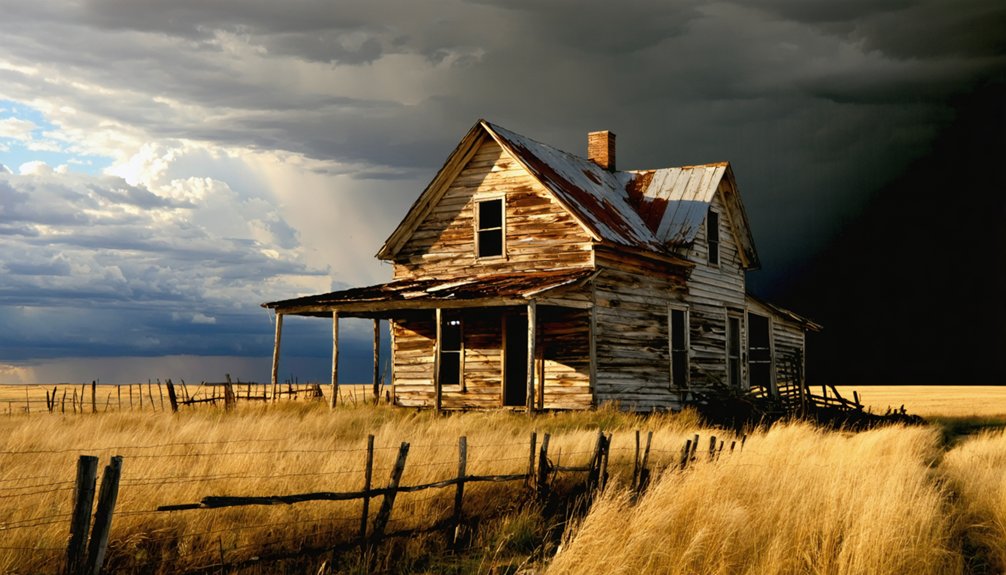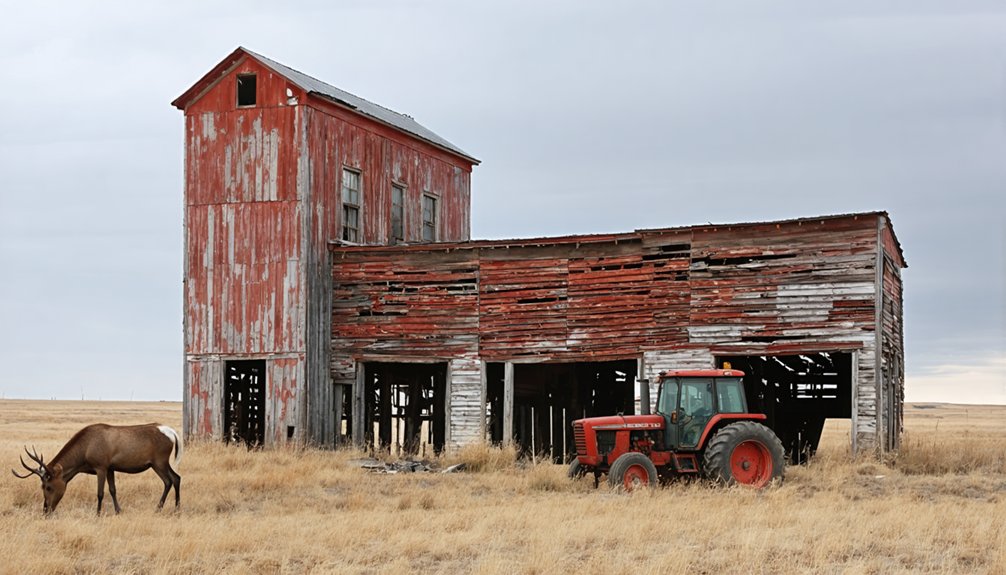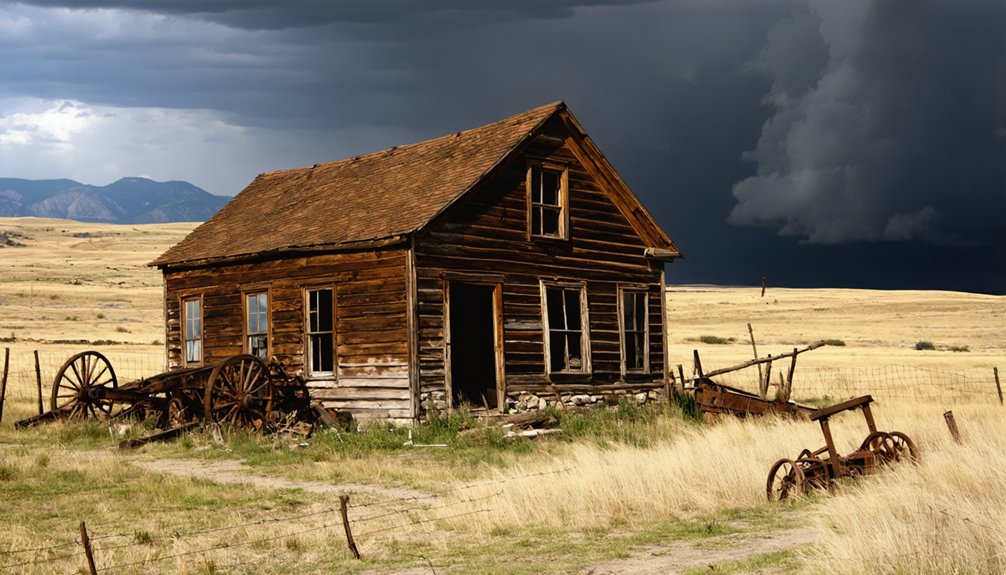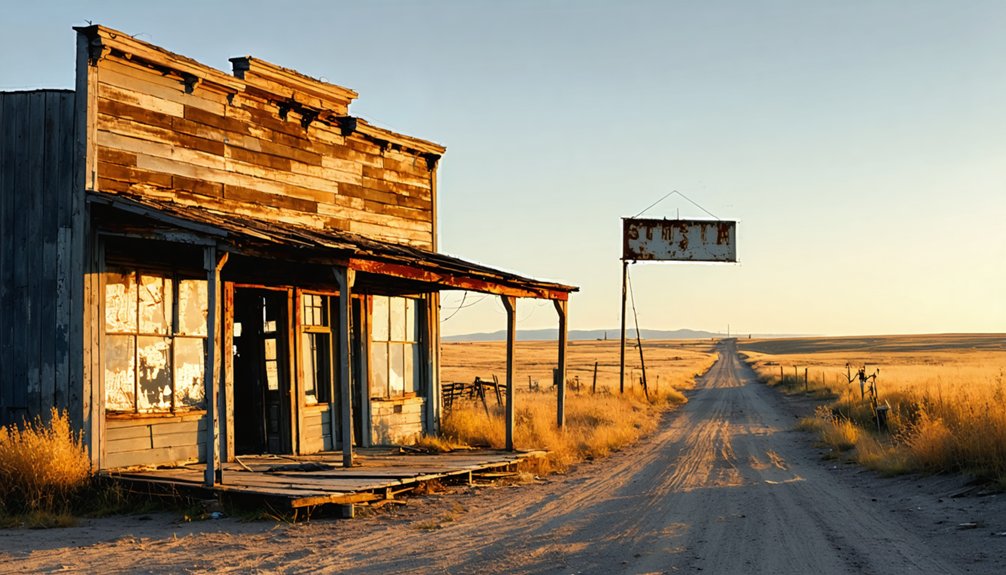
Gayville, South Dakota isn’t a true ghost town, but it’s a compelling stop for any prairie road trip. Start in Yankton or Vermillion and head west on Highway 50 through open farmland. You’ll find century-old storefronts, railroad-era architecture, and a tight-knit community of 382 that somehow outlasted floods, drought, and dust storms. Fuel up before you go, grab a county map, and keep your eyes open—the real ghost towns hiding on nearby county roads make this route unforgettable.
Key Takeaways
- Gayville is accessible via Highway 50 from Yankton or Vermillion, with Vermillion approximately 22 miles from I-29.
- Fuel up in Yankton or Vermillion before exploring, as services are limited in smaller surrounding towns.
- Bring detailed county maps, as standard GPS may not identify all ghost town sites and unmarked rural locations.
- Gayville offers authentic small-town amenities including a bank, gas station, convenience store, churches, and an athletic complex.
- Combine county roads with Highway 50 to create a road trip loop connecting Gayville and nearby abandoned railroad communities.
Is Gayville, South Dakota Really a Ghost Town?
Although Gayville appears on some South Dakota ghost-town lists, it isn’t actually abandoned — it’s a living, breathing small town with a 2020 census population of 382. That said, don’t let that stop you from making the drive.
Gayville carries the kind of deep-rooted history that ghost-town enthusiasts crave. You’ll find historical architecture tied to its railroad origins, early Scandinavian settlement, and decades of hard survival through floods, drought, and depression.
Local legends surrounding figures like Elkanah Gay and the town’s dramatic 1883 flood give the streets a layered, story-rich character. Think of Gayville less as a deserted relic and more as a rare survivor — a place where history didn’t die, it just quietly kept going on its own terms.
How a Railroad Agent Named Gay Built a Prairie Town
Behind Gayville’s quiet survival story is a single transaction that started it all. On Christmas Eve 1872, Halvor Brynelson sold 100 acres for just one dollar to Elkanah Gay and a Dakota Southern Railroad representative. That deal planted the seed for everything you’ll explore today.
Gay wasn’t just a name on a deed — he was the town’s first postmaster and railroad agent, the kind of figure local legends are built around. Scandinavian farmers followed the rails, commerce arrived fast, and a functioning town took shape on the east bank of The Lakes wetland.
As you walk through Gayville, the historical architecture and grid-pattern streets quietly reflect that railroad-era blueprint. One man, one dollar, one Christmas Eve — and a prairie town was born.
The Floods and Hard Times Gayville Somehow Survived
When you trace Gayville’s history, you’ll find a town that took some serious hits and kept standing.
In May 1883, a devastating flood tore through the community, and that wasn’t even the town’s first brush with disaster — residents had already scrambled to higher ground during widespread regional flooding in 1881.
You’d think repeated floods alone would’ve finished Gayville off, but the town pushed through each crisis and refused to disappear.
Devastating Floods Hit Hard
Gayville’s story isn’t just one of railroad ambition and pioneer grit — it’s also a story of water, drought, and economic despair testing the town’s will to survive.
Historical flooding struck twice in quick succession, first in 1881 when rising waters forced residents to scramble for higher ground, then again in May 1883 when a major flood caused extensive damage across the town. These weren’t minor inconveniences — they were community-defining moments that could’ve ended Gayville entirely.
Yet town resilience kept people rebuilding rather than retreating. If you’re tracing Gayville’s past on your road trip, picture those early settlers returning to waterlogged homes and starting over with little more than determination.
That stubborn refusal to quit is exactly what kept this town on the map.
Survival Against All Odds
Surviving back-to-back floods in 1881 and 1883 would’ve broken most frontier towns, but Gayville kept rebuilding every time the water receded. Residents scrambled to higher ground, salvaged what they could, and returned to reconstruct their lives on the same stubborn patch of South Dakota soil.
Then came the 1930s — drought, dust storms, grasshoppers, and economic collapse hammered businesses already stretched thin by farm losses. Yet Gayville’s bank reopened, anchoring the community when others collapsed entirely.
Walk through town today and you’ll sense those local legends embedded in the surviving historical architecture — buildings that quietly testify to generations of resilience. This town didn’t survive by accident. It survived because its people refused to quit, giving you a genuinely compelling stop on any freedom-fueled road trip through the Great Plains.
What You’ll Actually Find Driving Through Gayville Today
Despite its ghost town reputation, you’ll find that Gayville is very much alive when you roll through on Highway 50. The town’s historical architecture tells its story quietly — weathered storefronts and century-old structures that survived floods, drought, and depression still stand as honest reminders of resilience.
You’ll spot a working bank, a gas and convenience store, churches, parks, and an athletic complex. The community center signals that people here still gather, still invest in their town.
Stop for local cuisine at whatever’s open — small towns like this often surprise travelers with authentic, unpretentious food that beats anything on a highway chain menu.
With a 2020 population of 382, Gayville isn’t booming, but it’s breathing. That’s the real story worth discovering.
How to Reach Gayville From Yankton or Vermillion
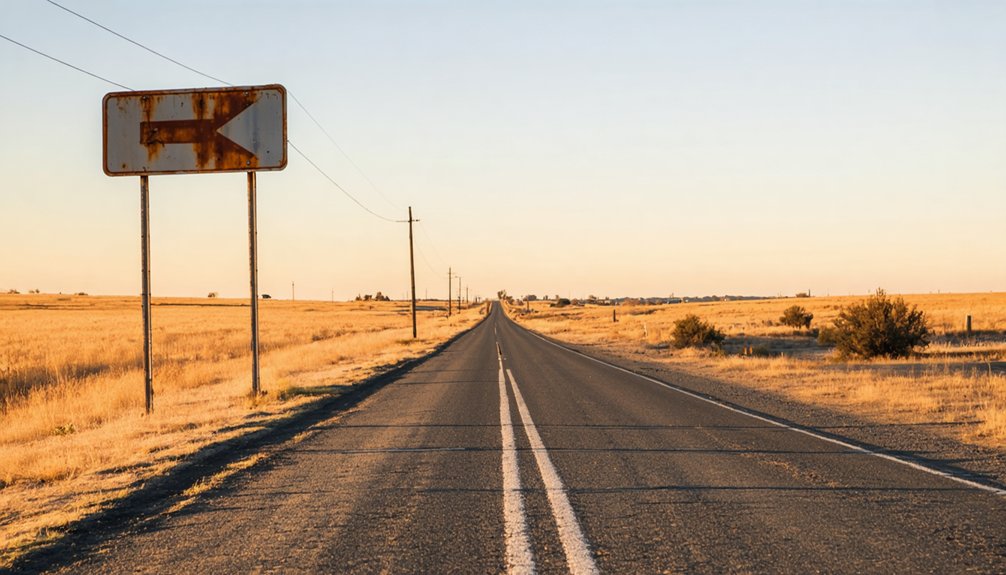
Once you’ve taken in everything Gayville has to offer, getting there is exceptionally straightforward. From Yankton, head west on Highway 50 and you’ll reach Gayville in just minutes — it’s a clean, easy drive through open prairie that delivers honest scenic viewpoints of southeast South Dakota’s rolling farmland.
From Vermillion, drive west on Highway 50 as well, passing through quiet stretches before arriving at Gayville’s doorstep. The town sits roughly 22 miles west of I-29, making it an ideal detour if you’re already moving through the region.
Stop in Yankton beforehand to grab local cuisine at one of its riverside restaurants, then roll into Gayville fueled and ready to explore. You won’t need a complicated itinerary — just a full tank and a sense of adventure.
Real Ghost Towns Near Gayville Worth Adding to the Route
While Gayville itself remains an active small town rather than a true ghost town, you’ll find genuinely abandoned sites scattered across the surrounding region that round out a compelling road trip.
South Dakota’s southeastern corner holds several forgotten railroad stops and collapsed rural communities that never survived the combined pressures of the Great Depression, drought, and rural depopulation.
You can easily stitch these sites into a single route by using Yankton or Vermillion as your base and working outward along Highway 50 and the county roads branching north and west.
Nearby Abandoned Town Sites
Gayville’s small-town charm makes it a natural anchor for a broader ghost town loop through southeastern South Dakota, where several genuinely abandoned communities are within easy striking distance. From Gayville, you can push westward along Highway 50 or branch off onto rural county roads to find scattered remnants of once-thriving railroad settlements.
Many of these sites reward explorers interested in historical preservation, offering crumbling foundations, weathered grain elevators, and fading rural architecture that tells a vivid story of boom-and-bust prairie life. You won’t always find signage marking these places, so downloading offline maps before you leave gives you a real advantage.
The freedom of this kind of open-road exploring lets you set your own pace and discover South Dakota’s forgotten corners on your own terms.
Route Planning For Ghost Towns
Building a route around Gayville gives you a strong southeastern South Dakota base, and from there you can extend your ghost town loop without much backtracking.
Highway 50 connects you westward through river valley towns where historical architecture still marks where settlements once thrived and quietly faded.
Head north toward the James River corridor and you’ll encounter local legends tied to homesteading failures and abandoned railroad stops that never grew into anything permanent.
Keep I-29 as your eastern anchor, letting you swing between Yankton, Vermillion, and quieter county roads with ease.
Carrying a detailed county map helps you spot unmarked sites that don’t appear on standard GPS routes.
Plan fuel stops in Yankton or Vermillion since smaller communities along the way offer limited services.
Frequently Asked Questions
What Is the Best Time of Year to Visit Gayville?
With 382 residents, Gayville’s charm shines brightest in late spring or early fall—you’ll enjoy mild seasonal weather and rich sightseeing opportunities exploring its railroad heritage, flood history, and small-town spirit without summer’s harsh heat.
Are There Any Hotels or Campgrounds Near Gayville, South Dakota?
You’ll find hotels and campgrounds in nearby Yankton, just minutes away! You can explore historic landmarks, savor local cuisine, and enjoy the freedom of open roads before heading back to your cozy basecamp.
How Long Does a Typical Visit to Gayville Usually Take?
You’ll typically spend one to two hours exploring Gayville’s historical landmarks and soaking in its small-town charm. Don’t rush—grab some local cuisine, wander freely, and let the town’s rich railroad and settlement history captivate you.
Is Gayville Safe to Explore for Families With Young Children?
With tree-lined streets and open skies welcoming you, Gayville’s a safe, family-friendly town. You’ll enjoy exploring historical landmarks and discovering local dining options together, creating memorable adventures your young children will treasure.
Does Gayville Host Any Annual Festivals or Community Events?
The knowledge base doesn’t confirm specific annual festivals, but you’ll discover community gatherings celebrating local cuisine and historical landmarks that bring Gayville’s rich railroad heritage alive, making your visit feel authentically free and deeply connected to America’s small-town spirit.
References
- https://westernmininghistory.com/towns/south-dakota/gayville/
- https://gayvillesd.org/44-2/
- https://en.wikipedia.org/wiki/List_of_ghost_towns_in_South_Dakota
- https://www.powderhouselodge.com/black-hills-attractions/fun-attractions/ghost-towns-of-western-south-dakota/
- https://en.wikipedia.org/wiki/Gayville
- https://kids.kiddle.co/List_of_ghost_towns_in_South_Dakota
- https://gayvillesd.org/
- https://www.sdhspress.com/journal/south-dakota-history-2-2/some-black-hills-ghost-towns-and-their-origins/vol-02-no-2-some-black-hills-ghost-towns-and-their-origins.pdf
- https://www.facebook.com/groups/SouthDakotaBeautiful/posts/1353910312454483/