You’ll find Hart Camp, Texas exactly as history left it—a once-ambitious farming settlement swallowed by drought, economic hardship, and time. Founded in 1927 by R. C. Hopping, this Lamb County ghost town once promised agricultural prosperity but couldn’t outlast the unforgiving Panhandle conditions. Today, weathered structures and rusted equipment tell its quiet story. Use Littlefield as your anchor point, visit in spring or fall, and pack for total self-sufficiency. Everything you need to plan your trip is just ahead.
Key Takeaways
- Hart Camp, located in Lamb County, Texas, was founded in 1927 and is now a ghost town with a population of eight by 2000.
- Visit during Spring or Fall to avoid extreme summer heat and navigate using Littlefield, Texas as your starting anchor point.
- Pack water, snacks, a paper map, layered clothing, sunscreen, and a charged power bank for this isolated road trip.
- Explore weathered structures, crumbling foundations, and rusted agricultural equipment that reflect Hart Camp’s abandoned farming heritage.
- Nearby ghost towns like Estacado, Hart, and West Point can be combined into a comprehensive Texas Panhandle road trip itinerary.
What Is Hart Camp, Texas?
Hart Camp is a ghost town tucked into the dry, flat expanse of Lamb County in the Texas Panhandle, founded in 1927 by R. C. Hopping as a speculative agriculture venture.
He envisioned Hart Camp as a thriving farming hub, but the land had other plans. The community never fully took hold, and its population dwindled over the decades until only eight residents remained by 2000.
Today, it’s fundamentally a historical marker standing where ambition once met unforgiving terrain. If you’re drawn to places that carry the weight of forgotten history, Hart Camp delivers something raw and unfiltered.
You won’t find crowds or gift shops here — just open sky, quiet roads, and the lingering story of a settlement that never quite became what its founder dreamed.
How Hart Camp Went From Farm Town to Ghost Town
When R.C. Hopping founded Hart Camp in 1927, he envisioned a thriving agricultural hub rising from the dry Panhandle soil, betting everything on speculative farming’s promise.
For a time, that bet seemed reasonable, as a small but active community took root and worked the land.
Hopping’s 1927 Agricultural Vision
Back in 1927, R. C. Hopping staked his claim on east-central Lamb County with bold ambitions. Hopping’s aspirations weren’t small — he envisioned Hart Camp as a thriving agricultural hub carved from the raw Texas Panhandle.
He believed the dry, expansive land could support a speculative farming community, one that would grow alongside the region’s early 20th-century expansion.
But the Panhandle doesn’t forgive optimism unchecked by reality. Agricultural challenges — unforgiving soil, unpredictable rainfall, and relentless wind — quietly dismantled what Hopping had built.
The community never reached the scale he’d imagined. As you drive through this remote stretch of Lamb County today, you’re retracing the faded footprints of a man who bet everything on land that ultimately refused to cooperate.
Peak Years Then Decline
For a brief window, Hart Camp hummed with the kind of purpose that makes a place feel permanent. The agricultural boom of the late 1920s drew settlers who believed the Panhandle’s flat, open land promised real opportunity.
Community dynamics took shape naturally — neighbors sharing labor, building routines, staking their futures in the soil.
Then the illusion cracked. Drought, economic pressure, and the brutal realities of speculative farming stripped the town of its momentum. Families left quietly, one by one, until the population dwindled to almost nothing.
By 2000, only eight people remained.
When you visit today, you’re walking through that silence. The land doesn’t lie — it simply shows you what happens when ambition meets an unforgiving landscape and loses.
Ghost Town By 2000
By 2000, Hart Camp had shed nearly every trace of its former self, reduced to just eight residents clinging to a place most of the world had already forgotten.
Rural decay had done its quiet, relentless work. When you walk these grounds today, you’re stepping into ghost town culture at its rawest.
What the census numbers can’t capture:
- Dreams abandoned mid-stride — buildings left as farmers walked away for good
- Silence replacing commerce — streets once busy with agricultural ambition, now empty
- Eight souls holding on — the last human thread connecting past to present
- A town erased without ceremony — no farewell, just gradual disappearance
Hart Camp didn’t collapse dramatically. It simply exhaled its last breath, one departed family at a time.
What You’ll Actually See When You Arrive
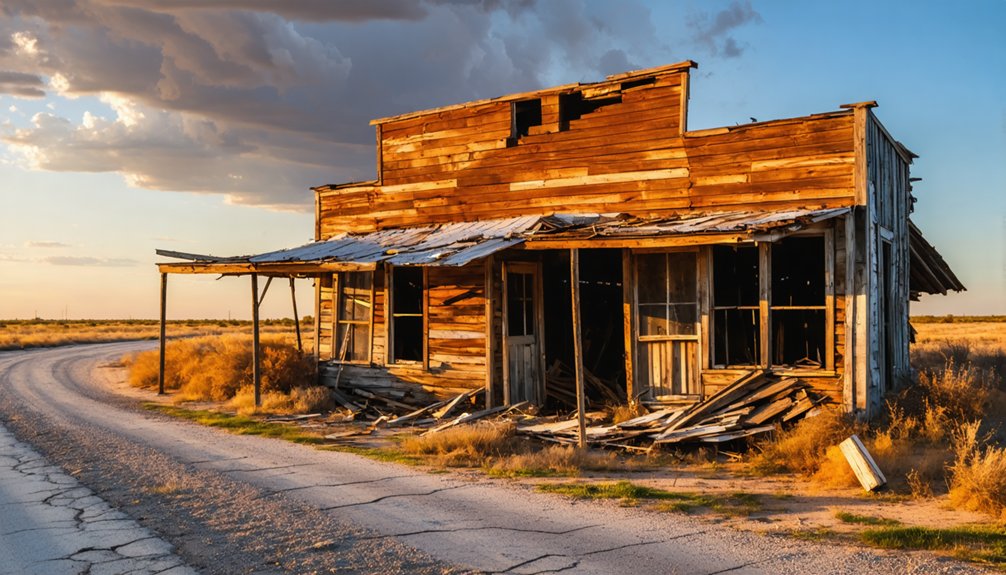
When you pull up to Hart Camp, you’ll find little more than a scattering of weathered structures standing as quiet proof that something once lived here.
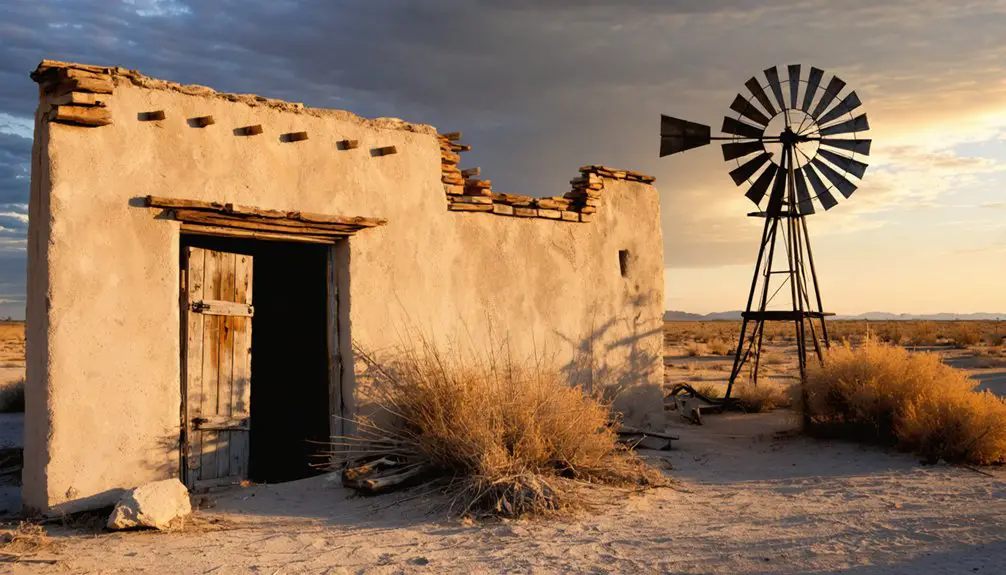
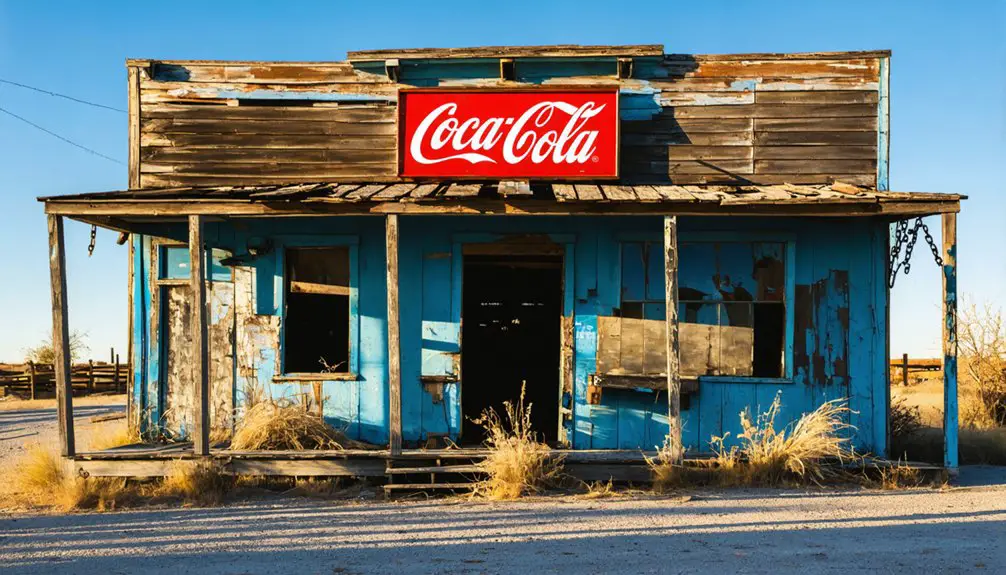
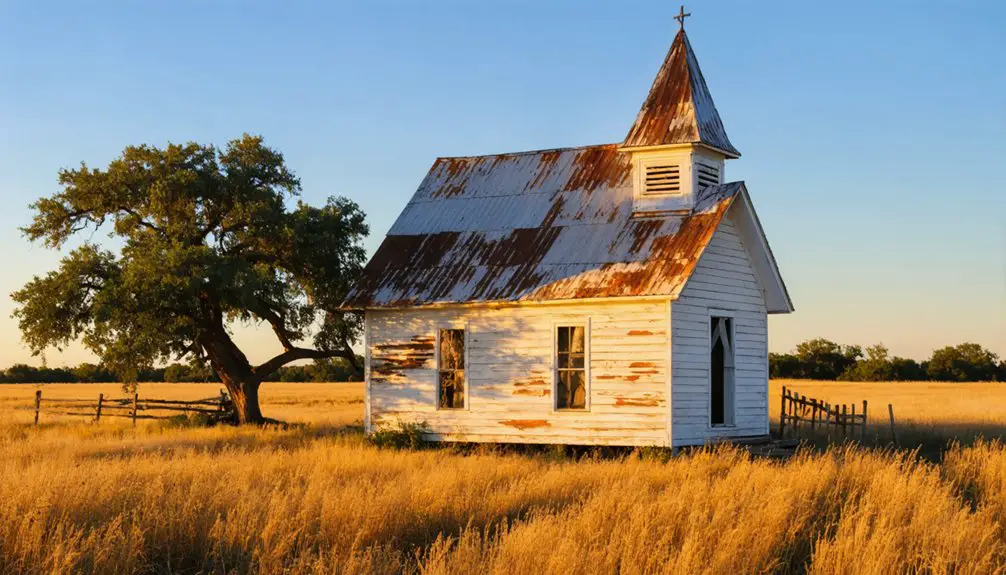
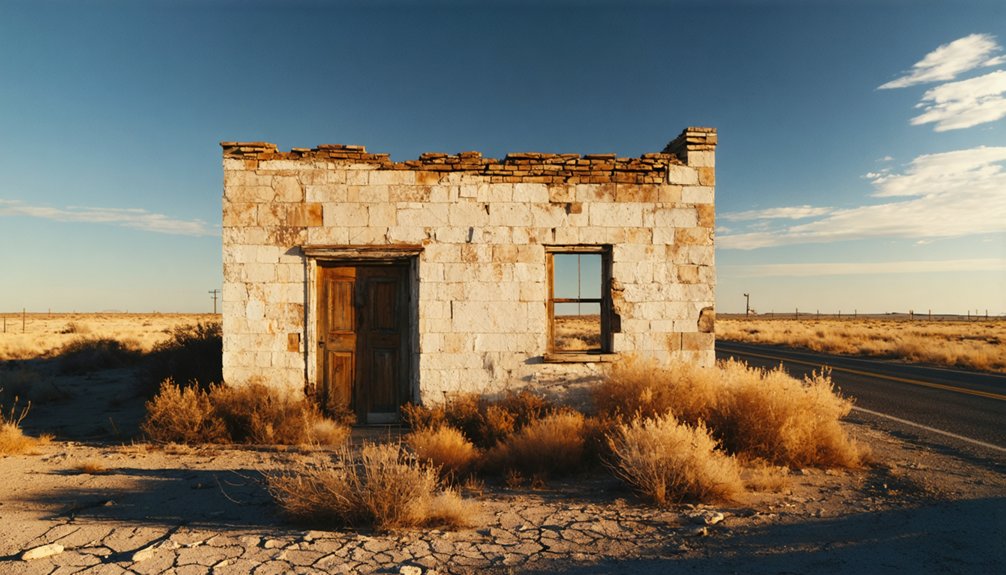
The ruins speak in fragments—sagging walls, forgotten foundations, and the skeletal remains of what farming ambition built back in 1927.
Beyond the remnants, the east-central Lamb County landscape stretches flat and wide in every direction, the dry Panhandle air carrying a stillness that makes the town’s absence feel almost loud.
Remaining Structures And Ruins
Few places strip away the romance of frontier ambition quite like Hart Camp. What you’ll find are remaining structures slowly surrendering to wind and time—perfect for ghost town photography that captures raw, unfiltered decay.
Walk the grounds and let these four realities sink in:
- Collapsed wooden frameworks — bones of buildings that once housed hopeful farming families
- Crumbling foundations — concrete outlines marking where commerce briefly breathed
- Rusted agricultural equipment — machines that worked the dry Panhandle soil and were simply left behind
- Weathered fence lines — boundaries that once meant something to someone with a deed and a dream
You’re not visiting a museum. You’re standing inside a quiet argument against speculative optimism—and the land is winning.
Surrounding Landscape Views
Stepping out of your vehicle in Hart Camp, you’re immediately swallowed by the Texas Panhandle’s signature vastness—flat, wind-scoured earth stretching to a horizon that feels geometrically impossible.
The sky dominates everything here, a canvas that rewards landscape photography with brutal, unfiltered honesty.
Lamb County’s agricultural plains surround you in every direction—dormant fields, occasional grain structures, and caliche roads disappearing into nothing.
The light shifts dramatically throughout the day, turning ordinary dirt and dried grass into something worth stopping for.
The scenic routes leading into Hart Camp amplify this experience.
Highway approaches offer unobstructed sightlines that feel earned rather than accidental.
You’re not just passing through abandoned land—you’re reading a century of speculative ambition written directly into the soil beneath your feet.
When Is the Best Time to Visit Hart Camp, Texas?

Planning a visit to Hart Camp means thinking carefully about the Texas Panhandle’s unforgiving climate, because the region’s dry, expansive terrain can make or break your ghost town experience.
Choose your best seasons wisely, since local events and weather shape everything:
- Spring (March–May) — Mild temperatures let you wander freely without brutal heat crushing your spirit.
- Fall (September–November) — Golden light blankets the abandoned landscape, making history feel achingly close.
- Avoid Summer — Triple-digit heat turns exploration into survival, stealing the joy from your journey.
- Winter (December–February) — Bitter Panhandle winds create an eerie, haunting atmosphere that amplifies Hart Camp’s ghost town silence.
You’ll connect most deeply with this forgotten place when the land itself isn’t fighting you.
How to Find Hart Camp in Lamb County
Once you’ve picked your season, you’ll need to know exactly where Hart Camp hides in Lamb County‘s vast, wind-scoured terrain. Finding directions isn’t straightforward — no flashy signage marks this forgotten 1927 settlement.
You’re traversing east-central Lamb County, deep in the Texas Panhandle, where flat horizons blur into one another.
Use Littlefield, Texas, as your anchor point when finding directions. From there, head east along rural farm roads, watching for local landmarks like grain elevators and abandoned structures that signal you’re closing in.
Sparse vegetation and weathered buildings become your guideposts. Cross-reference the Handbook of Texas entry for “Harts Camp” to confirm your coordinates before leaving cell range.
Once you arrive, you’ll recognize Hart Camp less by what’s standing and more by what’s beautifully, hauntingly gone.
Which Ghost Towns Near Hart Camp Are Worth the Detour?
Why stop at Hart Camp when the surrounding Panhandle holds a scattered graveyard of forgotten settlements? Your ghost town explorations don’t have to end here.
Rural history runs deep across this region, and these nearby stops deserve your time:
- Estacado, Texas — One of the Panhandle’s earliest ghost towns, carrying the weight of collapsed ambitions.
- Hart, Texas — A namesake neighbor that mirrors Hart Camp’s slow fade into silence.
- West Point — A once-named community swallowed by the relentless Texas landscape.
- Unnamed Panhandle Settlements — Nearly 900 ghost towns dot Texas; some remain unmarked, waiting for curious travelers like you.
Each stop adds another layer to a story the highway never tells you outright.
What to Pack for Your Hart Camp Road Trip
Heading into the Panhandle means trading convenience for raw, open country — so pack with intention.
Hart Camp sits in isolated Lamb County, far from reliable services, which means your road trip essentials need to cover every gap. Bring extra water, a paper map, snacks, and a full tank before you leave the last major town behind.
In Lamb County, the nearest help is far — pack water, maps, and a full tank before venturing out.
For ghost town photography, natural light is your greatest asset — arrive at golden hour and pack a wide-angle lens to capture the vast, empty landscape that swallowed this once-speculative farming community.
A tripod helps in low light conditions inside deteriorating structures.
Don’t forget sunscreen, layered clothing for shifting Panhandle temperatures, and a charged power bank.
Out here, self-sufficiency isn’t optional — it’s the whole spirit of the journey.
How to Capture Hart Camp Before It Disappears Completely
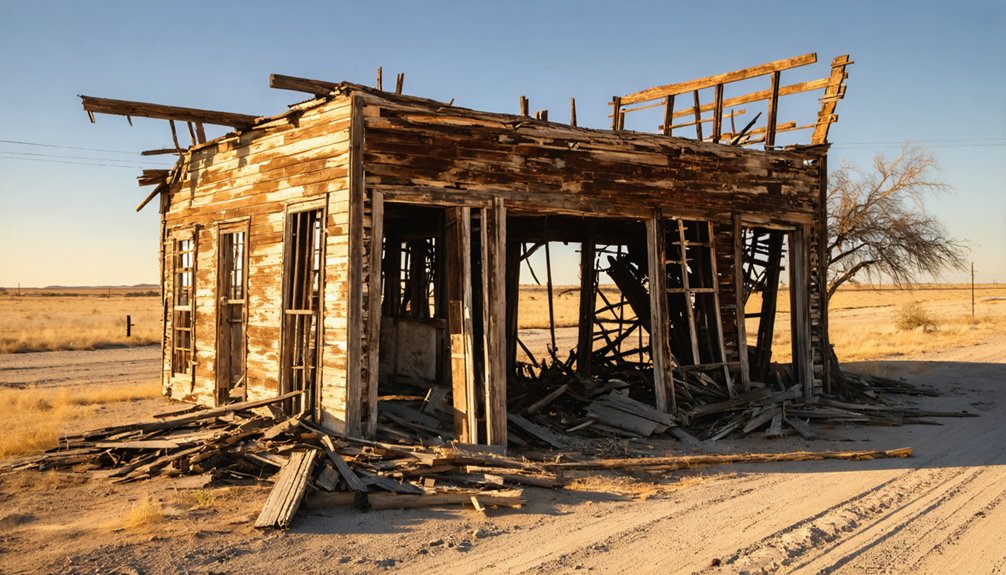
Hart Camp is disappearing on its own timeline, and you’re racing against it. Every crumbling wall holds 1927 in its bones. Your photography tips start here — shoot at golden hour when Texas light turns decay into dignity.
Historical preservation isn’t just archival work; it’s your camera shutter clicking before another structure collapses.
- Photograph every standing structure — walls won’t wait for your return visit
- Document road signs and markers — they’re quietly vanishing alongside the buildings
- Record ambient sound — wind through abandoned Lamb County land tells its own story
- Geotag your images — future researchers need your coordinates when nothing remains
You’re not just sightseeing. You’re witnessing one of Texas’s 900 ghost towns exhale its final breaths.
Frequently Asked Questions
Is Hart Camp, Texas Officially Recognized as a Protected Historical Site?
Hart Camp isn’t officially a protected historical site, but you’ll find it documented in the Texas State Historical Association’s records. Its historical significance endures, though active preservation efforts remain minimal, leaving this ghost town beautifully raw and free.
Are There Any Local Guided Tours Available Specifically for Hart Camp?
Ironically, no formal guided tours exist for Hart Camp — you’re on your own! But that’s the freedom you crave. Explore its local legends and ghost stories yourself, wandering where 1927’s speculative dreams quietly faded into Texas dust.
Can Visitors Legally Enter or Explore Abandoned Structures at Hart Camp?
You’ll want to respect private property laws before diving into urban exploration at Hart Camp. Safety regulations vary, so always seek permission, tread carefully through history’s remnants, and honor the freedom that responsible exploration truly demands.
Has Hart Camp Appeared in Any Films, Documentaries, or Television Programs?
Hart Camp’s film history is limited, but you’ll find a YouTube documentary capturing its haunting essence. Its documentary significance lives in that single video, letting you explore its forgotten story from anywhere you roam.
Are There Any Annual Events or Commemorations Held at Hart Camp?
You won’t find any annual festivals honoring Hart Camp’s ghost town history. The silence speaks for itself — you’re free to explore its forgotten past on your own terms, without crowds or calendars dictating your journey.
References
- https://discovertexasoutdoors.com/places/hart-camp-texas-a-tiny-panhandle-settlement-with-a-short-lived-past/
- https://www.youtube.com/watch?v=SSvUkUi3g3k
- https://www.texasescapes.com/TexasPanhandleTowns/Hart-Camp-Texas.htm
- https://digital-desert.com/east-mojave/hart.html
- http://genealogy.robtyn.us/hart/hart_hart_camp.htm
- https://www.facebook.com/petechristykcbd/posts/texas-town-history-22-estacado-texas-not-the-high-school-estacado-is-now-a-ghost/867239558107031/
- https://www.tshaonline.org/handbook/entries/harts-camp-tx
- https://en.wikipedia.org/wiki/List_of_ghost_towns_in_Texas
- https://www.texasescapes.com/TexasPanhandleTowns/Hart-Texas.htm
- https://texashistory.unt.edu/ark:/67531/metapth61101/m1/171/