Planning a ghost town road trip to Havana, Kansas means stepping into a living piece of Midwest history. You’ll find remnants of a once-bustling railroad trading hub, including the site of the original general store founded in 1869 and traces of the Atchison, Topeka & Santa Fe Railroad. With a population that’s dropped from 227 to under 100, Havana’s quiet streets tell a powerful story. There’s far more to uncover about what shaped this fascinating prairie town.
Key Takeaways
- Visit Havana, Kansas, a ghost town with roots dating to 1869, offering an authentic glimpse into Midwest small-town and railroad history.
- Explore key landmarks including the original general store site and the historic Atchison, Topeka & Santa Fe Railroad station remnants.
- Plan your visit during spring or fall to enjoy mild temperatures and avoid extreme summer heat or harsh winter conditions.
- Extend your road trip to nearby ghost towns like Fawn Creek, Dearing, and Tyro, or visit Elk Falls’ iconic iron bridge.
- Dedicate one full day to Havana, allowing ample time to explore historical sites, photograph landmarks, and reflect on pioneering life.
What’s Left to See in Havana, Kansas Today
Although Havana’s population has shrunk from 227 residents at its 1910 peak to just 84 today, the town still offers enough remnants of its past to make the detour worthwhile.
You’ll find historical landmarks that echo the era when this trading hub bustled with farmers, railroad workers, and merchants building something from nothing. The old Atchison, Topeka & Santa Fe Railroad station anchors the town’s identity, giving you a tangible connection to its commercial prime.
As you walk the quiet streets, locals share local legends about the founders, Callow and Myers, who planted the first general store here in 1869.
Havana won’t overwhelm you with attractions, but it’ll reward your curiosity with an honest, unfiltered glimpse into Midwest small-town history.
How to Get to Havana From Independence
Once you’ve soaked in what Havana has to offer, getting there from Independence is straightforward—just 16 miles southwest, a quick drive that takes you through the agricultural heartland of Montgomery County.
Your directions options are simple, and the open road makes this trip feel like true Midwest freedom.
With minimal turns and wide-open skies, the road to Havana offers effortless navigation and undeniable Midwest charm.
Keep these travel tips in mind before heading out:
- Head southwest from Independence on rural county roads, watching for flat farmland stretching toward the horizon.
- Fuel up in Independence beforehand—Havana’s services are minimal, reflecting its ghost town status.
- Allow extra time to explore the surrounding countryside, where stock raising heritage and quiet landscapes reward curious travelers.
The short drive delivers big historical payoff, connecting you to a vanishing slice of early 20th-century Kansas.
How Havana Fell From Trading Hub to Ghost Town
At its peak in 1910, Havana buzzed with genuine economic energy—a bank, telegraph and express offices, a money order post office, and an Atchison, Topeka & Santa Fe Railroad station all serving farmers and residents across a wide stretch of Montgomery County.
The town’s 227 residents represented real momentum.
But economic shifts slowly dismantled that foundation. Improved transportation gave rural families direct access to larger markets, cutting Havana out of the equation.
The bank closed, the express office went quiet, and the railroad lost its regional significance.
Population trends tell the rest of the story: today, only about 84 people call Havana home.
When you walk through town, you’ll feel that contrast—a place that once thrived now standing as a quiet reminder of how quickly prosperity can unravel.
What the Atchison, Topeka & Santa Fe Railroad Left Behind
The railroad didn’t just pass through Havana—it shaped the town’s identity. The Atchison, Topeka & Santa Fe Railroad’s economic impact turned this small Kansas settlement into a regional trading hub, connecting farmers, merchants, and goods to the wider world.
Iron rails didn’t merely pass through Havana—they built it, binding a Kansas farming town to the wider world.
Today, that railroad legacy lingers in the landscape, quietly telling its story to anyone willing to listen.
When you visit, look for these remnants of a railroad-driven past:
- The station site, once a bustling departure point for agricultural shipments across the state
- Telegraph and express office locations, which coordinated commerce along the rail line
- The town’s grid layout, deliberately positioned to serve railroad traffic and trade
Walking these grounds, you’ll feel the ghost of an era when iron rails meant everything to a small town’s survival.
When Is the Best Time to Visit Havana, Kansas?
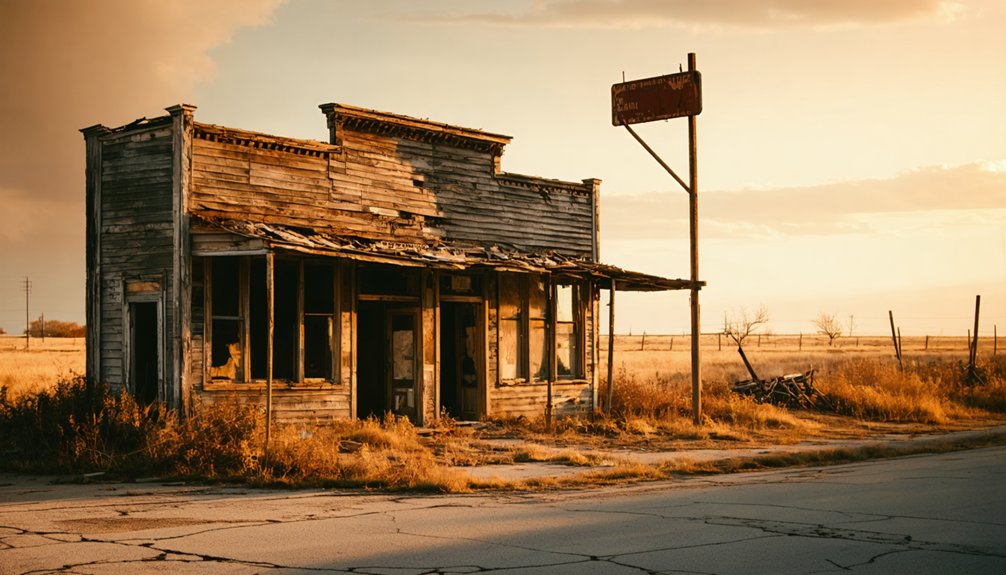
When should you plan your ghost town road trip to Havana, Kansas? The best seasons to visit are spring and fall, when mild temperatures make outdoor exploration genuinely comfortable.
Spring brings green landscapes and manageable weather conditions, letting you wander freely without battling summer’s intense heat.
Fall offers crisp air and golden fields, perfectly complementing the town’s faded, nostalgic atmosphere.
Weather considerations matter considerably here. Kansas summers can be brutally hot and humid, pushing temperatures well above 90°F, while winters bring harsh winds and occasional ice that restrict road travel.
You’ll want to avoid both extremes.
Target late April through early June or September through October for your trip. You’ll move freely through the area, capturing the quiet, haunting beauty of Havana without nature working against you.
Which Nearby Kansas Ghost Towns Are Worth the Detour?
While you’re exploring Havana, you’ll find that Montgomery County and its surrounding region hold several other small Kansas towns that share similar stories of boom-and-bust decline.
You can extend your road trip by tracking down nearby settlements that once thrived as agricultural trading hubs before the economy shifted and populations drained away.
Mapping out a multi-stop route lets you connect the dots between these forgotten communities, giving you a richer picture of how rural Kansas transformed over the past century.
Neighboring Ghost Towns Nearby
Havana isn’t the only ghost town worth exploring in Montgomery County — several nearby communities share a similar story of boom-and-bust that make them compelling detours on any road trip through southeastern Kansas.
You’ll find abandoned buildings and historical markers scattered across the region, each telling a distinct chapter of rural decline.
- Fawn Creek – A once-active farming settlement where crumbling foundations reveal the ambitions of early settlers.
- Dearing – Features remnants of early commerce, giving you a tangible sense of the area’s agricultural past.
- Tyro – A quiet community where historical markers document the rise and fall of a once-thriving trading hub.
Hitting these stops alongside Havana gives you a fuller, richer picture of southeastern Kansas’s fascinating, bittersweet history.
Notable Detour Worthy Stops
Beyond Havana’s crumbling streets, southeastern Kansas hides a handful of ghost towns that genuinely reward the detour. Elk Falls sits nearby, preserving one of Kansas’s oldest working pottery studios alongside historical landmarks like its iconic iron bridge — a rare survivor that tells stories locals still argue about.
Chase offers abandoned storefronts wrapped in local legends about boom-and-bust oil days that shaped the entire region’s identity. Further south, Liberty’s overgrown foundations invite you to piece together what agricultural ambition once looked like before the land won.
Each stop adds genuine texture to your journey rather than redundant scenery. You’re not just passing through forgotten places — you’re connecting dots across a landscape that refused to let its history disappear quietly.
Pack accordingly and leave room for unexpected discoveries.
How to Spend One Day in Havana, Kansas
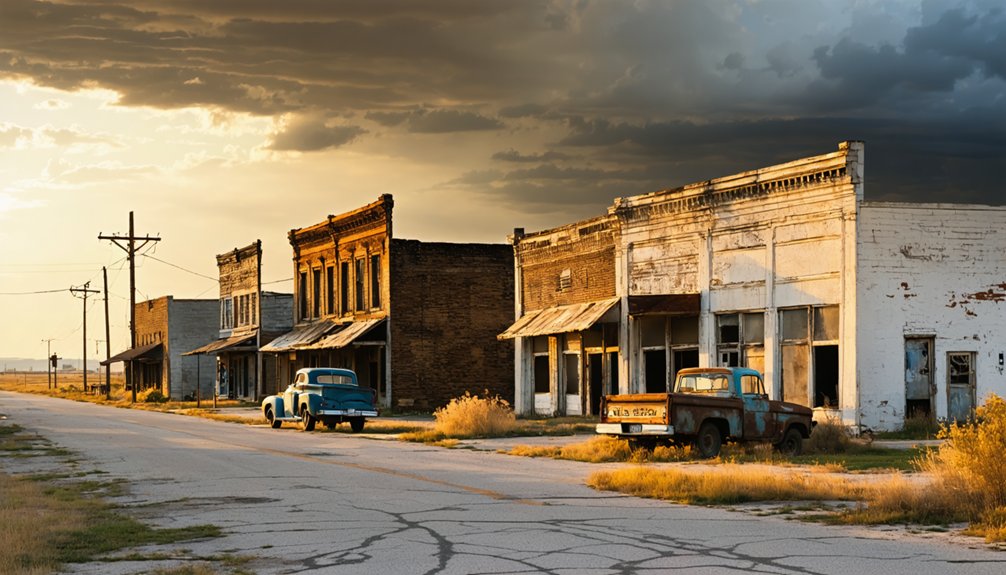
A single day in Havana, Kansas rewards curious travelers with a window into the Midwest’s fading small-town legacy.
You’ll walk streets where historical landmarks tell stories of a once-thriving 1869 trading hub, and local legends breathe life into the town’s quieter corners.
- Morning: Explore the old Atchison, Topeka & Santa Fe Railroad station, imagining the commerce that once flowed through this agricultural nerve center.
- Afternoon: Drive the rural routes connecting surrounding farmlands, soaking in the open landscapes that defined Montgomery County’s stock-raising heritage.
- Evening: Reflect near the original townsite where Callow and Myers built their general store, grounding yourself in Havana’s founding story.
You won’t need more than a day, but you’ll leave carrying something lasting.
Frequently Asked Questions
Who Were the Original Founders of Havana, Kansas in 1869?
You’ll discover that Callow and Myers were Havana’s founding families, serving as the town’s early settlers who established the first general store in 1869, igniting a thriving community you can explore today.
What Was Havana’s Exact Population When It Incorporated in 1910?
Frozen in time, Havana’s population statistics reveal exactly 227 residents when it incorporated in 1910. You’ll find this number carries immense historical significance, painting a vivid picture of the town’s thriving peak era.
Did Havana’s Post Office Offer Money Order Services to Rural Residents?
Yes, Havana’s post office offered money order services, giving rural residents a reliable way to send and receive funds. You’d have accessed two rural routes connecting you to distant farming communities across the countryside.
How Many Rural Postal Routes Served the Havana, Kansas Community Historically?
Two routes, vast farmland — Havana’s postal history connected you to the countryside through two rural mail routes, bridging isolated homesteads to town services, ensuring you’d never feel cut off from essential communication and community lifelines.
What Class of City Was Havana Designated Upon Incorporation in 1910?
When Havana earned its city classification in 1910, it became a third-class city, a designation carrying real historical significance. You’ll appreciate how this formal incorporation marked the town’s peak growth era and thriving community spirit.
References
- https://www.youtube.com/watch?v=Ra5RjaN6A_c
- https://legendsofkansas.com/kansas-ghost-town-list/
- https://esirc.emporia.edu/bitstream/handle/123456789/1577/McQuin Vol 8 Num 3.pdf?sequence=1
- https://books.google.com/books/about/Ghost_towns_of_Kansas.html?id=UwslAAAAMAAJ
- https://kansaspress.ku.edu/9780700603688/
- https://digitalcommons.unl.edu/greatplainsquarterly/1100/
- https://books.google.com.af/books?id=dos6AQAAIAAJ&source=gbs_book_other_versions_r&cad=2
- https://www.youtube.com/watch?v=oGB5FNJ95Rw
- https://www.ksgenweb.org/archives/1912/h/havana.html
- https://www.youtube.com/watch?v=jHD-6b-syto