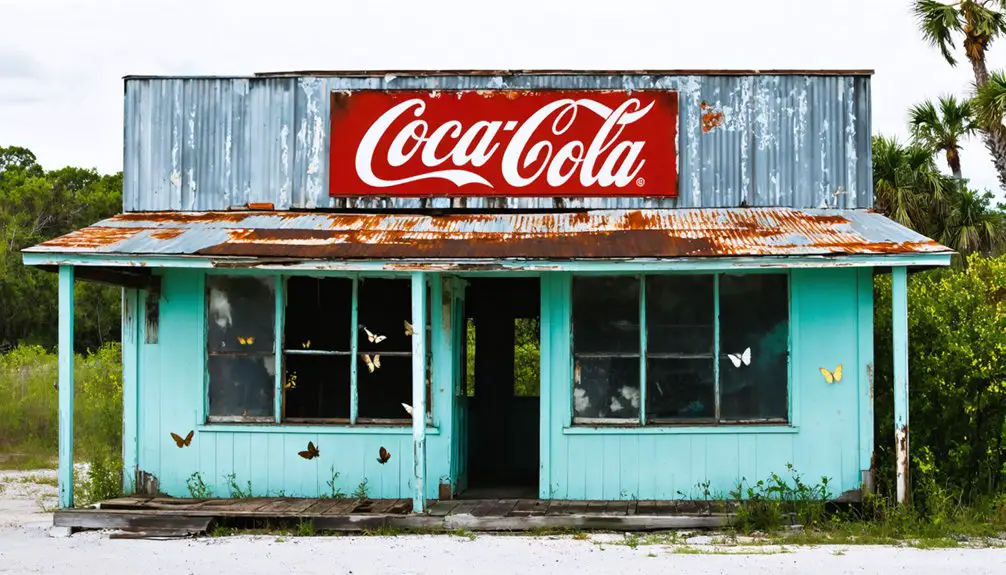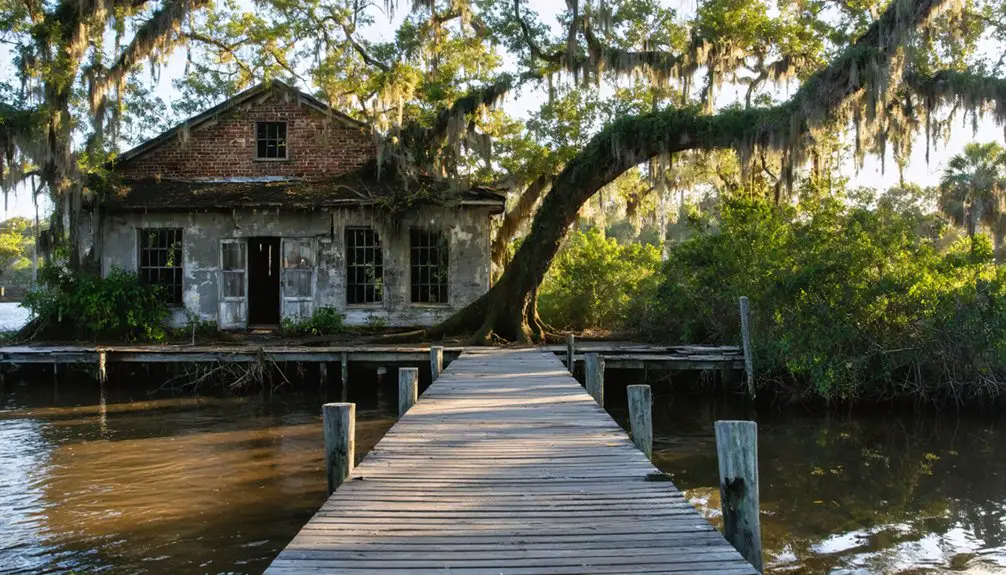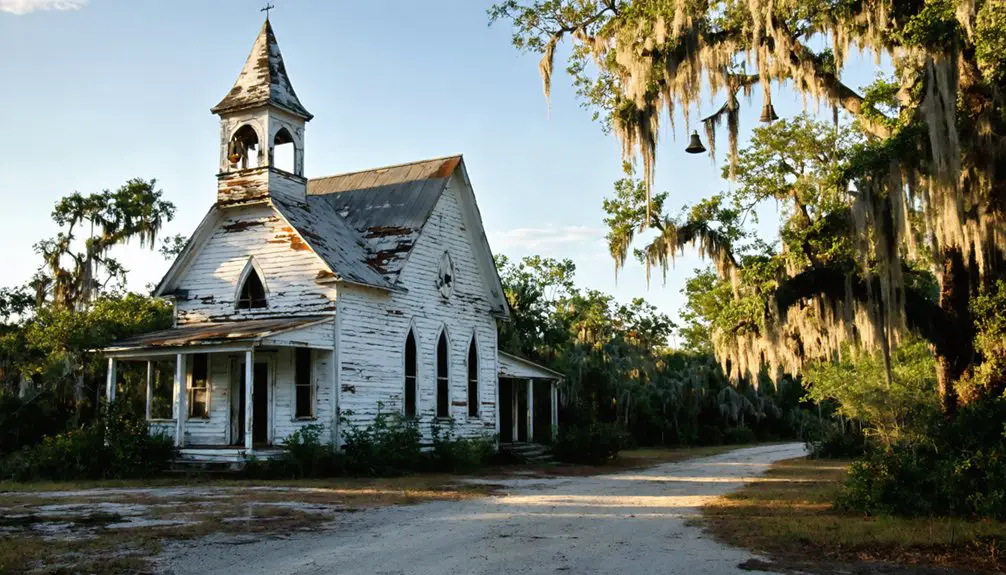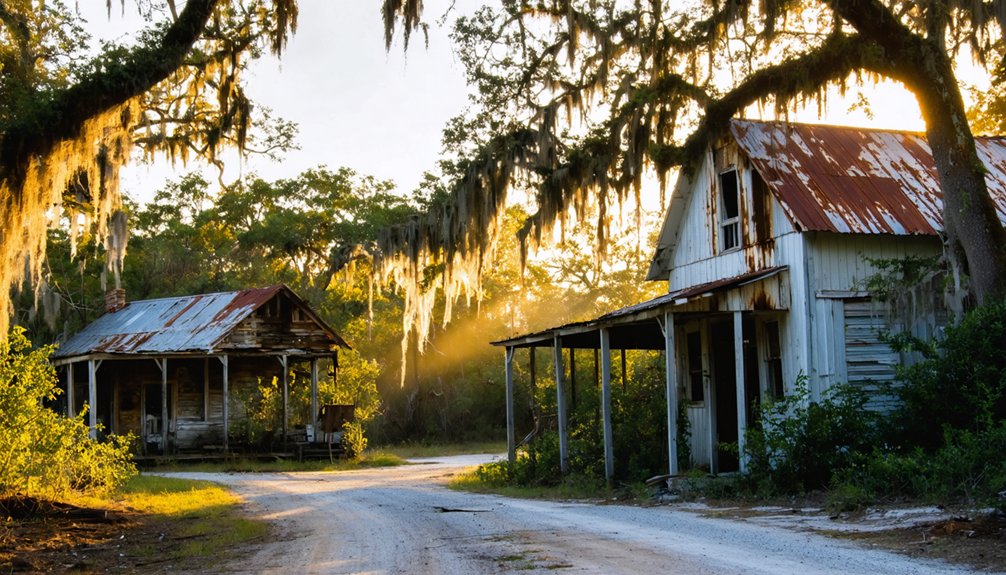
Planning a ghost town road trip to Hilolo, Florida means venturing deep into Okeechobee County’s quiet backroads, where a once-thriving railroad community of nearly 500 residents simply faded away. You’ll follow US 441 to NE 224th Street, maneuvering rural roads toward scattered remnants of the 1914 Kissimmee Valley Extension. Bring water, insect repellent, and an offline map — cell service is unreliable out here. The full story of Hilolo’s rise, fall, and what’s still waiting for you there runs much deeper.
Key Takeaways
- Hilolo is a remote ghost town in Okeechobee County, Florida, once home to nearly 500 residents before its railroad-driven economy collapsed.
- Reach Hilolo via US 441 to NE 224th Street, then head east toward 48th Ave, using offline maps due to spotty cell service.
- Visit between October and March for mild weather, avoiding summer afternoons when thunderstorms and extreme heat make exploration uncomfortable.
- Pack water, sunscreen, insect repellent, sturdy shoes, a quality camera, and a printed map before venturing into this remote rural area.
- Combine your visit with nearby ghost towns Fort Drum, Tantie, and Bassinger to create a fuller Florida rural history road trip.
What Is Hilolo, Florida: and Why Does It Exist?
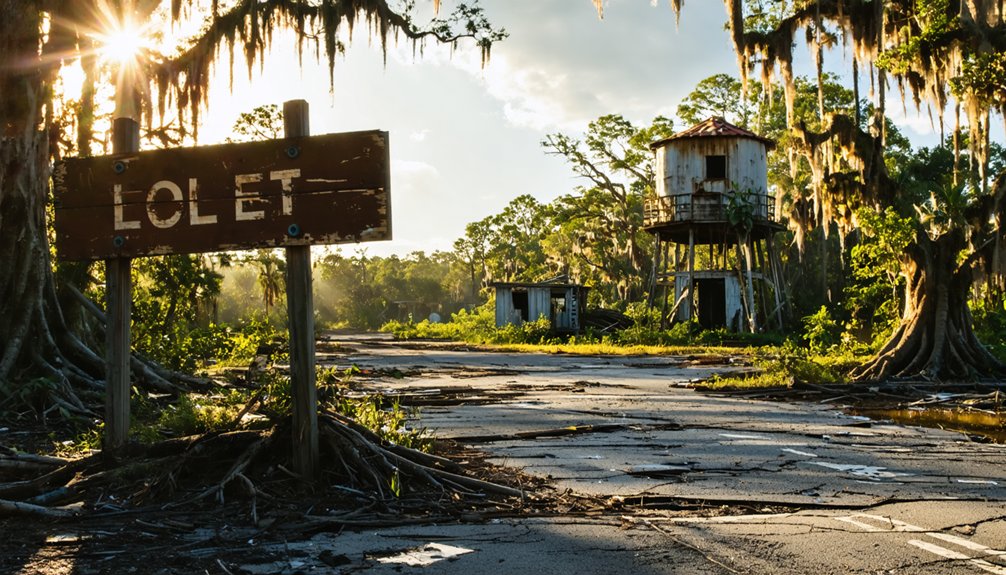
Tucked away in the rural expanse of Okeechobee County, Florida, Hilolo is a ghost town that once thrived as a small but vibrant railroad community before fading into near obscurity.
Understanding Hilolo history means tracing its roots back to 1914, when the Kissimmee Valley Extension of the Florida East Coast Railroad brought life to this remote stretch of land. The railroad station drew settlers, and the population climbed to around 500 residents. That’s remarkable for such an isolated location.
Once the railroad discontinued, however, the town’s purpose evaporated, and people moved on.
Today, ghost town significance defines Hilolo’s identity — it’s a quiet reminder that progress builds communities and abandons them just as easily. You’ll find freedom in exploring what remains of this forgotten Florida outpost.
The Rise and Fall of Hilolo’s Railroad Town
When the Kissimmee Valley Extension of the Florida East Coast Railroad arrived in 1914, it transformed a quiet stretch of Okeechobee County into a bustling settlement of nearly 500 residents.
You can trace Hilolo’s entire identity back to that single railroad station, which gave the community its purpose, its population, and its economic pulse.
Once the railroad line shut down, however, Hilolo’s reason for existing vanished, leaving behind little more than a foundation and a fading name on old maps.
Railroad Sparks Hilolo’s Growth
In 1914, the Kissimmee Valley Extension of the Florida East Coast Railroad breathed life into what would become Hilolo, establishing a station five miles southeast of Fort Drum and drawing settlers to this remote stretch of Okeechobee County.
The railroad impact transformed raw Florida wilderness into a thriving community development almost overnight. At its peak, nearly 500 residents called Hilolo home.
The railroad delivered more than just transportation — it sparked possibility:
- Economic opportunity attracted farmers and entrepreneurs seeking fresh starts
- Accessible trade routes connected isolated settlers to broader Florida markets
- Community infrastructure grew around the station, creating neighborhood bonds
You can almost imagine the excitement those early residents felt, watching their small town take shape along those iron rails.
Railroad Abandonment Causes Decline
The same railroad that built Hilolo ultimately sealed its fate. When the Kissimmee Valley Extension shut down operations, the town lost its economic lifeline overnight.
You can almost feel the railroad impact walking through what remains today — a community that thrived on connectivity suddenly left without it.
Economic shifts hit hard and fast. Residents who’d built their lives around railroad commerce had few options.
Businesses closed, families relocated, and Hilolo’s population of roughly 500 people quietly scattered across Florida’s open landscape.
What you’ll discover visiting today is a humbling reminder that freedom and prosperity can vanish when a single industry disappears.
The railroad gave Hilolo life, then took it away, leaving behind only a partial depot foundation and the ghost of ambition embedded in the soil.
What’s Left of Hilolo Today?
Today, only two remnants of Hilolo’s past survive: a partial railroad depot foundation and the old railroad bed that once carried the Kissimmee Valley Extension through this remote stretch of Okeechobee County.
These hidden treasures reward curious explorers willing to venture off the beaten path.
When you arrive, you’ll find:
- The depot foundation — crumbling concrete whispering local legends of a once-thriving community of 500 residents
- The railroad bed — a visible scar across the landscape marking where steam engines once rolled
- Rural farmland — stretching endlessly around the site, unchanged by time
You can reach the area via US 441 onto NE 224th Street heading east toward 48th Avenue.
A standard 2WD vehicle handles the route comfortably, making this forgotten Florida outpost surprisingly accessible.
How to Get to Hilolo, Florida
To reach Hilolo, take US 441 to NE 224th Street and head east toward the 48th Ave intersection, where this forgotten Florida ghost town quietly waits between Fort Drum and Okeechobee City.
You’ll navigate remote rural roads that are manageable by 2WD vehicle, though the isolated setting demands careful attention as farms and scattered residences mark your path.
Once you’ve arrived, keep your eyes open for the partial railroad depot foundation — the most significant remnant of a town that once bustled with 500 residents.
Starting Your Route
Reaching Hilolo starts with a simple but rewarding drive through Okeechobee County’s rural heartland. Your road trip essentials should be packed before you hit US 441, heading east onto NE 224th Street toward 48th Ave. The open farmland surrounding you makes for memorable scenic stops along the way.
Keep these navigation points in mind:
- US 441 serves as your main artery into the region
- NE 224th Street heading east puts you directly on course
- 48th Ave intersection marks your arrival near Hilolo’s remains
The route sits between Fort Drum and Okeechobee City, so you’ll feel genuinely off the beaten path.
Your 2WD vehicle handles the roads fine, but stay alert — this remote stretch rewards explorers who embrace wide-open Florida countryside.
Once you’ve turned onto NE 224th Street heading east from US 441, the landscape opens up into a patchwork of cattle pastures and flat Florida farmland that stretches toward the horizon.
Your destination sits near the intersection of 48th Ave, tucked between Fort Drum and Okeechobee City.
These rural navigation tips will keep you on track: watch for unmarked crossroads, note your mileage, and keep a downloaded offline map handy since cell service gets spotty.
Exploring hidden routes through this remote corridor rewards you with genuine solitude and unexpected glimpses of old Florida.
A standard 2WD vehicle handles these roads fine, but drive cautiously — farm equipment shares the pavement.
The grid navigation rating sits at 3, so stay alert and move deliberately through this quiet, open country.
Finding The Depot
After traversing those quiet rural roads, the reward waits at the old Hilolo depot site near the corner of NE 224th Street and 48th Ave. This spot carries real depot history, marking where the Kissimmee Valley Extension of the Florida East Coast Railroad once thrived.
The railroad significance here shaped an entire community of nearly 500 residents starting in 1914.
Here’s what you’ll discover on-site:
- A partial depot foundation still visible among the Florida brush
- A recognizable railroad bed cutting through the rural landscape
- Surrounding farmland that reflects the area’s quiet, untouched character
You won’t find crowds or commercialism here, just raw history and open land.
Bring your curiosity, walk the old railroad bed, and let the remnants of Hilolo speak for themselves.
What the Drive Through Okeechobee County Actually Looks Like
The drive through Okeechobee County feels like stepping into a quieter, slower version of Florida.
You’ll pass wide-open scenic landscapes stretching endlessly across flat terrain, broken only by cattle ranches, citrus groves, and wetland edges.
Keep your eyes open for local wildlife — herons, egrets, and sandhill cranes frequently appear roadside, completely unbothered by passing vehicles.
There’s no urban congestion here, no traffic lights demanding your attention.
Just open road, fresh air, and farmland rolling toward the horizon.
You’ll feel genuinely untethered from modern noise.
As you head east on NE 224th Street toward Hilolo, the landscape thins further.
Homes become sparse, farms grow larger, and the road narrows.
It’s exactly the kind of drive that reminds you why exploring forgotten places feels so worthwhile.
When Is the Best Time to Visit Hilolo?
Knowing when to go matters just as much as knowing how to get there. Hilolo’s subtropical climate means you can visit year-round, but timing your trip smartly makes the experience far better.
The best seasons for exploring this remote ghost town are fall through early spring, when cooler temperatures make outdoor exploration comfortable. Summer brings intense heat and heavy rain that can make rural roads unpredictable.
Consider these timing tips before hitting the road:
- October through March offers mild weather and manageable humidity.
- Avoid summer afternoons when thunderstorms roll in fast across open farmland.
- Early mornings reward you with active local wildlife, including birds and deer crossing rural fields.
Pack water, wear sturdy shoes, and give yourself plenty of daylight to explore freely.
What to Pack Before Driving to a Remote Florida Ghost Town
Packing smart before heading out to Hilolo can make the difference between a rewarding adventure and a frustrating ordeal.
You’re venturing into a remote Florida landscape, so bring plenty of water, sunscreen, and insect repellent. Sturdy walking shoes help you navigate uneven terrain around the partial depot foundation and remaining railroad bed.
For ghost town photography, pack a quality camera, extra batteries, and a wide-angle lens to capture the sprawling rural scenery. Lighting reflectors improve shots in Florida’s intense sunshine.
Carry a printed map since cell service is unreliable this far out. Support history preservation by bringing a notebook to document what you observe. A small first-aid kit rounds out your essentials.
Respecting this forgotten place means leaving everything exactly as you find it.
Which Ghost Towns Near Hilolo Are Worth the Detour?

Once you’ve explored Hilolo’s quiet railroad remnants, why not extend your adventure through Okeechobee County’s broader ghost town circuit?
Florida’s rural history hides several forgotten communities worth chasing down backroads.
Here are three ghost towns worth your detour:
- Fort Drum – Just northwest of Hilolo, this tiny settlement offers another glimpse into Florida’s cattle-ranching past and scattered pioneer heritage.
- Tantie – A vanished Okeechobee County community tied to early 20th-century Florida development, now swallowed by farmland.
- Bassinger – Once a significant frontier outpost along the Kissimmee River, its remaining traces reward curious explorers willing to navigate rural roads.
Each stop deepens your understanding of Florida’s overlooked rural history.
Pack your curiosity, trust your map, and let these ghost towns rewrite everything you thought you knew about the Sunshine State.
What the Hilolo Depot Foundation Looks Like Up Close
Standing at the edge of the Hilolo depot foundation, you’ll notice how little separates this quiet patch of Okeechobee County farmland from its railroad past. The partial concrete and masonry remnants hint at the depot architecture that once served a community of nearly 500 residents.
You can trace the original footprint, imagining freight moving through when the Kissimmee Valley Extension connected this remote stretch to the wider Florida East Coast Railroad network.
The historical significance becomes tangible here. Weathered edges, sun-bleached surfaces, and encroaching vegetation tell the story more honestly than any museum exhibit could.
Decay speaks with a directness no polished display ever could — these surfaces hold memory without curation.
The nearby railroad bed reinforces what this place once meant to people who built their lives around it. You’re standing where commerce and community converged — and that connection still registers, even in ruins.
Frequently Asked Questions
Can You Camp Overnight Near the Hilolo Ghost Town Site?
You won’t find official camping amenities at Hilolo’s ghost town site. Always check local camping regulations before settling in, as this remote rural landscape offers freedom-seekers a raw, untamed Florida experience worth exploring responsibly.
Are There Any Guided Tours Available for Visiting Hilolo?
No guided tours exist — you’ll uncover Hilolo’s ghost town history alone, piecing together local legends yourself. That eerie silence, those crumbling depot foundations… they’re yours to freely explore, no schedule required.
Is the Hilolo Site on Private or Public Property?
The knowledge doesn’t confirm whether Hilolo’s site is public or private property. You’ll want to research local property rights before exploring this ghost town history, ensuring you’re respecting boundaries while adventuring freely through Florida’s rural countryside.
Have Any Artifacts Been Recovered From the Hilolo Railroad Site?
Like buried treasure waiting to be unearthed, Hilolo’s artifact significance remains largely undocumented. The available records don’t confirm recovered artifacts from the site, but you’ll find railroad history etched into the surviving depot foundation and bed.
Did Hilolo Ever Have a Post Office During Its Peak Years?
The historical records don’t confirm whether Hilolo had a post office during its peak population of around 500 residents. You’d likely find its post office history buried deep within Okeechobee County’s archived railroad-era documents.
References
- https://www.ghosttowns.com/states/fl/hilolo.html
- https://floridatrailblazer.com/category/ghost-towns/page/2/
- https://www.youtube.com/watch?v=lKufguzO19k
- https://www.youtube.com/watch?v=bNjqcQ5SMwg
- http://www.gribblenation.org/2018/06/ghost-town-tuesday-mannfield-fl-and.html
- https://en.wikipedia.org/wiki/List_of_ghost_towns_in_Florida
- https://cccourthouse.org/wp-content/uploads/2023/12/Ghost-towns-and-Cemeteries-of-Citrus-County.pdf
- http://wikimapia.org/5548820/Hilolo-ghost-town