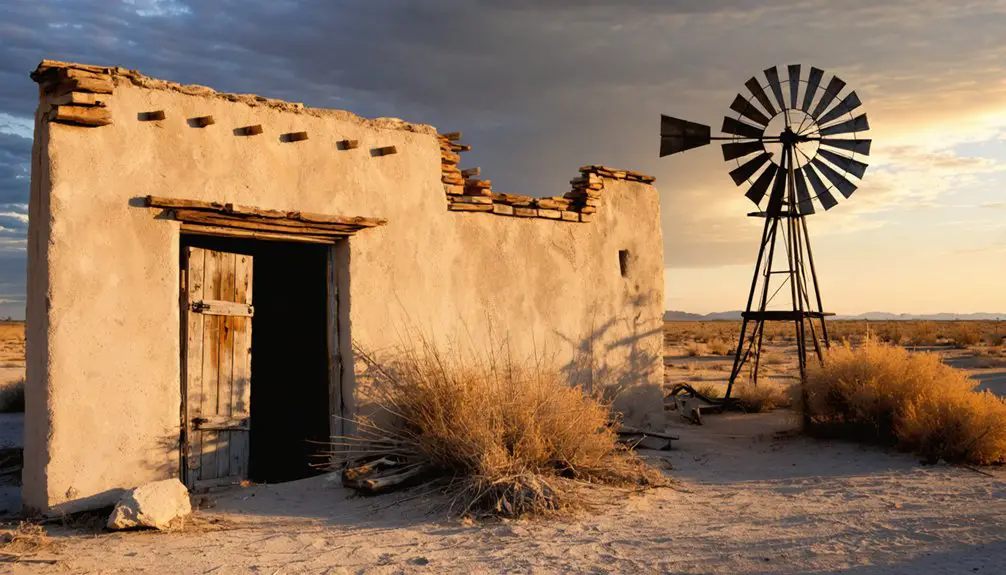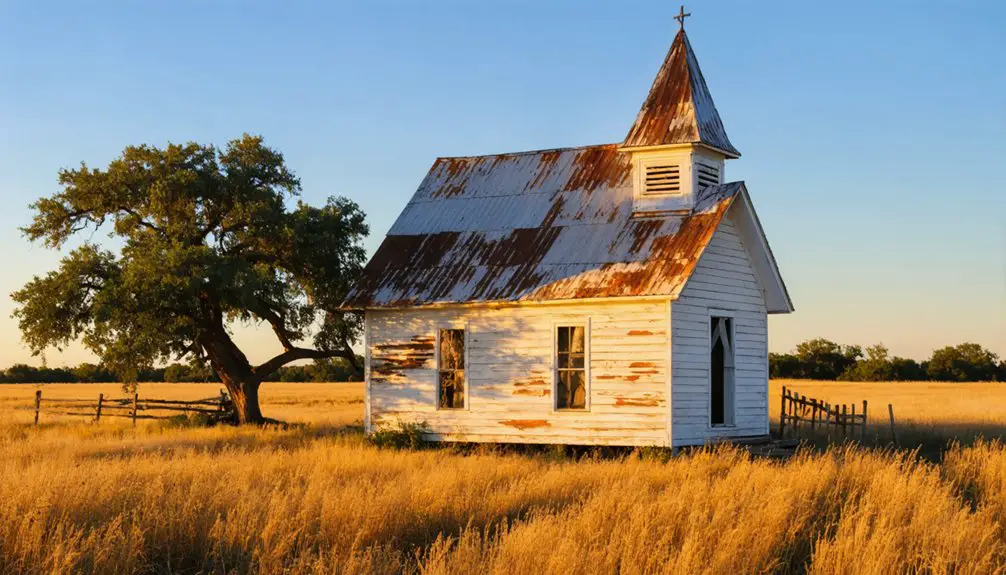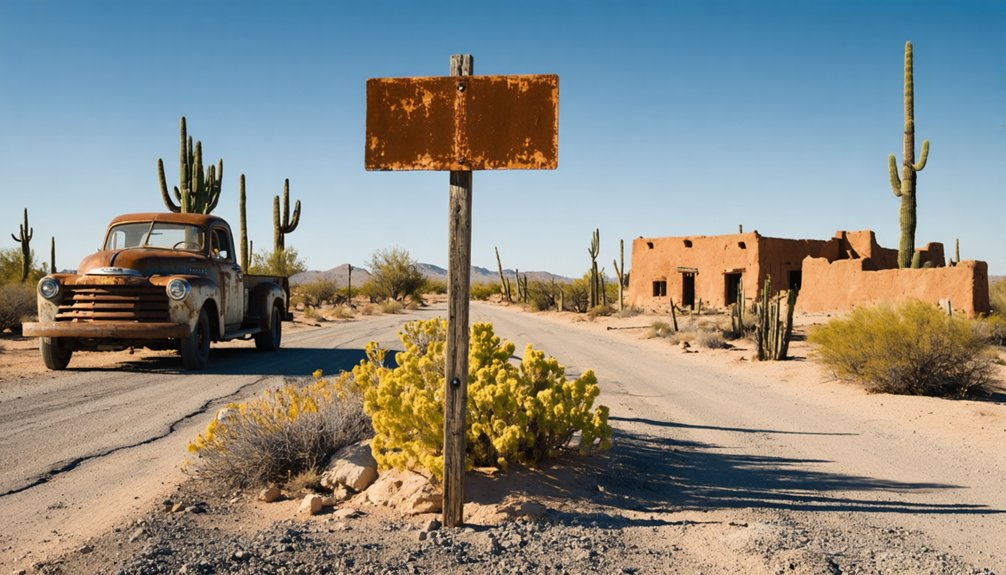
You’ll find Indianola’s ghost town site isn’t in Indio—it’s actually submerged beneath Matagorda Bay‘s waters after devastating 1875 and 1886 hurricanes obliterated Texas’s once-second-largest port. Drive 2.5 hours from Houston or 3 hours from San Antonio toward Port Lavaca, then navigate to Indianola Island’s tip where you’ll spot raised houses, a seafood shop, and the La Salle Monument marking waterfront access to scattered ruins. Historical markers tell the haunting story of 5,000 residents who vanished when nature’s fury struck twice, and there’s much more to uncover about this submerged city’s fascinating past.
Key Takeaways
- Indianola is located 2.5 hours from Houston, 3 hours from San Antonio, and 1.5 hours from Corpus Christi on the Texas coast.
- Follow signs toward Port Lavaca, then navigate to Indianola Island’s tip to reach the ghost town site.
- Look for the La Salle Monument to access the waterfront and explore submerged ruins from devastating 1875 and 1886 hurricanes.
- The town was Texas’s second-largest port by 1870 before hurricanes completely destroyed it, leaving only underwater remnants.
- Visit nearby markers, the seafood shop, and marina bearing Indianola’s name to experience the historic site’s legacy.
The Rise and Fall of Indianola: From Bustling Port to Submerged Ruins
In August 1846, Sam Addison White and William M. Cook founded Indian Point on Matagorda Bay’s windswept shores. You’re standing where German immigrants first landed at Karlshafen in 1844, transforming this strategic transportation hub into Texas’s second-largest port by 1870.
Picture over 5,000 residents bustling around four harbor keys as Morgan Lines steamships connected you to New York, Boston, and New Orleans. This military supply depot armed frontier forts for three decades, while camels from the U.S. Camel Corps unloaded at these very docks.
But nature had other plans. The 1875 hurricane struck first, then 1886’s devastating storm delivered the final blow. Today, you’ll find only submerged ruins beneath Matagorda Bay’s shallow waters—a memento to freedom’s fragile dance with nature’s fury.
Two Devastating Hurricanes That Erased a Texas Town
But nature wasn’t finished. On August 20, 1886, a Category 4 monster delivered the final blow with 155 mph winds and 15-foot surges, obliterating everything except two structures. Fire consumed what remained.
What Remains: Exploring the Cemetery and Historical Markers
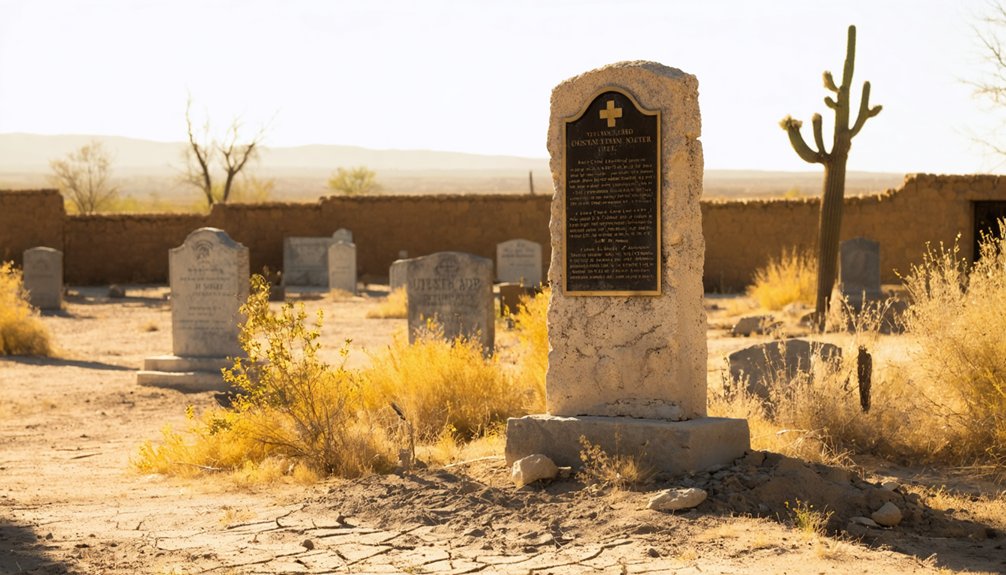
Perched on a downhill slope west of State Highway 170, Terlingua’s cemetery sprawls across just over an acre of Brewster County’s rugged terrain, holding an estimated 400 souls beneath its sun-baked earth. You’ll discover folk art cemetery markers that tell raw frontier stories—from modest filigree crosses to a metal T-Rex, even a Hobbit hole grave.
Most interred here were Hispanic mercury miners who faced brutal deaths: mine collapses, mercury poisoning, the 1918 influenza epidemic. Weather and relic hunters have erased many markers, but what remains captures your imagination.
Visit during Dia de Los Muertos on November 2 when the site comes alive with remembrance. The Chisos Mountains backdrop makes this one of Texas’s most photographed cemeteries—a compelling window into dangerous lives lived chasing fortune.
Getting There: Directions to the Indianola Ghost Town Site
Reaching Indianola’s ghost town site requires traversing the flat coastal fingers of Calhoun County, where Matagorda Bay and Powderhorn Lake squeeze the mainland into narrow strips of wind-beaten land. From Houston, you’ll drive 2.5 hours; San Antonio takes three; Corpus Christi only 1.5. Follow signs toward Port Lavaca, then navigate the final leg along Matagorda Bay to Indianola Island’s tip.
The history of Casa Blanca, Texas is rich with stories of early settlers and their quest for opportunity in a rugged landscape. Over the years, the region has transformed, reflecting the resilience and spirit of its inhabitants. Today, visitors can explore remnants of this past, from historic homes to local museums that celebrate the vibrant culture of the area.
Your arrival checklist:
- Look for raised houses and trailers marking the cul-de-sac
- Spot the seafood shop and marina bearing Indianola’s name
- Find La Salle Monument for waterfront access
- Locate the courthouse stub—your on site attractions anchor
The bayfront road dead-ends at a weathered neighborhood where wetlands meet history. Free beach camping awaits those seeking overnight solitude among the reeds.
Gateway to Texas: Indianola’s Role in German and European Immigration
Long before Indianola vanished beneath hurricane winds, it served as the literal gateway where thousands of German families took their first uncertain steps onto Texas soil.
Starting in 1844, Prince Karl zu Solms-Braunfels deliberately chose this remote harbor for cultural preservation—keeping his countrymen distant from American settlers who might dilute their traditions. You’d have watched ships arrive after 58-day voyages, passengers transferring through Galveston to reach this isolated shore.
That first brutal winter tested everyone’s resolve. Families huddled in makeshift shelters without adequate water or supplies, yet they persisted.
Frequently Asked Questions
What Is the Best Time of Year to Visit Indianola?
March offers you ideal conditions with average monthly temperatures around 70°F and minimal typical precipitation patterns. You’ll enjoy sunny, dry weather for exploring ruins before hurricane season arrives, giving you freedom to roam Indianola’s haunting coastline comfortably.
Are There Any Facilities or Amenities Available at the Ghost Town Site?
You’ll find essential comforts amidst the rustic charm—restrooms available and drinking water provided alongside RV hookups, EV charging stations, and WiFi. It’s freedom with convenience, letting you explore history without sacrificing modern necessities during your adventure.
How Long Should I Plan to Spend Exploring the Indianola Area?
Plan 2-3 hours to explore historical landmarks like the cemetery and La Salle Monument, then discover local folklore along scenic Zimmerman Road. You’ll want extra time for photography and soaking in the haunting coastal atmosphere.
Can You Access the Underwater Portions of the Original Town Site?
You can’t legally dive the site—90% remains buried underwater. There aren’t organized underwater excavation opportunities for visitors, though preservation efforts continue monitoring erosion. You’ll find freedom exploring the shoreline artifacts and historical markers instead of submerged ruins.
What Other Ghost Towns Are Nearby for a Multi-Stop Road Trip?
You’ll find abandoned farming communities like Medicine Mound and Glenrio within driving distance, showcasing historic preservation efforts along Route 66. Terlingua’s mercury mines offer desert exploration, while these stops create your perfect freedom-seeking adventure through Texas’s forgotten places.