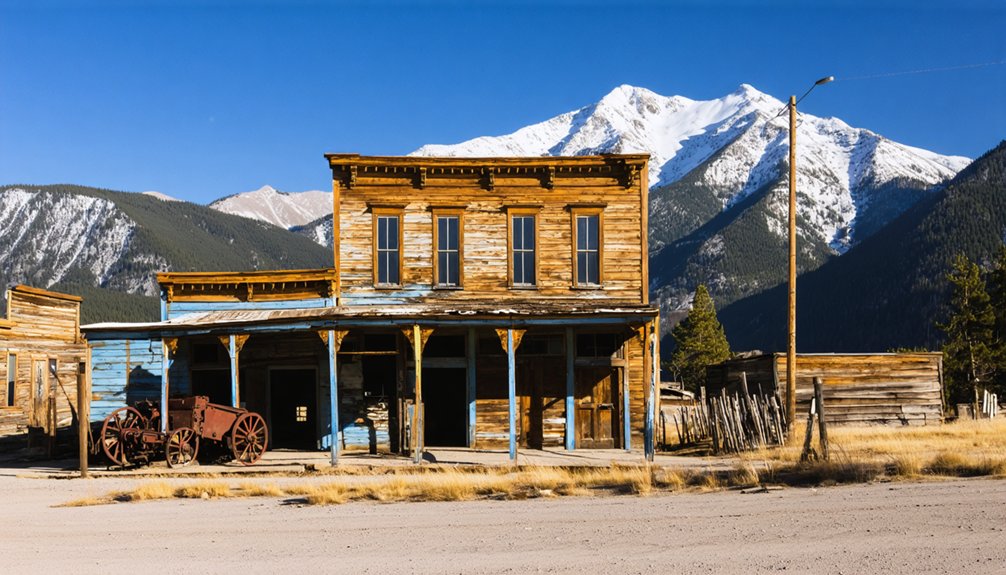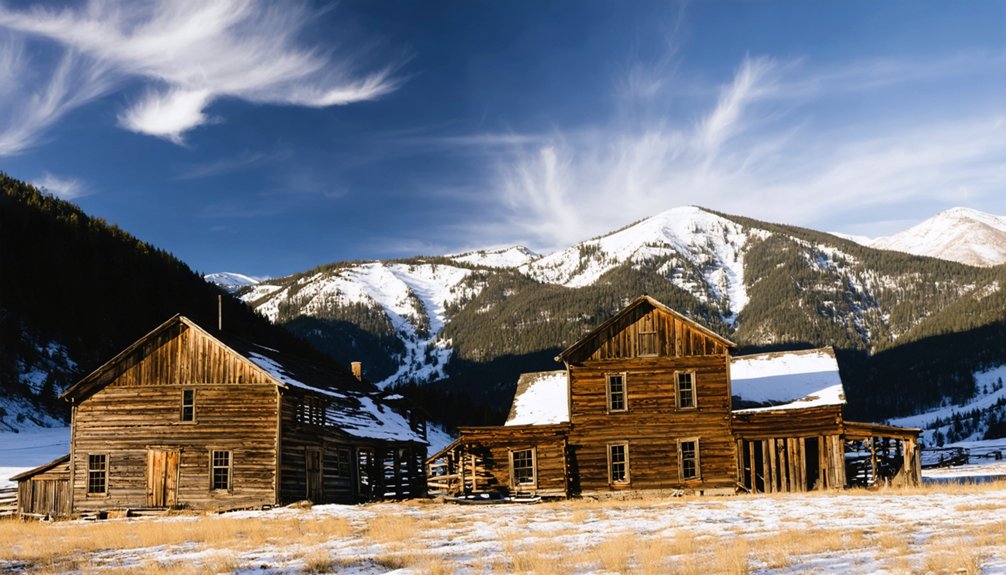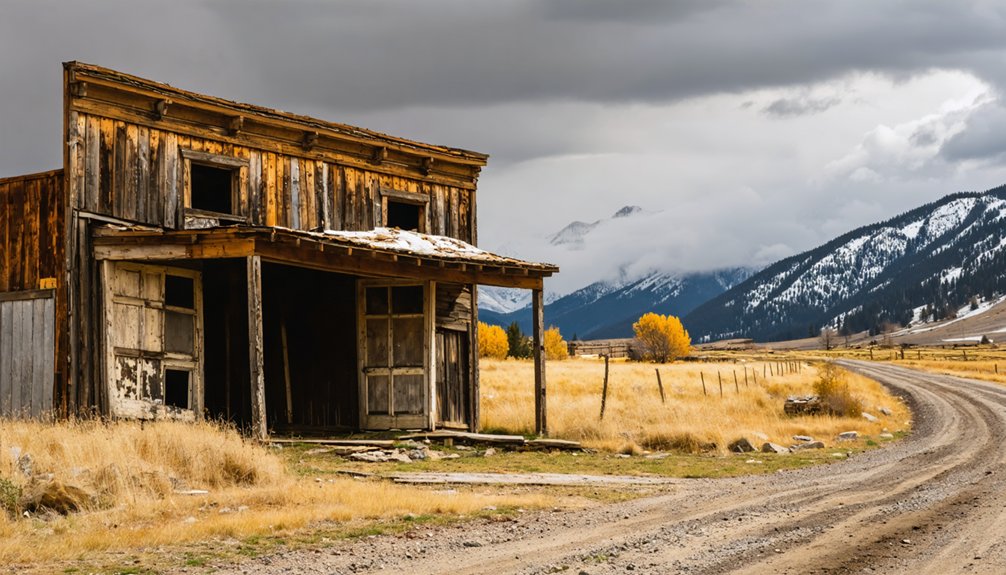
Plan your Juanita ghost town road trip by staging out of La Garita and heading north on CR 42. You’ll need a four-wheel drive vehicle to navigate the rough terrain toward this historic mining settlement near the confluence of the Navajo and San Juan rivers. Visit late spring through early fall before snow closes mountain routes. Weathered railroad bridges, original structures, and dramatic caldera country await you — and there’s far more to uncover ahead.
Key Takeaways
- Juanita Ghost Town is in southwestern Colorado, near the Navajo and San Juan rivers confluence, featuring original structures and railroad bridge remnants.
- Access requires a four-wheel drive or high-clearance vehicle via CR 42 north from La Garita, continuing eight miles toward Crystal Hill.
- Plan three days: travel to Juanita on day one, explore structures and photograph bridges on day two, and loop back on day three.
- Visit between late spring and early fall for accessible roads, as winter snow can quickly close mountain routes.
- Base camp in La Garita, which offers a general store and reduces daily drive times to Juanita and Crystal Hill Mine.
What Makes Juanita Ghost Town Worth the Drive?
Tucked into Colorado’s southwestern corner near the confluence of the Navajo and San Juan rivers, Juanita Ghost Town rewards curious travelers with something increasingly rare: original structures still standing on-site, railroad bridge remnants spanning two rivers, and a layered mining history rooted in the San Juan Mountains’ precious metal boom of the late 19th century.
Juanita history reflects a familiar but compelling arc — rapid settlement fueled by ore extraction, followed by quiet abandonment once deposits ran dry.
That mining legacy left behind tangible evidence you can actually walk through, photograph, and assess firsthand. Active preservation and reconstruction efforts mean the site’s character remains intact rather than lost to neglect.
The past isn’t buried here — it’s standing right in front of you, preserved and waiting to be explored.
You’re not chasing rumors here — you’re standing inside a documented moment of Colorado’s frontier past.
How to Get to Juanita Ghost Town
Reaching Juanita means committing to Colorado’s back-country rhythm — slow miles, rough roads, and scenery that earns your attention.
Start your approach from La Garita, heading north on CR 42. At the 2.5-mile mark, you’ll hit the CR 42K fork — take it and follow eight miles toward Crystal Hill before looping back via CR N42.
Among the essential travel tips: bring a four-wheel drive or high-clearance vehicle; this terrain punishes anything less. Del Norte works well as your southern staging point if you’re building a multi-day circuit.
The scenic highlights stack up fast — ancient volcanic caldera formations, pronghorn moving through open country, and ridgelines that frame the San Juan Mountains with quiet authority.
Spring through fall keeps the routes accessible.
What Railroad Bridges and Buildings Will You Actually Find at the Townsite?
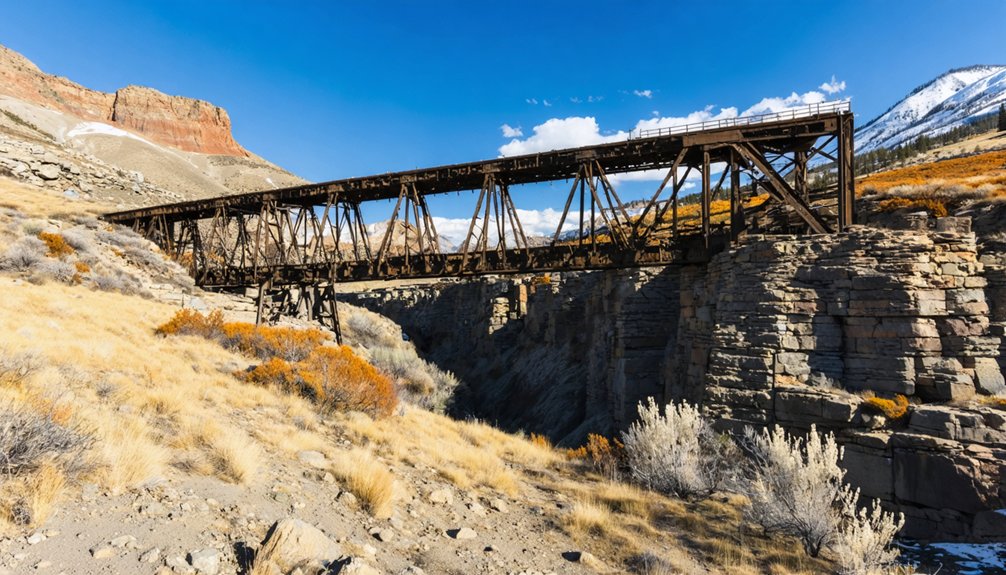
Once you’ve made it to the Juanita townsite, you’ll find the railroad bridge structures spanning the Navajo and San Juan rivers at their confluence still standing as striking remnants of the commerce that once flowed through this remote corner of southwestern Colorado.
Original buildings remain scattered across the site, offering you a rare chance to photograph and document architecture that hasn’t entirely surrendered to time.
Historic preservation efforts and reconstruction initiatives are actively underway, meaning the structures you’re walking among are being stabilized rather than left to collapse into the high desert.
Standing Railroad Bridge Structures
Standing at the confluence of the Navajo and San Juan rivers, you’ll find one of Juanita’s most compelling remnants: the railroad bridge structures that once carried commerce through this remote corner of Colorado’s southwestern region.
These spans represent railroad history made tangible, connecting you directly to the mining era’s relentless ambition. Their structural significance becomes immediately apparent when you study the engineering required to cross two rivers in such rugged terrain.
Builders didn’t choose this location carelessly — the confluence made Juanita a strategic transportation node during the San Juan Mountains’ precious metal boom.
Today, you can walk near these bridges, photograph their weathered forms, and genuinely feel the weight of what was lost when the ore ran out and the trains stopped running permanently.
Historic Buildings For Exploration
Beyond the bridge structures at the confluence, Juanita’s remaining buildings wait for you to document and explore them. Original structures still stand at the townsite, giving you direct contact with Colorado’s mining heritage without filters or recreations.
Current property owners have undertaken historic preservation efforts, stabilizing what remains so you can move through the space authentically. Reconstruction initiatives are also underway, working to restore structural integrity while maintaining historical character.
Bring your camera. These buildings reward careful documentation — weathered timber, collapsed rooflines, and remnant interiors all tell the story of a community that rose quickly and emptied just as fast.
You’re walking through a place where real people lived, worked, and eventually left everything behind. That rawness is exactly what makes Juanita worth the drive.
Nearby Ghost Towns Worth Adding Between Juanita and Del Norte
Once you’ve finished at Juanita, you’re well-positioned to extend your trip through the Bachelor Loop, a network of historic mining settlements scattered across the surrounding high country that rewards patient exploration.
The route south toward Del Norte threads through remnants of Colorado’s 19th-century ore rush, where abandoned structures and weathered foundations mark communities that once hummed with commerce and ambition.
You’ll want multiple days to do the region justice, pairing rough four-wheel-drive stretches with stretches of paved highway as Del Norte anchors the southern end of your ghost town circuit.
Bachelor Loop Ghost Towns
Tucked between Juanita and Del Norte, the Bachelor Loop ghost towns deserve a dedicated detour on your itinerary. This bachelor loop exploration rewards curious travelers with raw glimpses into Colorado’s mining past, where abandoned structures still whisper ghost town history across weathered hillsides.
You’ll navigate Forest Roads threading through the San Juan high country, encountering remnants of communities that once thrived on precious metal extraction before ore deposits ran dry. Each crumbling building represents a chapter in Colorado’s boom-and-bust narrative — families who arrived with ambition and departed with hard lessons.
A high-clearance vehicle handles these roads comfortably, and spring through fall delivers the safest window for exploration.
Budget extra hours here; the Bachelor Loop consistently surprises visitors who expect little and discover considerably more.
Del Norte Regional Stops
Stretching south from Juanita toward Del Norte, the corridor between these two points rewards patient travelers with additional ghost town discoveries worth folding into your route.
The San Juan Mountains frame your descent, and several scenic pit stops along the way reveal crumbling foundations, rusted machinery, and mine shafts that speak to the region’s relentless boom-and-bust cycles.
You’ll pass through country shaped by precious metal fever, where entire communities rose and vanished within a generation.
Del Norte attractions anchor the southern end of your journey, offering lodging, fuel, and regional history that contextualizes everything you’ve witnessed on the trail.
Use the town as your base before pushing north again, or treat it as your final punctuation mark on a road trip built for the genuinely curious and freely wandering.
What Vehicle Do You Actually Need for Juanita Ghost Town?
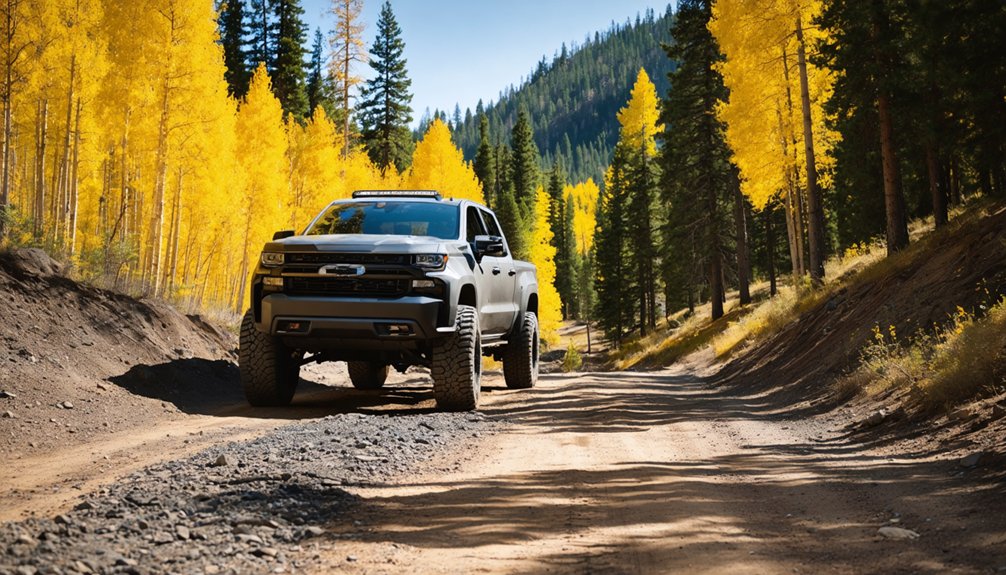
Getting to Juanita Ghost Town isn’t a Sunday afternoon cruise — you’ll want a four-wheel drive or high-clearance vehicle before you even think about pointing your hood toward the confluence of the Navajo and San Juan rivers.
Reaching Juanita Ghost Town demands four-wheel drive — forget it without serious clearance and capability.
The terrain challenges along CR 42 and its branching forest roads demand real capability from whatever vehicle types you’re considering. Ruts, loose rock, and elevation shifts punish low-clearance sedans without mercy.
Once you fork onto CR 42K at the 2.5-mile mark, that 8-mile stretch toward Crystal Hill reminds you why serious rigs exist. Think lifted trucks, capable SUVs, or dedicated off-road platforms.
The ghost town’s remoteness is precisely what preserved it — that same remoteness will strand an unprepared driver fast. Respect the road, and it rewards you.
The Best Scenic Drives and Off-Road Routes Out of Juanita
Once you’ve walked the townsite and documented what remains at Juanita, the surrounding road network opens into something worth its own exploration.
Three routes deserve your attention:
- CR 42 North toward Crystal Hill Mine — eight miles of raw terrain connecting scenic landscapes to layers of historical significance, where mining-era ghosts feel close.
- CR 42K Fork — splitting at the 2.5-mile mark, this corridor rewards patience with dramatic high-country views you won’t share with crowds.
- CR N42 Loop back to La Garita — completing the circuit through ancient supervolcano caldera country, where pronghorn cross ridgelines and the land reminds you why freedom still exists out here.
The Bachelor Loop and surrounding Forest Roads extend your options further, threading through a ghost town network that earns every rough mile.
Why La Garita Makes the Best Base Camp for This Trip
La Garita sits at the natural crossroads of everything this trip demands — close enough to Juanita and the Crystal Hill Mine route to cut your daily drive times, far enough from the main corridors that you won’t feel the creep of tourist infrastructure.
La Garita history runs deep here, shaped by the same mining currents that built and buried Juanita itself. The town anchors your route without overwhelming it.
La Garita amenities stay practical: a general store handles resupply, and the surrounding La Garita Mountains offer genuine geological drama — an ancient supervolcano caldera visible in the rock formations rising around you.
Camp here, refuel here, orient yourself here. You’re positioned to push north on CR 42 each morning with daylight to spare and purpose already mapped.
When to Go and How Many Days to Plan For
Timing shapes everything on a trip like this. The best seasons run from late spring through early fall, when mountain roads dry out and the high country opens up. Snow closes these routes fast, so plan accordingly.
Timing shapes everything. Visit late spring through early fall, when mountain roads open and the high country welcomes you.
Give yourself at least two to three days to do it right:
- Day one — Drive CR 42 north from La Garita, absorb the landscape, reach Juanita before sunset.
- Day two — Explore the townsite structures, photograph the railroad bridges at the river confluence.
- Day three — Loop through Crystal Hill Mine and complete the return circuit.
These road trip tips matter: bring extra fuel, pack for weather shifts, and don’t rush history.
Before You Go: Safety at Abandoned Sites
Ghost town structures have stood without maintenance for decades. Floors, stairs and roof timbers fail without warning, and a building that looks solid from outside may not hold your weight. Stay out of standing structures unless the site is actively maintained and open to visitors.
Mine workings are the more serious hazard. Vertical shafts can be hundreds of feet deep, are often unfenced, and may be hidden by brush or capped with rotted boards. Never enter an adit, tunnel or shaft: abandoned workings can hold oxygen-poor or toxic air that gives no warning before you lose consciousness.
Enclosed spaces with rodent droppings carry a risk of hantavirus, which is contracted by breathing contaminated dust. Do not sweep or stir up dust inside old cabins and outbuildings.
Cell coverage at these sites is usually poor or absent. Tell someone your route and expected return time, and carry more water than you think you need.
Frequently Asked Questions
Is Juanita Ghost Town on Private Property or Open to the Public?
Over 90% of Colorado’s ghost towns sit on private land. Juanita’s currently under private ownership, but preservation efforts mean you can still explore its Juanita history and uncover ghost town legends firsthand.
Are There Any Entrance Fees or Permits Required to Visit Juanita?
The knowledge doesn’t confirm specific fees or permits, but you’ll want to verify current access requirements directly with property owners. Respecting historical significance and visitor safety guarantees your freedom to explore remains protected.
Can You Camp Overnight Near the Juanita Ghost Town Townsite?
Like a frontier trailblazer claiming open land, you’ll find freedom here. Camping regulations for the Juanita townsite aren’t confirmed, but nearby campgrounds throughout Rio Grande County’s forests offer your perfect overnight base.
Is Cell Phone Service Available Along the Routes to Juanita?
Don’t count on reliable cell coverage along these remote San Juan Mountain routes. You’re venturing into true wilderness where signals vanish, so carry satellite communicators and plan your emergency services access before leaving civilization behind.
Are Pets Allowed When Exploring the Juanita Ghost Town Area?
The knowledge base doesn’t confirm pet-friendly policies for Juanita. You’ll want to contact current property owners directly. Practice ghost town etiquette regardless — respect the historic structures, keep your adventure responsible, and honor this freedom-loving landscape’s storied past.
References
- https://www.youtube.com/watch?v=r1_pnNhNWxY
- https://www.myscenicdrives.com/places/colorado/juanita-ghost-town
- https://visitriograndecounty.com/jeeping-through-ghost-towns/
- https://tranquiltrekker.com/central-colorado-ghost-towns-independence-pass/
- https://www.kukucampers.com/blog/9-colorado-ghost-towns-to-visit
- https://95rockfm.com/the-ultimate-ghost-town-road-trip-through-colorado/
- https://www.colorado.com/articles/colorado-ghost-towns
- https://www.uncovercolorado.com/ghost-towns/
- https://www.trainorders.com/discussion/read.php?11,3623489
- https://www.facebook.com/groups/abandonedhomesamerica/posts/6276818669032773/