Planning a ghost town road trip to Juno, Florida means hunting for a lost county seat buried beneath North Palm Beach and Palm Beach Gardens neighborhoods near PGA Boulevard. Established in 1889, Juno thrived until Henry Flagler rerouted his railroad in 1899, and a 1907 fire finished what remained. Today, you’ll find almost no above-ground traces, but a brick cistern in Twelve Oaks and subtle landscape clues still whisper the town’s forgotten story. There’s more to uncover than you’d expect.
Key Takeaways
- Juno’s original townsite lies buried beneath North Palm Beach and Palm Beach Gardens neighborhoods, near PGA Boulevard and the northern end of Lake Worth Lagoon.
- The brick cistern in Twelve Oaks is the most tangible surviving remnant of the original 1889 settlement worth seeking out.
- Visit Riverbend Park to walk the original Celestial Railroad corridor, central to understanding Juno’s rise and eventual abandonment.
- The Loxahatchee River Historical Museum offers artifacts and regional context to enrich your ghost town exploration experience.
- Plan your visit between November and April; bring water, offline maps, and comfortable shoes due to cell service gaps.
Juno, Florida’s Lost County Seat: How a Ghost Town Vanished Into the Suburbs
Before the sprawling subdivisions and gated communities of Palm Beach County took hold, a town called Juno served as the county seat—a bustling little hub of courthouses, newspapers, and rail connections that practically defined the region’s future. Established in 1889, Juno rode the momentum of the famous Celestial Railroad, drawing settlers enthusiastic to build something lasting.
Then Henry Flagler rerouted his Florida East Coast Railway, bypassing Juno entirely and strangling its economic lifeline. By 1899, the county seat had shifted away, and a 1907 forest fire erased what little remained.
Today, local legends keep Juno’s memory alive where preservation efforts have uncovered remnants like a brick cistern near Twelve Oaks. You’re fundamentally chasing history through modern subdivisions—but that’s exactly what makes this road trip worth taking.
Where the Juno Ghost Town Site Actually Is Today
If you’re trying to find exactly where historic Juno once stood, you won’t spot a weathered sign or crumbling courthouse. The original townsite is now buried beneath modern suburban neighborhoods in what’s today North Palm Beach and Palm Beach Gardens.
You’ll want to orient yourself around PGA Boulevard, roughly three miles south of modern Juno Beach, near the Hidden Oaks gated community.
Nearby developments like Lost Tree Village, Captain’s Key, and Twelve Oaks sit directly on or adjacent to the former townsite, making these neighborhoods your best landmarks for pinpointing the ghost town’s footprint.
Locating The Original Townsite
Though the name “Juno” still appears on local maps, the historic ghost town and modern Juno Beach are two entirely different places. You’ll find the original townsite roughly three miles south of today’s Juno Beach, near PGA Boulevard in what’s now North Palm Beach and Palm Beach Gardens.
Historical maps place the settlement close to the Hidden Oaks gated community, where the Lake Worth Lagoon’s northern end once made Juno a natural transportation hub. Preservation efforts have been minimal, and no original structures stand above ground.
However, the Twelve Oaks subdivision reportedly contains a brick cistern linked to the former dock area.
Neighborhoods like Lost Tree Village and Captain’s Key now occupy this land, so your road trip here means reading the landscape between the lines of suburban development.
Nearby Landmarks And Neighborhoods
Knowing where the townsite sits is one thing; knowing what surrounds it today helps you actually navigate the visit. Urban expansion has completely absorbed what was once Juno’s courthouse and dock district.
You’ll find the former townsite embedded within Lost Tree Village, Captain’s Key, and the Twelve Oaks subdivision, all upscale residential communities along the Lake Worth Lagoon. A brick cistern near Twelve Oaks is one of the few tangible remnants worth tracking down.
PGA Boulevard serves as your primary reference point heading into this area. Locals carry local legends about buried foundations and forgotten dock pilings beneath the waterline.
Keep Hidden Oaks roughly three miles north of Juno Beach on your mental map, and you’ll orient yourself quickly once you arrive.
What Survives at the Historic Juno Townsite
Although the 1907 fire erased nearly every visible trace of Juno, a few quiet remnants still anchor the site to its past. The most tangible survivor is a brick cistern tucked within the Twelve Oaks subdivision, one of the few physical connections to the original settlement.
Archaeological excavations have uncovered additional fragments beneath the suburban surface, hinting at the town’s layered history. Historic preservation efforts remain limited here, so you won’t find interpretive signs or restored structures waiting for you.
Instead, you’ll explore a landscape where Lost Tree Village, Captain’s Key, and Twelve Oaks now occupy the former townsite. The freedom to piece together Juno’s story from subtle clues, scattered research, and a keen eye makes this stop genuinely rewarding for curious road trippers.
Landmarks Along the Celestial Railroad Corridor Worth Stopping For
Once you’ve traced Juno’s footprint through the quiet subdivisions of North Palm Beach and Palm Beach Gardens, broadening your drive along the old Celestial Railroad corridor rewards you with a richer sense of what this pocket of Florida once was.
Tracing Juno’s quiet footprint through North Palm Beach unlocks a richer, forgotten chapter of old Florida.
Railroad history and ghost town preservation come alive when you hit these three stops:
- Jupiter Inlet Lighthouse – The northern anchor of the Celestial Railroad route and a restored landmark offering unobstructed coastal views.
- Loxahatchee River Historical Museum, Jupiter – Documents the railway era with artifacts, maps, and regional context.
- Riverbend Park, Palm Beach Gardens – Follows the original rail corridor, letting you walk terrain that once carried passengers between Jupiter and Juno.
Each stop deepens the story considerably.
When to Visit and How to Prepare for a Ghost Town Road Trip
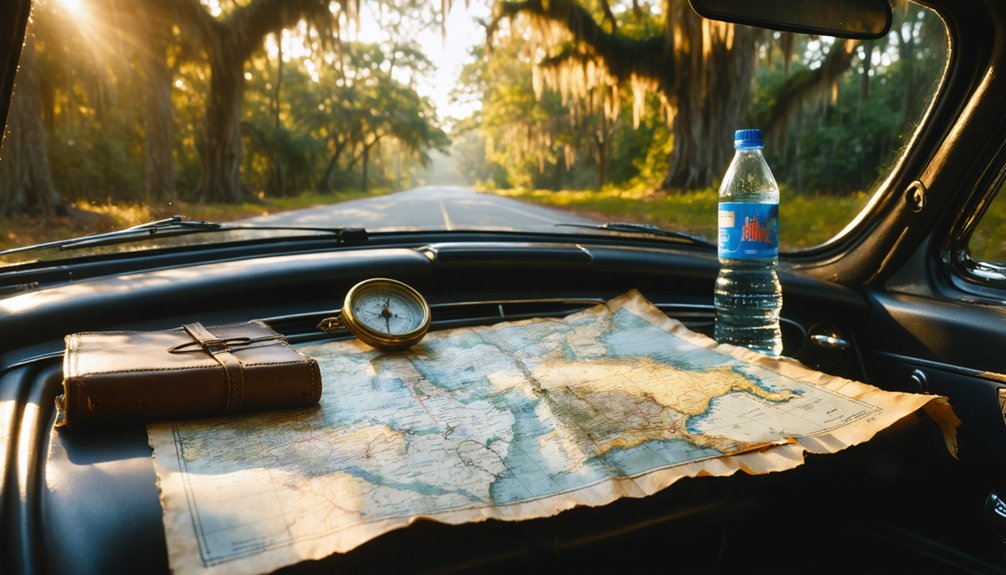
With your corridor stops mapped and your historical bearings set, timing your visit smartly will make or break the experience. Florida’s cooler, drier months — November through April — deliver comfortable walking temperatures and cleaner skies for photography. Summer heat and afternoon storms slow you down and muddy your shots.
Arrive early to catch soft morning light, which flatters historical preservation markers and neighborhood streetscapes beautifully. Bring a polarizing filter to cut glare off any waterfront remnants near the old Juno dock area.
Pack water, comfortable shoes, and a downloaded offline map — cell service gaps exist in quieter residential pockets. Research HOA restrictions before entering gated communities like Twelve Oaks. Keep a small notebook for jotting observations, because details fade faster than you’d expect once you’re back on the road.
Nearby Lost Towns That Pair Well With the Juno Ghost Town Route
Juno doesn’t stand alone in its rise-and-fall story — the Celestial Railroad’s other stations, Mars, Venus, and Galaxy, vanished just as completely. Threading them into your route transforms a single ghost-town stop into a fuller portrait of how railroad politics reshaped coastal Florida. Each site deepens your understanding of historical transportation‘s brutal power to build and erase communities.
Pair these stops strategically:
- Mars – Once a small agricultural waypoint, now absorbed into modern Jupiter neighborhoods with virtually no ghost town preservation markers remaining.
- Venus – A brief station stop that disappeared faster than Juno itself, leaving only archival records.
- Galaxy – The least documented station, making it a compelling research puzzle for curious road-trippers seeking something beyond the obvious trail.
Frequently Asked Questions
Was Juno, Florida Ever Featured in Any Books or Documentaries?
You’ll find Juno woven into Florida history books exploring ghost town legends and abandoned settlements, though it hasn’t starred in major documentaries—its fascinating story quietly lives within regional historical archives and Palm Beach County records.
Are There Any Ghost Town Tours Officially Organized in Palm Beach County?
Like whispers fading into overgrown trails, no official ghost town tours exist in Palm Beach County, but you can independently explore abandoned structures, chase local legends, and carve your own untamed path through forgotten history.
Did Any Notable Historical Figures Ever Live in Juno, Florida?
You’ll find that Commissioner Albert M. Field and postmistress Lettie Field shaped Juno’s founding story — figures worth exploring through historical preservation efforts and local tourist attractions celebrating this fascinating, freedom-defining frontier community.
Is There an Admission Fee to Visit the Juno Ghost Town Site?
You won’t face any entrance fee or visitor costs exploring Juno’s ghost town site, since it’s woven into public suburban neighborhoods. Simply drive through North Palm Beach and Palm Beach Gardens, enjoying this forgotten history freely.
Are There Any Local Museums Dedicated Specifically to Juno’s History?
No dedicated museum exists, but you’ll find historical preservation efforts across Palm Beach County’s archives. Over 130 years of local legends surrounding Juno’s rise and fall are documented at the Palm Beach County History Museum nearby.
References
- https://en.wikipedia.org/wiki/Juno
- https://www.palmbeachpost.com/story/news/local/2025/03/04/history-ghost-lost-towns-palm-beach-county-florida/78970195007/
- https://www.housevaluelab.com/blogs/juno-beach-a-coastal-paradise
- https://www.ghosttowns.com/states/fl/juno.html
- https://www.juno-beach.fl.us/sites/default/files/fileattachments/history/page/4771/jb_history.pdf
- https://education.pbchistory.org/pbc_community/juno/
- https://en.wikipedia.org/wiki/List_of_ghost_towns_in_Florida
- https://www.florida-backroads-travel.com/juno-beach-florida.html