To plan your ghost town road trip to Kelso, California, start by heading into Mojave National Preserve via Kelbaker Road off I-15 or I-10. You’ll find the restored 1923 Kelso Depot at the heart of what was once a booming railroad town of 2,000 residents. Pack water, wear sturdy shoes, and visit in spring or fall for the best conditions. There’s far more to this haunting desert crossroads than first meets the eye.
Key Takeaways
- Kelso sits inside Mojave National Preserve at the junction of Kelbaker and Kelso Cima Roads, roughly two hours from Palm Springs via I-10.
- The restored 1923 Kelso Depot serves as a museum, bookstore, and art gallery, showcasing mining history and Spanish Mission Revival architecture.
- Visit in spring, fall, or winter to avoid summer temperatures exceeding 110°F and enjoy wildflowers or clearer skies.
- Kelso has no dining or lodging; stock up on supplies in Baker, Barstow, or Needles before entering the preserve.
- Beyond the depot, explore Kelso Dunes, volcanic Cinder Cones, and ancient Lava Flows for a complete Mojave adventure.
Kelso, California: A Ghost Town Hidden Inside a National Preserve
Tucked inside the Mojave National Preserve, Kelso, California is a ghost town that’s easy to miss but impossible to forget. Once a thriving railroad hub, it peaked at nearly 2,000 residents before mine closures and diesel engines stripped it bare.
Kelso, California: a ghost town easy to miss, impossible to forget, and stripped bare by time.
Now, silence rules the streets, broken only by desert wildlife moving freely through the open terrain.
You’ll find Kelso sitting at the crossroads of Kelbaker and Kelso Cima Roads in San Bernardino County, far from crowded tourist corridors. Spring wildflower blooms paint the surrounding desert in unexpected color, rewarding travelers willing to venture off the beaten path.
The town’s remarkable Spanish Mission Revival depot still stands, anchoring this forgotten settlement inside one of California’s most underexplored national preserves. It’s raw, historic, and entirely worth the detour.
How Kelso Went From Boomtown to Ghost Town
Kelso’s story follows the classic arc of the American West — a scrappy railroad stop that exploded into a bustling community, then quietly faded when the engines that built it moved on.
You can trace the boom to the 1940s, when nearby iron and borax mines drew workers by the hundreds, pushing the population toward 2,000 and filling the depot’s restaurant with hungry, road-weary travelers.
But when the Vulcan Mine closed and diesel locomotives replaced steam engines — eliminating the need for Kelso’s water and service facilities — the town emptied almost as fast as it had filled.
Railroad Boom Years
During its railroad boom years, Kelso thrived as an essential lifeline in one of America’s most unforgiving landscapes. You’d have witnessed a desert outpost pulse with raw energy, purpose, and survival. Four things defined this remarkable era:
- Water access kept steam locomotives climbing demanding grade shifts through brutal terrain.
- Historic architecture emerged with the 1923 Spanish Mission Revival depot anchoring desert flora and civilization together.
- Worker communities transformed tent camps into legitimate neighborhoods supporting roughly 2,000 residents.
- Iron and borax mining supercharged Kelso’s economy during the 1940s, shipping millions of tons of ore.
Diesel engines eventually eliminated the need for water stops, and mine closures gutted the economy. Kelso’s golden era collapsed almost overnight, leaving behind stunning silence and weathered history.
Mine Closures Triggered Decline
What the diesel engine started, the mines finished. When Kaiser Steel’s Vulcan Mine shut down after shipping 2.6 million tons of iron ore, Kelso lost its economic backbone overnight.
The railroad history that built this desert outpost couldn’t save it once the freight dried up. By the 1970s, only about 75 souls remained, living quietly among the desert flora in a town famously without television. No signal, no industry, no future — just wind and silence reclaiming the streets.
The depot officially closed June 30, 1985, ending 61 years of service. Union Pacific then threatened demolition, nearly erasing what the desert hadn’t already claimed.
Kelso went from boomtown to ghost town not with a bang, but with a slow, inevitable exhale.
The Kelso Depot: What You’ll Actually Find Inside
Step inside the restored depot and you’ll find a museum and art gallery that bring Kelso’s railroading past to vivid life through historical exhibits and rotating displays.
You can wander the former dormitory rooms, baggage room, and ticket office, each one a tangible echo of the workers and travelers who passed through during the town’s peak years.
It’s a rare chance to walk through history rather than just read about it.
Museum And Gallery Exhibits
Once inside the Kelso Depot, you’ll find a thoughtfully restored space that blends local history with living culture — the building now houses a museum, an art gallery, and a bookstore stocked with hiking guides, maps, and emergency water supplies.
Here’s what you won’t want to miss:
- Historical architecture exhibits showcasing the 1923 Spanish Mission Revival construction
- Desert flora displays documenting the Mojave’s resilient plant ecosystems
- Mining history panels covering Kaiser Steel’s Vulcan Mine iron ore operations
- Rotating art gallery collections featuring regional artists inspired by desert landscapes
Each exhibit connects you directly to Kelso’s boom-and-bust story — from railroad workers sleeping in dormitory rooms above you to the mine closures that silenced everything.
It’s raw, honest history worth absorbing.
Restored Rooms To Explore
Beyond the exhibits, the depot itself becomes the artifact — and its restored rooms pull you deeper into Kelso’s layered past. Walk through the former dormitory rooms where railroad workers once slept after long desert runs.
Step into the original baggage room and ticket office, where the ghost of a working railroad still lingers in every worn surface and preserved detail. The historic architecture speaks directly to you — Spanish Mission Revival arches, thick walls built to outlast the Mojave’s brutal heat, and windows framing the surrounding desert flora like living paintings.
Each restored space strips away the noise of modern travel and hands you something raw: the texture of a life built far from everything comfortable. Kelso doesn’t romanticize its past — it just shows it to you plainly.
What to See Near Kelso Depot, the Dunes, and Cinder Cones
Wandering outside the depot, you’ll find the Mojave National Preserve packed with natural spectacles worth the detour. The surrounding landscape rewards those who push beyond the railroad history and historical architecture anchoring Kelso‘s identity.
- Kelso Dunes – Climb 650-foot sand dunes that occasionally hum with a rare booming phenomenon caused by shifting grains.
- Cinder Cones – Walk among ancient volcanic formations rising dramatically off Kelbaker Road.
- Lava Flows – Explore hardened rivers of basalt stretching across the desert floor, frozen mid-pour for thousands of years.
- Kelbaker Road Corridor – Drive this raw stretch connecting geological wonders between Las Vegas and Palm Springs, desert freedom at its purest.
Pack water, grab a trail map from the depot bookstore, and go.
How to Reach Kelso From Las Vegas or Palm Springs
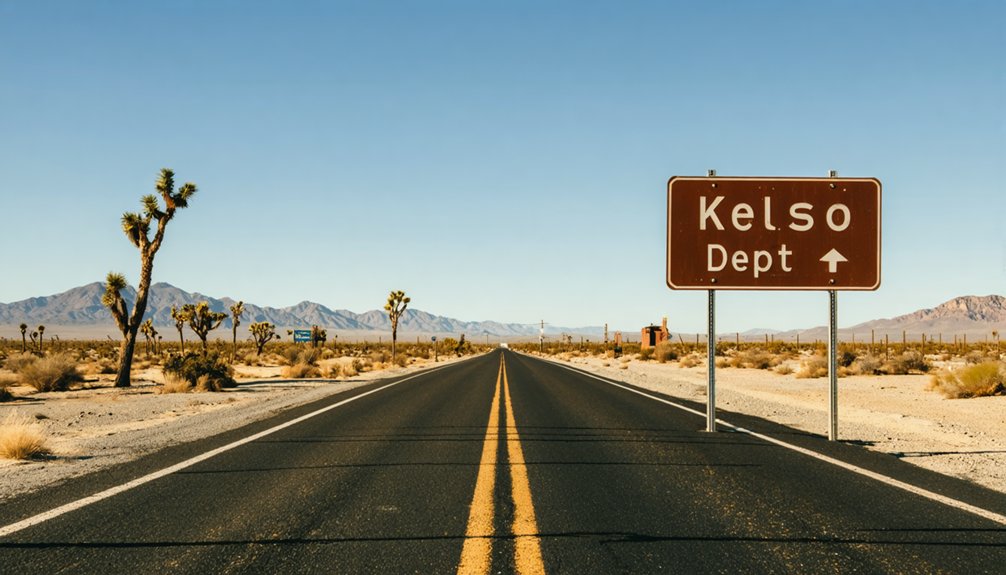
Whether you’re heading out from Las Vegas or Palm Springs, Kelso sits conveniently along the route as a natural desert waypoint. From Las Vegas, you’ll drive south on I-15 before cutting through the Mojave on Kelbaker Road.
From Palm Springs, head north on I-10 and then north again on Kelbaker Road toward the preserve. Either way, you’ll hit the crossroads of Kelbaker and Kelso Cima Roads, where this once-booming railroad town still quietly waits.
Las Vegas Route Overview
Kelso sits conveniently between Las Vegas and Palm Springs, making it a natural pit stop on a desert road trip. From Las Vegas, you’re roughly 90 minutes southwest through open Mojave terrain. Follow these steps:
- Take I-15 South toward Baker, California.
- Exit onto Kelbaker Road heading north into the preserve.
- Drive 34 miles through cinder cones and lava flows steeped in local legends.
- Arrive at the intersection of Kelbaker and Kelso Cima Roads.
You’ll feel the freedom of wide-open desert long before you arrive. Kelso rewards curious travelers who seek more than a highway rest stop — it offers cultural festivals, ghost town history, and an architecturally striking depot rising unexpectedly from the sand.
Palm Springs Route Overview
From Palm Springs, you’ll head north into the Mojave’s vast interior, trading resort-lined boulevards for sun-scorched two-lane roads that cut through one of California’s most striking desert landscapes. Follow I-10 east before turning north onto Kelbaker Road, where Joshua trees and creosote announce the desert flora surrounding your final destination.
The drive runs roughly two hours, rewarding patient travelers with sweeping basin views and an overwhelming sense of open solitude.
You’ll arrive at Kelso’s 1923 Spanish Mission Revival depot — a monument to historical architecture rising unexpectedly from the flats. Once a bustling railroad hub serving workers and passengers alike, the building now anchors Mojave National Preserve as its official visitor center.
It’s a worthy payoff for anyone chasing genuine remoteness over manufactured comfort.
Key Road Intersections
Reaching Kelso comes down to two key intersections that have guided desert travelers for over a century. Your route funnels through the Mojave’s open expanse, where desert wildlife roams freely alongside roads that once served railroad workers hauling iron ore.
Navigate your trip using these four landmarks:
- Kelbaker Road – Your primary north-south corridor from Baker
- Kelso Cima Road – Cuts east toward the Nevada border
- The depot intersection – Where historical architecture anchors the crossroads
- Kelbaker and Kelso Cima junction – The exact meeting point marking Kelso’s heart
You’ll feel the freedom of open desert before the Spanish Mission Revival depot appears on the horizon, rewarding every mile you’ve driven through this untamed landscape.
Best Time of Year to Visit Kelso and the Mojave
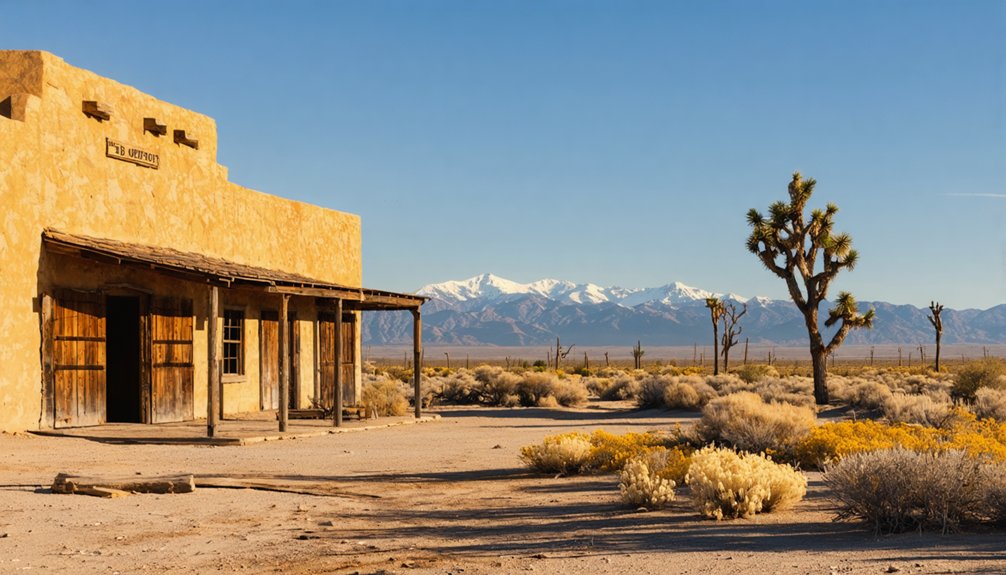
When you visit matters as much as where you go in the Mojave. Spring and fall offer the most rewarding experiences — temperatures stay manageable, and you’ll catch desert flora blooming across the landscape in vivid bursts of color.
Wildlife encounters become more frequent during these cooler months, as animals move freely rather than hiding from brutal heat.
Cool temperatures coax desert animals into the open, turning every trail into an unexpected wildlife encounter.
Summer temps regularly exceed 110°F, turning the desert into a genuine survival challenge. Unless you’re chasing that raw, unforgiving edge, avoid July and August entirely.
Winter brings cold nights and occasional snow, but clear skies and solitude reward those willing to layer up.
If freedom means having Kelso Dunes and the cinder cones practically to yourself, a crisp January morning might be your perfect ghost town moment.
Where to Stop, Eat, and Sleep Near Kelso
Knowing when to visit Kelso sets the stage — but knowing where to fuel up, rest your head, and grab a hot meal keeps the adventure from turning into a crisis. Kelso itself offers no local dining options or nearby lodging — it’s a ghost town, not a resort. Plan accordingly before you roll in.
Here’s where road-trippers typically anchor themselves:
- Barstow — 60 miles west, solid food, motels, and fuel
- Needles — 65 miles east, Route 66 nostalgia with basic amenities
- Baker — 35 miles southwest, home of the world’s tallest thermometer and roadside diners
- Twentynine Palms — southern gateway with full services near Joshua Tree
Stock water, pack snacks, and book nearby lodging before you leave civilization behind.
What to Pack for a Day Trip to Kelso and the Dunes
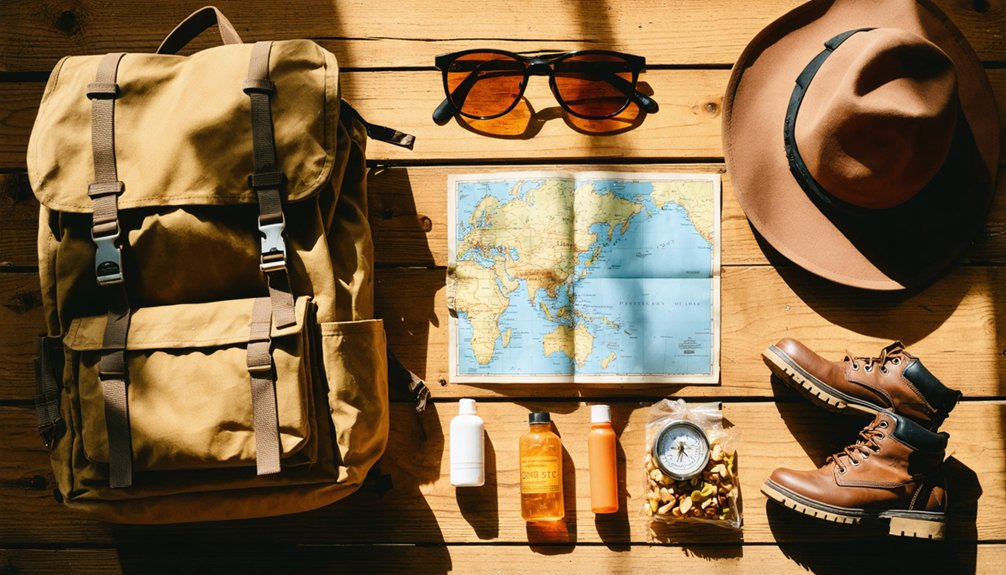
Kelso doesn’t forgive the unprepared — it’s a desert ghost town surrounded by shifting sand dunes, volcanic cinder cones, and miles of sun-baked emptiness.
Pack at least a gallon of water per person; the depot’s bookstore sells spare water, but don’t count on it.
Wear sturdy, closed-toe shoes for exploring both the Kelso Dunes and the historical architecture of the 1923 Spanish Mission Revival depot.
Sunscreen, a wide-brim hat, and layers are non-negotiable — desert temperatures swing hard.
Bring a camera to document the desert flora clinging defiantly to volcanic soil and the dunes’ sculpted ridgelines.
Download offline maps before you arrive since cell service disappears fast out here.
Freedom tastes better when you’re not stranded without water in the Mojave.
How to Build a Road Trip Around Kelso Depot
Sitting almost perfectly between Las Vegas and Palm Springs, Kelso Depot makes an ideal anchor for a desert road trip that actually means something. Its historical architecture and surrounding desert flora reward those willing to leave the highway behind.
Build your route around these four stops:
Build your route with intention — four stops, each one earning its place on the map.
- Kelso Depot – Explore the 1923 Spanish Mission Revival building and its museum exhibits.
- Kelso Dunes – Hike California’s tallest dune field just miles from the depot.
- Cinder Cones – Walk volcanic terrain that feels genuinely otherworldly off Kelbaker Road.
- Kelso Cima Road – Drive through Joshua tree forests connecting to broader Mojave landscapes.
You’re not just passing through — you’re tracing a route through living desert history.
Depot Hours, Parking, and Rules You Need to Know
Before you load up the car and point it toward the Mojave, a few practical details will make or break your visit to Kelso Depot. The visitor center typically operates limited hours, so check the National Park Service website before you go — nothing kills desert adventure momentum like a locked door.
Parking is free and straightforward near the depot’s front entrance, leaving you steps away from remarkable railroad architecture that survived demolition threats and decades of harsh neglect. Respect the preservation efforts that saved this building by staying within designated areas and avoiding contact with restored surfaces.
No pets are allowed inside. Water’s available at the bookstore, so grab some. The desert doesn’t negotiate, but this beautifully rescued depot rewards every traveler who arrives prepared.
Frequently Asked Questions
Was Kelso Ever Considered for a Permanent California Historical Landmark Designation?
Coincidentally, Kelso’s historical significance hasn’t earned it an official California Historical Landmark designation, yet preservation efforts saved it anyway. You’ll find its story alive through the National Park Service’s dedicated stewardship of this remarkable desert survivor.
Are Pets Allowed Inside the Kelso Depot Visitor Center and Museum?
The knowledge doesn’t confirm pet policies for the Kelso Depot. You’ll want to contact the National Park Service directly before bringing your furry companion to explore visitor amenities inside this beautifully restored desert landmark.
Can Visitors Access Kelso Depot Using Public Transportation From Nearby Cities?
Public transportation options to Kelso don’t exist — you’ll drive your own route through open desert. Accessibility improvements remain limited, so you’re embracing true freedom: an untamed, historically-grounded journey where the open road leads you there alone.
Is There Cell Phone Reception Available at Kelso Depot and Surrounding Areas?
Cell reception at Kelso Depot is extremely limited, so don’t count on strong signal strength in this remote Mojave desert outpost. Embrace the freedom of disconnecting as you explore this historically rich ghost town adventure.
Are Guided Group Tours of Kelso Depot Available for School or Organizations?
While the depot’s records are silent, you can contact Mojave National Preserve directly to explore guided tour options and group visit arrangements for schools or organizations — turning your desert adventure into a historically-grounded journey worth every mile.
References
- https://en.wikipedia.org/wiki/Kelso
- https://www.atlasobscura.com/places/kelso-ghost-town
- https://www.facebook.com/groups/1263397433817758/posts/1436340579856775/
- https://wheninyourstate.com/california/kelso-ca-military-history-desert-railroad-hub/
- https://living-las-vegas.com/2016/01/the-kelso-train-depot/
- https://www.pbssocal.org/shows/socal-wanderer/where-to-find-the-mojaves-greatest-ghost-towns