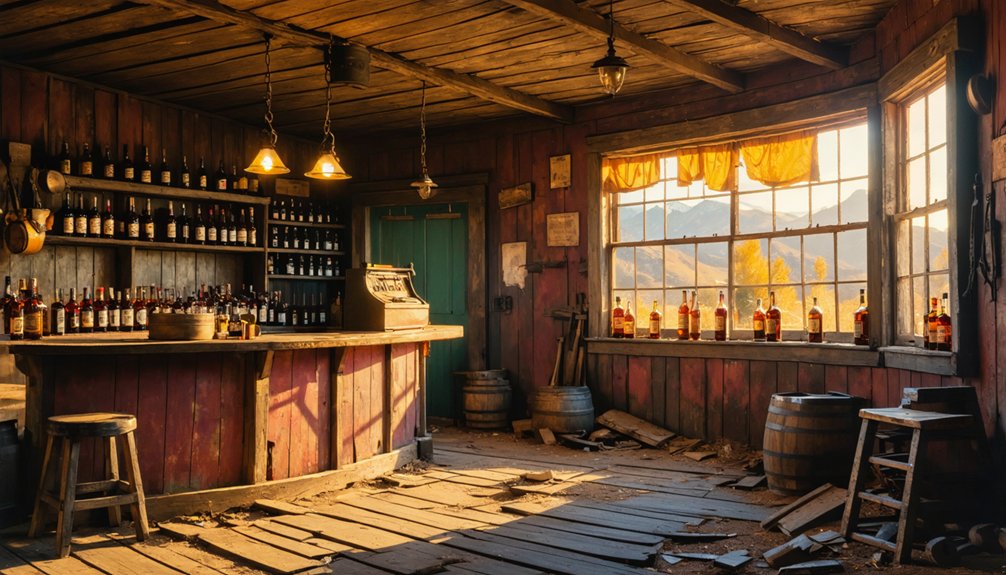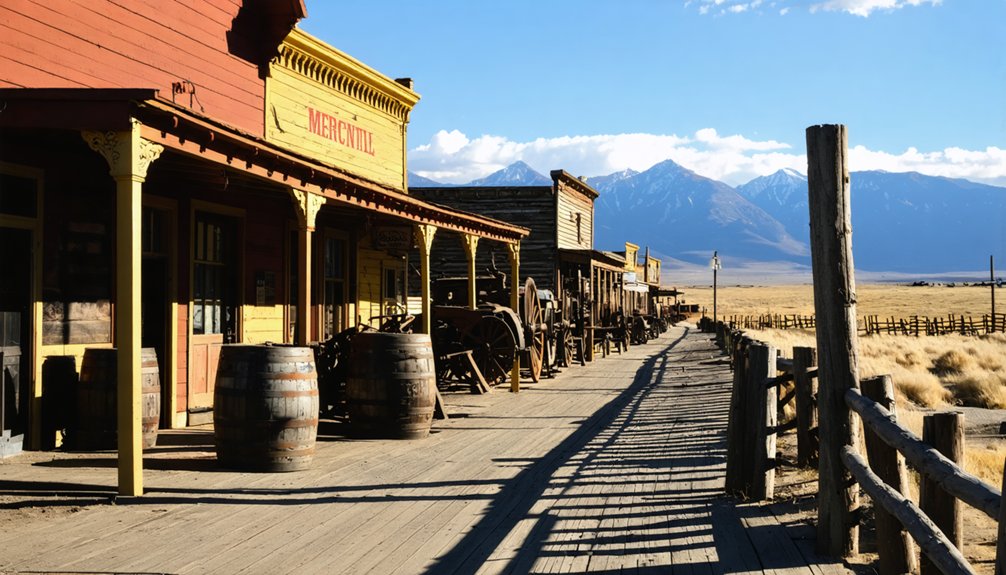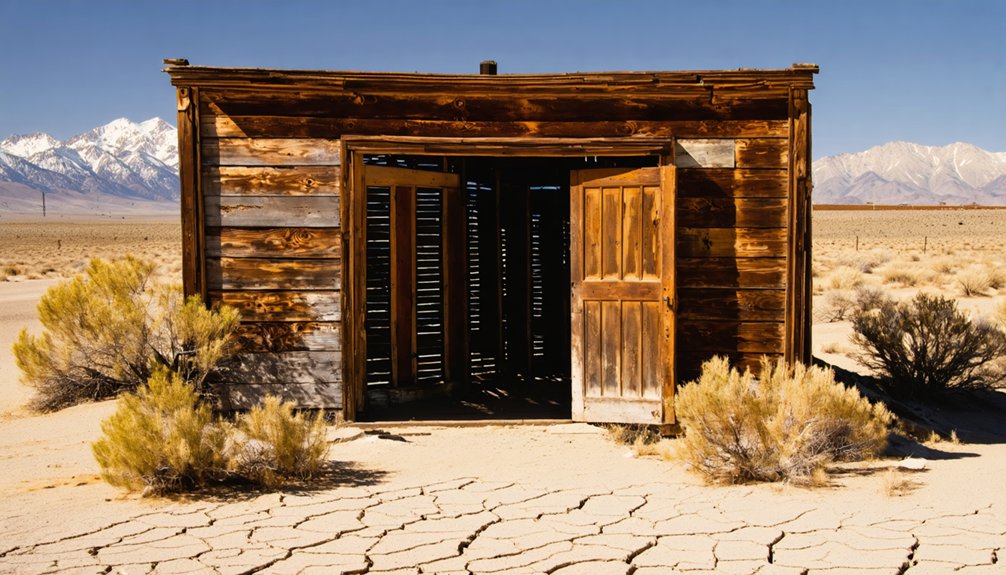
Planning a ghost town road trip to Kingston, California means heading to Kings County near Laton, where California’s Central Valley holds a fading 19th-century river settlement. Founded in 1856, Kingston thrived as a ferry crossing hub before better infrastructure made it obsolete. Visit in spring or fall, pack plenty of water, and download offline maps since cell service is unreliable. There’s much more to uncover about making this trip unforgettable.
Key Takeaways
- Kingston, founded in 1856 near the Kings River, offers historic markers and remnants representing California’s 19th-century westward expansion and stage travel history.
- Visit in spring or fall to avoid summer temperatures exceeding 100°F; pack water, snacks, sun protection, and sturdy walking shoes.
- Download offline maps before arriving, as cell service is unreliable; access the site via Laton-Kingston Park and check seasonal hours.
- Nearby ghost towns like Elkhorn Station, Centerville, and Millerton complement Kingston, creating a full day of frontier California exploration.
- Limit your itinerary to three ghost towns, keep drives under one hour apart, and end your loop near Laton before dusk.
What Makes Kingston, California Worth the Drive?
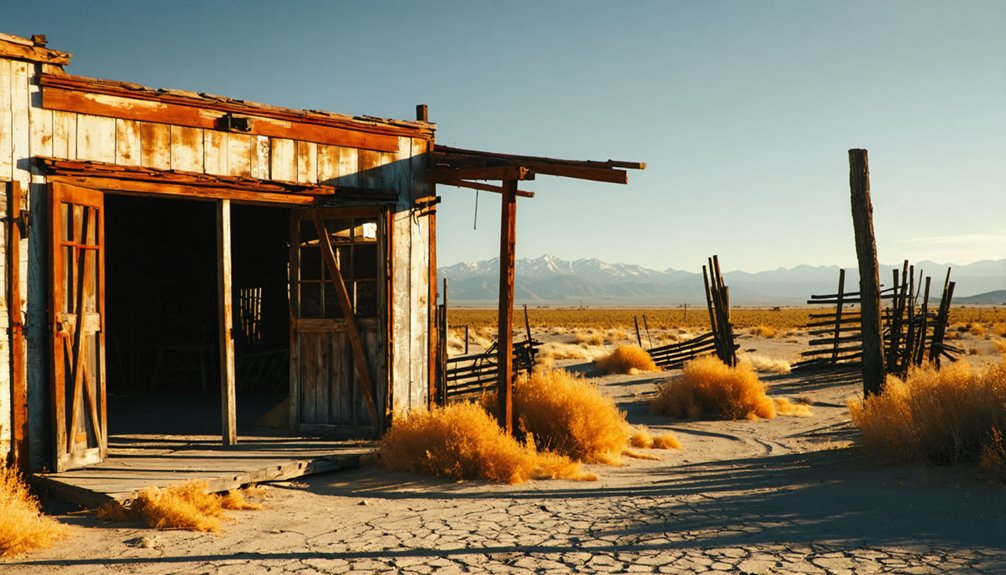
Though Kingston, California won’t greet you with preserved storefronts or a walkable main street, it offers something rarer — a direct connection to the raw, unglamorous mechanics of 19th-century westward movement.
This was a place built entirely around function: a river crossing that kept stage travel moving through the San Joaquin Valley when the Kings River stood between travelers and their destinations.
A river crossing, a waiting coach, a churning current — function was the only luxury the valley offered.
You’re not coming here for comfort or spectacle. You’re coming to stand where ferry operators once hauled coaches across churning water, where the West was less romance and more mud, muscle, and necessity.
A historic marker, scattered cement remnants, and a few stubborn trees are what remain. Sometimes, the most honest history leaves the lightest footprint.
Where Exactly Is Kingston, California?
Kingston, California sits in Kings County, tucked near the Kings River close to the present-day town of Laton — a location that’s easy to miss if you don’t know what you’re looking for.
This Kingston geography places you in the heart of California’s Central Valley, where flat farmland stretches endlessly and the river once dictated everything.
Before Kings County existed, this river settlement fell under early Fresno County’s jurisdiction, making its regional identity a layered one.
The Kings River explains why Whitmore chose this spot — water meant crossings, crossings meant travelers, and travelers meant commerce.
Today, the Laton-Kingston Park area marks your best entry point.
Check seasonal access hours before you head out, because the river still calls the shots out here.
How Kingston Rose and Fell as a River Town
When L.A. Whitmore founded Kingston in 1856, he recognized the Kings River as a natural opportunity. He launched ferry services that connected stage travelers crossing the river, turning a simple crossing point into a thriving hub of river commerce.
Stage drivers, traders, and travelers all depended on Whitmore’s Ferry, and Kingston quickly grew around that demand.
But the town’s strength was also its weakness. Once better infrastructure reduced reliance on the ferry crossing, Kingston lost its reason to exist.
Mining activity near Ophir Canyon briefly offered hope in 1863, but it wasn’t enough to sustain the settlement. The town faded almost as fast as it appeared.
What you’ll find today are scattered traces, a historic marker, and a compelling reminder of how quickly frontier towns could vanish.
How to Get to the Laton-Kingston Park Area?
Reaching the Laton-Kingston Park area takes just a few steps of preparation before you head out.
For Laton directions, set your GPS to Laton, California, a small community in Kings County along the Kings River corridor. From there, local roads guide you toward the Kingston access point near the riverbank.
Before you leave home, check current park hours and seasonal river-safety notices, since conditions shift with the Kings River’s flow. You’ll want a reliable vehicle, water, and a sense of adventure for this off-the-beaten-path stop.
Check river conditions and park hours before heading out — this remote stop rewards the well-prepared adventurer.
Once you arrive, you’ll find a historic marker commemorating the vanished town, scattered cement remnants, and a handful of old trees standing where a bustling river settlement once thrived.
It’s minimal infrastructure for maximum historical reward.
What’s Left to See at the Kingston Ghost Town Site?
Once you arrive at the Kingston site, you won’t find a preserved downtown or standing row of old buildings, but you’ll spot cement infrastructure remnants and a few scattered trees that hint at the settlement’s former presence.
The most notable feature you’ll encounter is the historic marker, located within the Laton-Kingston Park area, which commemorates the town’s founding and its role as a river crossing hub.
These quiet traces are all that remain of a town that rose and fell with the era of stage travel and ferry commerce along the Kings River.
Physical Remnants Still Standing
Arriving at the Kingston ghost town site, you’ll find the past preserved more in suggestion than in structure. The most tangible remnants include scattered cement infrastructure and a handful of old trees that once shaded a thriving river settlement. A historic marker stands to acknowledge the town’s historical significance, giving context to what might otherwise feel like an unremarkable stretch of land near the Kings River.
Visitor experiences here lean toward quiet reflection rather than dramatic exploration. You won’t walk down a preserved main street or photograph crumbling storefronts. Instead, you’ll read the marker, scan the landscape, and piece together a picture of the ferry crossings and stage traffic that once defined this place.
It’s subtle, but that subtlety carries its own honest power.
Historic Marker Location
The historic marker at Kingston sits within the Laton-Kingston Park area, and it’s your clearest anchor point when traversing what’s otherwise a quiet, understated landscape.
The marker acknowledges Kingston’s historic significance as a river crossing hub, reminding you that real commerce and daily life once played out here. Without it, you’d have little confirmation that a ghost town ever existed at this location.
Pull over, read the marker carefully, and let the surrounding terrain fill in the gaps.
The Kings River flows nearby, the same water that made this settlement worth building in the first place.
You’re fundamentally reading history in two forms simultaneously — the carved text before you and the living landscape stretching beyond it. That combination makes the stop genuinely worthwhile.
Best Time of Year to Visit Kingston?
When’s the best time to visit Kingston’s ghost town site near Laton?
Spring and fall are the best seasons for exploring this Kings River location. You’ll enjoy mild temperatures, manageable river levels, and easier access through Laton-Kingston Park.
Weather considerations matter here — summer heat in California’s Central Valley can be brutal, pushing temperatures well past 100°F, making outdoor exploration genuinely uncomfortable.
Winter brings unpredictable rainfall that can raise river levels and limit safe park access.
Spring offers blooming landscapes and cooler mornings, giving you the most rewarding experience among the scattered traces and historic markers.
Before you head out, always check current park hours and river-safety notices. Conditions change seasonally, and you’ll want your road trip to Kingston to go smoothly.
What Kingston’s Remote Location Means for What You Pack
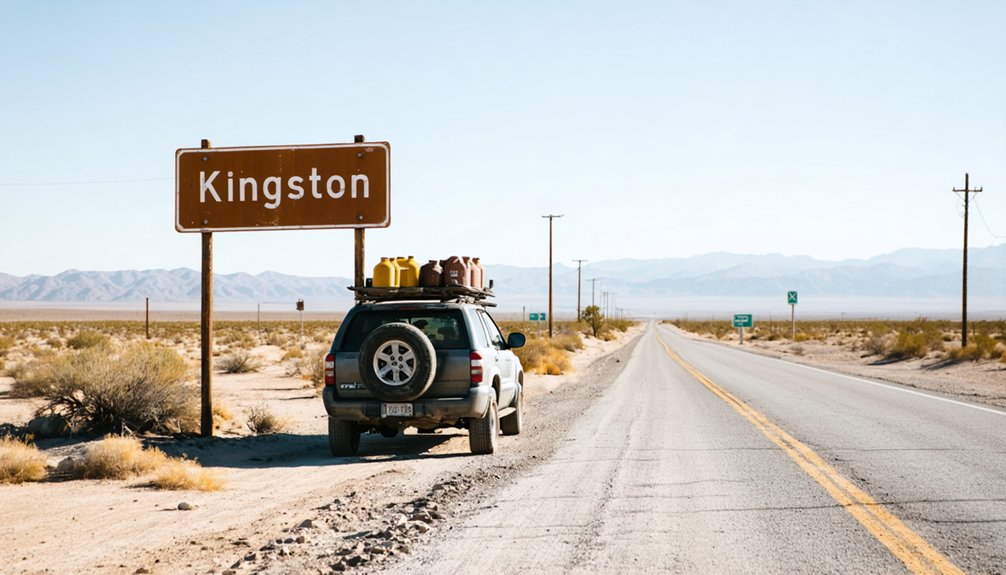
When you head out to Kingston, you’re trading convenience for history, so you’ll want to pack water, snacks, a first-aid kit, and a paper map since cell service is unreliable in this rural stretch of Kings County.
No shops, gas stations, or services sit nearby, meaning you’re entirely on your own once you leave the main road.
Load your vehicle with more supplies than you think you need, because the remote Kings River setting rewards preparation and punishes assumptions.
Essential Supplies To Bring
Because Kingston sits in a remote stretch of Kings County with no preserved buildings, shops, or services anywhere near the site, you’ll need to arrive fully self-sufficient.
Pack essential gear that covers heat, hydration, and navigation. Must have items include at least two liters of water per person, sun protection, sturdy walking shoes, and a basic first aid kit.
The Kings River area can shift dramatically with seasonal conditions, so check current weather and river-safety notices before you leave.
Bring a paper map or downloaded offline route since cell service isn’t guaranteed. Snacks, a charged portable battery, and a camera round out a smart kit.
Traveling prepared means you spend your energy exploring the site, not managing avoidable problems.
Navigating Limited Nearby Resources
Packing the right gear gets you only so far — knowing what surrounds Kingston (or rather, what doesn’t) shapes every decision you make before you leave home.
The nearest local amenities sit in Laton, a small community offering minimal services. Don’t count on finding a fully stocked convenience store or gas station right at your doorstep. Fill your tank before leaving any major highway, and carry more water than you think you’ll need, especially during summer heat near the Kings River.
These travel tips aren’t just suggestions — they’re the difference between a smooth adventure and a frustrating detour. Cell service can be unreliable, so download offline maps and park information ahead of time.
Kingston rewards self-sufficient travelers who plan before they roam.
Which Ghost Towns Near Kingston Are Worth Adding to Your Route?
Once you’ve explored Kingston’s quiet riverside remnants, why not stretch your route to include a few neighboring ghost towns that round out the San Joaquin Valley’s fading history?
Elkhorn Station once served travelers traversing similar river crossings along regional stage routes, making it a natural complement to Kingston’s ghost town history.
Centerville, another forgotten Kings County settlement, offers crumbling foundations and a rawness that rewards curious explorers.
Heading slightly north, Millerton’s submerged ruins occasionally surface during low water at Millerton Lake, delivering an eerie, unforgettable experience.
Each stop adds texture to your understanding of how quickly frontier ambition rose and collapsed across California’s interior valleys.
Map these towns before you leave, confirm seasonal road access, and you’ll travel a corridor rich with forgotten stories waiting to be uncovered.
How to Combine Kingston With Nearby Ghost Towns in One Day

Knowing which ghost towns complement Kingston is only half the battle—mapping a route that fits them into a single day takes a bit of planning.
Start at Kingston early, absorbing its ghost town history around the river crossing and historic marker before crowds arrive. Then head south or east toward your next stop, keeping drive times under an hour between sites.
Begin at Kingston before the crowds, then push south or east—no leg longer than an hour.
Pack water, snacks, and a printed map since cell service gets unreliable in rural Kings County. Visit no more than three locations total—rushing dilutes the experience. Each site deserves at least forty-five minutes of unhurried exploration.
End your loop near Laton so you’re not backtracking at dusk. A tight, intentional route lets you cover real ground without sacrificing depth.
Frequently Asked Questions
Who Originally Founded Kingston, California, and in What Year?
L.A. Whitmore founded Kingston in 1856, and you’ll find its founding significance rooted in ferry services across the Kings River. Exploring Kingston history reveals how one entrepreneur shaped an entire region’s early travel and commerce.
What County Does Kingston, California Currently Belong To?
Like a river finding its final bed, Kingston’s historical significance has settled into Kings County. You’ll find local legends whisper through its grounds, reminding you that freedom once flowed here, carried by ferries and wandering stagecoaches.
Did Mining Activity Ever Help Sustain Kingston’s Economy?
Mining impact didn’t sustain Kingston’s economic sustainability. Though mining activity began near Ophir Canyon in 1863, you’ll find it never took hold enough to keep the town thriving beyond its river-crossing and stage travel roots.
What Physical Remnants Still Exist at the Kingston Ghost Town Site?
Like whispers from the past, you’ll find cement infrastructure remnants and a few trees standing as historical artifacts. Don’t expect abandoned structures — instead, a historic marker quietly honors what once thrived at this freedom-filled river crossing.
Was Kingston Historically Part of Fresno County Before Kings County?
Yes, you’ll find Kingston’s historical significance tied to early Fresno County before shifting county boundaries placed it within Kings County, giving this ghost town a layered past that’ll deepen your appreciation for California’s evolving regional history.
References
- https://www.hertz.com/p/american-road-trip-planner/west-coast/ghost-towns-of-the-west
- https://www.visitcalifornia.com/now/california-ghost-towns-road-trip/
- https://nvtami.com/2022/06/06/1-jeep-2-explorers-3-days-30-ghost-towns-and-2-rattlesnakes-part-ii/
- https://www.visitcalifornia.com/jp/road-trips/kosutotaun/
- https://www.visitcalifornia.com/road-trips/ghost-towns/
- https://www.visitcalifornia.com/kr/road-trips/goseuteu-taun/
- https://www.youtube.com/watch?v=FEiWdlOSoiw
- https://www.facebook.com/groups/calhighways/posts/1781297805254306/
- https://www.calexplornia.com/kingston/
- https://www.explore.com/1709921/how-to-visit-best-california-ghost-towns-in-one-trip/