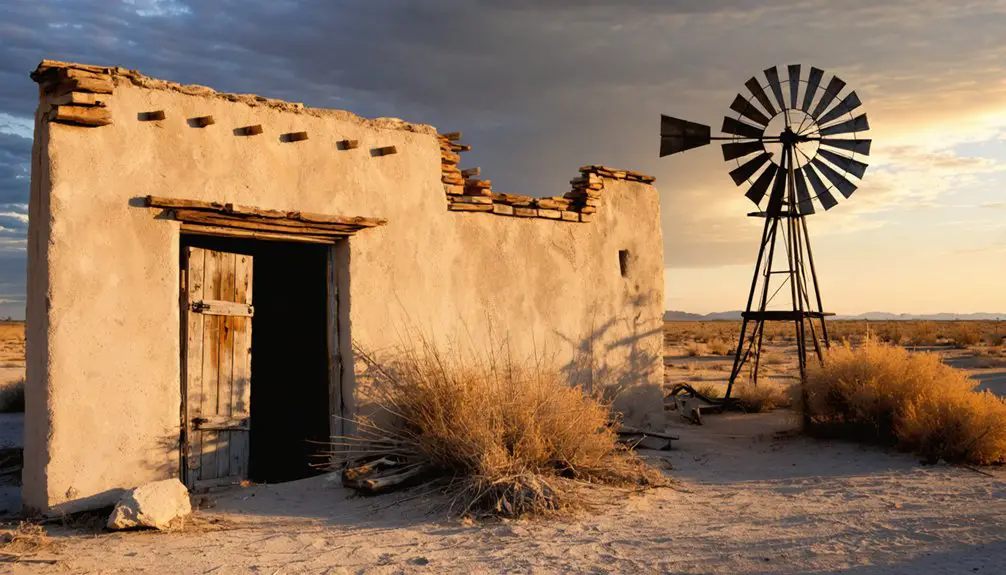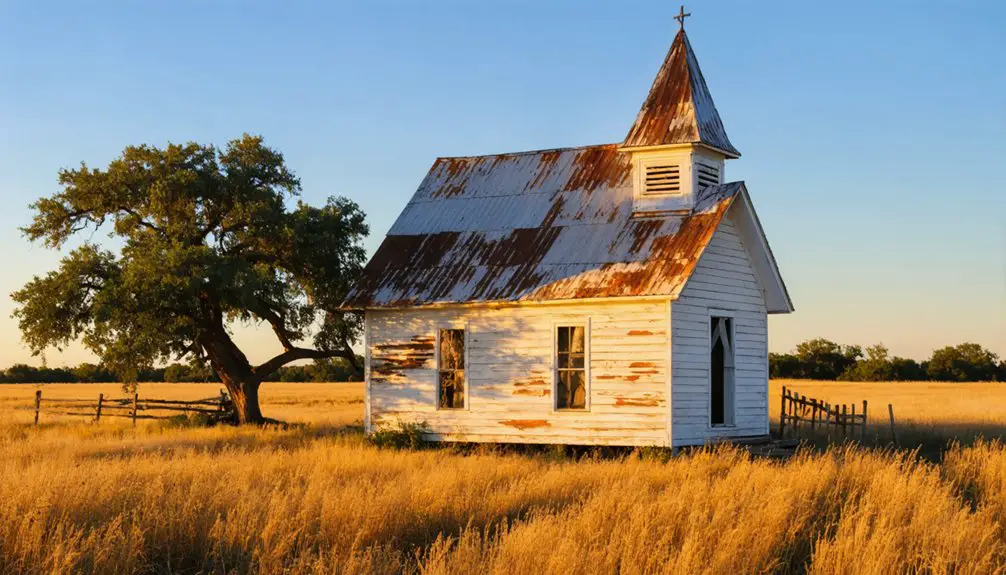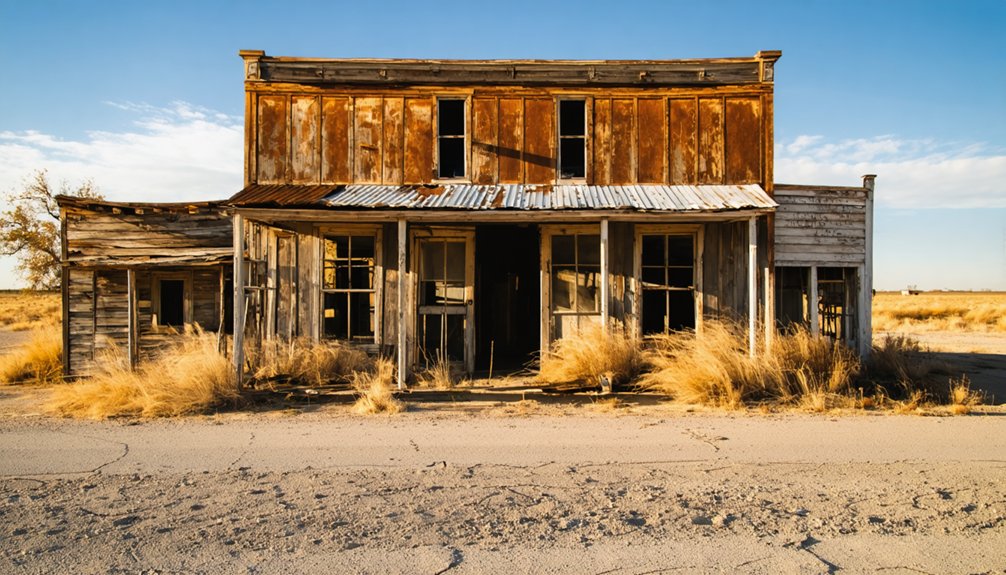
Kittie, Texas — also known as Kittie West — is a forgotten railroad stop sitting two miles south of Three Rivers on U.S. Highway 281. Founded around 1915 by George Washington West and named after his wife, this once-active community had a hotel, depot, and school before quietly disappearing after 1943. You won’t find markers or buildings, just open land and history beneath your feet. There’s far more to this vanished town’s story than meets the eye.
Key Takeaways
- Kittie, Texas, is located two miles south of Three Rivers on U.S. Highway 281, making Three Rivers an ideal base for your trip.
- No structures or historical markers remain, so visit with realistic expectations of open land where the town once stood.
- Bring water, arrive early, and slow down to spot possible remnants of the depot, hotel, and school.
- Pair your Kittie visit with nearby ghost towns in Live Oak County by heading north on U.S. Highway 281.
- Founded around 1915 and named after Kittie West, the town declined after school consolidation into George West ISD in 1943.
What Was Kittie, Texas: and Why Does It Matter?
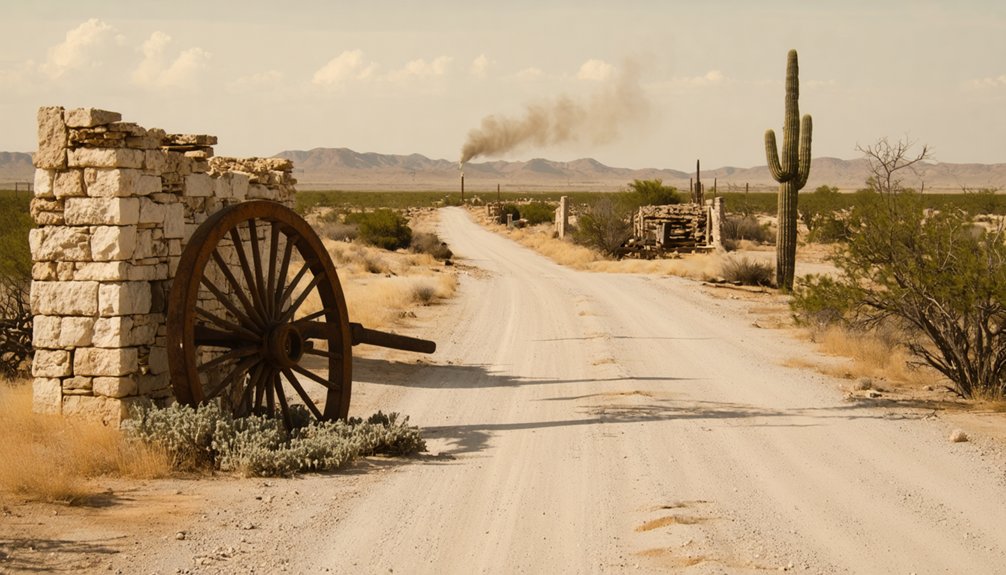
Tucked about two miles south of Three Rivers along U.S. Highway 281, Kittie, Texas, sits quietly as one of South Texas’s forgotten railroad communities. Founded around 1915, Kittie history traces back to George Washington West, who named the settlement after his wife, Kittie West. That personal touch makes this ghost town feel distinctly human amid the vast South Texas landscape.
At its peak, the community supported a hotel, school, and depot on the San Antonio, Uvalde and Gulf Railroad.
When the school consolidated into the George West Independent School District in 1943, the town’s decline accelerated.
Understanding this ghost town significance matters because Kittie represents hundreds of vanished Texas communities that once fueled rural life.
You’re not just visiting an empty spot — you’re standing inside a living piece of forgotten American history.
The Name Behind the Town: George Washington West and Kittie West
Behind every ghost town is a name, and behind Kittie’s name stands a man with deep roots in South Texas history. George Washington West founded this small community around 1915, and he named it after his wife, Kittie West. That personal tribute became the town’s identity, and it stuck.
You’ll sometimes see the name spelled *Kittle* in older sources, and locals also called it Kittie West, honoring her directly. This Kittie history is a reminder that real people built these places, not just economics or railroads.
The community legacy George Washington West left behind may be modest, but it’s genuine. A town named for your spouse carries intention.
When you pass through this stretch of Highway 281, you’re crossing ground someone once claimed with pride.
Kittie’s Railroad Roots and Its Brief Early Growth
Once the San Antonio, Uvalde and Gulf Railroad pushed through this part of South Texas, small communities like Kittie had a reason to exist. That railroad history gave the early settlement its backbone.
When Kittie took shape around 1915, it wasn’t just a name on a map — it was a functioning stop with a depot, a hotel, and a school. Travelers and locals moved through on their own terms, and for a time, the town delivered what people needed.
The depot connected Kittie to a wider world, pulling in commerce and residents alike. You can almost picture it — a modest but active community carving out its place along a busy rail line, building something real from the flat South Texas landscape.
Why Kittie Disappeared After the 1943 School Consolidation
When Kittie’s school merged into the George West Independent School District in 1943, the community lost one of its last reasons to exist as a distinct settlement.
You can trace the town’s disappearance to a chain reaction—once the school left, families followed, and the social fabric that held the community together unraveled.
Without its railroad depot and school anchoring daily life, Kittie faded from a functioning town into little more than a name on older maps.
School Consolidation Accelerated Decline
Few forces hollowed out small Texas towns faster than school consolidation, and Kittie felt that loss sharply in 1943 when its school merged into the George West Independent School District.
Rural education had anchored the community, giving families a reason to stay rooted. Once that anchor lifted, parents followed their children’s school elsewhere, and businesses lost their customer base.
Kittie’s school history mirrored a statewide pattern sweeping through Texas during the mid-20th century. Consolidation promised efficiency but drained small settlements of their identity.
Without a schoolhouse, Kittie lost its social center. The hotel and depot had already tied the town to the railroad era, but those institutions couldn’t compensate once families relocated.
You’re now looking at a community that lost its future the moment it lost its school.
Lost Railroad Community Functions
The school’s departure in 1943 didn’t just strip Kittie of its children—it severed the last thread holding the community’s railroad functions together.
Before that, the San Antonio, Uvalde and Gulf Railroad depot kept Kittie breathing. Goods moved. People arrived. The hotel filled rooms, and the depot buzzed with purpose.
Once the school consolidated into George West ISD, community dynamics collapsed fast. Families relocated toward Three Rivers, just two miles north on U.S. Highway 281.
Without residents, the depot lost its reason to operate. The hotel emptied. Railroad heritage that once defined Kittie’s identity became a footnote.
You’re now driving past a place where those functions vanished quietly, leaving only the highway and scattered memory.
That’s exactly what makes Kittie worth stopping for.
What’s Left to See at Kittie Today?
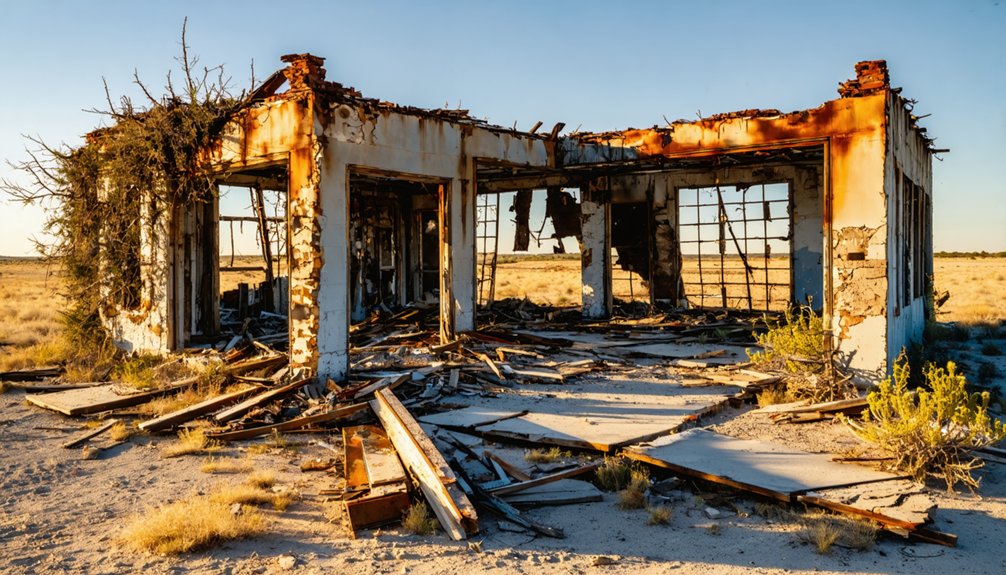
When you drive south from Three Rivers on U.S. Highway 281, you won’t find a preserved downtown or a historical marker announcing Kittie’s former glory — the town has largely vanished into the South Texas landscape.
You can still travel the same corridor that once connected this small railroad community to the wider region, and the highway itself serves as your most tangible link to the site.
Pull into Three Rivers before or after your visit to fuel up, grab a meal, and get your bearings before exploring what little remains of this forgotten settlement.
Remnants Along Highway 281
Driving south from Three Rivers on U.S. Highway 281, you’ll notice the landscape shift into quiet stretches of South Texas brush country. That’s where Kittie once stood, roughly two miles down the road.
Today, no depot, hotel, or schoolhouse marks the spot. Rural community decline erased those structures decades ago, leaving little more than open land beside a busy modern highway.
Yet the ghost town significance of Kittie lingers for those who know what to look for. You’re fundamentally traveling through living history, passing a place that thrived during the railroad era and quietly vanished.
Bring a camera, study your map beforehand, and keep your eyes open. Sometimes the absence of a town tells its story more powerfully than any standing building ever could.
Nearby Three Rivers Stop
Since Kittie itself offers no standing structures to explore, Three Rivers—just two miles north on Highway 281—becomes your natural base for this ghost town excursion. You’ll find fuel, food, and lodging here, making it a practical launching point before you head south to the Kittie site.
Three Rivers also rewards curious travelers with its own local attractions. The Choke Canyon State Park lies nearby, offering fishing, camping, and wildlife viewing if you want to extend your stay beyond roadside history.
The town’s modest downtown gives you a feel for how South Texas communities survived where Kittie didn’t.
Use Three Rivers as your anchor, explore the Kittie corridor along Highway 281, and you’ve got a lean, satisfying ghost town stop built around genuine historical curiosity.
How to Find Kittie West on U.S. Highway 281
Finding Kittie West takes just one road and a sharp eye — head south on U.S. Highway 281 from Three Rivers and drive approximately two miles. That’s it. No complicated backroads, no confusing intersections.
The highway that carries you forward also quietly preserves hidden histories beneath its modern surface.
The road beneath your tires has witnessed more history than any map will ever reveal.
You won’t find a sign announcing Kittie West. What you’re really chasing is rural nostalgia — the ghost of a depot, a school, a hotel, and a community that once had real daily life humming along a railroad line.
Slow down as you pass through, and let the landscape speak. The flat South Texas terrain holds its secrets close. Knowing you’re standing near a founded-in-1915 settlement makes that stretch of highway feel entirely different.
Planning Your Visit to Kittie and Live Oak County
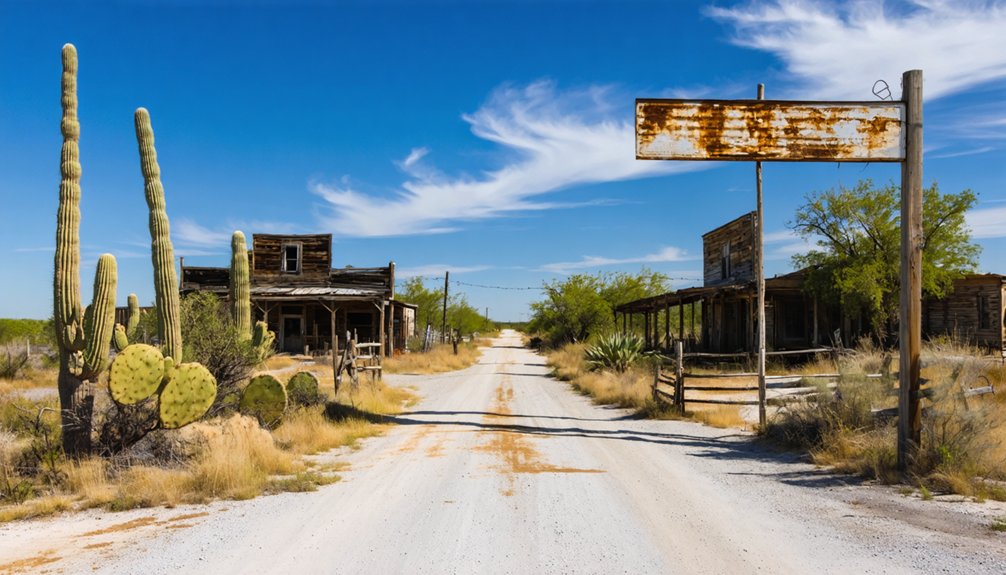
Tucked along U.S. Highway 281, Kittie sits just two miles south of Three Rivers, making it an easy detour on a South Texas road trip.
You won’t find a downtown or visitor center here — Kittie history lives in the landscape itself, in the quiet stretch where a depot, hotel, and school once defined a community.
Use Three Rivers as your base; it offers fuel, food, and lodging before you head out to explore.
These travel tips will sharpen your trip: go early, bring water, and pair Kittie with other Live Oak County historical stops for a fuller day.
The freedom of the open highway connects you to dozens of similar lost Texas towns, and Kittie is a worthy first stop.
Nearby Texas Ghost Towns Worth Combining With a Kittie Stop
South Texas rewards patient explorers, and once you’ve walked the quiet stretch where Kittie once stood, you’ll want to keep driving.
Live Oak County sits within reach of dozens of forgotten communities, making it easy to build ghost towns into your broader travel itineraries across the region.
Head north along U.S. Highway 281 and you’ll find small settlements that faded alongside the railroads that once sustained them.
George West itself carries remnants of that early ranching and railroad era worth a slow look.
Farther out, the ghost towns scattered across adjoining counties reward anyone willing to leave the main road briefly.
The ghost towns hiding just beyond the county line belong to those willing to take the turn.
Texas counts roughly 900 ghost towns statewide, so your options stay wide open.
Kittie works best as a starting point, not a final destination.
Frequently Asked Questions
Is Kittie, Texas, Listed on Any Official Texas Historical Markers?
Want to uncover Kittie’s historical significance? The available sources don’t confirm official Texas historical marker locations for Kittie, so you’ll want to check the Texas Historical Commission’s database directly before hitting the road.
Are There Any Photographs of Kittie’s Original Hotel or Depot?
No confirmed photographs of Kittie’s original hotel or depot have surfaced yet. If you’re passionate about ghost town photography and historic architecture, you’ll want to dig through local Live Oak County archives for hidden visual treasures.
What Is the Best Time of Year to Visit Kittie?
Spring or fall offer you the best seasonal attractions and ideal weather considerations for exploring Kittie. You’ll dodge brutal summer heat and enjoy open roads, mild temperatures, and a raw, untamed South Texas landscape that’s yours to discover.
Is the Kittie Site on Public or Private Land?
Texas has roughly 900 ghost towns, and many sit on private land. Kittie’s land ownership isn’t clearly documented, so you’ll want to check local regulations before visiting to avoid trespassing on someone’s forgotten piece of history.
Did Any Notable Texas Figures Ever Pass Through Kittie?
No records confirm famous visitors or historical anecdotes linking notable Texas figures to Kittie. You’re exploring a quiet railroad stop where everyday settlers, not legends, shaped its brief story along Highway 281.
References
- https://www.youtube.com/watch?v=6u47HvHWZXM
- https://www.tshaonline.org/handbook/entries/kittie-tx
- https://en.wikipedia.org/wiki/List_of_ghost_towns_in_Texas
- https://www.tshaonline.org/handbook/entries/kit-tx
- https://en.wikipedia.org/wiki/Category:Ghost_towns_in_West_Texas
- https://www.ghosttowns.com/states/tx/tx.html
- https://www.youtube.com/watch?v=AsCuwE0joO0
- https://www.texasescapes.com/Texas-Ghost-Towns-A-to-Z.htm
- https://www.texasescapes.com/TOWNS/Texas-Ghost-Towns-4-West-Texas.htm
- https://www.instagram.com/reel/DGzRHlvNiJ0/?hl=en