Planning a ghost town road trip to Ladore, Kansas means trading crumbling buildings for something quieter and stranger. Founded in 1867, this frontier boomtown swelled to nearly 1,500 residents almost overnight before collapsing within three years. Today, you’ll find only a weathered cemetery a few miles north of Parsons, a historical marker, and open Kansas sky. It’s a place where violent history still lingers in the silence — and there’s far more to this story than you’d expect.
Key Takeaways
- Ladore, Kansas, founded in 1867, was a frontier boomtown that vanished within three years, leaving only a cemetery as its physical remnant.
- The Ladore Cemetery, located north of Parsons, and a historical marker at Lyon and 25th Road are the primary points of interest.
- Bring navigation tools, water, sturdy footwear, bug spray, and a camera, as the remote location has unreliable GPS signals.
- Ladore’s history includes a notorious 1870 mass lynching of five outlaws, which gained national headlines and accelerated the town’s decline.
- Nearby attractions include Parsons, Fort Scott, Oswego, and Coffeyville’s Dalton Gang museum, enriching your Southeast Kansas frontier history road trip.
What Was Ladore, Kansas: and Why Does It Still Matter?

Before the railroad moved on and took everything with it, Ladore, Kansas was a boomtown that erupted almost overnight in 1867, drawing between 900 and 1,500 residents to the southern plains of Neosho County near present-day Parsons.
The Missouri, Kansas, Texas Railroad fueled its explosive economic impact, transforming raw frontier land into a thriving settlement within months.
But Ladore history isn’t just a story of growth — it’s a cautionary tale about how quickly freedom can collapse into chaos.
Lawlessness terrorized honest citizens, vigilante lynchings made national headlines, and when the railroad relocated to Parsons around 1869, the town vanished almost as fast as it appeared.
Understanding Ladore means understanding the brutal, unfiltered reality of frontier life — and why ghost towns deserve your attention.
The Boom and Bust: How Ladore Rose and Collapsed in Three Years
When James N. Roach founded Ladore in 1867, you’d have watched a frontier boom town materialize almost overnight, swelling to a population of 900 to 1,500 residents in a matter of months.
The Missouri, Kansas, Texas Railroad was Ladore’s lifeblood, and when those railroad facilities packed up and moved to nearby Parsons around 1869, residents followed almost immediately.
Buildings were physically relocated, businesses vanished, and within three short years, a town that had roared to life simply ceased to exist.
Overnight Boom Town
Few frontier settlements rose and fell as dramatically as Ladore, Kansas — a town that went from raw prairie to a bustling community of nearly 1,500 residents practically overnight. Founded in 1867 by James N. Roach, the settlement first operated as Fort Roach before transforming into a full-fledged boom town almost immediately.
The Missouri, Kansas, Texas Railroad drove everything. Where rails went, commerce followed, and Ladore exploded with activity the moment the railroad established its presence there. Merchants, laborers, and opportunists flooded in, chasing the promise of frontier freedom and fast money.
But ghost town lore warns you — what railroads build, they can also destroy. When railroad facilities relocated to nearby Parsons around 1869, frontier justice couldn’t save what economics had already sentenced to death.
Railroad Departure Triggers Collapse
The moment railroad facilities packed up and relocated to Parsons around 1869, Ladore’s fate was sealed. You can almost picture it — buildings literally hauled away on wagons, families abandoning homes overnight, streets emptying with shocking speed.
The railroad impact on frontier settlements was absolute; without those tracks and facilities, no economic engine existed to sustain daily life.
Ladore’s economic shifts happened brutally fast. What took years to build elsewhere collapsed here within months. Residents didn’t linger debating their options — they followed the railroad’s money and momentum straight into Parsons.
Entire commercial structures relocated alongside the people.
That’s the raw reality of frontier freedom: opportunity drove settlement, and when opportunity moved, so did everyone else. Ladore became a memory before most realized it had peaked.
The 1870 Mass Lynching That Made Ladore a National Story
When you dig into Ladore’s history, you’ll find that lawlessness wasn’t just a rumor — honest citizens lived in daily fear of armed robbery with zero law enforcement to protect them.
That volatile atmosphere reached a breaking point on May 10, 1870, when vigilantes took matters into their own hands and executed five outlaws in a mass lynching that shocked the nation.
The brutal act of frontier justice thrust Ladore into the national spotlight, cementing its reputation as one of the most dangerous and desperate settlements on the American frontier.
Lawlessness Before The Lynching
Ladore never had a sheriff, a jail, or any semblance of formal law enforcement during its brief and chaotic existence. That absence defined the town’s lawlessness origins from day one.
Outlaws moved freely through the streets, robbing honest citizens at gunpoint with almost zero consequences. You’d have felt it the moment you arrived — a tension hanging in the air, a sense that anything could happen and probably would.
Without formal authority, residents faced a stark choice: endure the violence or take matters into their own hands. That desperation gradually cultivated a vigilante culture that would eventually explode into something far more dramatic.
The lawlessness wasn’t incidental — it was Ladore’s identity, woven into every transaction, every dark alley, and every uneasy night spent behind a locked door.
Five Outlaws Executed
On May 10, 1870, Ladore’s fed-up residents stopped waiting for justice and delivered it themselves — five outlaws were seized, tried by the crowd’s fury, and hanged before the day ended.
No sheriff, no courthouse, no delay. Citizens who’d endured relentless robbery and intimidation finally drew their line.
The executions ignited national headlines, cementing Ladore’s place in America’s vigilante culture and broadcasting its lawless reputation far beyond Kansas.
Newspapers across the country covered the story, fascinated by frontier justice at its most raw.
Those five hangings left behind outlaw legacies defined not by triumph but by the consequences of preying on people who refused to stay afraid.
When the system fails you, you build your own.
Vigilante Justice Aftermath
Five outlaws swinging from makeshift gallows sent a message that echoed far beyond Neosho County — Ladore had just handed the national press exactly the kind of frontier spectacle it couldn’t ignore.
Newspapers across the country picked up the story, cementing Ladore’s reputation as a place where vigilante culture replaced any semblance of formal law enforcement.
You’d think the executions would’ve stabilized things, but the town was already bleeding residents to Parsons.
The lynching didn’t save Ladore — it just guaranteed the town would be remembered for its violence rather than its ambitions.
That dark notoriety outlasted every building, every business, and every hopeful settler who once called it home.
What remains isn’t triumph; it’s a cautionary footnote carved into Kansas frontier history.
The Ladore Cemetery: The Only Thing Left Standing
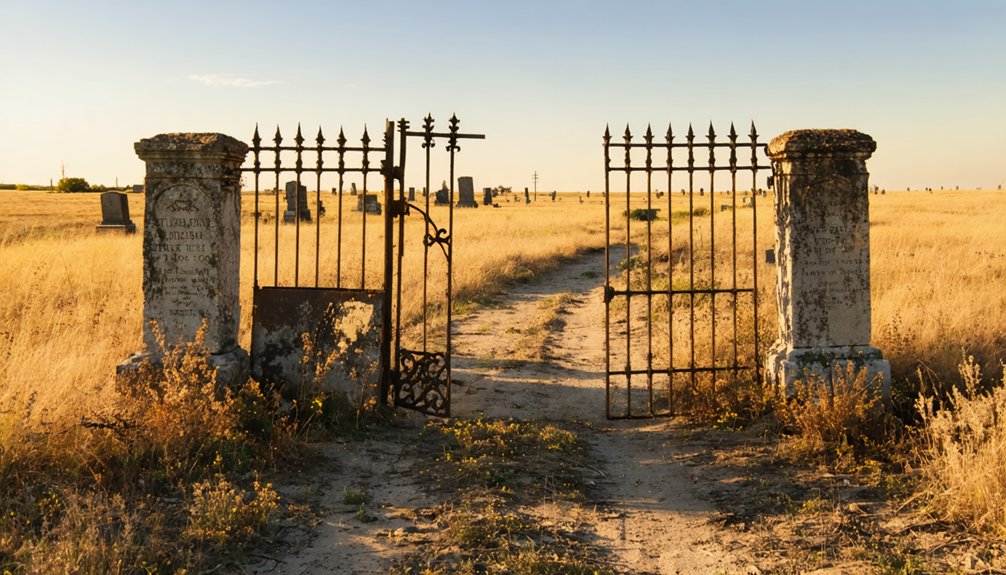
Today, the only physical remnant of Ladore’s turbulent existence is its cemetery, quietly tucked away on an out-of-the-way road a few miles north of Parsons.
Its cemetery significance can’t be overstated — without it, nothing would mark that this boomtown ever existed.
When you visit, you’ll find a historical sign at the intersection of Lyon and 25th Road northwest of Parsons, designating the “Gone Town of Ladore 1869.”
That simple marker represents the entire weight of historical preservation for a community that once held up to 1,500 residents.
Walk through the cemetery and let it sink in — beneath your feet lies the last evidence of a town that exploded into existence, burned bright with violence and ambition, then vanished almost completely within three years.
How to Get to the Ladore Ghost Town Site
Getting to the Ladore ghost town site takes a little navigation, but that’s part of the experience. Few ghost towns reward the journey quite like this forgotten corner of Kansas frontier history.
Follow these directions to find the Ladore history marker:
- Head northwest of Parsons, Kansas, toward Lyon Road.
- Locate the intersection of Lyon and 25th Road, where a historical sign marks the Gone Town of Ladore.
- Continue a few miles north of Parsons to find the Ladore Cemetery tucked along an out-of-the-way road.
You won’t find crowds here. You’ll find silence, open skies, and the raw authenticity that serious ghost town hunters crave.
Bring a map, trust your instincts, and let the road lead you somewhere history almost forgot.
What You’ll Find When You Arrive at Ladore?
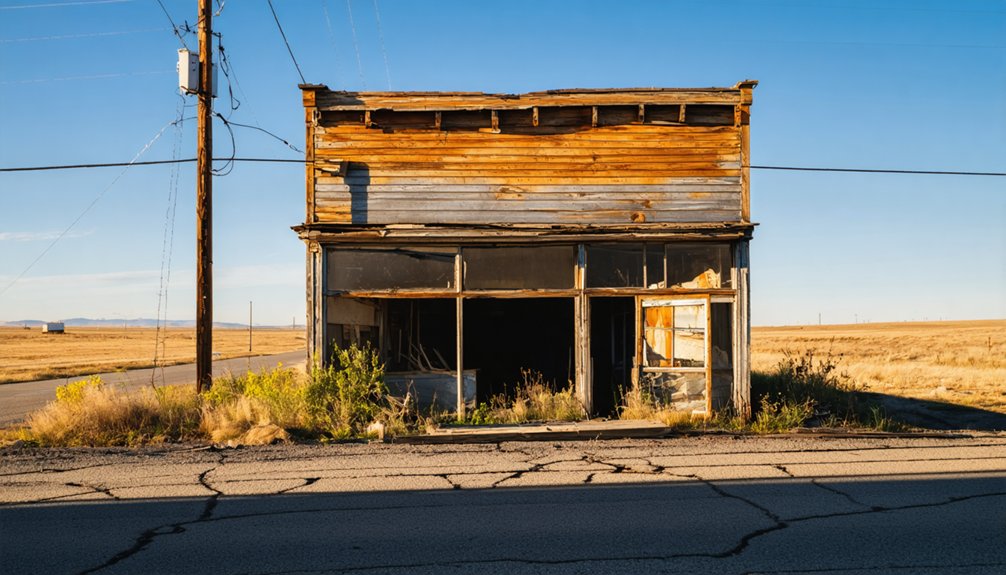
Silence greets you the moment you step out of your car at Ladore. There’s no main street, no crumbling facades, no dramatic ruins waiting for your camera. What you’ll find instead are wide, open fields carrying the Historical Echoes of a town that vanished almost as fast as it appeared.
A historical sign marks the intersection of Lyon and 25th Road, acknowledging the Gone Town of Ladore 1869. A few miles north, the Ladore Cemetery stands quietly, holding the town’s last physical truth.
Weathered stones anchor the Ladore Legends of vigilante justice, boom-town ambition, and collapse.
You’re standing where nearly 1,500 people once scrambled for opportunity, then scattered overnight. The land doesn’t mourn. It simply endures, indifferent and honest, the way only forgotten places can be.
What to Bring on Your Ladore Ghost Town Visit
Preparation makes the difference between a meaningful visit and a frustrating one. Ladore’s remote location demands self-sufficiency, so pack smart before heading out for this ghost town exploration.
Preparation separates a meaningful visit from a frustrating one — Ladore rewards those who arrive self-sufficient and ready to explore.
- Navigation tools – GPS signal drops on rural Neosho County roads, so download offline maps or bring printed directions to Lyon and 25th Road.
- Camera and journal – Capturing the cemetery’s weathered markers helps you process the historical significance of lives lived during Ladore’s violent, fleeting existence.
- Water and sturdy footwear – No facilities exist here; you’re walking uneven terrain in complete solitude.
You’ll also want bug spray during warmer months. The site rewards visitors who arrive ready to explore independently, honoring the restless frontier spirit that built and destroyed Ladore in just three years.
Ghost Towns and Historic Sites Within an Hour of Ladore
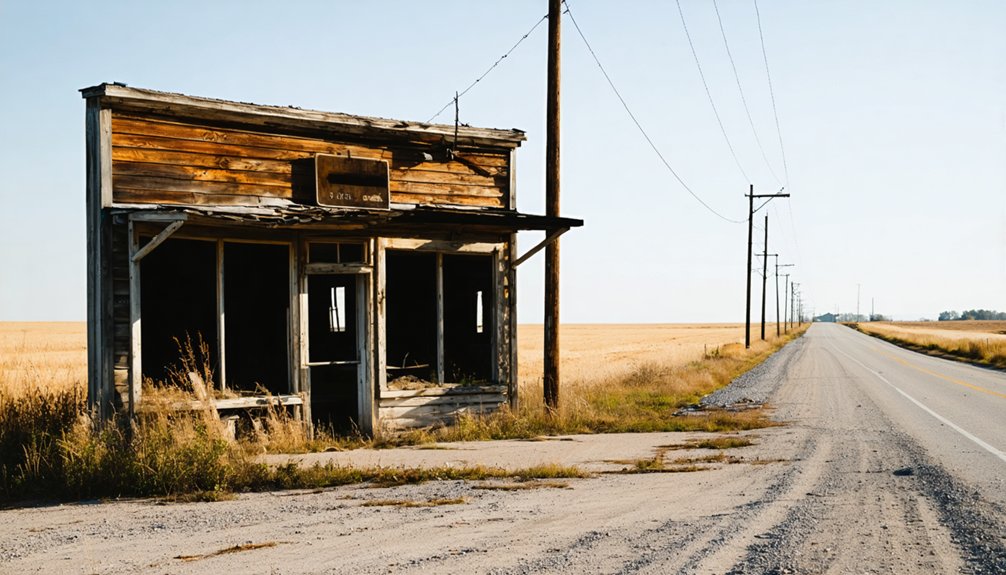
Once you’ve paid your respects at Ladore Cemetery, southeast Kansas opens up into a surprisingly rich corridor of frontier history worth exploring.
Parsons itself carries railroad heritage worth an afternoon, while nearby Oswego offers preserved Victorian architecture and frontier courthouse history.
Fort Scott, roughly an hour northwest, delivers one of the region’s best examples of historical preservation, with its restored military fort and Civil War battleground sites.
Coffeyville, to the south, anchors ghost town legends with the infamous Dalton Gang raid site and museum.
Each location layers onto Ladore’s story, painting a fuller picture of how violent, ambitious, and fleeting frontier life truly was.
Pack your map, trust the backroads, and let southeast Kansas reveal its unfiltered past on your own terms.
Frequently Asked Questions
Was Ladore Ever Considered for Official Incorporation as a Kansas Town?
You’ll find no record of official incorporation attempts in Ladore history — it rose fast, burned bright, and collapsed quickly. The town vanished before Kansas authorities could ever formalize its fleeting, freedom-filled frontier existence.
Did James N. Roach Relocate to Parsons After Ladore Collapsed?
The records don’t confirm Roach’s Legacy beyond Ladore’s collapse. You’ll find Town Migration details showing residents fled to Parsons, but whether James N. Roach joined that exodus remains historically undocumented — his ultimate fate’s yours to uncover.
Are Metal Detecting or Artifact Hunting Activities Permitted at the Cemetery?
You’ll want to check local cemetery regulations and Kansas metal detecting laws before hunting artifacts at Ladore Cemetery. Disturbing hallowed ground carries legal consequences, so respect this sacred remnant of a wild, vanished frontier town.
Has Ladore Ever Been Featured in Books, Films, or Documentaries?
Ladore’s dark past is a flickering ember in historical records—you’ll find its Ladore history and ghost town legends woven into frontier literature, though no major films or documentaries have yet immortalized this lawless, vanished Kansas settlement.
Is the Ladore Cemetery Still an Active Burial Site Today?
The Ladore Cemetery’s current burial practices aren’t confirmed active, but you’ll find its historical significance undeniable. It’s the last surviving remnant of a vanished boomtown, where weathered stones whisper forgotten stories of frontier freedom and fleeting lives.
References
- https://en.wikipedia.org/wiki/Ladore
- https://lostkansas.ccrsdigitalprojects.com/sites/lostkansas/files/private_static/2022-12/LT_NO_Ladore_Mog.pdf
- https://www.youtube.com/watch?v=WwkBPVxO1vc
- https://www.acatholicmission.org/ladore.html
- https://krex.k-state.edu/items/377b0eca-fb92-4b37-8780-589b7b54f113
- https://www.parsonssun.com/article/925
- https://theactiveage.com/graveyard-all-that-remains-of-once-notorious-kansas-town/
- https://ozarks-history.blogspot.com/2019/03/deadly-day-in-ladore_31.html
- https://www.youtube.com/watch?v=Td_gmiDMfI4
- https://legendsofkansas.com/everyplace-in-kansas-l/