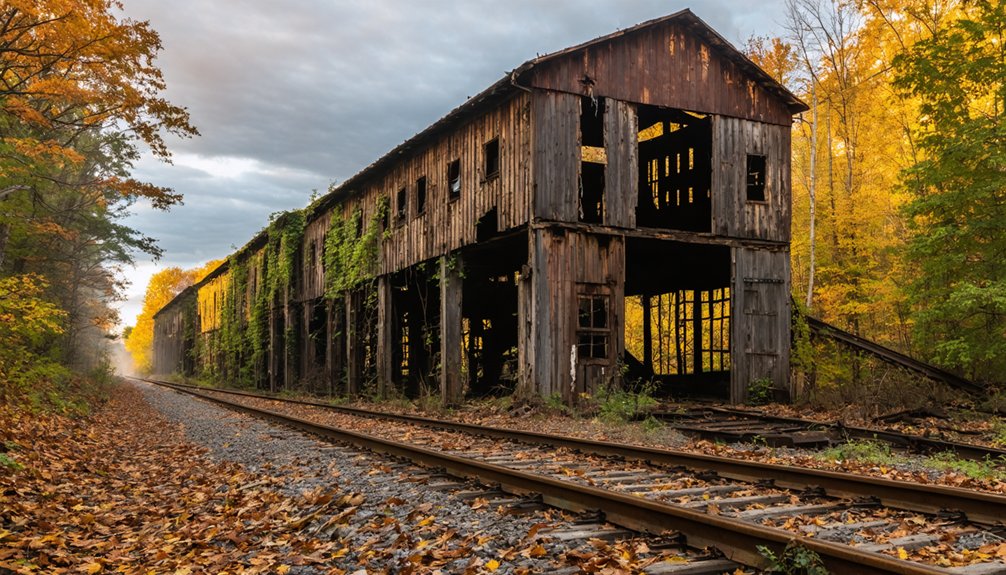
Planning a ghost town road trip to Granville, Indiana means stepping back into canal-era history along the old Wabash and Erie Canal route. You’ll find a weathered canal bridge, a quiet cemetery with pioneer headstones, and scattered remnants of a town railroads erased almost overnight. Pack water, offline maps, and sturdy shoes before you go. Spring and fall offer the best conditions for exploring — and there’s far more to this forgotten landscape than first meets the eye.
Key Takeaways
- Granville, Indiana, platted in 1834 along the Wabash and Erie Canal, shifted from a thriving trade hub to a ghost town after railroads arrived.
- Key surviving landmarks include a weathered canal bridge and an old cemetery with headstones connecting visitors to early settlers and canal workers.
- Spring and fall offer the best visiting conditions, with fall providing vibrant photography landscapes and spring enhancing the haunting, abandoned beauty.
- Download offline maps before traveling, as cell service is spotty, and pack water, snacks, sturdy footwear, and insect repellent for warmer months.
- Nearby Indiana ghost towns like New Harmony and Corydon can complement your road trip with additional historical depth and unique stories.
What Makes Granville, Indiana Worth the Drive?
Though Granville, Indiana barely registers on modern maps, it’s a place that rewards the curious traveler with layers of history etched into the landscape. Platted in 1834 along the Wabash and Erie Canal, this quiet ghost town history speaks volumes about ambition, boom, and inevitable bust.
You’ll find canal commerce once drove real prosperity here, connecting settlers to broader trade networks along the Wabash River. Then railroads arrived, silencing the waterway economy almost overnight.
Today, a weathered canal bridge and a cemetery carrying the Granville name are your primary anchors to the past. It’s not flashy, but that’s exactly the point. You’re chasing something raw and authentic, a landscape that tells the truth about how American towns rise, thrive, and disappear.
How Granville Went From Canal Boom to Ghost Town
When Granville was platted in 1834, the Wabash and Erie Canal made it a thriving hub of commerce, moving goods and people through the heart of Indiana.
You can almost picture the bustling merchant activity that once lined its streets, all fueled by steady canal traffic.
Then the railroads arrived, and almost overnight, they stripped the canal of its economic purpose, leaving Granville to fade into the quiet ghost town you’ll find today.
Canal Era Prosperity
Once the Wabash and Erie Canal cut through this corner of Indiana, Granville’s fate seemed sealed — but in the best possible way.
Platted in 1834, the town rode that momentum hard. Merchants, laborers, and traders flooded in, drawn by the promise of open commerce and moving water.
The canal’s economic impact was immediate and real. Goods flowed freely, money changed hands, and Granville felt like possibility made physical.
You can still sense that ambition in the canal architecture that survives — particularly the old bridge standing quietly over what was once a thriving trade corridor.
For a brief window, this town had everything. It wasn’t just surviving; it was building something.
That energy, though short-lived, left marks you can still chase down today.
Railroad Kills Commerce
The railroad didn’t just compete with the canal — it made it obsolete overnight. When iron rails cut across Indiana, freight moved faster and cheaper than any mule-drawn barge could manage.
That railroad impact hit Granville hard. Merchants who’d built their livelihoods along the Wabash and Erie Canal suddenly found themselves stranded, watching commerce shift to towns with rail access.
You can almost feel that abandonment standing at the old canal bridge today. Storefronts emptied. Families relocated.
The commerce shift wasn’t gradual — it was a financial guillotine. What took years to build dissolved in a single economic season. Granville’s brief boom became a permanent bust, leaving only a cemetery, a bridge, and the quiet hum of a town that time simply walked away from.
The Cemetery, Bridge, and Other Surviving Landmarks
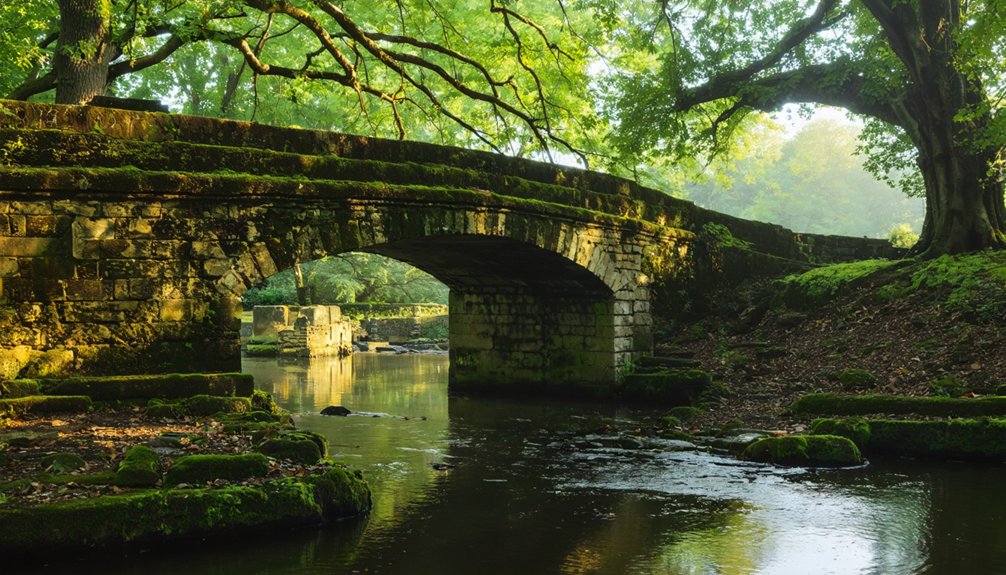
When you visit Granville today, you’ll find the old cemetery and canal bridge standing as the town’s most enduring markers, each carrying the weight of a community that once thrived along the waterway.
The bridge, a lonely sentinel over what were once busy merchant fields, connects you physically to the canal era that built and ultimately outlived the town.
Scattered remnants dot the landscape around these landmarks, offering quiet, fragmentary clues to the life Granville held before the railroads silenced it.
Historic Cemetery Remains
Scattered across what were once Granville’s bustling merchant fields, a cemetery and an old canal bridge stand as the town’s most enduring remnants, quietly marking a place that history has largely forgotten.
When you visit, you’ll find weathered headstones that carry real historic significance, connecting you directly to the people who once built their lives along the Wabash and Erie Canal.
Local legends suggest that some graves belong to canal workers who never made it home, lending an eerie weight to your walk among the stones.
You don’t need a guided tour to feel the gravity here. Let the silence do the talking. Bring a camera, respect the grounds, and take a moment to acknowledge the brief, bold lives Granville once sheltered.
Canal Bridge Landmark
Just steps from those weathered headstones, an old canal bridge pulls you further into Granville’s quietly dramatic past. This structure carries real bridge significance—it’s one of the last tangible links to the Wabash and Erie Canal that once drove this town’s entire economy.
Stand on it and you’re connecting directly to canal history, imagining flatboats pushing through water that no longer flows beneath you. Merchants once built their livelihoods around this very passage.
Then railroads arrived, commerce shifted, and Granville slowly emptied out.
The bridge didn’t disappear with the town, though. It stayed, weathering decades as a quiet monument to ambition that ultimately couldn’t outlast progress.
You’ll want to photograph it—not just for its age, but for everything it silently represents about freedom sought and fortunes lost.
Scattered Town Remnants
What remains of Granville exists in fragments—a cemetery, a canal bridge, and a handful of other scattered markers that refuse to let the town vanish entirely from memory.
You’ll find these historical artifacts quietly holding their ground against time and overgrowth.
Explore what’s left before nature reclaims it entirely:
- The cemetery preserves names of early settlers who built their lives along the canal.
- The canal bridge stands as one of the few abandoned structures still marking Granville’s original footprint.
- Scattered markers along the old towpath trace the route commerce once traveled.
Walk these grounds and you’re stepping through a living archive.
Nothing’s curated or fenced off—it’s raw, unfiltered history that rewards those willing to seek it out independently.
What’s the Best Time of Year to Visit Granville?
When you visit Granville matters more than you might think, as the seasons shape how you’ll experience this quiet ghost town.
Spring and fall offer the best seasonal activities, letting you explore the canal bridge and cemetery without brutal heat or frozen ground slowing you down.
Fall transforms the landscape into rich amber and crimson, making the remaining landmarks extraordinary photography spots against nature’s dramatic backdrop.
Spring reveals fresh greenery framing the old canal infrastructure, giving the site a quietly haunting beauty.
Summer works if you’re an early riser—beat the Indiana humidity by arriving at dawn.
Winter strips the trees bare, exposing structural details you’d otherwise miss, though muddy paths can challenge your exploration.
Choose your season deliberately, and Granville rewards you with raw, unfiltered history.
How to Get to Granville, Indiana
Finding Granville takes a few deliberate turns through Tippecanoe County, Indiana, where Wayne Township’s quiet backroads lead you toward the ghost town’s remaining landmarks near the Wabash River.
You’ll want a reliable GPS and a paper map as backup, since rural routes here aren’t always well-marked.
These travel tips will sharpen your approach:
These travel tips will sharpen your approach — and separate the casual curious from the truly prepared explorer.
- Use Lafayette, Indiana as your base, roughly 10 miles northeast, for fuel and supplies
- Follow County Road paths through Wayne Township, staying alert for the historic canal bridge marker
- Download offline maps beforehand, since cell service thins out fast
The ghost town history etched into this landscape rewards the prepared traveler.
You’re not just driving to a dot on a map — you’re steering toward a quietly vanished world.
Which Other Indiana Ghost Towns Are Worth the Detour?
Once you’ve walked Granville’s quiet fields, you’ll find that Tippecanoe County alone holds several more ghost towns worth hunting down — and Indiana’s broader backroads hide dozens of others that reward the curious traveler.
Follow the old Ouiatenon trading path and you’ll stumble onto settlements where abandoned buildings lean into the wind, their stories half-buried under decades of silence.
Towns like New Harmony and Corydon offer rich layers of local legends that pull you deeper into Indiana’s forgotten chapters.
Each stop reveals a different reason a community rose and collapsed — canal failure, rail shifts, or simple neglect.
Pack a map, leave the interstate behind, and let Indiana’s ghost town circuit turn a single detour into a full road trip obsession.
What Should You Bring for a Ghost Town Day Trip?
Packing smart separates a frustrating day trip from a genuinely rewarding one. Before you hit the open road toward Granville, run through your road trip checklist and gather your ghost town essentials.
- Navigation tools: Cell service gets spotty near Wayne Township, so download offline maps beforehand.
- Camera and charged batteries: The canal bridge and cemetery deserve proper documentation, not blurry phone snapshots.
- Water, snacks, and sturdy footwear: No commercial center exists here, so you’re completely self-sufficient once you arrive.
You’ll also want insect repellent during warmer months, since overgrown former merchant fields aren’t exactly groomed parkland.
Bring a printed historical reference too—context transforms crumbling landmarks into vivid stories.
Pack intentionally, move freely, and let Granville’s quiet ruins speak on their own terms.
Frequently Asked Questions
Is There an Admission Fee to Visit Granville’s Historical Landmarks?
Like a open book, Granville’s historical landmarks welcome you freely — no admission fee required! You’ll explore its historical significance at your own pace, but remember visitor etiquette: respect these quiet, evocative remnants of a forgotten canal era.
Are Pets Allowed When Exploring the Granville Ghost Town Area?
The knowledge doesn’t confirm pet-friendly policies for Granville, so check local regulations before exploring with pets. You’ll want your furry companion beside you as you wander these hauntingly beautiful, history-soaked grounds freely and responsibly.
Does the Granville Historical Society Offer Guided Tours or Appointments?
Since 1834, Granville’s story’s waited to be told! The Granville Historical Society maintains local archives, but you’ll want to contact them directly about guided tour options and historical society events — your freedom to explore awaits!
Is the Granville Canal Bridge Safe to Walk Across Today?
We don’t have confirmed Granville bridge safety or walking conditions data, so you’d want to assess it yourself before crossing. Approach this lonely sentinel with caution—its weathered history doesn’t guarantee a secure, adventurous crossing today.
Are There Any Local Legends or Ghost Stories About Granville?
Ironically, Granville’s biggest “ghosts” are its vanished merchants! You won’t find documented ghostly apparitions, but Granville hauntings feel real when you’re wandering its abandoned canal remnants, where whispers of forgotten prosperity seemingly echo through every crumbling, overgrown landmark.
References
- http://ingenweb.org/intippecanoe/ghosttowns.htm
- https://kids.kiddle.co/Granville
- http://robbhaasfamily.com/Places/Towns-Delaware Co
- https://en.wikipedia.org/wiki/Granville
- https://www.youtube.com/watch?v=VmIx555RFCM
- https://www.granvillehistory.org/latest-news/2025/10/25/mark-your-calendars-for-the-old-colony-burying-grounds-ghost-walk
- https://www.granvillehistory.org/photos-and-multimedia
- https://en.wikipedia.org/wiki/List_of_ghost_towns_in_Indiana
- https://33travels.com/ghost-towns-in-indiana/
- https://www.onlyinyourstate.com/experiences/indiana/ghost-towns-in