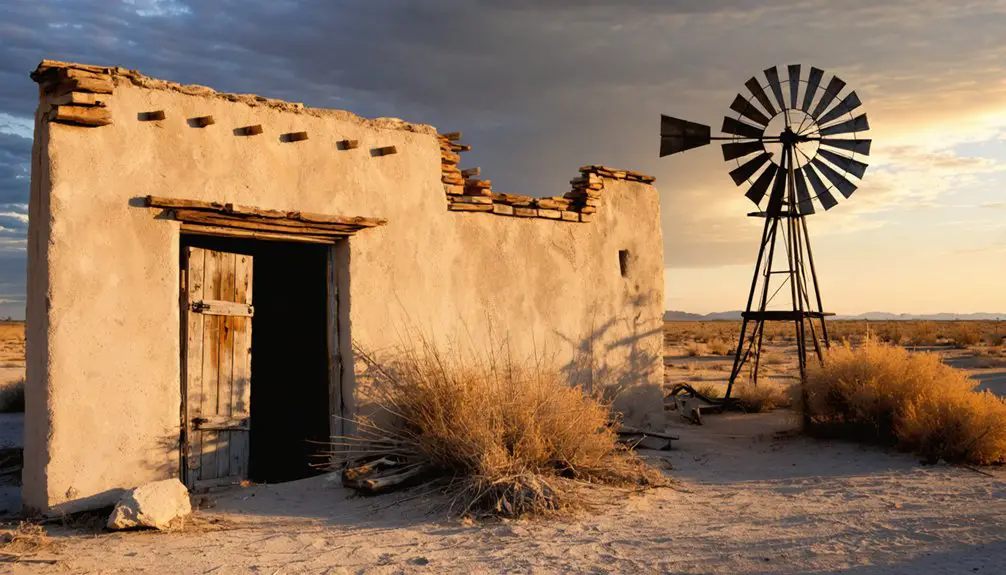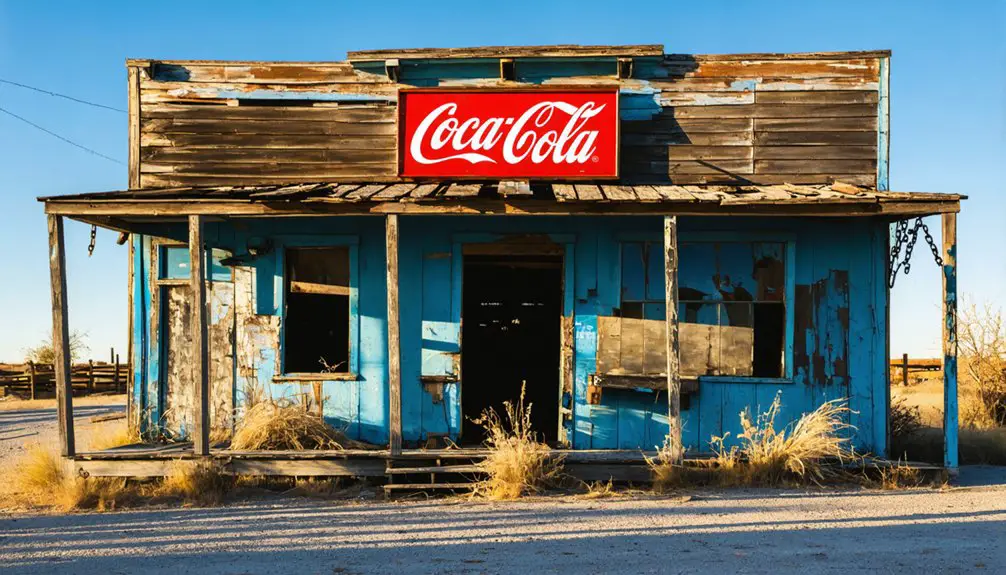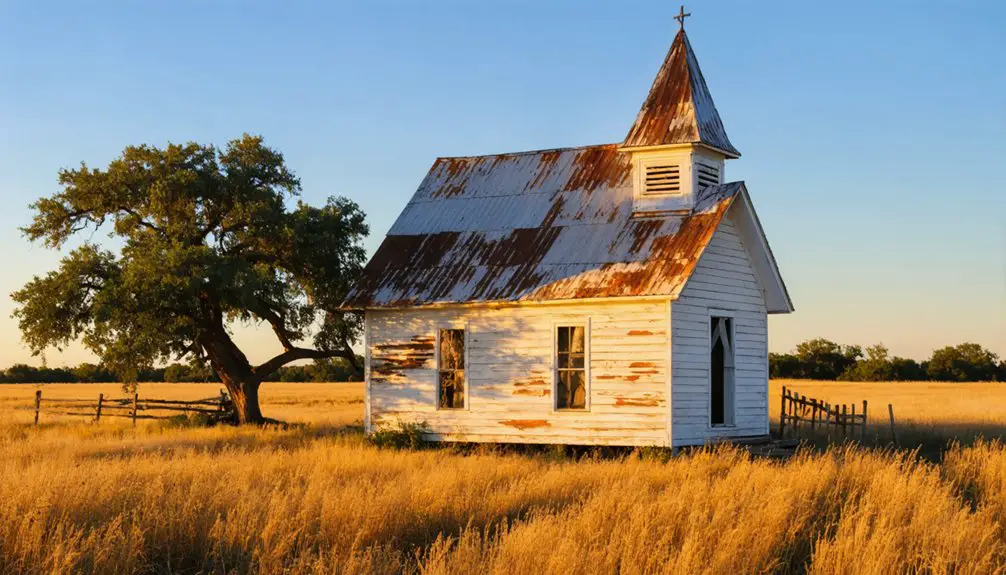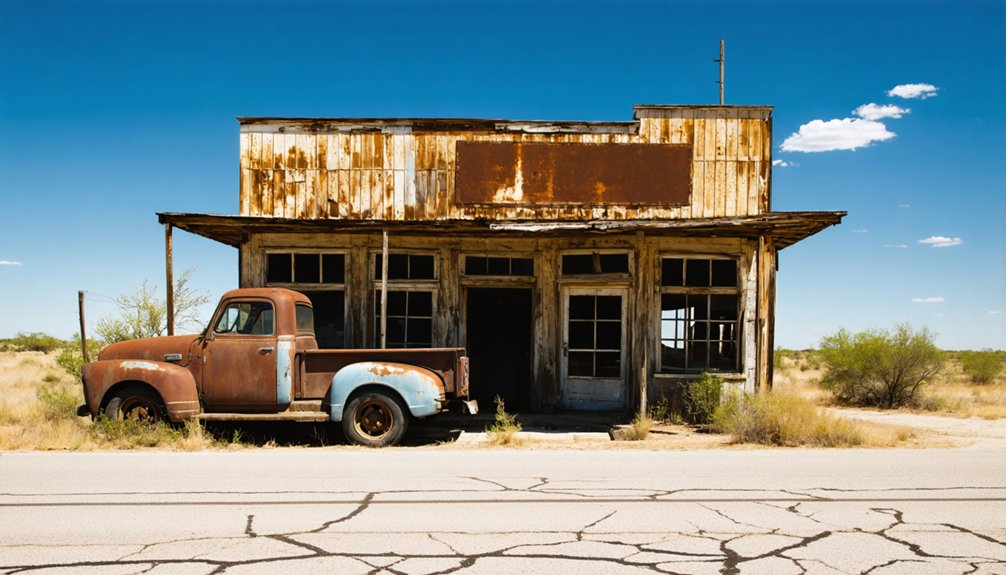
Levita, Texas isn’t your typical ghost town—it still has around 70 residents—but it’s close enough to scratch that abandoned-history itch. Located just 10 miles northwest of Gatesville in Coryell County, this near-ghost town carries a layered past of name changes, railroad booms, and a devastating 1932 fire. Its surviving graveyard holds weathered markers that whisper old stories. Stick around and you’ll uncover everything you need to plan your trip.
Key Takeaways
- Levita is located 10 miles northwest of Gatesville in Coryell County, accessible via farm roads 930 and 2412 with standard 2WD vehicles.
- The town’s primary surviving historical site is its graveyard, containing weathered markers offering insights into early settlement families and local legends.
- Spring and fall offer the most comfortable temperatures for exploring, while winter provides a quieter, more intimate visit with fewer crowds.
- Pack water, charge your camera, and visit on weekdays for a more relaxed, uninterrupted exploration of this near-ghost town.
- Combine Levita with nearby Gatesville’s courthouse square, local museums, and Copperas Cove for a full Central Texas historical road trip.
Is Levita, Texas a Real Ghost Town?
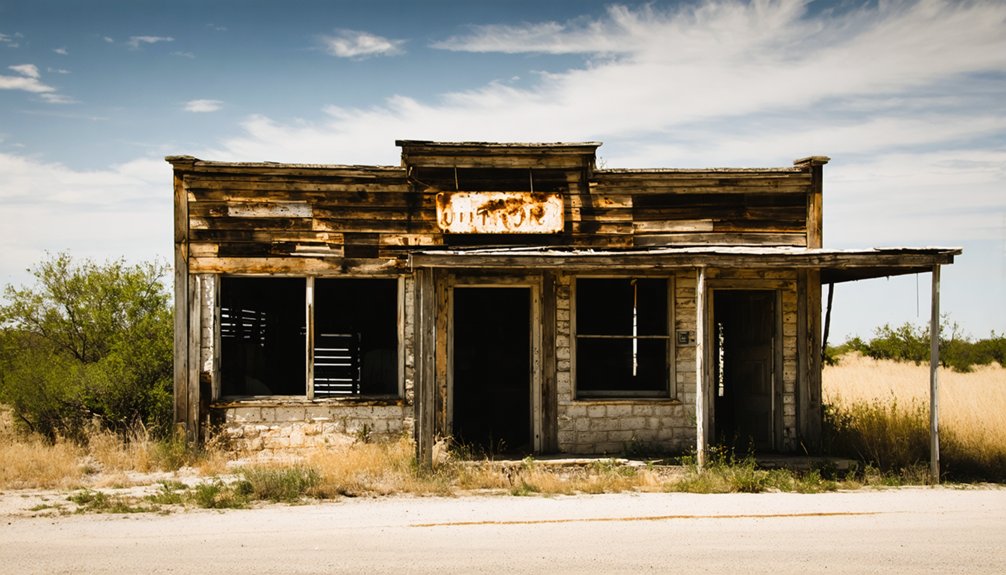
While Levita gets lumped into ghost-town road trip guides, it doesn’t quite fit the classic definition of an abandoned town. Around 70 residents still called it home in 2000, and the Texas Almanac continues listing it as an active community.
You won’t find crumbling historic architecture lining empty streets or local legends echoing through deserted buildings. What you’ll find is a deeply weathered rural community that survived a devastating 1932 fire, railroad abandonment in 1941, and steady population decline.
The Handbook of Texas stops short of labeling it a ghost town. Think of Levita as a near-ghost town — a place where history quietly fades into the Texas landscape without fully disappearing. That distinction actually makes it a more honest and rewarding road trip stop.
How Levita Got Its Name and Its Railroad
Before it was Levita, this small Coryell County community went by Simpsonville, named after Mont Simpson, who donated land for the town’s first public buildings. When the post office opened, officials discovered another Simpsonville already existed in Texas, so the name changed to Levita, and a new identity took hold.
The railroad arrived in 1911, and that’s when things got interesting. Levita briefly became the county’s top produce-buying hub outside Gatesville and Copperas Cove.
Historic architecture filled the townsite — a flour mill, gristmill, gin, blacksmith shop, and more lined its streets. Local legends grew alongside that commerce. You’re now visiting a place that once punched well above its weight.
The railroad’s arrival built the town, and its departure in 1941 began unraveling it.
How Fire and the Railroad Shaped Levita’s Decline
When the railroad arrived in 1911, Levita briefly thrived as one of the county’s top produce-buying hubs, complete with a flour mill, gin, blacksmith shop, and multiple stores.
Then a devastating fire in 1932 gutted much of what commerce remained, stripping the town of its commercial backbone almost overnight.
Better roads made Gatesville too convenient to ignore, and by 1941, when local rail service ended, Levita’s days as a working trade center were fundamentally over.
Railroad Arrival and Growth
Although Levita’s story began with a post office and a name change, the railroad’s arrival in 1911 marks the town’s true peak. By 1914, the population hit 100, and Levita earned a reputation as the county’s greatest produce buyer after Gatesville and Copperas Cove.
You’d have found a thriving community packed with:
- A flour mill, gristmill, and cotton gin driving daily commerce
- Historical architecture including a barbershop, blacksmith shop, and multiple stores
- Two churches and a Woodmen of the World lodge anchoring community life
- Local legends of doctors, merchants, and railroad workers building something lasting
That railroad connection turned a quiet rural crossroads into a real economic engine. It’s the era that makes Levita worth adding to your road trip itinerary.
Fire and Fading Commerce
What the railroad gave, time and circumstance slowly took away. Better roads meant residents could reach Gatesville faster, pulling commerce away from Levita’s storefronts.
Then, in 1932, fire tore through the community, destroying much of what remained. It nearly wiped the town off the map entirely.
By 1941, the railroad ended local service, cutting Levita’s last major economic lifeline. Schools held on into the 1950s before children were bused elsewhere.
You can almost hear the local legends fading alongside the empty buildings.
Today, the graveyard stands as one of the few remaining historical landmarks worth seeking out on your road trip. Levita didn’t vanish completely — about 70 residents still called it home in 2000 — but the commerce that once defined it’s largely gone.
What’s Actually Left to See in Levita Today
When you pull up to Levita today, don’t expect crumbling storefronts or dramatic ruins — most of the town’s past is simply gone. The graveyard stands as the clearest surviving link to Levita’s history, giving you a tangible marker of the community that once supported a flour mill, a railroad depot, and nearly a dozen businesses.
A small number of residents — around 70 — still call Levita home, so you’re visiting a near-ghost town rather than a fully abandoned site.
The Surviving Graveyard
If you’re hoping to find remnants of Levita’s rail-era boom, the graveyard is fundamentally your only stop. One ghost-town guide confirms that nearly all the historic architecture and past are gone, leaving the cemetery as the community’s strongest surviving anchor. It’s a quiet, open space where local legends still linger among the headstones.
Plan your visit around these graveyard highlights:
- Weathered markers that date back to Levita’s earliest settlement days
- Family names connected to the town’s post-office and rail-era growth
- Local legends tied to families who built Levita’s flour mills and businesses
- Year-round accessibility via Farm Roads 930 and 2412 without off-road vehicles
You won’t find preserved buildings here, but you’ll find an honest, unfiltered connection to Levita’s past.
Remaining Community Presence
Beyond the graveyard, Levita hasn’t fully surrendered to abandonment. About 70 residents still call it home, making it more of a near-ghost town than a completely deserted ruin. You’ll find scattered homes and quiet roads where a railroad, flour mill, and bustling storefronts once defined daily life.
Historical preservation here is informal — it lives in local legends passed down about the 1932 fire that nearly wiped everything out, the rail service that died in 1941, and a school that kept its doors open into the 1950s. Drive through slowly and you’ll sense the layered past beneath the stillness.
Levita rewards curious travelers who appreciate authentic rural Texas over polished tourist stops. Freedom to explore on your own terms is exactly what this place offers.
Where Levita’s Graveyard Fits Into the Story
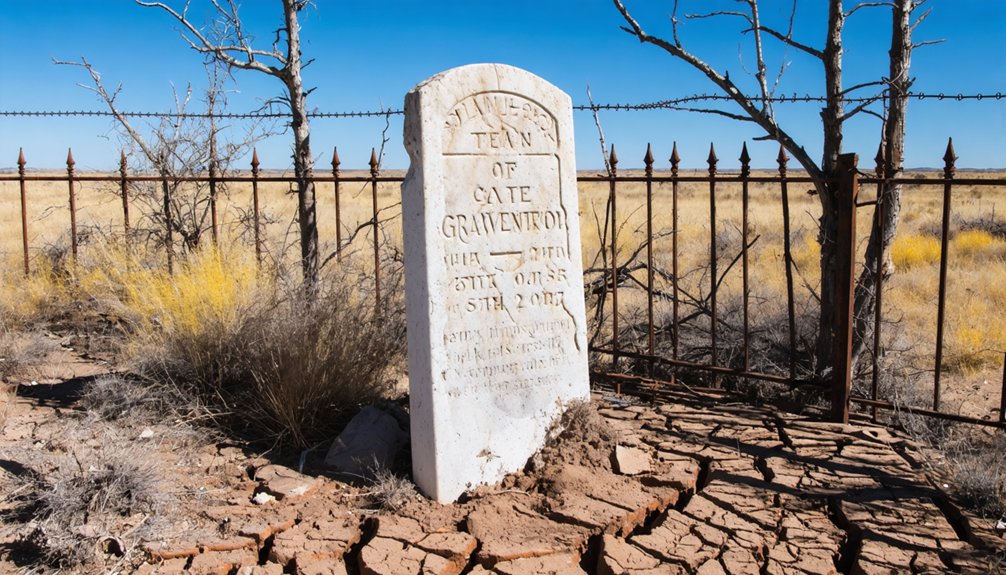
Though most of what made Levita a thriving rail-era community has vanished, the graveyard remains the one tangible anchor to its past. Ghost-town guides consistently point to it as the site’s most significant surviving feature, outlasting the historical architecture, businesses, and railroad that once defined the town.
Local legends tied to early settlers rest here, giving you a direct connection to Levita’s 1800s roots.
When you visit, the graveyard tells the story that buildings no longer can:
- Early settler names reflecting the community’s founding era
- Dates spanning Levita’s peak growth years
- Markers connecting families to the post-office-era settlement
- A quiet reminder of the 1932 fire’s lasting impact on community loss
It’s a small stop with serious historical weight.
How to Get to Levita, Texas
Reaching Levita is straightforward since the community sits at the junction of Farm Roads 930 and 2412, about 10 miles northwest of Gatesville in Coryell County. Both roads are listed as 2WD, so you don’t need a special vehicle to make the trip.
From Gatesville, head northwest and follow the farm roads until the junction appears. Levita falls within the Killeen-Temple-Fort Hood metropolitan area, making it an easy detour if you’re already exploring central Texas.
Once you arrive, you’ll find a quiet rural setting where local legends of rail-era commerce and produce trading once shaped daily life. Little historic architecture survives today, but the graveyard and surrounding landscape still anchor the community’s long story.
Plan for year-round access with no serious road obstacles.
Best Time of Year to Visit Levita
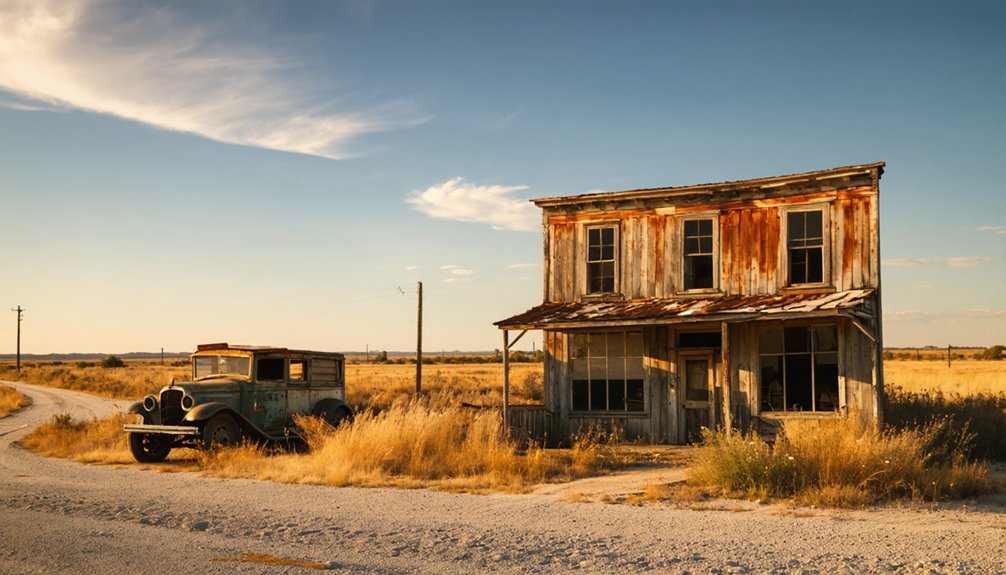
Levita welcomes visitors year-round, so you don’t need to plan around a narrow travel window. Each season offers a different lens for exploring this historic rural community and its local legends.
Levita opens its doors in every season, always ready to reveal another layer of its storied past.
- Spring and fall deliver mild Texas temperatures, ideal for walking the graveyard and surrounding area.
- Summer gives you long daylight hours to photograph remnants and read historical preservation markers without rushing.
- Winter thins the crowds completely, leaving you with a quieter, more personal connection to the site.
- Weekdays any season mean fewer interruptions, letting you move at your own pace.
Farm roads 930 and 2412 are standard 2WD accessible, so no special vehicle is required. Pack water, charge your camera, and go whenever the open road calls you.
What to Combine With Your Levita Road Trip
Since Levita sits about ten miles northwest of Gatesville, you’ve already got a natural anchor city for a longer day trip through Coryell County.
Gatesville offers historical landmarks worth exploring, including its courthouse square and local museums that flesh out the region’s frontier past.
From there, you can push west toward Copperas Cove, another community tied to Levita’s commercial history during its rail-era peak.
Fort Hood’s proximity also puts you inside the Killeen-Temple-Fort Hood metropolitan area, opening options for additional stops.
Along the way, ask locals about the area’s local legends — small Coryell County communities carry stories that rarely make it into guidebooks.
Combining these stops turns a quick detour into a full day of Central Texas history you can explore completely on your own terms.
Frequently Asked Questions
Is Levita Located Inside or Outside City Limits?
Levita lives outside city limits as an unincorporated community. Don’t let ghost town myths mislead you — Levita history proves it’s a free, boundary-breaking settlement where you’ll roam without the restrictions of incorporated town lines.
Did Levita Ever Have Its Own Zip Code?
The knowledge base doesn’t confirm whether Levita had its own zip code, but you’ll find its historical landmarks and ghost town legends fascinating enough to make this unincorporated community worth exploring on your next adventure.
Are There Any Events or Gatherings Still Held in Levita?
Don’t hold your breath waiting for festivals here — the ghost town history and abandoned buildings tell a quiet story. You won’t find organized events, but Levita’s graveyard and rural charm still draw curious road-trippers year-round.
Is Camping or Overnight Parking Available Near Levita?
No official campgrounds exist near Levita, so you’ll want to research local parking regulations before arriving. Check nearby Coryell County areas for dispersed camping options, and always follow campfire safety rules to protect this quiet, historic landscape.
Are There Any Local Guides or Tours Available in Levita?
Forget fancy tour buses — Levita’s your own adventure! You won’t find formal local guides here, but you can freely explore its historical landmarks, uncover local legends, and let the graveyard tell its own haunting story.
References
- https://en.wikipedia.org/wiki/List_of_ghost_towns_in_Texas
- https://www.facebook.com/groups/873928379320499/posts/26354189527534367/
- https://www.texasescapes.com/CentralTexasTownsNorth/Levita-Texas.htm
- https://jamesbigleyranches.com/general/texas-ghost-towns/
- https://www.youtube.com/watch?v=SaUCT73CKnY
- https://www.ghosttowns.com/states/tx/levita.html
- https://www.ghosttowns.com/states/tx/tx_ghst_twns_sect1345.doc
- https://www.texasalmanac.com/places/levita
- https://en.wikipedia.org/wiki/Levita
- https://www.tshaonline.org/handbook/entries/levita-tx