Planning a ghost town road trip to Malone, Washington starts with timing your visit right—autumn and late spring offer the best road conditions and scenery along Grays Harbor County’s forest roads. You’ll want to verify current conditions before heading out, pack rain gear, and grab a physical map since cell service is spotty. Founded in 1897, Malone’s abandoned mill and company-built structures tell a fascinating industrial story, and there’s even more to uncover ahead.
Key Takeaways
- Malone, Washington, founded in 1897, features an abandoned mill, boarded-up buildings, and company-built structures offering a rich industrial history experience.
- Visit during summer or early autumn for the driest road conditions and longest daylight hours for exploring ghost town sites.
- Before departing, verify road conditions, secure a Discover Pass or Northwest Forest Pass, and check for seasonal fire restrictions.
- Begin your route via forest roads off State Route 12, exploring the mill and company buildings before connecting smaller nearby abandoned sites.
- Carry rain gear, a physical map, and emergency supplies, as coastal weather is unpredictable and cell service remains limited throughout the area.
What Makes Malone, Washington Worth the Drive?
When logging towns die, they leave behind more than empty buildings — they leave behind entire worlds frozen in time, and Malone, Washington is one of the most compelling examples in the Pacific Northwest. Founded in 1897 by Hector J. Malone along Moxie Creek, this former shingle mill hub operated as a fully company-owned town before logging resources ran dry.
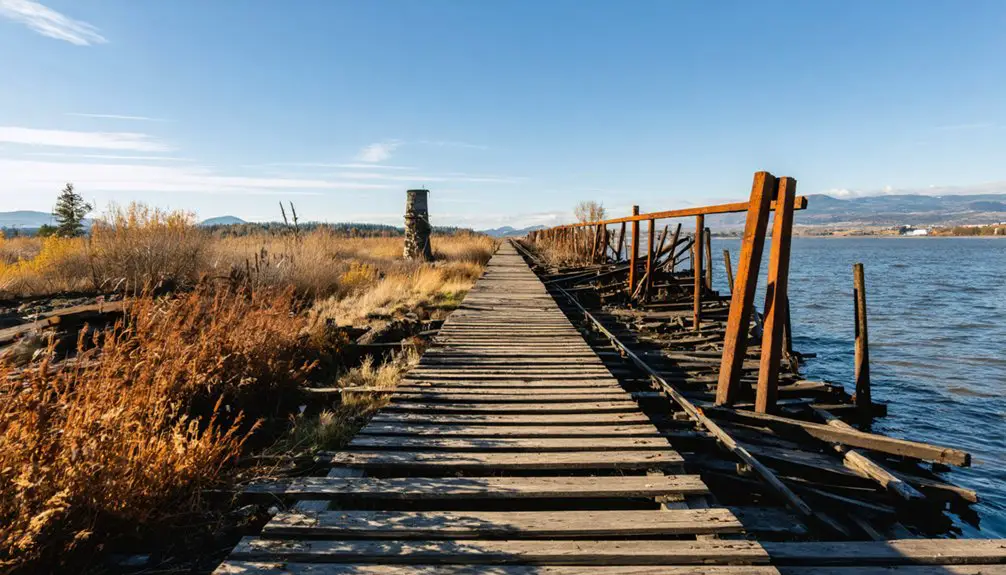
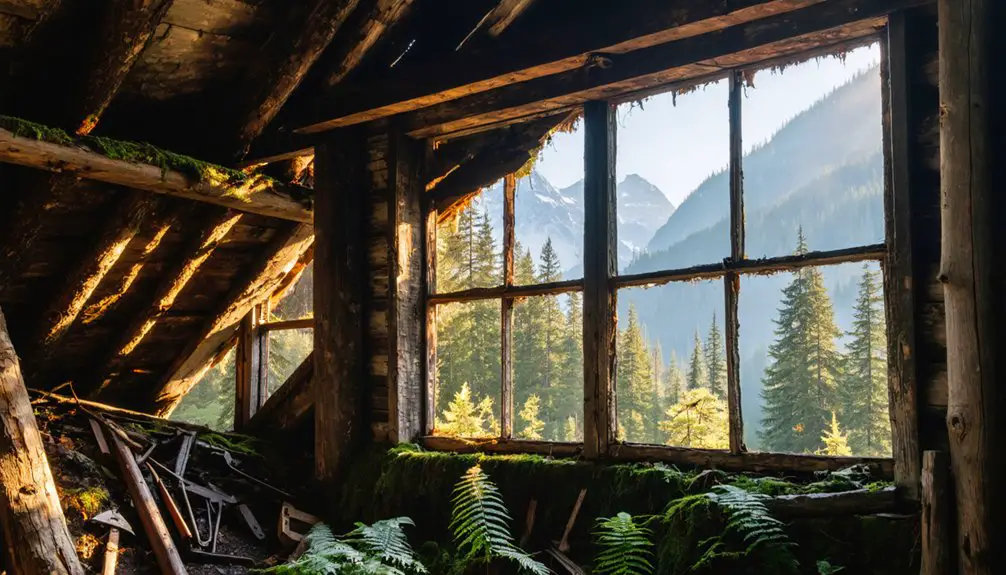
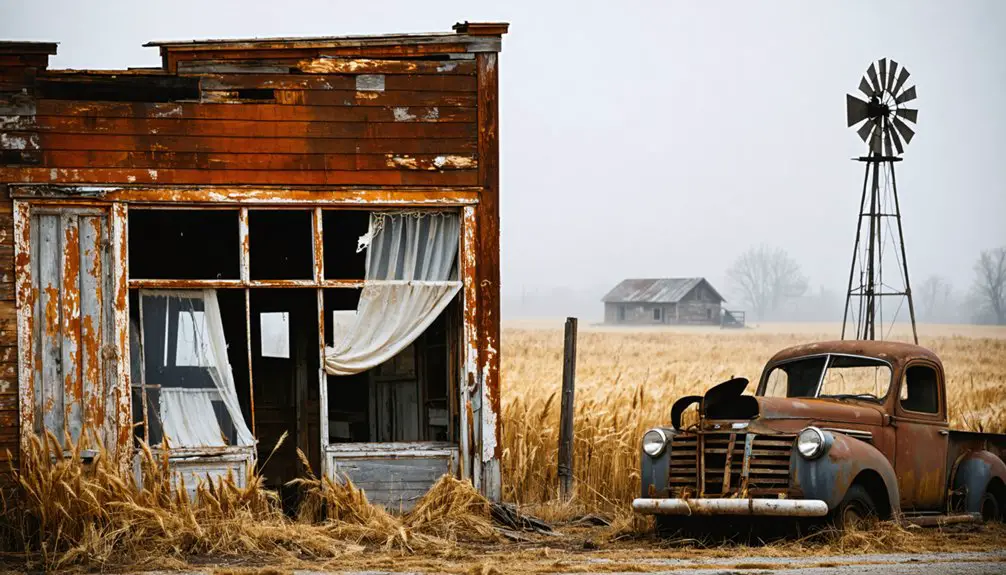
Today, you’ll find a standing abandoned mill, boarded-up company buildings, and vacant houses that tell a raw, unfiltered story of local history. The scenic routes through Grays Harbor County near the Black Hills make the journey equally rewarding.
You’re not just visiting ruins — you’re driving through a living landscape that rewards curiosity, independence, and a genuine appetite for forgotten places.
When to Visit Malone for the Best Road Conditions and Weather
Autumn offers you the most rewarding window to visit Malone, with cooler temperatures, manageable trail conditions, and stunning foliage framing the abandoned mill and boarded-up buildings.
Before you head out, check current road conditions on the forest roads connecting State Route 12 and US 101 to the site, since wet or washed-out paths can quickly turn a scenic drive into a frustrating dead end.
You’ll also want to confirm any active fire restrictions or required forest permits, ensuring your trip stays both legal and safe.
Optimal Visiting Seasons
Timing your visit to Malone can make the difference between a memorable road trip and a frustrating dead end.
Forest roads leading through Grays Harbor County become impassable during winter snowfall and spring mud season. You’ll want to plan around these three ideal windows:
- Late Spring (May–June): Roads dry out, wildflowers bloom, and wildlife spotting opportunities peak as animals emerge after winter.
- Summer (July–August): Longest daylight hours support extended exploration and seasonal activities like hiking surrounding trails.
- Early Autumn (September–October): Fall foliage creates dramatic scenery around the abandoned mill, and crowds thin considerably.
Check current forest road conditions before departing, regardless of season.
Washington’s coastal weather shifts quickly, so pack layers and rain gear even during summer months.
Road Condition Considerations
Forest roads into Malone’s Grays Harbor County terrain shift dramatically with the seasons, so you’ll want to understand what you’re driving into before you leave home.
Winter brings saturated soil, washed-out sections, and ice that makes off road navigation genuinely hazardous.
Spring thaws create deep mud that’ll swallow low-clearance vehicles without warning.
Summer and early autumn offer your best window — drier conditions improve road safety considerably, and you’ll find the forest roads more predictable and passable.
Always pull current road condition reports from the Washington State Department of Natural Resources before departing.
Fire restrictions can close routes entirely during dry stretches.
Carry a physical map since cell service disappears fast out here, and let someone know your planned route before you head out.
What to Check Before You Drive Out to Malone
Before you load up the car and head out to Malone, there are a few practical boxes you’ll want to check.
Forest road navigation requires current information, so don’t skip these road trip essentials before departure.
- Verify road conditions – Contact the Washington State Department of Transportation or check online travel reports for forest road closures, especially after rain or winter weather.
- Check fire restrictions – Seasonal burn bans can limit or close access to forest roads entirely, particularly in summer and early fall.
- Secure permits – Some forest roads require a Northwest Forest Pass or Discover Pass for parking. Grab yours in advance to avoid fines and delays at the trailhead.
A little preparation keeps your adventure on track.
How to Get to Malone on Forest Roads
With your permits secured and road conditions confirmed, you’re ready to point the car toward Malone. The ghost town sits in Grays Harbor County near the Black Hills, reachable via forest roads branching off State Route 12 or US 101.
Forest road navigation out here rewards patience over speed. The routes wind through dense timber, so keep your map or downloaded offline GPS handy since cell service drops fast.
Watch for unmarked intersections and follow posted forest road numbers carefully.
For scenic route tips, autumn transforms these corridors into golden tunnels of alder and maple, making the drive as rewarding as the destination itself.
Take your time, pull over for views, and stay alert for logging trucks that occasionally still work these same corridors.
The Abandoned Mill and Buildings You Can Actually Explore
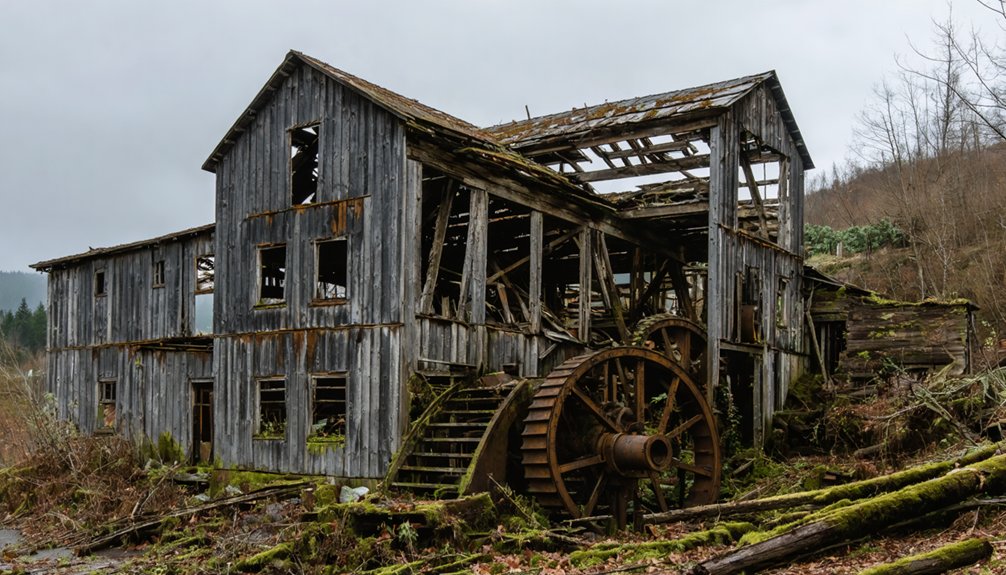
Once you’re in Malone, the large abandoned mill immediately commands your attention, its weathered frame standing as the town’s most striking remnant.
You’ll also find a cluster of company-built structures—a store, theater, and offices—all boarded up but explorable from the outside.
Stick to posted no-entry zones, since some structures are unstable, but you can still get an evocative sense of what daily life looked like when this shingle mill town was running at full steam.
Mill Exploration Highlights
The centerpiece of Malone is the large abandoned mill, still standing after decades of silence, and it’s immediately clear why this structure draws ghost town enthusiasts from across the region.
Its weathered bones tell the story of mill history dating back to 1897, when Hector J. Malone’s shingle operation transformed this creek-side location into a bustling company town.
Keep these exploration tips in mind before you wander:
- Stay outside unstable structures — respect posted no-entry zones for your safety.
- Photograph the boarded-up company store, theater, and offices — each building reveals a different layer of abandoned life.
- Walk the surrounding grounds carefully — uneven terrain and overgrown paths demand sturdy footwear.
You’ll leave with a genuine sense of what industrial abandonment actually looks and feels like.
Boarded-Up Buildings Overview
Beyond the mill itself, a cluster of boarded-up company buildings lines the grounds, each one frozen in a different moment of Malone’s working past.
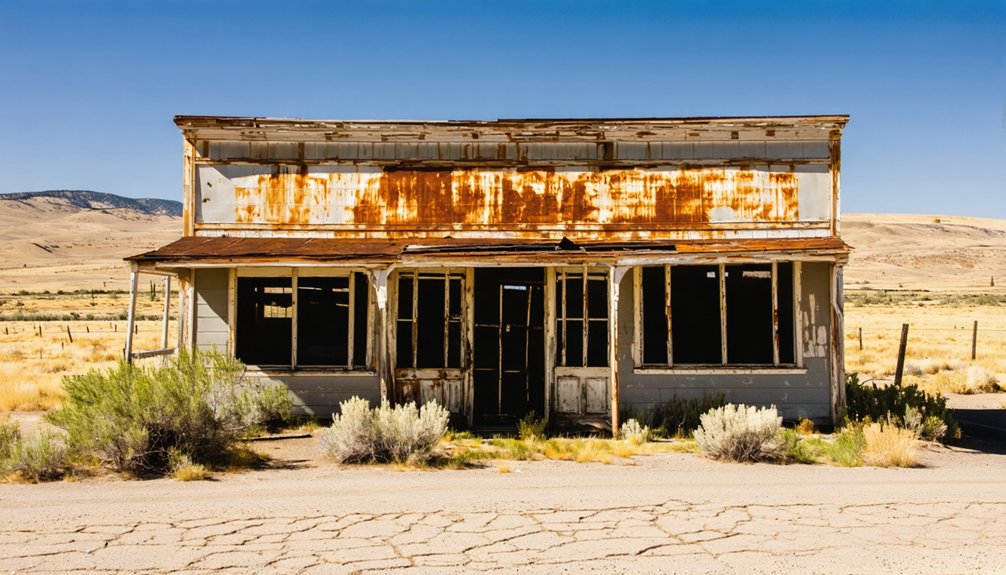
You’ll find the old company store, theater, and offices still standing, their weathered facades quietly revealing the town’s abandoned architecture and undeniable historical significance.
These weren’t random structures — the company built and owned every one of them, controlling daily life here completely.
Walking past each building, you get a raw sense of how self-contained and isolated this logging community once was.
You can move freely around the exteriors, reading the decay like a timeline.
Respect posted boundaries and any no-entry zones, but don’t let that limit your curiosity — there’s plenty to observe, photograph, and absorb from the outside.
What to Bring When the Weather Can Change Fast
Weather in Grays Harbor County shifts quickly, so you’ll want to pack layers even if the morning sun makes it feel like a T-shirt day.
Weather preparedness isn’t optional here — it’s essential gear that keeps your exploration on track instead of cutting it short.
Pack smart with these three must-haves:
- Waterproof jacket — Pacific Northwest rain arrives without warning, soaking you before you reach the mill.
- Sturdy hiking boots — Forest roads and overgrown paths demand ankle support and grip.
- Dry bag or pack cover — Protect your camera, maps, and snacks from sudden downpours.
You came to roam freely through history, not retreat to your car.
The right gear keeps you moving.
Nearby Ghost Towns Worth Combining With a Malone Visit
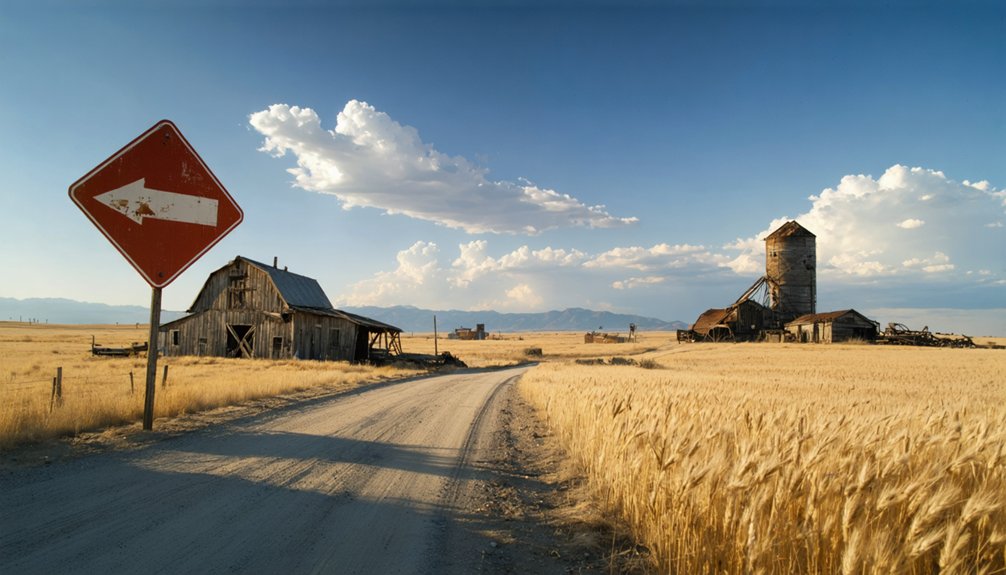
Once you’ve wandered Malone’s boarded-up storefronts and silent mill, Washington’s ghost town circuit rewards you with several worthy stops nearby.
Monte Cristo sits 78 miles northeast of Seattle along the Mountain Loop Highway, offering coal mine remnants and rugged mountain scenery worth every mile.
If you’re craving something livelier, Liberty Town still breathes — residents call it a living ghost town, complete with a working arrastra and historical signage that tells its mining story clearly.
Further east, Govan near Grand Coulee Dam features a striking abandoned schoolhouse standing alone on open land.
Each stop adds a distinct chapter to your road trip, letting you piece together Washington’s forgotten industrial and frontier past without backtracking unnecessarily or wasting a single mile of open road.
How to Build a Full Grays Harbor Ghost Town Loop Around Malone
Grays Harbor County rewards patient planners with a tight ghost town loop that keeps Malone as its anchor without sending you scrambling across half the state.
Layer your route intentionally, and you’ll maximize both ghost town photography opportunities and your appreciation of each site’s historical significance.
Plan your stops with purpose — every ghost town rewards the traveler who arrives with curiosity and leaves with context.
- Start at Malone via forest roads off State Route 12, exploring the abandoned mill and boarded-up company buildings at your own pace.
- Head toward the Black Hills corridor, checking road conditions beforehand so detours don’t derail your schedule.
- Loop back through Grays Harbor County’s forest road network, connecting smaller abandoned sites before returning to US 101.
You control the pace, the stops, and the story — exactly how a road trip through forgotten Washington should feel.
Frequently Asked Questions
Who Founded Malone, and What Year Was the First Mill Built?
Hector J. Malone founded this remarkable town, and you’ll discover he built the first shingle mill in 1897. Malone’s founding and mill history reveal a fascinating logging legacy that’s waiting for your exploration!
Is Malone Located on a Named Creek or Waterway?
Yes, you’ll find Malone sitting on Moxie Creek, adding to its historical significance. This waterway helped shape one of Washington’s most fascinating ghost towns, where you can still explore the echoes of a once-thriving logging community.
Did One Company Own All the Land and Buildings in Malone?
100% of Malone’s land and buildings fell under single company ownership, a fact of profound historical significance. You’ll discover that one entity controlled all the land ownership, shaping and ultimately abandoning this remarkable logging community.
What County Is Malone Ghost Town Actually Located In?
You’ll find Malone’s ghost town exploration waiting in Grays Harbor County! This fascinating piece of Malone history sits near the Black Hills, where you can uncover the remnants of its once-thriving logging community.
Why Was Malone Eventually Abandoned After Its Busy Years?
Like a fire starved of fuel, Malone’s economic decline hit hard once logging resources depleted. You’ll see how that population shift happened fast — when the timber vanished, the company simply packed up and abandoned everything.
References
- https://advntrtrac.home.blog/2019/05/05/washingtons-ghost-town-road-trip/
- https://www.facebook.com/groups/wanderingwashington/posts/1231269897841544/
- https://revisitwa.org/waypoint/malone/
- https://www.seattletimes.com/sponsored/autumn-road-trips-to-washington-ghost-towns/
- https://www.reddit.com/r/Washington/comments/1dwcb69/abandoned_roadtrip/
- https://www.gigharborlivinglocal.com/post/2017/06/30/ghost-town-road-trip
- https://www.sandpointlivinglocal.com/post/2017/06/30/ghost-town-road-trip
- https://www.wta.org/go-outside/seasonal-hikes/fall-destinations/hidden-history-ghost-town-hikes
- https://seattlerefined.com/lifestyle/ghost-town-road-trip-7-locations-8-hours
- https://www.youtube.com/watch?v=xRblrQUBg1Y