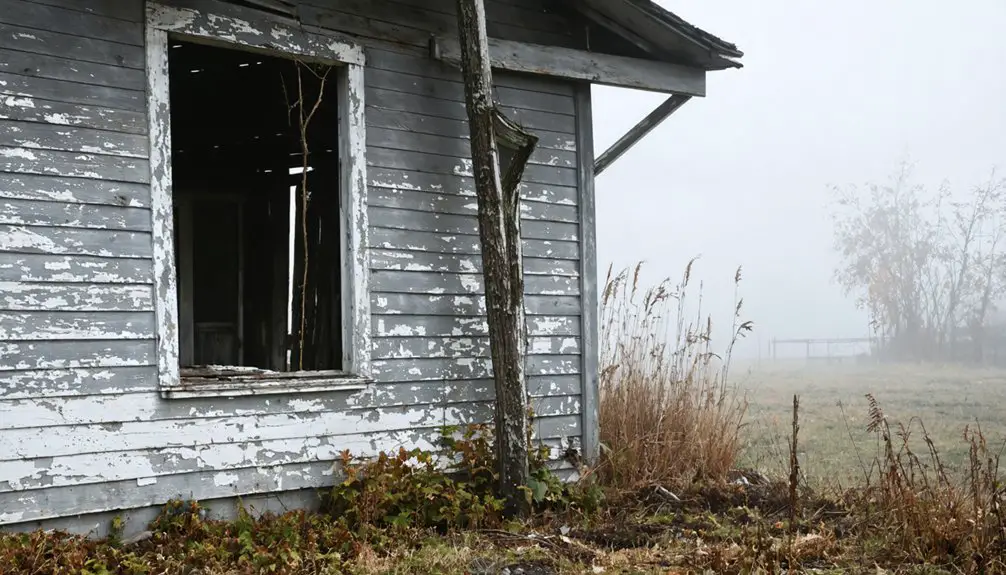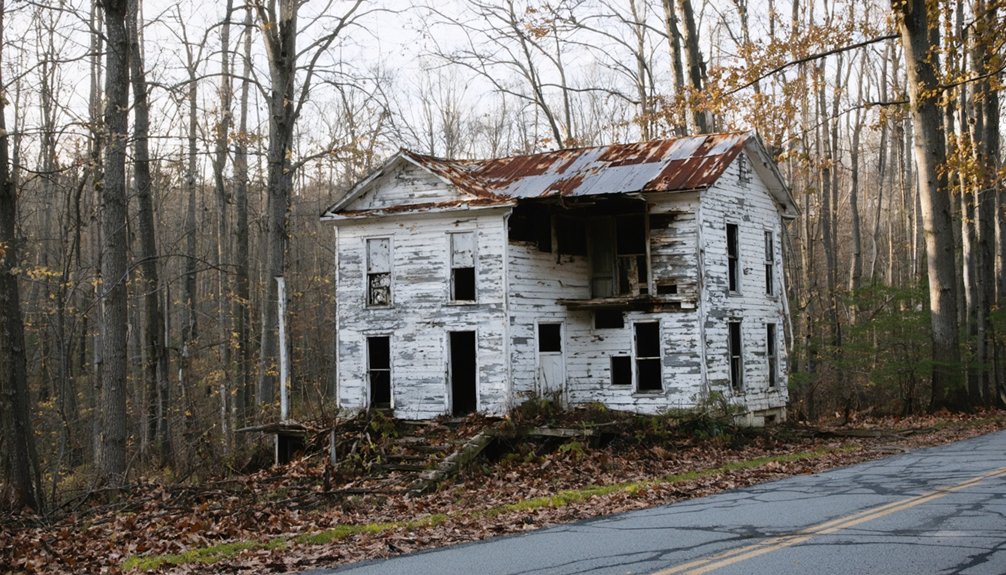
Planning a ghost town road trip to Marlborough, Michigan means stepping into the haunting remains of a cement boom town that rose and collapsed within a single decade. You’ll find crumbling concrete walls, forgotten foundations, and forest-swallowed ruins tucked deep in Lake County’s woods. The site’s designated as a Michigan State Historic Site, so you’re free to explore legally. Sturdy boots, a trail map, and a curiosity for history are your best companions — and there’s far more to this eerie destination than first meets the eye.
Key Takeaways
- Marlborough, Michigan, is a ghost town in Lake County, established in the 1890s as a cement company town, abandoned by 1910.
- The town’s cement plant failed due to inferior product quality, high production costs, and operational inefficiencies, forcing the company into receivership by 1906.
- Visible ruins include concrete walls, an opera house, hotel, school, post office, and scattered rubble reclaimed by forest.
- Park along James Road, wear sturdy boots, bring water and a trail map, and explore with a partner for safety.
- Watch for crumbling concrete, broken glass, rusted metal, hidden drop-offs, and unstable structures throughout the overgrown site.
What Is the Ghost Town of Marlborough, Michigan?
Deep in the forests of Lake County, Michigan, the ghost town of Marlborough stands as a crumbling reminder of ambition gone wrong.
In the 1890s, the Great Northern Portland Cement Company built a thriving industrial operation southeast of Baldwin, harvesting marl from North Lake to produce cement.
The Marlborough history is one of rapid rise and swift collapse — by 1905, over 400 residents called this company town home.
At its peak in 1905, Marlborough was home to over 400 residents — a boom town that wouldn’t last.
The cement legacy it left behind tells a different story, though. Inferior product quality and crushing production costs drove the company into receivership by 1906.
Workers abandoned their homes, buildings were demolished for scrap, and the forest slowly reclaimed what remained.
Today, you can walk among the ruins and witness that forgotten story firsthand.
The Rise and Fall of Marlborough’s Cement Boom Town
When you explore the story behind Marlborough’s ghostly ruins, you’ll find a tale of ambitious industrial dreams that collapsed almost as quickly as they rose.
In the 1890s, the Great Northern Portland Cement Company built a thriving operation southeast of Baldwin, harvesting marl from North Lake and shipping roughly seven railroad cars of cement daily at its peak.
But the company’s rapid growth masked serious problems — inferior cement quality and crushing production costs drove it into receivership by 1906, leaving behind a workforce without a town and a landscape of crumbling concrete walls slowly surrendering to the forest.
Cement Plant Origins
Tucked southeast of Baldwin in Michigan’s Lower Peninsula, the Great Northern Portland Cement Company rose from an unlikely resource: marl, a lime-rich sediment left behind by retreating glaciers, harvested directly from the bottom of North Lake. This marl history shaped everything that followed.
Workers transformed the raw material through a straightforward but demanding process — drying, burning, and grinding it into usable cement particles. Incorporated in 1901, the company attracted two major investors, Howard Parsons and Frederick Farnsworth, who raised one million dollars in stock to fuel cement production.
At its peak, the operation shipped roughly seven railroad cars of cement daily. The plant’s enormous energy demands even required building the largest power plant in the Lower Peninsula — a bold statement for a town still finding its footing.
Production Challenges And Decline
Despite its impressive scale and ambitions, the Marlborough cement operation carried a fatal flaw from early on: the cement it produced was inferior to what competitors were putting out.
Production quality never matched the operation’s enormous footprint, and operational efficiency suffered under the weight of sky-high production costs.
You can imagine the pressure mounting on investors Howard Parsons and Frederick Farnsworth, who’d sold a million dollars in stock just years earlier.
By 1906, those pressures proved too great. The company entered receivership, sealing Marlborough’s fate almost overnight.
Workers left, houses were sold for salvage, and the plant was eventually dynamited for scrap iron.
What had been a thriving community of 400 residents dissolved remarkably fast, leaving only concrete walls and quiet woods behind.
From Boom To Ruins
Few boom towns rise and fall as fast as Marlborough did. By 1905, over 400 residents called this thriving community home, and its economic impact stretched across the entire region. Seven railroad cars of cement shipped daily, powering one of Michigan’s most ambitious industrial ventures.
Then, almost overnight, everything collapsed. Inferior cement quality and crushing production costs drove the company into receivership by 1906. Workers scattered, houses sold for salvage, and crews dynamited the plant for scrap iron.
By 1910, only ruins remained standing, slowly surrendering to the forest. Yet the community legacy endures in the concrete walls, crumbled foundations, and scattered remnants still visible today.
What you’ll find at Marlborough isn’t just rubble — it’s a raw, honest snapshot of ambition meeting its limits.
What Ruins Can You Still See at Marlborough Today?
Although nature has spent over a century reclaiming Marlborough, you’ll still find a striking collection of ruins scattered across the site. An enormous concrete building still stands roadside along James Road, surrounded by a labyrinth of concrete walls that the forest is slowly swallowing whole. Graffiti and greenery now decorate what once housed a thriving industrial operation.
Your ruins exploration will reveal remnants of an old opera house, hotel, school, homes, post office, and cement factory — each carrying deep historical significance.
Rubble from worker residences and crumbling storage facilities remain visible throughout the woods. You’ll need to park and explore on foot to uncover everything scattered among the trees. The site’s layers of industrial and community history make every crumbling wall worth discovering.
Can You Legally Visit Marlborough? Access, Parking, and Property Rules
You’ll be glad to know that Marlborough’s dual designation as a Michigan State Historic Site and a National Historic Place means you can tour the ruins without worrying about trespassing charges.
Plan to park along James Road, then lace up your boots for a walk through the surrounding woods, where many of the scattered structures hide among the trees.
That said, keep in mind that portions of the site sit on private property, so stay alert to any posted boundaries as you explore.
Historic Site Legal Status
Visiting Marlborough feels surprisingly straightforward once you understand its legal standing. Michigan designated the site a State Historic Site in 1971, followed by its recognition as a National Historic Place in 1972. These designations carry meaningful legal implications for curious explorers like you.
Because of its protected historic preservation status, you can tour the ruins without worrying about trespassing charges. The official designations fundamentally open the door for public exploration, letting you wander through crumbling concrete walls, overgrown structures, and forest-swallowed remnants freely.
One important caveat worth noting: portions of the surrounding land remain privately owned. Stay aware of your surroundings and respect any posted boundaries you encounter.
Stick to the designated historic areas, and you’ll experience this fascinating ghost town with complete peace of mind.
Parking And Trail Access
Getting to the ruins requires a bit of planning, but the logistics are simple. You’ll park along James Road, where you can pull off near the cement plant ruins standing roadside.
From there, you’re on foot, traversing trail conditions that vary by season — expect uneven terrain, overgrowth, and scattered rubble beneath your boots.
The ruins spread throughout the surrounding woods, so give yourself enough time to explore beyond what’s visible from the road.
Parking options are limited to roadside pull-offs, so keep that in mind if you’re traveling with a group.
Wear sturdy shoes, watch your footing around crumbling concrete, and bring water. The site rewards those willing to push past the tree line and discover what the forest hasn’t yet swallowed whole.
Private Property Awareness
Before you set foot on the grounds, it’s worth knowing that Marlborough sits on private property — a detail that gives many would-be visitors pause.
However, its dual designation as both a Michigan State Historic Site and a National Historic Place means you can explore freely without trespassing concerns.
That said, private property etiquette still matters here. Treat the ruins with respect, take nothing, and leave no trace behind.
Visitor safety is equally important — crumbling concrete, uneven terrain, and forest overgrowth create genuine hazards throughout the site. Watch your footing carefully, especially near deteriorating walls and rubble fields.
Come prepared, stay alert, and respect the space. Marlborough rewards the curious traveler who approaches it thoughtfully rather than carelessly.
How Do You Get to Marlborough From Baldwin?

Finding Marlborough from Baldwin is straightforward once you know where to look. Head south from Baldwin’s town center on US-37, also called Michigan Avenue, and travel southeast into Lake County. The cement plant ruins stand alongside James Road, where you’ll spot the massive concrete building from the road.
Head south from Baldwin on US-37 into Lake County — Marlborough’s cement plant ruins appear alongside James Road.
If you’re coming from further east, take Highway 127 north, exit onto US-10 just past Clare, then head west through Reed City until you reach Baldwin.
Once you arrive, park your vehicle and prepare to explore on foot. Marlborough history reveals itself gradually as you push deeper into the surrounding woods, uncovering scattered ruins swallowed by decades of forest growth.
Ghost town exploration here rewards the curious traveler willing to wander beyond what’s immediately visible from the road.
What to Bring and Watch Out for When Exploring the Ruins
Exploring Marlborough’s crumbling concrete maze demands preparation. Wear sturdy boots since uneven rubble and broken concrete hide beneath encroaching vegetation. Bring water, a trail map, and a fully charged phone because ruins scatter throughout dense woods requiring significant foot travel.
Follow these essential exploration tips: photograph everything, touch nothing unstable, and never climb deteriorating walls.
Safety precautions matter here. Weathered concrete weakens unpredictably, and collapsing sections pose serious injury risks. Watch for broken glass, rusted metal fragments, and hidden drop-offs camouflaged by overgrowth.
Go with a partner rather than exploring solo.
What Other Ghost Towns Near Baldwin Are Worth Adding to the Trip?
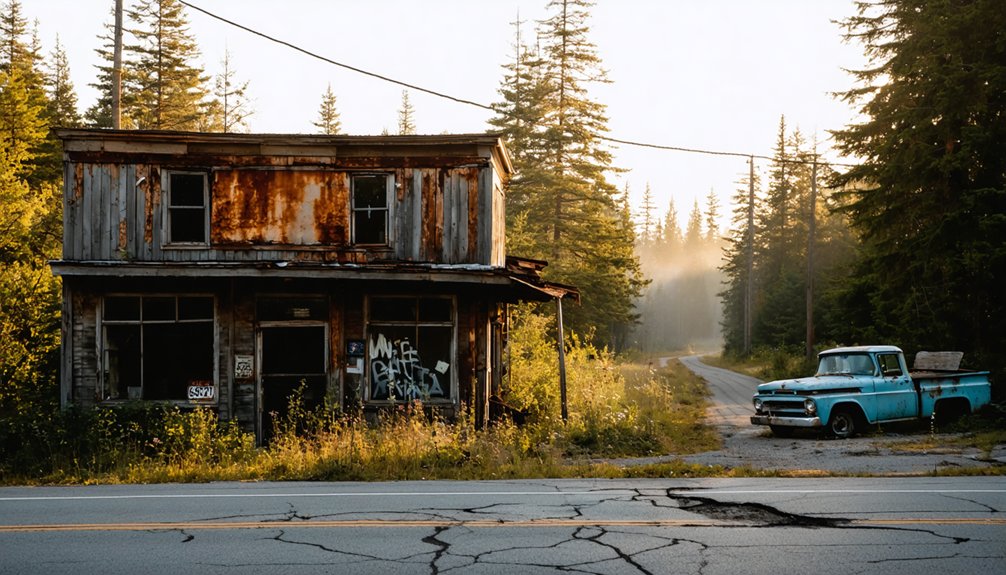
Michigan’s Lower Peninsula hides several forgotten settlements worth pairing with your Marlborough visit. Baldwin sits within striking distance of multiple abandoned communities carrying their own ghost town legends and local folklore.
Feltville and the remnants of old logging camps scattered through Lake County reward curious explorers willing to push deeper into the woods. Each site tells a different story about Michigan’s industrial and frontier past — failed enterprises, economic collapses, and communities that simply vanished when opportunity dried up.
You’ll find that combining several stops into one road trip maximizes your time and deepens your understanding of the region’s layered history. Research your route beforehand, pack your gear, and let Michigan’s forgotten corners surprise you around every bend.
Frequently Asked Questions
What Time of Year Is Best for Visiting Marlborough’s Ruins?
You’ll find late spring or early fall offers the best weather considerations for exploring Marlborough’s ruins. These seasons provide comfortable temperatures and manageable foliage, enhancing your seasonal activities while traversing the forest-consumed concrete structures and scattered remnants.
Are There Guided Tours Available at the Marlborough Historic District?
No guided tours are available, but you’ll enjoy independent, guided exploration of Marlborough’s haunting ruins. Its historical significance earned National Historic Place status in 1972, so you can freely wander without worrying about trespassing concerns.
How Long Does a Typical Visit to Marlborough Ruins Take?
You’ll typically spend 1-2 hours exploring Marlborough history and ghost town exploration. You’ll wander wooded paths, discover scattered ruins, and uncover concrete remnants at your own pace, so bring comfortable shoes for this rewarding adventure!
Is the Marlborough Site Accessible for Visitors With Mobility Limitations?
The Marlborough site poses significant mobility challenges, as you’ll navigate uneven wooded terrain and scattered ruins. Accessibility options are limited here, but you can still glimpse remarkable concrete structures standing alongside James Road without venturing deep into the forest.
Can Photography or Drone Usage Be Conducted at the Marlborough Ruins?
You can capture stunning photography at Marlborough’s hauntingly beautiful ruins! For drone regulations, check local laws before flying. These photography tips guarantee you’ll document history responsibly while embracing your freedom to explore this incredible, officially designated historic site.
References
- https://lostinmichigan.net/concrete-ghost-town/
- https://99wfmk.com/2018marlboroughruins2018/
- https://975now.com/2018marlboroughruins2018/
- https://www.youtube.com/shorts/JUbawGvAqMA
- https://freshwater-reporter.com/new-documentary-cements-marlboroughs-boom-to-bust-history/
- https://www.youtube.com/watch?v=yE4dT8pZZlI