Planning a ghost town road trip to Frosa, Texas starts in Groesbeck, just 14 miles southeast of this vanished settlement. You’ll head northwest on Farm Road 1245, traversing rural roads with a GPS or printed map. Once a thriving 1800s community with mills and a cotton gin, Frosa left no structures behind — just open blackland prairie. Pack water, snacks, and a camera, and get ready to uncover what this silent landscape is really telling you.
Key Takeaways
- Frosa, Texas, is located in Limestone County, 14 miles northwest of Groesbeck, and is accessible via Farm Road 1245.
- Stock up on water, snacks, and supplies in Groesbeck, as Frosa has absolutely no amenities available.
- Bring a camera and printed map or offline GPS, as rural navigation can be challenging without reliable service.
- No structures remain in Frosa, as the blackland prairie has fully reclaimed the land once occupied by the town.
- The site can be visited year-round thanks to Frosa’s mild climate and road conditions suitable for standard 2WD vehicles.
The Rise and Fall of Frosa, Texas
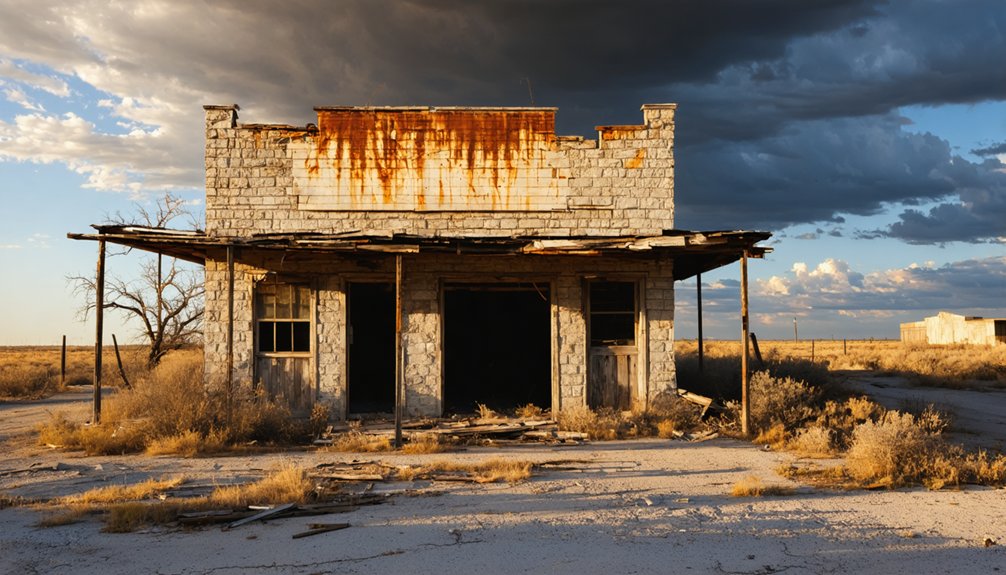
Tucked into central Limestone County, Frosa, Texas, tells a story of ambition, hard work, and quiet disappearance. Named after settler José Frosa, who arrived along Christmas Creek in the early 1850s, the town earned its post office by 1877 and never looked back — at least not yet.
Community growth came fast. By 1884, 70 residents supported a steam gristmill and cotton gin. An agricultural shift from sandy soils to rich surrounding blackland fueled even greater prosperity.
By 1892, the population hit 300, and a flour mill joined the mix. Churches, schools, and businesses filled the town.
Then it faded. No dramatic collapse, no recorded date — just silence. Today, no structures remain. Frosa exists only in directories, historical records, and the curiosity of road-trippers like you.
Where Is Frosa, Texas?
Frosa sits in central Limestone County, fourteen miles northwest of Groesbeck along Farm Road 1245. You’ll reach it via accessible 2WD roads, making it an easy detour on any Texas road trip. The mild climate means you can visit any time of year without worrying about road conditions.
Understanding Frosa history adds depth to the drive. This once-thriving community grew from early Frosa agriculture, where settlers shifted farming from sandy soil to surrounding blackland, cultivating cotton, hay, and grain.
Frosa’s settlers turned from sandy soil to rich blackland, building a farming legacy rooted in cotton, hay, and grain.
By the 1890s, the town supported 300 residents, mills, churches, and a post office.
Today, no structures remain, but the land itself tells the story. Grab your supplies in Groesbeck before heading out — there’s nothing waiting for you in Frosa except history and open Texas sky.
Nothing Remains at Frosa: Here’s What That Looks Like
When you pull off Farm Road 1245 and stand where Frosa once thrived, you’re met with something disorienting — not ruins, not foundations, not even a historical marker.
This ghost town has vanished completely, swallowed by blackland prairie.
That absence carries its own historical significance.
Consider what’s gone:
- A steam gristmill and cotton gin that kept 300 people fed and employed
- Two churches where families gathered every week
- A flour mill and school that represented a community’s ambitions
No crumbling walls. No weathered timber. Just open land where an entire civilization once operated.
That’s the raw reality of visiting Frosa — you’re not reading history through artifacts.
You’re feeling it through emptiness.
And somehow, that hits harder than ruins ever could.
How to Reach Frosa From Groesbeck on Farm Road 1245
Fourteen miles northwest of Groesbeck, Frosa sits at the end of a straightforward drive that requires nothing more than a standard 2WD vehicle. Follow Farm Road 1245 out of town, and you’ll cover those miles without encountering difficult road conditions.
The grid 3 rating means the access roads are manageable, so you’re not dealing with remote backcountry terrain.
A few travel tips before you head out: stock up on supplies in Groesbeck, since Frosa offers nothing in the way of amenities.
The mild central Texas climate keeps the route accessible year-round, giving you the freedom to plan your visit around your schedule rather than weather windows.
Keep your GPS handy, because traversing rural Limestone County roads without a reference point can add unnecessary time to your trip.
What to Bring and When to Visit Frosa
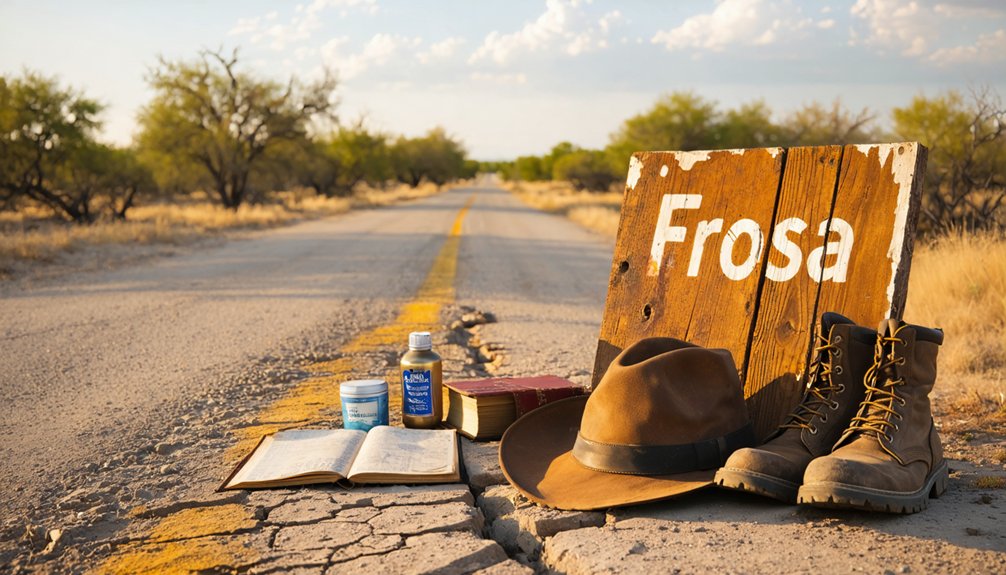
Since Frosa offers no amenities, services, or standing structures, you’ll want to arrive self-sufficient and prepared for a site that rewards curiosity over comfort.
The best time to visit is any season, thanks to Frosa’s mild central Texas climate, giving you true freedom to plan on your own terms.
Pack these essential items before heading out:
- Water and snacks — no stores exist nearby, and the silence of this forgotten land deserves unhurried exploration.
- A camera — photograph the open blackland prairie where 300 souls once built mills, gins, and churches.
- A printed map or offline GPS — cell service may be unreliable along Farm Road 1245.
You’re not visiting ruins — you’re visiting memory.
Come ready to feel it.
Frequently Asked Questions
Who Was Frederick P. Morey, and What Happened to Him?
Frederick P. Morey served as Frosa’s first postmaster in 1877, shaping Morey’s Legacy in this Texas frontier town. Beyond that, his fate remains a Mysterious Disappearance—you won’t find further records of his story.
Are There Any Guided Ghost Town Tours Available Near Frosa?
No specific guided tours exist for Frosa, but you’ll find fascinating ghost town experiences near Groesbeck, where locals share intriguing local legends. Explore independently, embrace your freedom, and uncover this settlement’s rich, mysterious history yourself!
Can Visitors Camp Overnight Near the Frosa Ghost Town Site?
You won’t find any camping options or ghost town amenities at Frosa, as it’s completely abandoned with no structures remaining. You’ll need to secure accommodations in nearby Groesbeck, your best base for exploring this hauntingly empty site.
What Other Ghost Towns Are Located Near Frosa in Limestone County?
Like whispers from the past, Limestone County hides several ghost towns near Frosa. You’ll discover abandoned buildings and local legends waiting in nearby communities, but specific neighboring ghost towns aren’t documented in available records—Groesbeck’s local historians can guide you further.
Is the Frosa Site on Private Land Requiring Landowner Permission?
The provided knowledge doesn’t confirm whether land ownership is private or public, so you’ll want to verify access rights before visiting. Contact local Limestone County authorities to ascertain you’re exploring Frosa legally and respectfully.
References
- https://www.ghosttowns.com/states/tx/frosa.html
- https://www.southernthing.com/ruins-in-texas-2640914879.html
- https://en.wikipedia.org/wiki/List_of_ghost_towns_in_Texas
- https://www.youtube.com/watch?v=7wUjJy5r8tA
- https://authentictexas.com/texas-ghost-towns/
- https://www.tshaonline.org/handbook/entries/frosa-tx
- https://texashighways.com/travel/the-quest-to-resurrect-a-ghost-town/
- https://www.texasescapes.com/TexasGhostTowns/Frio-Town-Texas-Ghost-Town-Honeymoon.htm
- https://www.youtube.com/watch?v=w-9nWnQob7E