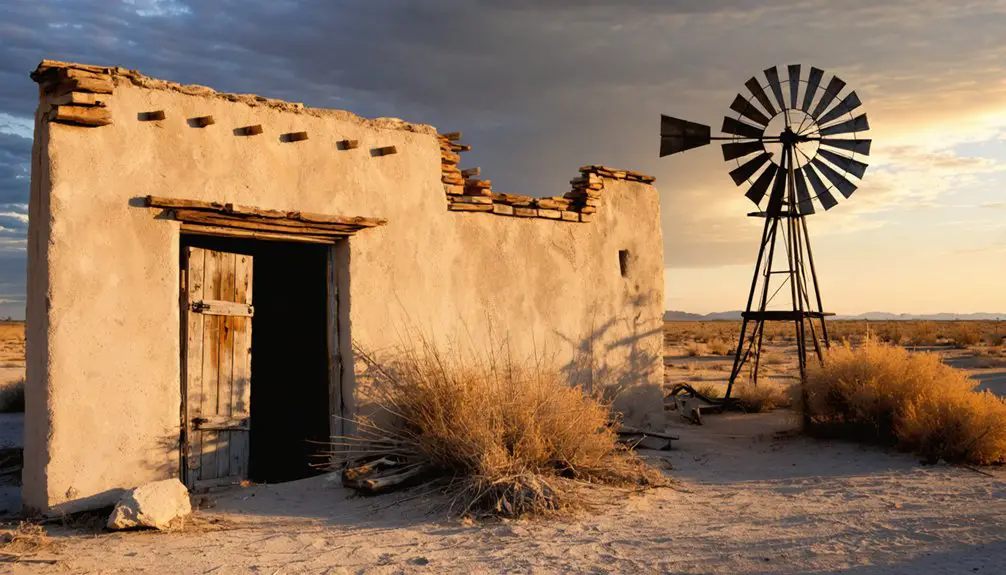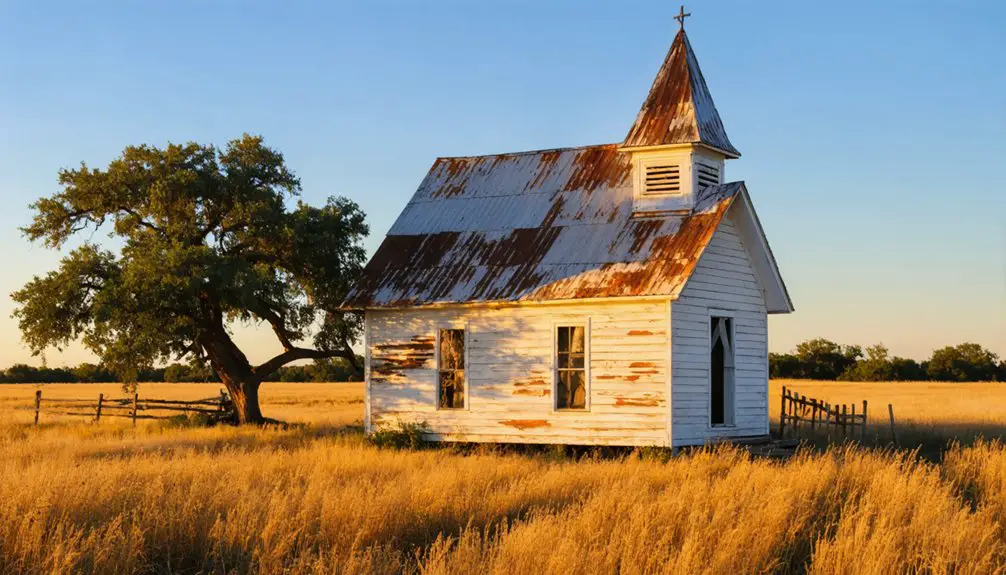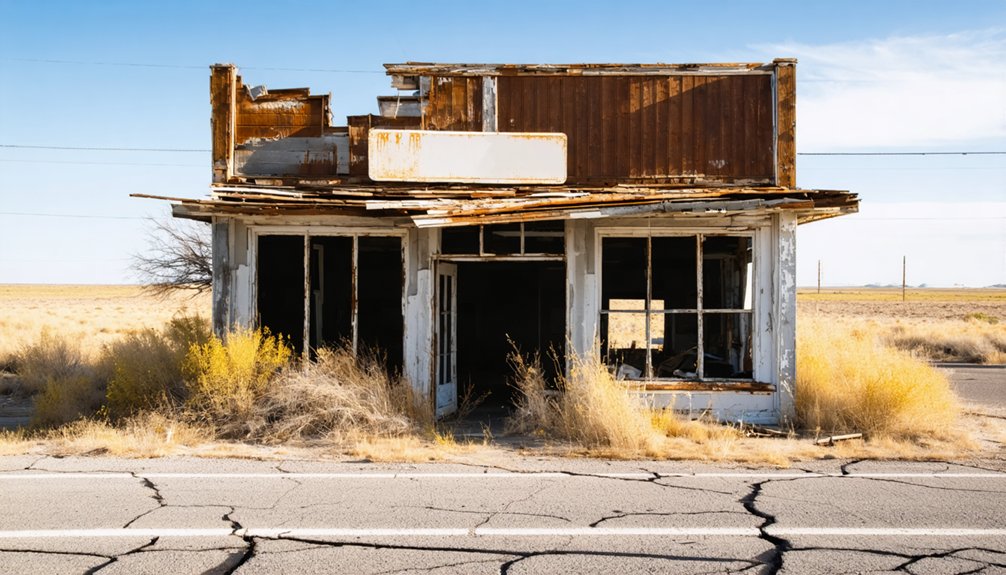
Planning a ghost town road trip to McGirk, Texas means chasing a cotton-era town that’s nearly vanished into Hamilton County’s ranchland. You’ll navigate Highway 1047 in western Hamilton County, using map coordinates since there aren’t any road signs to guide you. The old cemetery is your most reliable landmark once you cross the Lampasas River. Pack water, sturdy boots, and insect repellent before you go — and there’s much more to uncover about this forgotten Texas town.
Key Takeaways
- McGirk, Texas, is located along Highway 1047 in western Hamilton County, between FM 2005 and the community of Star.
- No road signs exist, so bring printed maps or GPS coordinates, as cell service is unreliable in the area.
- Pack essentials including water, sturdy boots, insect repellent, long pants, and camera gear for exploring the site.
- The old cemetery serves as the most visible landmark, while the school foundation remains hidden beneath thick brush.
- Nearby ghost towns like Fairy, Evant, Jonesboro, and Mullin can be incorporated into an extended road trip itinerary.
Mcgirk’s Rise and Fall: How a Cotton Town Disappeared From Hamilton County
Tucked along the Lampasas River in the far reaches of Hamilton County, McGirk once hummed with the rhythmic churn of a steam-powered cotton gin and the daily bustle of a growing frontier settlement. Founded in the early 1870s, the town built its identity around the cotton industry, supporting a post office, school, and gas station alongside its agricultural operations.
But economic decline crept in steadily. The post office shuttered by 1920, and the school vanished by the mid-1930s.
What’s Left of McGirk, Texas Today
Today, little remains where McGirk once stood, but what survives tells a quiet, compelling story. Farmland and ranch property have swallowed the old townsite, reclaiming what settlers once built. Nature has done its work, hiding the school’s foundation beneath thick brush.
Cemetery exploration offers your clearest connection to McGirk’s past. The old burial ground still stands, marking lives lived along the Lampasas River when cotton ruled this corner of Hamilton County.
Historical preservation keeps McGirk’s memory alive through regional archives and local records, even as the physical town fades. You won’t find tourist infrastructure or paved walkways here.
What you’ll find instead is raw Central Texas landscape, quiet history, and the rare satisfaction of discovering a place most people have completely forgotten.
How to Find McGirk Along Highway 1047
Finding McGirk requires a few key reference points in Hamilton County’s remote western terrain. Use these directions details and highway landmarks to navigate confidently:
- Head toward Highway 1047 in western Hamilton County near the Lampasas River.
- Position yourself between FM 2005 and the small community of Star.
- Watch for the river crossing, which signals you’re entering McGirk’s original footprint.
- Look for the old cemetery, your most reliable visible landmark on approach.
- Scan the brushy roadside vegetation for partially hidden structural foundations.
You won’t find road signs announcing McGirk’s existence, so trust your map coordinates and mileage markers.
The surrounding ranchland now defines the landscape where the town once operated. Arriving with GPS coordinates and a paper backup guarantees you won’t miss this quietly forgotten Central Texas destination.
What to Bring on Your McGirk Ghost Town Visit
Once you’ve locked down your route along Highway 1047, smart packing makes the difference between a rewarding visit and a frustrating one.
McGirk’s remote location demands self-sufficiency, so pack water, sturdy boots, and insect repellent before leaving home.
Bring your camera gear to document the old cemetery markers and any visible foundations hiding beneath the brush. Natural lighting shifts quickly in Central Texas, so wide-angle and macro lenses both earn their weight here.
Carry printed local maps since cell service remains unreliable near the Lampasas River corridor. A GPS device provides backup navigation across Hamilton County’s rural roads.
Wear long pants to push through vegetation covering archaeological remnants, and respect the cemetery grounds as private historical space deserving careful, mindful exploration.
Hamilton County Ghost Towns Within 30 Miles of McGirk
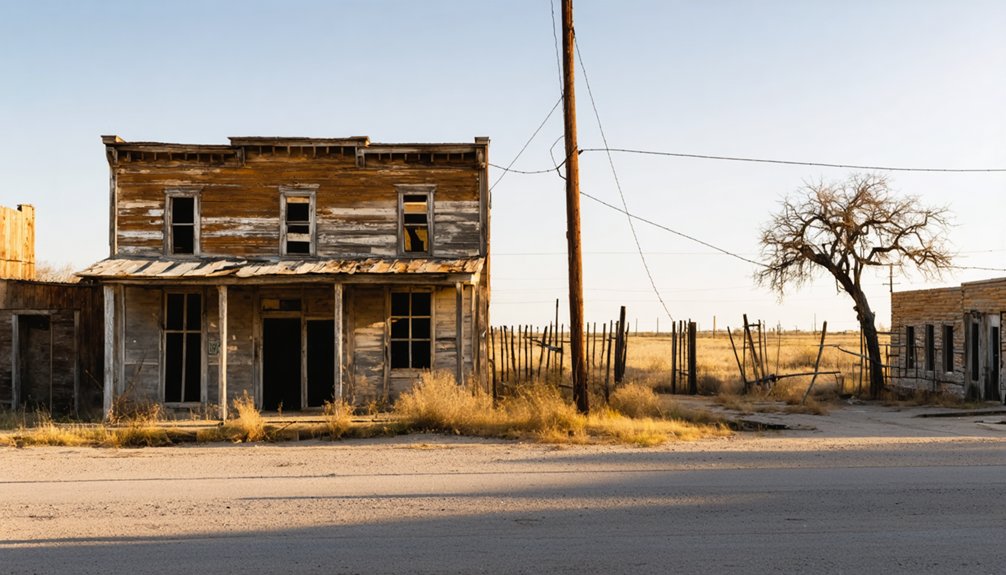
If McGirk’s quiet desolation leaves you wanting more, Hamilton County holds several other forgotten settlements worth tracking down within a short drive.
You’ll find that this remote stretch of Central Texas once supported far more communities than modern maps suggest, with abandoned townsites scattered across the countryside like breadcrumbs from a vanished era.
Pack your curiosity and a reliable map, because exploring these lost Hamilton County communities reveals a fascinating pattern of frontier ambition, economic struggle, and eventual surrender to time.
Nearby Abandoned Texas Settlements
McGirk doesn’t stand alone in its abandonment — Hamilton County and the surrounding Central Texas region hold several other forgotten settlements within a short drive, each carrying its own story of boom and bust.
Exploring these sites lets you piece together the region’s deeper settlement history through abandoned structures, crumbling foundations, and forgotten cemeteries.
Consider adding these nearby ghost towns to your route:
- Fairy, Texas – A once-thriving Hamilton County community with remaining historical markers
- Evant, Texas – A border-town settlement straddling Coryell and Hamilton counties
- Jonesboro, Texas – A Coryell County remnant with visible abandoned structures
- Mullin, Texas – A Mills County ghost town with preserved historical character
- Goldthwaite area settlements – Mills County communities that faded alongside agricultural decline
Hamilton County Historical Ghost Towns
Hamilton County holds more forgotten settlements than most travelers realize, and a short drive from McGirk puts several of them within easy reach.
The county’s rural stretches hide communities that thrived briefly, then quietly disappeared when cotton markets collapsed and populations drifted toward cities. Each site carries its own ghost town legends, from failed post offices to vanished schoolhouses swallowed by cedar and brush.
You’ll find that exploring these nearby settlements deepens your understanding of McGirk’s own story, since they all share the same economic pressures and geographic isolation.
Historical preservation efforts vary widely across these sites, so research each location before you arrive. Some offer accessible cemeteries while others require traversing private ranch land with landowner permission.
Exploring Forgotten County Communities
Spreading outward from McGirk along Hamilton County’s back roads, you’ll find a handful of other forgotten communities worth tracking down on the same day trip. Each carries its own historical significance, rewarding curious travelers willing to explore beyond marked tourist routes.
- Pottsville – A quiet remnant settlement with surviving structures and deep pioneer roots.
- Evant – Once a thriving crossroads community straddling the Coryell County line.
- Jonesboro – Features an old cemetery and scattered foundation ruins worth photographing.
- Carlton – A small agricultural community that narrowly avoided complete abandonment.
- Fairy – One of Texas’s most uniquely named forgotten communities, offering surprising historical depth.
Pack a detailed county map, fuel up beforehand, and embrace the freedom of traversing Hamilton County’s rural landscape entirely on your own terms.
Best Season to Visit McGirk and Central Texas Ghost Country
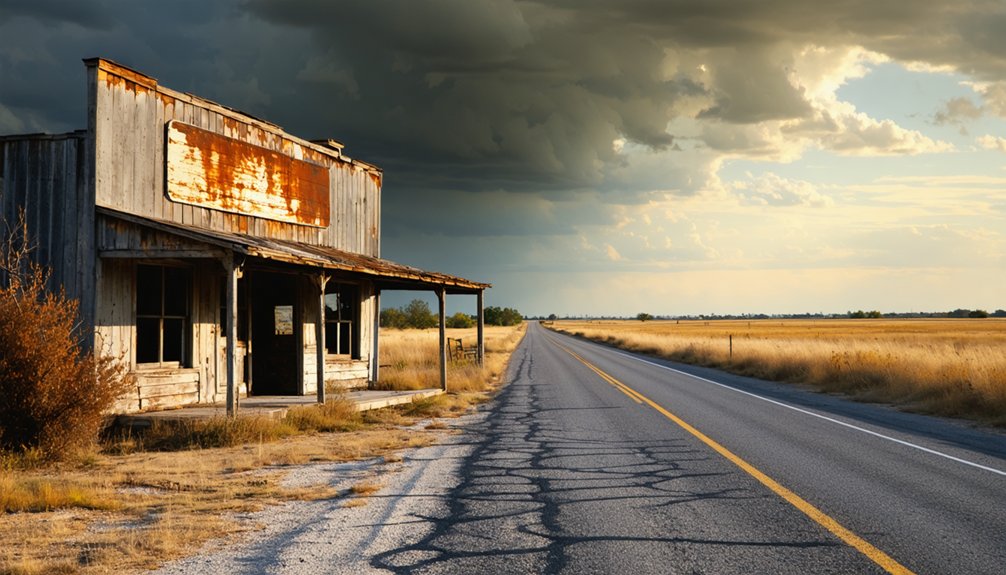
When you visit McGirk and the surrounding Central Texas ghost country matters as much as where you go.
Spring and fall deliver the best weather for exploring abandoned landscapes, with mild temperatures making long walks through overgrown foundations and quiet cemeteries genuinely enjoyable.
Spring and fall offer the gentlest conditions for wandering forgotten places, where mild air softens every crumbling edge.
Seasonal activities shift with the calendar — spring wildflowers transform the Lampasas River corridor into something unexpectedly beautiful, while fall’s cooler air makes hiking through dense brush far more tolerable.
Avoid summer’s brutal heat, which turns Central Texas into an unforgiving furnace that drains energy fast.
Winter visits work if you’re tough and prepared, but shorter daylight hours limit your exploration time.
Plan your trip between March and May or September and November for the most rewarding experience.
Frequently Asked Questions
Can Visitors Legally Access the Mcgirk Cemetery on Private Property?
You’ll want to verify cemetery access before visiting, as the McGirk cemetery likely sits on private property. Always contact local landowners or Hamilton County historical societies to secure proper permission before exploring this historic site.
Are There Guided Ghost Town Tours Available in Hamilton County?
Guided tours don’t officially exist, but you’ll uncover ghost town history and local legends exploring Hamilton County independently. Chart your own course, follow Highway 1047, and let McGirk’s mysterious remnants speak directly to your adventurous spirit.
What Is the Nearest Town With Hotels to Mcgirk?
Hamilton, Texas is your closest option for hotel accommodations when exploring McGirk! It’s a convenient base where you’ll find comfortable lodging while enjoying nearby attractions, giving you the freedom to roam Central Texas’s fascinating ghost town landscapes.
Is Mcgirk Listed on Any Official Texas Historical Registers?
The available knowledge doesn’t confirm McGirk’s official listing on Texas historical registers, but you’ll find its historical significance and town folklore preserved through regional archives, local historical societies, and community documentation that keep its fascinating ghost town legacy alive.
Can Metal Detecting or Artifact Collecting Be Done at Mcgirk?
Like treasure buried beneath forgotten dreams, McGirk’s grounds tempt explorers. You’ll want to research Texas metal detecting laws carefully before visiting, as artifact preservation rules protect historical items — always respect the land’s silent, sacred history.
References
- https://kids.kiddle.co/McGirk
- https://en.wikipedia.org/wiki/McGirk
- https://www.tshaonline.org/handbook/entries/mcgirk-tx
- https://authentictexas.com/texas-ghost-towns/
- https://texashighways.com/travel/the-quest-to-resurrect-a-ghost-town/
- https://www.wilcotx.gov/1635/Historical-Abandoned-Towns
- https://www.texasescapes.com/CentralTexasTownsNorth/McGirk-Texas.htm
- https://www.youtube.com/watch?v=phjUE19A8HM