Planning a ghost town road trip to Millville, Texas is easier than you’d think. You’ll find this forgotten boomtown just nine miles northeast of Henderson in Rusk County, where a weathered church and Harmony Hill Cemetery quietly preserve nearly two centuries of history. Once home to hotels, a mill, and a thriving academy, Millville faded in the 1870s. Pack your camera, skip the tourist crowds, and keep exploring — there’s far more to this story than meets the eye.
Key Takeaways
- Millville, a ghost town 9 miles northeast of Henderson in Rusk County, Texas, is accessible year-round via county roads with standard 2WD vehicles.
- Key historical attractions include a weathered 19th-century church and Harmony Hill Cemetery, both free to visit with no entry restrictions.
- Spring and fall offer the best visiting conditions, with wildflowers blooming around the cemetery and cooler temperatures for comfortable exploration.
- Nearby Henderson attractions, including the Oil Patch Museum and Boggy Branch oil site, complement a Millville visit with additional historical context.
- Pack a map for navigating remote back roads, as Rusk County contains numerous ghost towns and abandoned sites worth exploring beyond Millville.
What Is Millville, Texas and Why Visit?
Tucked 9 miles northeast of Henderson in Rusk County, Millville, Texas is a ghost town that’s quietly disappeared from the map but not from history.
Once a thriving 19th-century community, Millville history stretches from its early days as Liberty Hill through its growth into a mill town with hotels, stores, and an academy.
By the 1870s, it had faded, leaving behind only a church and a hauntingly beautiful cemetery called Harmony Hill.
If you’re drawn to places where time stands still, ghost town tourism doesn’t get more authentic than this.
You’ll walk ground where stagecoach travelers once rested and where early oil exploration shaped Rusk County’s future.
Millville rewards the curious traveler who craves discovery beyond the ordinary tourist trail.
How Millville Went From Boomtown to Ghost Town
Before it became the quiet, forgotten stretch of East Texas you’ll visit today, Millville had all the makings of a permanent, thriving community. Its boomtown growth started with a water mill in 1853, which drew settlers, businesses, and ambition to what was once called Liberty Hill.
At its peak, you’d have found a Masonic Lodge, a tanyard, a wagon factory, hotels, and even an academy dedicated to education. This wasn’t just a settlement — it was a community building toward something real.
But the 1870s brought ghost town decline, and Millville couldn’t hold its momentum. Residents drifted away, businesses shuttered, and the town slowly surrendered to time.
Today, only a church and cemetery remain, standing as quiet proof that something significant once thrived here.
What’s Left to See at Millville Today?
Despite that quiet surrender to time, Millville hasn’t entirely disappeared — and what’s left makes the 9-mile drive from Henderson absolutely worth it.
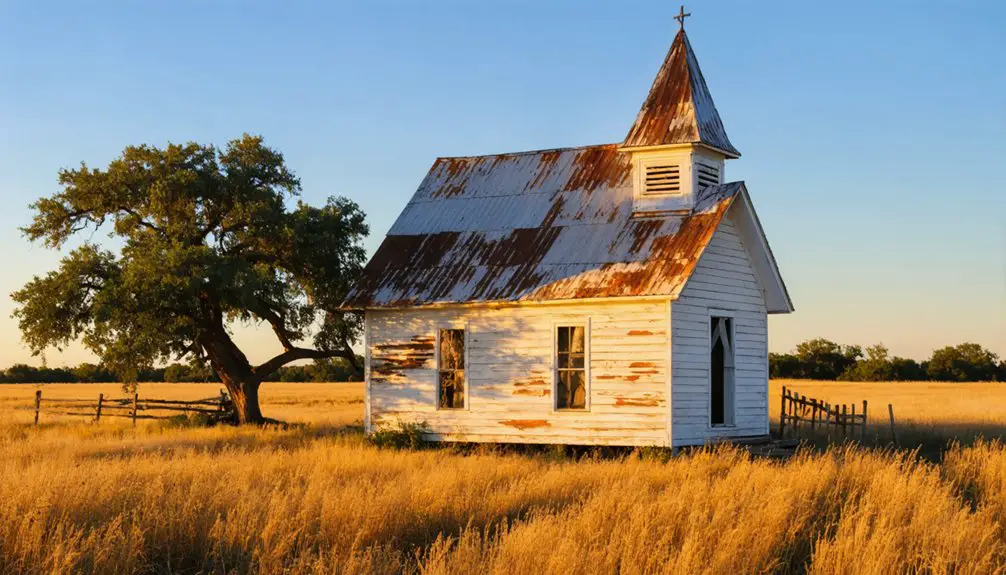
You’ll find a weathered church still standing alongside Harmony Hill Cemetery, the town’s most enduring landmark. Your cemetery exploration here reveals headstones dating back to Millville’s peak years, connecting you directly to the families who built this once-thriving community.
A weathered church and timeworn headstones — all that remains of a community that once thrived here.
The historical significance runs deep — these grounds quietly preserve stories of the academy, the water mill, and the ambitious settlers who shaped north central Rusk County.
No crowds, no entry fees, no restrictions. Just open East Texas land and genuine history beneath your feet.
Bring a camera, walk the grounds at your own pace, and let Millville tell its story on your terms.
When Should You Visit Millville?
You can visit Millville anytime you’d like, since East Texas’s mild climate keeps the roads accessible year-round without serious weather concerns.
Spring and fall offer the most comfortable temperatures for wandering the cemetery and exploring the church grounds, though summer visits work fine if you start early to beat the heat.
Whenever you plan your trip, block out enough time to soak in the historical atmosphere and consider pairing the stop with other Rusk County ghost town sites along the way.
Visit Anytime, Weather Permitting
Since Millville sits in East Texas, you’ll find the weather welcoming enough to visit just about any time of year. The mild climate means you won’t face harsh conditions that limit your ghost town exploration.
Consider these three ideal visiting strategies:
- Spring offers blooming surroundings that frame the cemetery’s historical significance beautifully.
- Fall delivers cooler temperatures perfect for walking the grounds and reading aged headstones.
- Winter provides sparse crowds, giving you uninterrupted, personal access to the site.
Pack comfortable walking shoes and a camera regardless of season. The 2WD-accessible roads from Henderson stay manageable year-round, so you’re never locked out of this slice of Texas history.
Whenever freedom calls, Millville’s church and cemetery stand ready to receive you.
Best Seasons To Explore
Millville welcomes explorers across all four seasons, but each time of year brings its own distinct character to this Rusk County ghost town.
East Texas weather patterns stay mild enough year-round that you’ll never face a truly bad window for visiting.
Spring delivers wildflowers around the cemetery, making it visually stunning.
Summer brings thick green canopy but also heat and humidity, so start early.
Fall offers cooler temperatures and golden light that makes the old church and gravestones look striking.
Winter strips the trees bare, revealing the landscape’s quiet bones and giving you unobstructed views of the grounds.
The best seasons ultimately depend on your preference — atmosphere or comfort.
Since 2WD roads stay accessible throughout the year, you’re free to choose your own timing.
Planning Your Trip Timing
Planning a trip to Millville doesn’t require much stress over timing — the mild East Texas climate keeps the 2WD roads accessible year-round, so you’re never locked out by weather.
When building your trip itinerary, keep these timing tips in mind:
- Avoid peak summer heat — mornings offer cooler exploring conditions.
- Pack travel essentials — water, comfortable footwear, and a camera for the cemetery and church.
- Allow 2–3 hours — the 9-mile drive from Henderson is short, but the site deserves unhurried attention.
You’re free to go whenever the open road calls.
Spring and fall deliver the most pleasant conditions, though winter visits carry their own quiet charm among the weathered headstones of Harmony Hill Cemetery.
How Do You Get to Millville From Henderson?
Getting to Millville from Henderson couldn’t be simpler — it’s just a 9-mile drive northeast along county roads that are fully accessible by 2WD vehicles.
Follow the route once known as Chickenfeather Road, and you’ll feel the historical significance of every mile as you trace paths that stagecoach passengers once traveled to reach Millville’s bustling hotel and water mill.
Your driving directions don’t require special navigation tools — just head northeast from Henderson and let Rusk County’s quiet backroads guide you.
East Texas’s mild climate means you can make this drive anytime without worrying about road conditions.
Once you arrive, you’ll find the Harmony Hill church and cemetery waiting, standing as quiet reminders of a community that thrived, declined, and now invites curious travelers like you to explore its story.
What Else Can You See Near Millville in Rusk County?
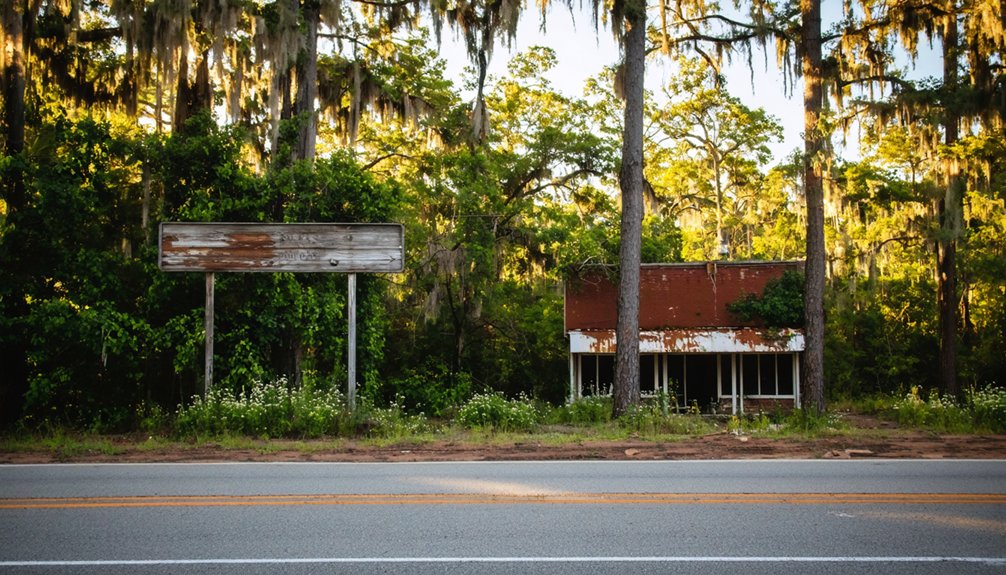
After exploring Millville’s church and cemetery, you can extend your road trip by swinging through Henderson’s historical town center, where preserved architecture and local museums bring Rusk County’s past to life.
Just near Millville, you’ll find the Boggy Branch oil site, where the county’s first oil exploration unfolded around 1911, adding an unexpected industrial chapter to this rural landscape.
Rusk County also hides several other ghost towns worth tracking down, making Millville just one stop on a broader East Texas historical circuit.
Henderson’s Historical Town Center
While Millville’s quiet cemetery and church make for a reflective stop, Henderson’s historical town center—just 9 miles southwest—offers a lively contrast worth exploring.
You’ll find Henderson architecture and historic landmarks that tell Rusk County’s broader story.
Make the most of your visit by checking out:
- The Depot Museum – A preserved complex showcasing regional heritage through artifacts and exhibits.
- The Historic Courthouse Square – Classic East Texas Henderson architecture anchors this walkable downtown district.
- The Oil Patch Museum – Connects directly to Rusk County’s petroleum history, including early exploration near Millville itself.
Together, these historic landmarks round out your understanding of how this region evolved from pioneer settlements to industrial growth.
Henderson’s town center transforms a single ghost town visit into a full East Texas historical experience.
Boggy Branch Oil Site
Beyond Henderson’s museums and courthouse square, Rusk County holds another hidden gem just a short distance from Millville itself—the Boggy Branch oil site.
Around 1911, this unassuming creek area became the setting for the first oil exploration attempts in Rusk County, cementing its historical significance in Texas energy history.
You won’t find grand monuments or visitor centers here, but that’s exactly what makes it compelling.
Standing near Boggy Branch, you’re connecting with a raw, largely forgotten chapter of industrial ambition—one that preceded the massive East Texas oil boom by decades.
Pair this stop with your Millville cemetery visit, and you’ve built a genuinely rich historical route through Rusk County that few travelers ever discover.
That kind of freedom from the tourist crowds makes the detour absolutely worthwhile.
Rusk County Ghost Towns
Rusk County quietly harbors more ghost towns worth tracking down once you’ve finished exploring Millville and Boggy Branch.
This corner of East Texas rewards curious travelers who dig deeper into Texas history beyond the well-worn routes.
Pack your map and explore these nearby highlights:
- Abandoned townsites along county roads — Rusk County’s back roads connect you to forgotten settlements that echo Millville’s rise and fall.
- Historic cemeteries — Like Harmony Hill, other gravesites across the county preserve stories no building survived to tell.
- Early oil country landmarks — Ghost town exploration here intersects with Texas’s petroleum heritage, giving you layered historical context.
You’ve got open roads, mild weather, and genuine history waiting — Rusk County’s forgotten places won’t disappoint if you’re willing to wander.
What Made Millville Important to Rusk County History?
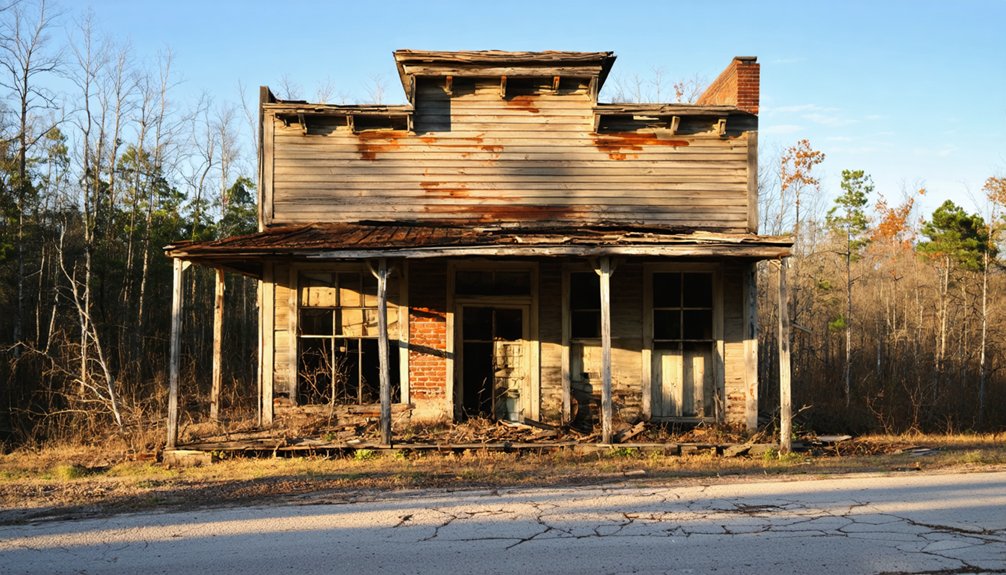
Millville punched well above its weight in shaping Rusk County’s early identity. You’re looking at a community that built a water mill, established a Masonic Lodge, operated a hotel for stagecoach travelers, and launched an accredited academy — all before the Civil War reshaped everything.
That Millville legacy reflects serious community development for such a remote East Texas location.
That kind of community development doesn’t happen by accident — not in a remote East Texas settlement, and not this early.
The Millville Male & Female Academy, incorporated in 1858, signals that residents prioritized education alongside commerce. Then, around 1911, Boggy Branch near Millville hosted Rusk County’s first oil exploration, cementing the town’s outsized historical footprint.
Even after its decline in the 1870s, Millville’s contributions to regional infrastructure, trade, and learning left marks you can still trace through the county’s broader story today.
Frequently Asked Questions
What Was the Original Name of Millville Before 1853?
Like a seed before it blooms, you’ll find Millville’s original settlement carried the name Liberty Hill in the 1840s-1830s — a title rich with historical significance, echoing the freedom its early pioneers cherished deeply.
Who Built the Water Mill That Renamed the Town Millville?
Enoch Hayes and Willis Calloway built the water mill in 1853, driving the town renaming from Liberty Hill to Millville. You’re exploring rich water mill history that sparked a thriving community you won’t want to miss!
What Is the Exact Incorporation Date of Millville Male & Female Academy?
You’ll find the Millville Male & Female Academy’s exact incorporation date was January 26, 1858—a truth that carries real historical significance, proving its educational legacy wasn’t just myth but a bold, freedom-driven community achievement.
What Road Was Millville Historically Located on Before Modernization?
You’ll find Millville’s roots along what’s historically known as Chickenfeather Road, a fitting name that captures the Town Evolution of this once-thriving hub. Trace these Historic Routes and you’re walking paths early settlers actually traveled!
What Grid Reference Number Is Assigned to Millville for Mapping?
Millville’s ghost town holds grid reference 1 for mapping techniques — and yes, it’s genuinely useful! You’ll navigate East Texas roads confidently, pinpointing this historic, freedom-calling destination with ease on any detailed Rusk County map.
References
- https://www.ghosttowns.com/states/tx/millville.html
- https://www.texasescapes.com/EastTexasTowns/Millville-Texas.htm
- https://www.tshaonline.org/handbook/entries/millville-tx
- https://www.ghostsandgetaways.com/blog-1/27-fascinating-ghost-towns-in-texas
- https://southernarizonaguide.com/exploring-millville-ruins-fspr/
- https://www.redriverhistorian.com/post/history-in-ghost-towns
- https://www.texasalmanac.com/places/millville