Planning a ghost town road trip to Monmouth, Kansas means traversing rural Crawford County backroads without highway signs, so grab a DeLorme Atlas or download offline maps before you go. You’ll drive original streets, walk the old elementary school’s cement slab, and explore a township-maintained cemetery at your own pace. There’s no admission fee and no guided tour — just quiet history waiting to be discovered. Stick around, and you’ll find everything you need to make this trip unforgettable.
Key Takeaways
- Monmouth, in southern Crawford County, Kansas, has drivable streets, a Trinity Holiness Church remnant, cemeteries, and an elementary school cement slab to explore.
- No highway signs mark Monmouth, so bring a DeLorme Atlas or detailed county map, and download offline maps due to spotty cell service.
- Admission is free with no guided tours; explore at your own pace while respecting potential private property restrictions before wandering.
- Monmouth’s decline accelerated after its post office closed in 1955, reflecting broader rural Kansas trends of economic shifts and agricultural mechanization.
- Combine Monmouth with nearby ghost towns like Ottumwa, Oil Hill, Densmore, and Monticello for a richer, more efficient road trip experience.
What Remains at Monmouth, Kansas’s Forgotten Ghost Town
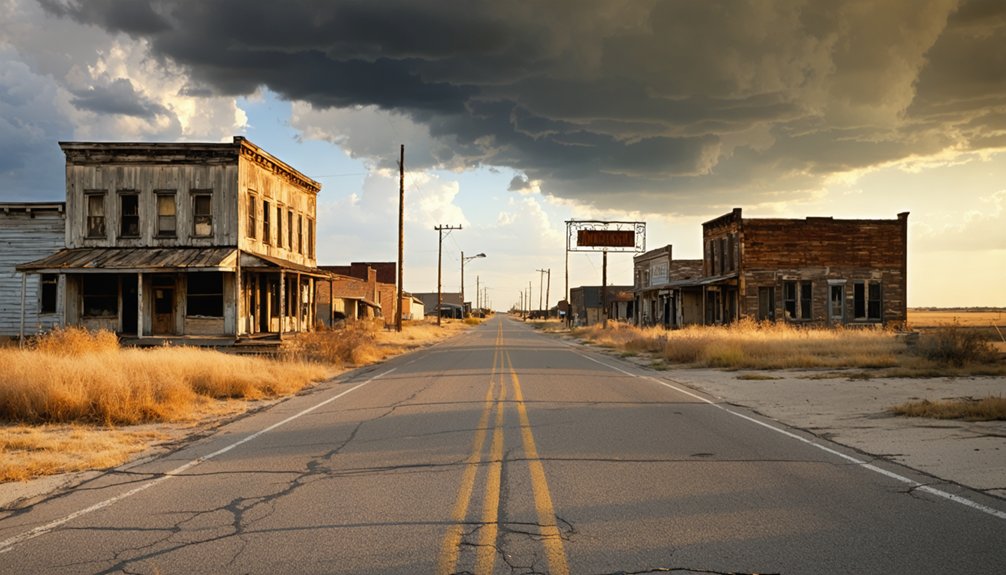
Although little remains of Monmouth’s once-active townsite in southern Crawford County, what you’ll find still carries a quiet, haunting character. You can drive the original streets, still maintained by the township, and walk across the cement slab floor where the elementary school once stood.
Trinity Holiness Church remnants add historical significance to your visit, connecting you to the community that once thrived here.
For your exploration tips, arrive prepared to navigate rural roads and respect any private property boundaries. The township also maintains cemeteries worth visiting, offering personal glimpses into Monmouth’s past residents.
Though businesses closed and the population faded, the landscape itself tells the story. You’re not just passing through a forgotten place — you’re standing inside a piece of Kansas history.
How to Find Monmouth on Kansas’s Rural Backroads
Finding Monmouth takes a little patience, but that’s part of the appeal. You’ll need solid rural navigation skills to locate this unincorporated ghost town tucked into southern Crawford County, Kansas. No highway signs will guide you there — that’s exactly what makes ghost town exploration feel rewarding.
Start by pulling up a DeLorme Atlas or a detailed county map. Monmouth sits within Sheridan Township, accessible via rural roads near the Kansas-Missouri border. You can reach the area by heading off US 54 and winding through the backroads.
Cell service gets spotty, so download offline maps before you leave. Once you arrive, you’ll find drivable streets and township-maintained roads making movement easy. Embrace the slow pace — getting slightly lost is half the adventure.
Walk the Streets and School Foundation for Yourself
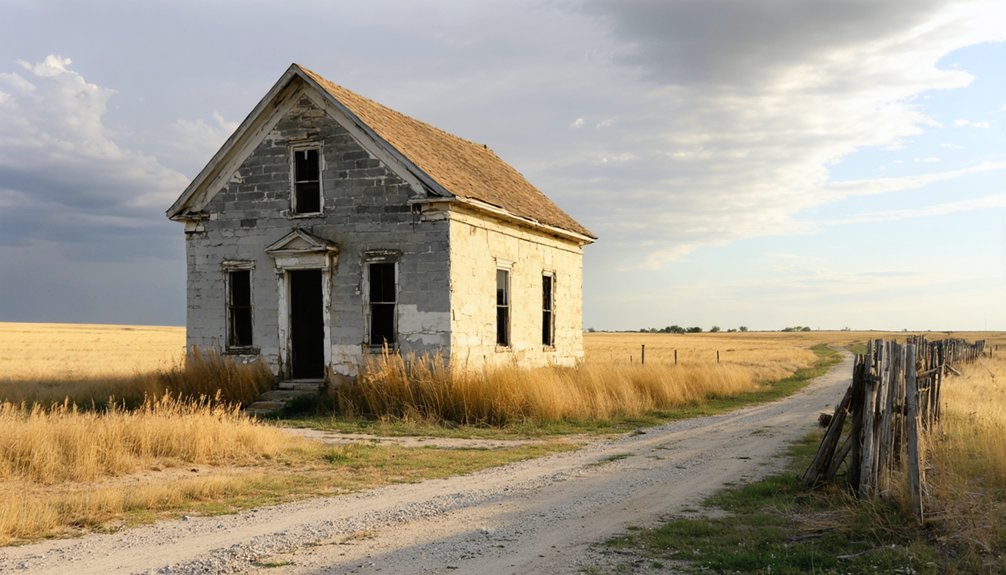
Once you’re there, you’ll find Monmouth’s streets still drivable, letting you cruise the old grid at your own pace.
Step out of your car and walk the cement slab floor of the former elementary school, where you can almost feel the echoes of a once-thriving community beneath your feet.
The township keeps the cemetery in decent shape, so you can visit the graves of Monmouth’s earliest settlers without fighting through overgrowth.
Streets Still Drivable
One of the most satisfying surprises about visiting Monmouth is that you can actually drive its streets and walk the grounds on your own two feet. Unlike many ghost towns blocked off by private property or overgrowth, Monmouth’s drivable routes remain open and accessible.
Sheridan Township maintains the roads, so you’re not bushwhacking through wilderness — you’re cruising quiet, navigable streets where a community once thrived. That kind of access is rare in ghost town exploration, and it makes Monmouth genuinely rewarding.
You can take your time, move at your own pace, and soak in the silence without restriction. Bring your camera, roll down your windows, and let the empty landscape tell its story as you drift through what’s left.
Walking The School Foundation
Beyond the streets themselves, one of Monmouth’s most tangible connections to its past sits right underfoot — the cement slab foundation of the old elementary school.
You can walk its entire surface, tracing the outlines of classrooms where children once learned, laughed, and grew up in a town that no longer exists.
There’s something grounding about standing on that slab. You’re not just exploring history through photographs or documents — you’re physically occupying the same space generations before you once did. It turns passive curiosity into something real.
Uncovering stories here doesn’t require a guided tour or admission fee. It only requires your willingness to show up, look down, and let the silence do the talking.
Monmouth rewards the curious traveler who moves slowly and pays attention.
Township-Maintained Cemetery Access
Few places in Monmouth invite quiet reflection quite like its township-maintained cemeteries.
Sheridan Township keeps these grounds accessible, so you can walk among headstones that reveal the town’s cemetery history firsthand. You’ll notice burial practices that reflect 19th and early 20th century rural Kansas traditions — modest markers, family plots clustered together, and epitaphs carved with quiet dignity.
The township’s ongoing maintenance means you’re not hacking through overgrowth to find graves. Roads leading in stay drivable, and the grounds remain respectfully preserved.
Bring a notebook or camera, because the inscriptions tell stories no history book fully captures. You’re standing where generations of Monmouth’s founding families rest. That kind of direct, unfiltered connection to the past is exactly what ghost town road trips are built for.
Why Monmouth Died: From Thriving Town to Empty Township
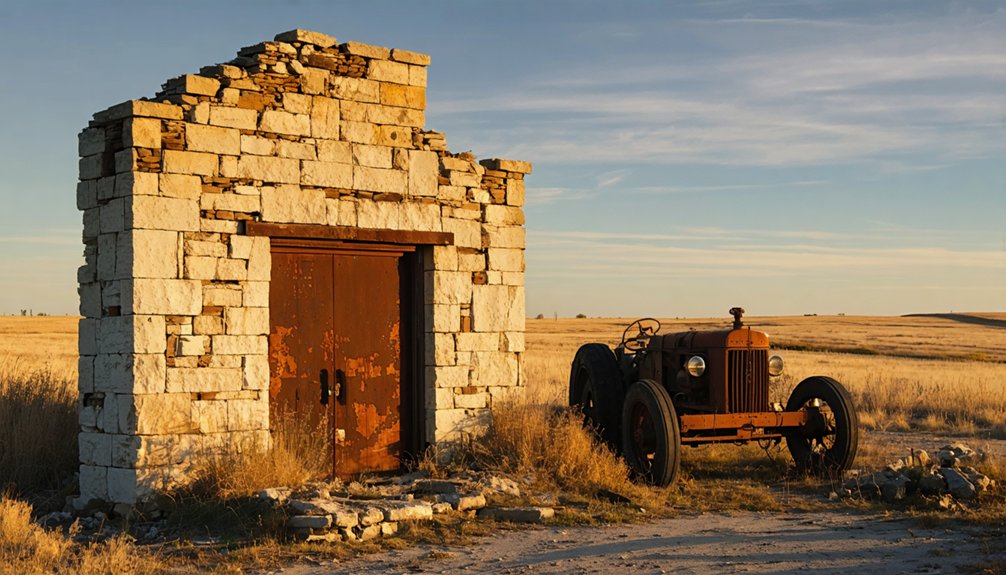
Once you’ve walked Monmouth’s empty streets, you’ll naturally start wondering how a town with a functioning post office, businesses, and a school simply ceased to exist.
The answer follows a pattern you’ll recognize across Kansas — economic shifts slowly choked local commerce, one closed business pulling another down with it until nothing remained worth staying for.
When the post office finally shuttered in 1955 after nearly a century of operation, it didn’t cause Monmouth’s death so much as sign the death certificate for a town that had already given up the ghost.
Economic Shifts Closed Businesses
Like many small Kansas towns, Monmouth didn’t fade overnight — it died by degrees, each closed business pulling another thread from the community’s fabric.
You can trace the business closure impacts through what’s missing: no storefront windows, no filling stations, no feed stores. Economic shifts hit rural Kansas hard, and Monmouth absorbed every blow.
When agriculture mechanized and regional trade centers grew, small-town economies lost their reason to exist. The community decline factors stacked relentlessly — fewer families, shrinking tax bases, disappearing services.
Once residents had to drive elsewhere for basics, staying made less sense. Each departure accelerated the next.
What you’ll find today isn’t tragedy, exactly. It’s honesty. Monmouth shows you what happens when economic gravity wins and nobody fights back hard enough to matter.
Post Office Finally Shuttered
When the post office finally shuttered in 1955, Monmouth lost more than a building — it lost its last official reason to exist. Since 1857, that post office had anchored the community, giving Monmouth its postal history and connecting residents to the broader world.
For nearly a century, mail deliveries validated Monmouth’s place on Kansas maps. But once the federal government pulled that designation, the town’s historical significance faded fast.
No post office meant no official recognition, no reason for stragglers to stay, and no anchor holding the community together. You can still drive those quiet streets today and feel that absence — a silence that speaks louder than any marker.
Monmouth didn’t vanish overnight; it simply stopped mattering to the systems that kept small towns alive.
Abandonment Sealed Town’s Fate
Businesses didn’t close all at once — they bled out slowly, each shuttered storefront pulling another thread from Monmouth’s already fraying fabric.
Economic decline crept through this Crawford County community like a slow frost, killing commerce before anyone noticed the damage was permanent.
When the post office finally closed in 1955, it didn’t cause Monmouth’s death — it confirmed it. The town had already surrendered.
Residents drifted toward larger communities offering jobs, schools, and opportunity that small-town Kansas simply couldn’t sustain anymore.
What you’ll find today feeds a particular ghost town nostalgia — streets still drivable, a cement school slab still walkable, and cemeteries still maintained by the township.
The bones remain. You’re walking through a community that didn’t vanish overnight but simply… exhaled its last breath across decades.
Ghost Towns Near Monmouth Worth Adding to Your Route
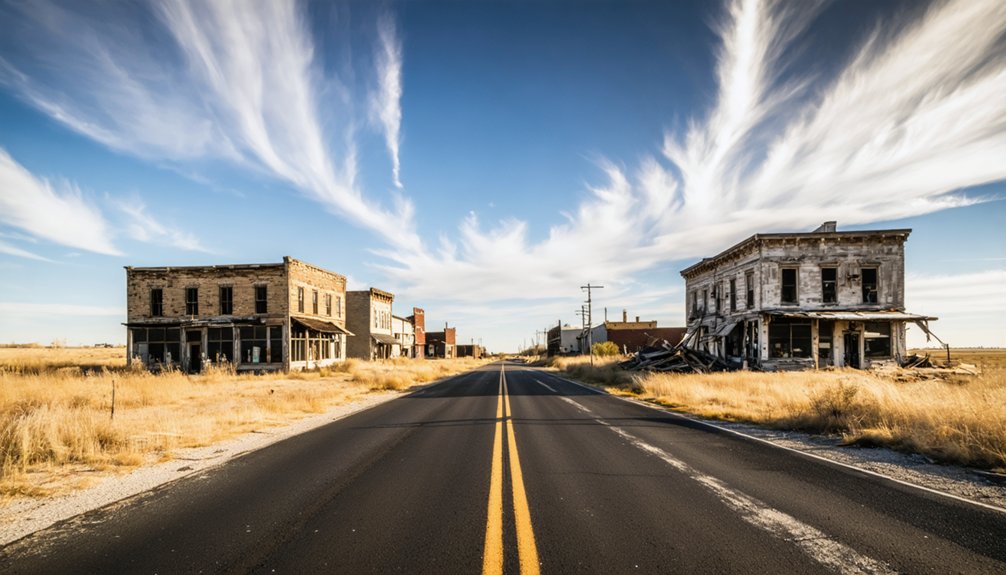
Since Monmouth sits in southern Crawford County near the Kansas-Missouri border, you’re already well-positioned to string together a compelling ghost town route through the region.
Several nearby abandoned landmarks carry their own local legends and deserve a stop on your itinerary.
Several nearby abandoned landmarks pulse with local legend, each one quietly waiting to earn its place on your route.
Consider adding these destinations to your route:
- Ottumwa in Coffey County, a submerged townsite near John Redmond Reservoir
- Oil Hill in Butler County, accessible along the Kansas Turnpike corridor
- Densmore in Norton County, featuring deteriorated homes and churches
- Monticello in Johnson County, where a historic schoolhouse and cemetery remain
Each site offers something distinct.
Mix and match based on your direction of travel, keeping your DeLorme Atlas handy for guiding the backroads connecting these forgotten Kansas communities.
How to Plan a Southern Crawford County Ghost Town Road Trip
Planning a southern Crawford County ghost town road trip starts with grabbing a DeLorme Atlas and tracing the rural backroads that thread through the region’s forgotten communities.
Mark Monmouth as your anchor stop, then build outward toward nearby unincorporated towns and faded post office settlements.
For ghost town exploration, prioritize sites where you can actually walk the ground — Monmouth’s school foundation slab and township-maintained cemeteries reward the curious traveler.
Check private property restrictions before wandering beyond road access.
Time your route to combine Trinity Holiness Church remnants with other historically significant stops near the Kansas-Missouri border.
Move slowly, document what you find, and respect what remains.
The region’s historical significance reveals itself mile by mile when you let the backroads lead.
Frequently Asked Questions
Was Monmouth Ever Considered for Reservoir Flooding Like Nearby Towns?
Yes, Monmouth history shows it was originally intended for submersion, but you’ll find it’s now a dry ghost town instead. Reservoir impact never materialized, leaving its streets drivable and its freedom-loving spirit hauntingly intact.
Are There Any Annual Ghost Town Events Held in Crawford County?
No specific annual ghost town events in Crawford County are confirmed, but you’ll find local folklore celebrations and ghost town history tours occasionally pop up, so check with the Crawford County Historical Society for upcoming explorations!
Can You Camp Overnight Near the Monmouth Townsite Legally?
Like frontier settlers of yore, you’ll need to check local camping regulations and secure overnight permits before pitching camp near Monmouth’s townsite, as it’s unincorporated private land requiring landowner permission first.
What Wildlife or Nature Features Surround the Abandoned Monmouth Area?
You’ll discover wildlife diversity thriving around Monmouth’s abandoned landscape, where open fields, scattered woodlands, and nature trails invite deer, birds, and native Kansas flora — making your ghost town exploration feel like a wild, untamed adventure.
Are Metal Detecting or Artifact Collecting Activities Permitted at Monmouth?
Over 90% of Kansas ghost towns lack clear collecting policies. You’ll want to check metal detecting regulations before digging at Monmouth, as artifact preservation concerns apply — always respect private property boundaries and township-maintained land you’re exploring.
References
- https://en.wikipedia.org/wiki/Monmouth_Township
- https://www.youtube.com/watch?v=KBXINX0xqnU
- https://legendsofkansas.com/kansas-ghost-town-list/
- https://www.onlyinyourstate.com/trip-ideas/kansas/kansas-ghost-town-road-trip
- https://www.youtube.com/watch?v=YQHVP21sYC8
- https://www.travelks.com/kansas-magazine/articles/post/exploring-kansas-forgotten-roads/
- https://legendsofkansas.com/monmouth-kansas/
- https://www.youtube.com/watch?v=alC1wDdSVvg
- https://www.youtube.com/watch?v=Aa-_f4ThouQ