Mount Pisgah, Iowa, sits quietly in southcentral Iowa near Thayer, preserving the memory of a Mormon pioneer waystation established in 1846. At its peak, over 2,000 settlers called it home, but brutal winters and disease claimed more than 300 lives. Today, you’ll find an 1888 memorial, a maintained cemetery, and interpretive markers managed by the Church of Jesus Christ of Latter-day Saints. Pair it with nearby ghost towns for a fuller picture of Iowa’s forgotten pioneer legacy.
Key Takeaways
- Mount Pisgah, located at 1741 Mt Pisgah Rd, Thayer, IA 50254, is easily accessible via GPS using quiet two-lane rural roads.
- The site features historical markers, an 1888 memorial, and a cemetery maintained by The Church of Jesus Christ of Latter-day Saints.
- Mt. Pisgah County Park provides parking, restrooms, and picnic areas, making it a convenient rest stop for road trippers.
- Fuel up before visiting, as services near Thayer are limited; pack a lunch and allow flexible time for exploration.
- Nearby ghost towns like Lorimor and Thayer offer additional historical stops, enriching the overall southcentral Iowa road trip experience.
What Was Mount Pisgah, Iowa?
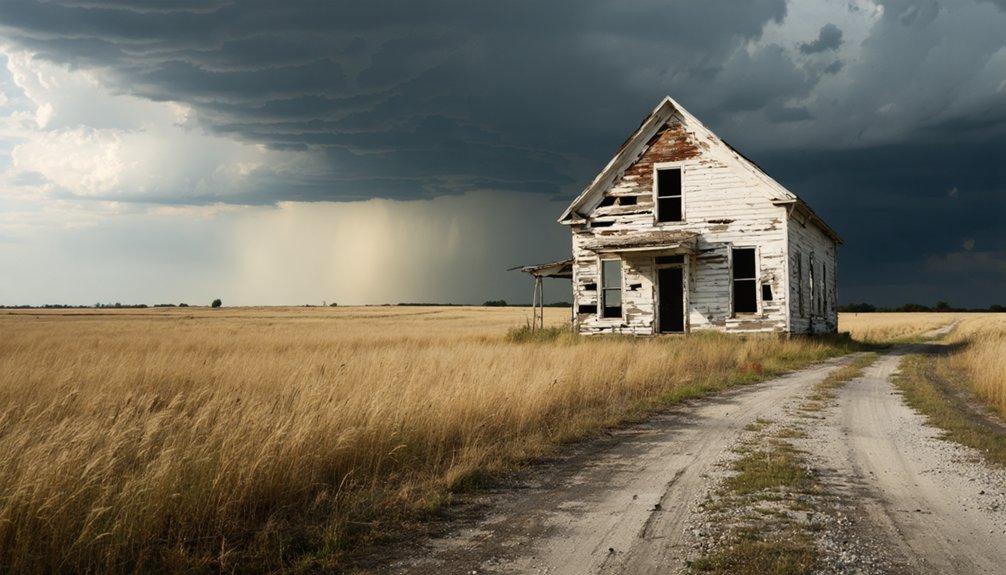
Deep in southcentral Iowa, Mount Pisgah isn’t your typical ghost town. It’s a place where history carved itself into the land through sacrifice and survival.
In 1846, the Mormon migration west pushed thousands of Latter-day Saints out of Nauvoo, Illinois, toward the Missouri River. Mount Pisgah became one of their most critical waystations along that brutal journey.
At its peak, more than 2,000 people called this temporary settlement home. They built cabins, planted crops, and created a functioning community from scratch.
At its peak, over 2,000 souls turned raw wilderness into a living, breathing community — built from nothing.
But pioneer hardships hit hard here. Disease, brutal winters, and scarce supplies claimed more than 300 lives during 1846 and 1847.
Today, you won’t find a rebuilt village waiting for you — just quiet land, a memorial, and the weight of everything that happened here.
The Rise and Fall of a Mormon Pioneer Waystation
When the Mormon Pioneer 1846 Vanguard Company pushed westward out of Nauvoo, Illinois, they needed somewhere to rest, recover, and regroup. Mount Pisgah became that place.
At its peak, more than 2,000 settlers called this waystation home, making it one of the largest stops along the entire Mormon Pioneer Trail through Iowa.
But pioneer hardships hit hard. The brutal winter of 1846–1847 brought disease, starvation, and death to those unprepared for what lay ahead.
More than 300 Saints died here, many buried in unmarked graves scattered across the land.
What’s Left to See at Mount Pisgah Today
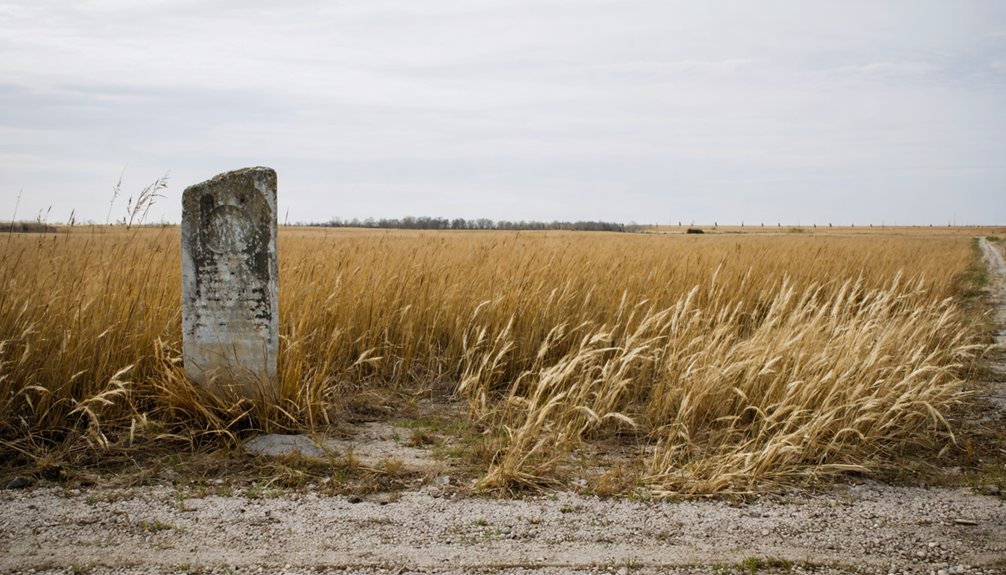
Standing where more than 2,000 settlers once lived and 300 others were laid to rest, you might expect to find a preserved village frozen in time — but Mount Pisgah isn’t that kind of place.
What you’ll find instead are three distinct areas worth exploring. The Church of Jesus Christ of Latter-day Saints maintains a monument and cemetery open to the public, while Mt. Pisgah County Park offers parking, restrooms, and interpretive wayside markers.
Historic remnants like log cabin foundations are still visible, though pioneer artifacts and physical traces of the settlement are scarce. Much of the surrounding land stays privately owned, but the ranch owner reportedly gives tours.
It’s a quiet, sobering stop — raw history without the reconstruction.
How to Get to Mount Pisgah Near Thayer, Iowa
Mount Pisgah sits at 1741 Mt Pisgah Rd, Thayer, IA 50254 — a straightforward address to plug into your GPS, though the rural roads leading there will feel anything but ordinary.
You’re heading into southcentral Iowa’s open countryside, where the landscape itself starts telling the story before you arrive.
Your directions options are simple: approach from Thayer to the north or through the Lorimor corridor if you’re coming from the south.
Either way, you’ll be traversing quiet two-lane roads through farmland.
A few travel tips worth remembering — fuel up before you leave a larger town, since services near Thayer are limited.
The county park offers parking, restrooms, and a picnic area, making it easy to pause, stretch, and orient yourself before exploring.
What to Expect at the Monument and Cemetery
Once you’ve parked and gotten your bearings at the county park, the monument and cemetery are where the weight of this place really settles in.
The memorial, placed in 1888, stands as a quiet but powerful marker of monument significance — honoring more than 300 Saints who died here during the brutal winter of 1846–1847.
Many graves remain unmarked, which makes your cemetery reflections feel more personal than formal. You’re not reading polished epitaphs; you’re standing on ground where ordinary people pushed through extraordinary hardship and didn’t make it.
Interpretive markers nearby give you context without overwhelming the experience. It’s a place that rewards slowing down.
Give yourself a few minutes to simply stand there and let the history speak for itself.
What the Mount Pisgah County Park Offers Visitors
Just steps from the monument and cemetery, the county park gives you a practical and peaceful place to decompress after taking in the heavier history nearby. The park amenities include restrooms, a parking area, and a picnic space, making it easy to extend your stay without needing to rush off.
You can spread out, eat lunch, and let the quiet Iowa landscape settle around you. Visitor activities here stay simple by design. You’re not maneuvering through crowds or paying entrance fees.
You pull in, explore at your own pace, and move on when you’re ready. That kind of low-commitment access suits a road trip perfectly. The park works as both a practical rest stop and a genuine complement to the pioneer history unfolding just across the grounds.
The Winter of 1846 and the 300 Saints Buried at Mount Pisgah
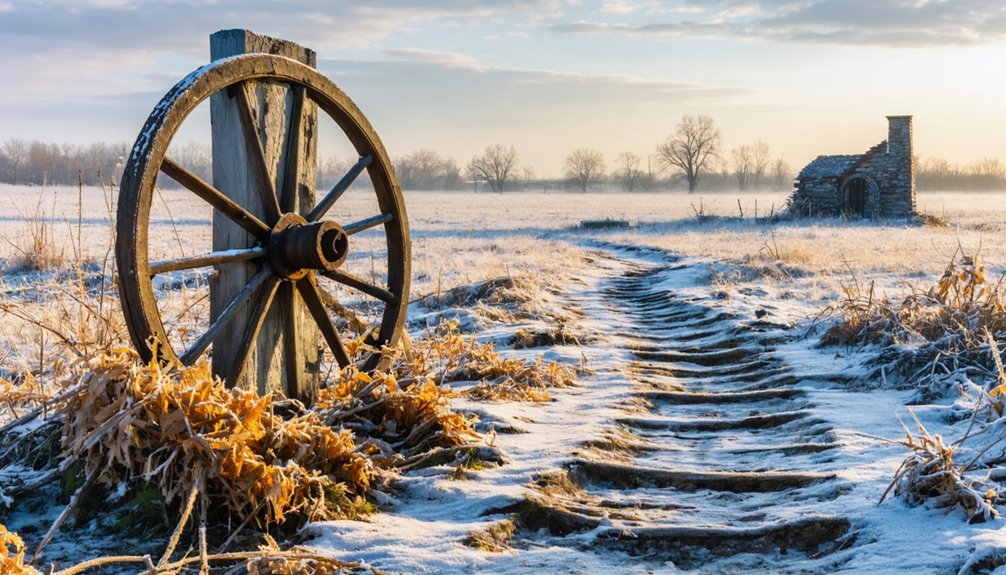
The peaceful park setting makes it easy to forget what this ground carried through the winter of 1846. Settlers who stopped here expecting a brief rest found themselves trapped by brutal conditions, dwindling food, and spreading illness.
The winter hardships hit hard and fast, leaving families with little choice but to bury their dead and press forward when spring allowed. More than 300 Saints lost their lives at Mount Pisgah during this period.
More than 300 Saints died at Mount Pisgah that winter, buried and left behind as survivors pressed westward.
Burial practices were rough by necessity — many graves were unmarked, dug quickly, and left behind as the living continued west. You’re walking ground that absorbed enormous human cost.
The 1888 memorial monument stands as the clearest acknowledgment that these people existed, suffered, and deserve to be remembered.
Ghost Town Road Trips That Pair Well With Mount Pisgah
If you’re already making the drive through southcentral Iowa to reach Mount Pisgah, you’re well-positioned to string together a fuller ghost town road trip across the region.
Iowa’s rural corridor near Thayer and Lorimor holds scattered remnants of 19th-century settlements that reward curious travelers willing to take the back roads.
Pairing Mount Pisgah with nearby historic stops turns a single heritage site visit into a richer, more immersive journey through the state’s pioneer past.
Nearby Ghost Town Stops
Since Mount Pisgah sits in southcentral Iowa’s quiet rural corridor, it pairs naturally with several other forgotten settlements worth folding into a longer road trip.
The region’s backroads connect you to ghost town attractions that rarely appear on mainstream travel lists, giving you the freedom to explore Iowa’s layered pioneer past at your own pace.
Nearby historical landmarks like Lorimor and Thayer offer glimpses into small-town decline, where empty storefronts and aging grain elevators tell their own quiet stories.
You can string these stops together across a single day, moving between preserved cemeteries, roadside markers, and crumbling foundations without doubling back.
Each detour deepens your understanding of how settlement, hardship, and abandonment shaped southcentral Iowa’s landscape long before modern highways bypassed these communities entirely.
Pairing Routes With History
Mapping your drive around Mount Pisgah turns a single stop into a full-day journey through southcentral Iowa’s forgotten past. Follow the Mormon Pioneer Trail corridor connecting Nauvoo to the Missouri River, and you’ll trace a route dense with historical significance at nearly every mile.
Stop at Garden Grove, another major waystation just east of Mount Pisgah, where pioneers endured similar hardships before pressing westward. Both sites share a pioneer legacy rooted in sacrifice, survival, and remarkable determination.
The open highways between these stops reward you with quiet farmland, minimal traffic, and genuine solitude. You’re not just driving between coordinates — you’re moving through living history that most travelers completely miss.
Pack a lunch, build in flexibility, and let the landscape tell its story.
Frequently Asked Questions
Is Mount Pisgah Considered an Official Iowa State Historic Landmark?
The knowledge doesn’t confirm Mount Pisgah’s official Iowa state historic landmark status, but you’ll find its historic significance celebrated through preservation efforts, including a public monument, cemetery, and interpretive exhibits honoring Mormon Pioneer Trail heritage.
Can Visitors Legally Metal Detect or Dig at the Mount Pisgah Site?
Before you grab that metal detector, know this: you can’t legally dig here. Historical preservation laws and metal detecting regulations protect Mount Pisgah’s sacred ground, keeping its buried secrets undisturbed for future generations to honor.
Are There Guided Tours Available Through the Private Ranch Owner?
You might score guided experiences through the private ranch owner, who reportedly gives tours of the historic land. Contact locals or visit in person to explore ranch history and uncover this pioneer settlement’s hidden stories firsthand.
What Is the Best Time of Year to Visit Mount Pisgah?
Spring and fall offer the best activities for your visit, with mild weather enhancing your exploration of the monuments and cemetery. You’ll enjoy seasonal events and comfortable conditions for picnicking and uncovering Mount Pisgah’s rich pioneer history.
Are Pets Allowed at the Mount Pisgah County Park and Monument Area?
Pet policies aren’t confirmed in available details, so you’ll want to check Mt. Pisgah’s park regulations directly before visiting. Contact Union County officials to guarantee your furry companion can explore this historic pioneer site freely!
References
- https://www.nps.gov/places/mount-pisgah-historic-site.htm
- https://www.facebook.com/iowaroadtrip/posts/mt-pisgah-park-located-near-thayer-iowaa-mormon-way-station-from-1846-to-1852-at/785647608886860/
- https://www.traveliowa.com/places/mount-pisgah-mormon-trail/186/
- https://www.facebook.com/iowaroadtrip/posts/mt-pisgah-park-located-near-thayer-iowaa-mormon-way-station-from-1846-to-1852-at/1172743468231281/
- https://kids.kiddle.co/List_of_ghost_towns_in_Iowa
- https://npshistory.com/publications/mopi/auto-tour-guide-ia.pdf
- https://www.youtube.com/watch?v=YDd_wn2B2js
- https://www.instagram.com/p/DXg5CS_Dsxx/
- https://www.youtube.com/watch?v=1J0Qx64ZrwI
- https://en.wikipedia.org/wiki/Category:Ghost_towns_in_Iowa