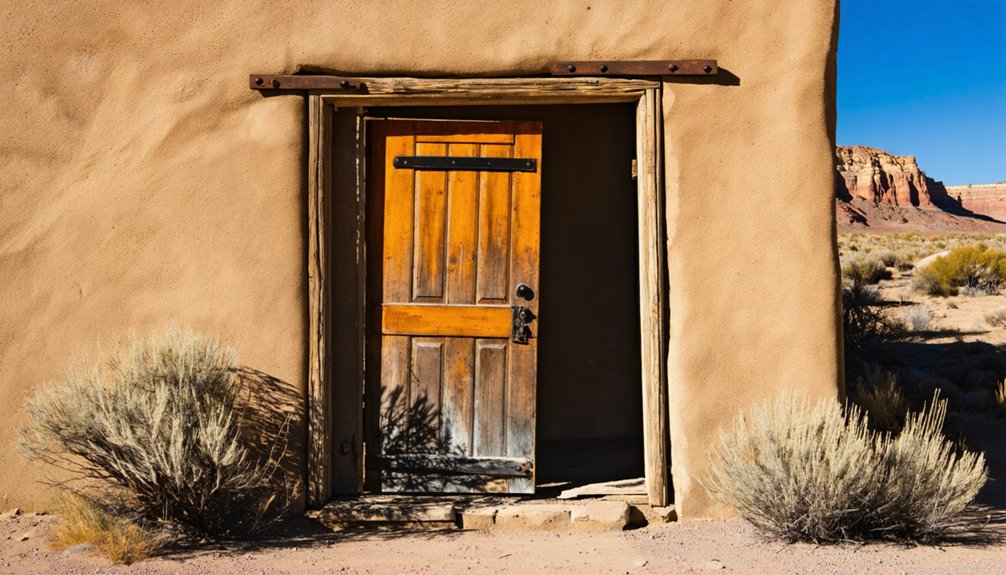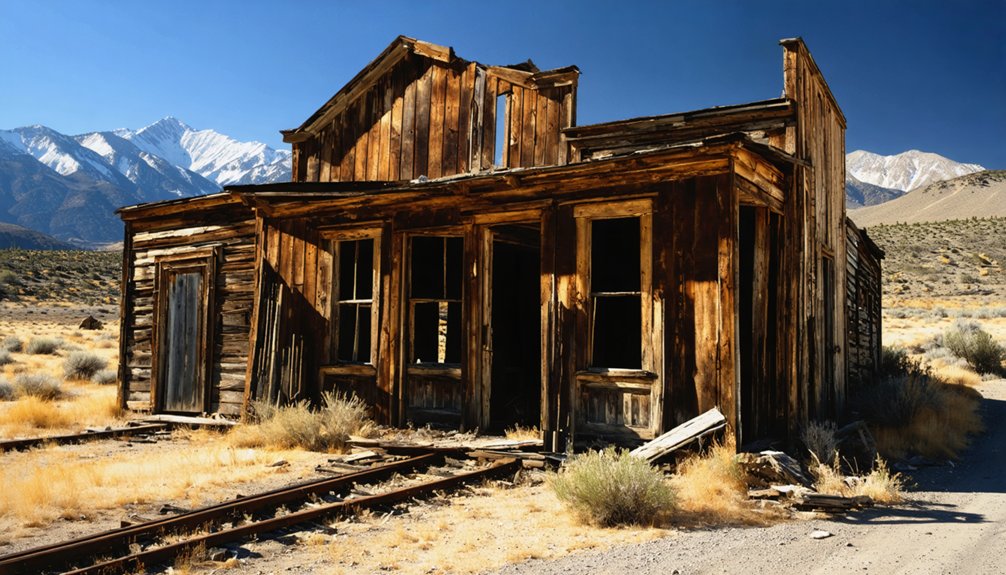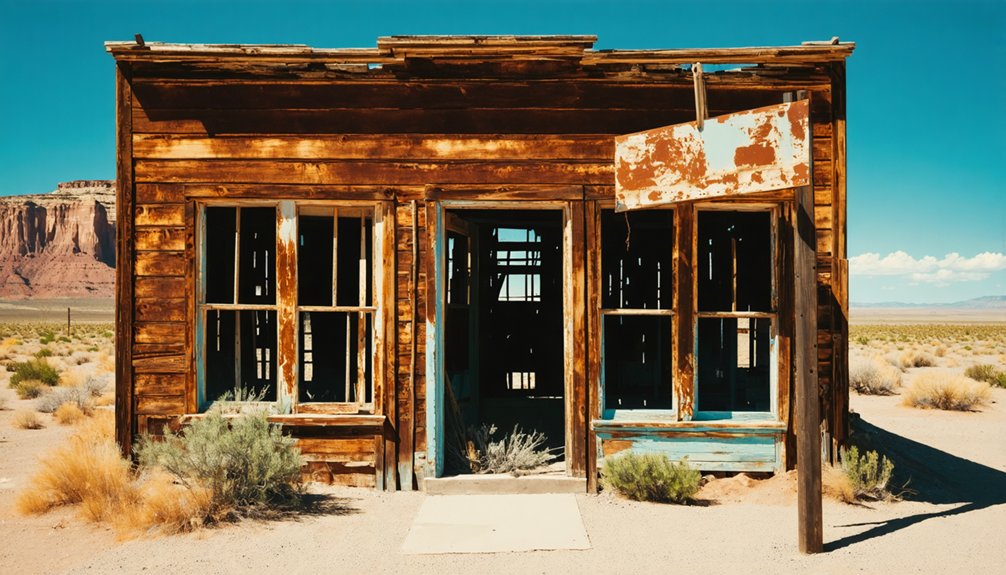
To plan your ghost town road trip to Mutual, Utah, start in Helper and head west on Spring Canyon Road toward a coal camp frozen in 1921. You’ll need a high-clearance vehicle, a full tank, and supplies — no services exist once you enter the canyon. Ruins of the old Mutual Store and mine foundations still stand as quiet monuments to a vanished way of life. There’s far more waiting for you deeper in the canyon.
Key Takeaways
- Mutual, Utah, is a former coal-mining camp in Spring Canyon, Carbon County, established in 1921 and now featuring historic ruins and mine remnants.
- Access Mutual via US-6/US-191, exiting at Helper Main Street, then heading west on Bryner Street and following Spring Canyon Road.
- High-clearance vehicles are strongly recommended, as the unpaved, steep road becomes especially hazardous after rain or snow.
- No services exist in Spring Canyon; stock up on fuel, water, and food in Helper or Price before departing.
- Nearby ghost towns like Standardville, Rains, Latuda, and Storrs can be combined into one comprehensive Spring Canyon road trip.
What Is Mutual, Utah and Its Place in Spring Canyon’s Coal History
Tucked into the folds of Spring Canyon in Carbon County, Utah, Mutual was a coal-mining camp that roared to life in February 1921 and quietly died when the mines played out.
It’s a chapter of Mutual history written in black dust and hard labor. You’ll find it northwest of Rains, one settlement among several strung along the same canyon ridge, each tied to Carbon County’s coal mining boom that ran roughly from 1912 through World War II.
Company bosses controlled the housing, the store, and the daily rhythm of life here. When the coal stopped paying, the people left.
Company towns gave everything and owned everyone. When the seams ran dry, loyalty ran out with them.
What you’re chasing now are the bones of that world — foundations, crumbling walls, and silence where machinery once roared.
How to Get to Mutual From Helper
Getting to Mutual takes only a handful of turns, but each one peels away another layer of the modern world.
From Helper, catch US-6/US-191 and exit onto Helper Main Street at exit 232. Your route options narrow quickly — turn west on Bryner Street, then follow Spring Canyon Road as it bends away from town.
You’ll pass under a railroad bridge, a rusted threshold marking your entry into coal country. From there, scenic views open across canyon walls scarred by decades of mining ambition.
The road runs northwest, unpaved and steep in stretches, demanding a clearance-worthy vehicle and a steady nerve.
Fuel up in Helper or Price before you leave — Spring Canyon offers no services, only silence and the bones of what once was.
The Ruins Still Standing: Mine Foundations, Store Walls, and Corrals
Once Spring Canyon Road delivers you past that railroad bridge and into the canyon’s quiet, the ruins begin to speak. Mine foundations jut from the hillside, concrete and timber footings holding their ground long after the coal company abandoned them.
You’ll spot scattered metal debris, masonry walls, and wooden remnants marking where industry once roared.
The old Mutual Store walls still stand, weathered but stubborn, surrounded now by corrals and ranching equipment. Somebody repurposed this land after the mines closed, layering a new chapter over the old one.
Your ruins exploration here carries real historical significance — these structures represent Carbon County’s coal boom, the workers who lived and labored in this canyon, and an entire way of life that simply vanished when the coal ran out.
Other Ghost Towns Along Spring Canyon Road Worth Stopping For
Once you’ve explored Mutual’s ruins, Spring Canyon Road keeps pulling you forward—because Mutual’s just one stop on a canyon lined with ghost towns.
Standardville, Rains, Peerless, Latuda, and Storrs each hold their own mine foundations, crumbling walls, and echoes of Carbon County’s coal-boom years.
You can work through them all in a single drive, piecing together a vanished world one abandoned camp at a time.
Nearby Canyon Ghost Towns
Spring Canyon Road doesn’t just lead to Mutual — it threads through five other ghost towns worth slowing down for: Standardville, Rains, Peerless, Latuda, and Storrs.
Each one adds another layer to Spring Canyon’s ghost town history, telling the story of Carbon County’s coal boom through crumbling foundations, scattered debris, and silent mine remains.
Rains sits just south of Mutual, sharing the same ridge and rail access.
Latuda and Storrs push deeper into the canyon, rewarding your canyon exploration with stone walls and rusted equipment still clinging to the hillsides.
Standardville and Peerless were built by the same companies that carved out Mutual, making the whole route feel like one continuous, abandoned world.
Drive it start to finish — you won’t want to rush it.
Must-See Canyon Stops
Driving Spring Canyon Road, you’ll pass through ghost towns that deserve more than a glance — Standardville, Rains, Peerless, Latuda, and Storrs each hold their own ruins, foundations, and mine debris, piecing together Carbon County’s coal-boom story one abandoned camp at a time.
Rains sits closest to Mutual, sharing the same ridge and railroad corridor. Standardville and Peerless rose under the same corporate hands that built Mutual, making their parallel collapse feel inevitable.
Push farther up the canyon toward Latuda and Storrs, where scattered concrete footings and rusting equipment reward patient ghost town exploration.
Each stop adds another layer to the region’s mining history — a timeline of boom, bust, and abandonment written in crumbling masonry. Move slowly, stay on the road, and let the canyon tell its story.
What Kind of Vehicle Do You Need for Spring Canyon Road?
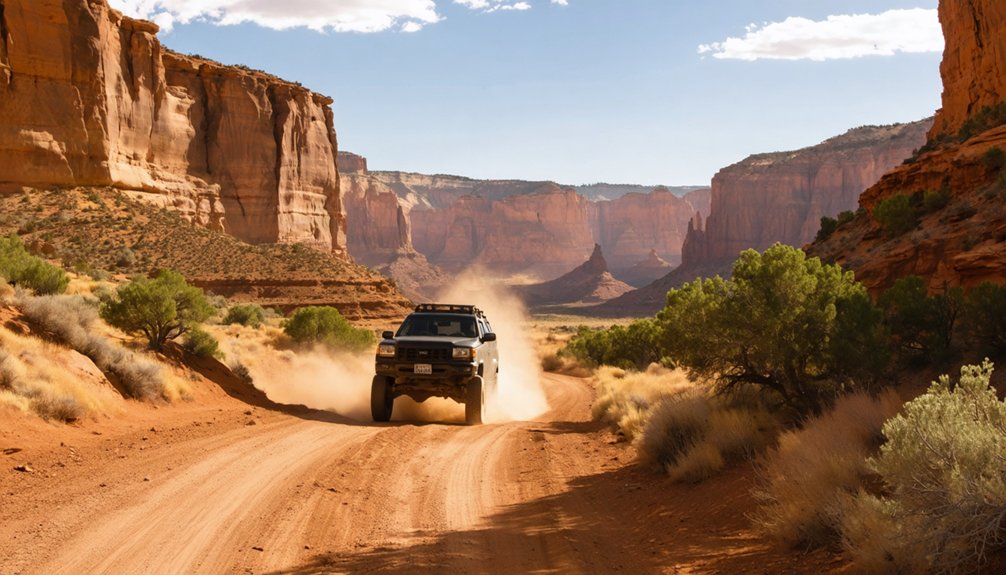
Before you head up Spring Canyon Road, know that the route is narrow, steep, and unpaved in stretches—conditions that can punish a low-clearance sedan and strand you miles from help.
Vehicle recommendations lean toward trucks, SUVs, or any high-clearance rig that handles loose gravel and sudden washouts without flinching.
High-clearance trucks and SUVs handle Spring Canyon’s loose gravel and sudden washouts without flinching.
Road condition shifts fast after rain or snow, turning manageable dirt into slick, rutted trouble. These canyons swallowed miners’ wagons a century ago; they’ll swallow your confidence just as quickly if you’re unprepared.
Check the weather before you leave Helper, top off your fuel, and carry water. The freedom to explore abandoned camps like Mutual, Latuda, and Standardville depends entirely on arriving with the right machine under you.
What to Bring Before You Head Up Spring Canyon
Once you leave Helper, you’re on your own—no gas stations, no cell signal, no corner store waiting at the end of Spring Canyon Road. Fill your tank before you turn onto Bryner Street, and load your packing essentials like water, food, and a paper map. These canyons don’t care about your data plan.
Your safety gear matters out here—think first aid kit, jumper cables, and a spare tire in solid condition. The road narrows, climbs, and surprises you. Weather shifts fast across Carbon County’s ridges, so pack layers and check conditions before you roll out.
Helper and Price are your last real stops for supplies. Stock up there, then drive west into the canyon with everything you need and nothing left to chance.
How to Visit Without Trespassing or Getting Stranded
Once you’re rolling up Spring Canyon Road, you’ll want to keep to the main road and honor every “No Trespassing” sign you see—these old coal camps sit on private land, and the ruins are best admired from a respectful distance.
Spring Canyon sees little traffic, so if your vehicle breaks down or the weather turns, you’re on your own until you can reach someone back in Helper.
Stock up on fuel, food, and whatever else you need before you leave town, because once you head up that canyon, you’re stepping back into history without a safety net.
Stay On Main Road
Spring Canyon’s ghost towns line a single road, and that road is your best friend and your boundary all at once.
Spring Canyon Road takes you past every ruin worth seeing — Standardville, Rains, Mutual, Latuda — without requiring a single step onto posted land. You’ll spot old walls, mine foundations, and corrals right from your window.
For solid navigation tips, download an offline map before leaving Helper, because cell service disappears fast up canyon.
Road safety means reading the terrain, not just the signs — pull completely off the narrow road before stopping to photograph anything.
“No Trespassing” signs aren’t suggestions out here; they protect private land that locals still actively use.
Respect them, stay rolling on the main road, and the canyon reveals everything you came to find.
Respect Posted Signs
Those “No Trespassing” signs nailed to fence posts and canyon walls aren’t relics — they mark land that ranchers and private owners still actively work, the same land that absorbed Spring Canyon’s mining era and kept right on going after the last coal car rolled out.
Respect boundaries here the way you’d respect a locked door; the history you’ve come to witness is visible from the road without crossing a single fence line.
Local etiquette matters in tight-knit Carbon County communities — word travels fast, and your behavior reflects on every explorer who follows.
Photograph the old Mutual Store walls, take in the corrals and foundations, then move on.
The canyon rewards the curious and the respectful equally, and it remembers those who aren’t.
Prepare Before Leaving Helper
Helper itself is your last reliable checkpoint before Spring Canyon swallows the pavement and the cell signal both. Fill the tank, grab food and water, and download an offline map before you turn west onto Spring Canyon Road.
Ghost town exploration rewards the prepared and punishes the careless — a flat tire or empty fuel gauge out here becomes a genuine problem fast. The road runs narrow, steep, and rough in sections, demanding a high-clearance vehicle after any rain or snow.
Carry the historical significance of this canyon with you too — these aren’t just crumbling walls, they’re the remains of lives built around coal. Respect that weight, move deliberately, and you’ll leave Spring Canyon richer for having walked its edges.
Frequently Asked Questions
Are There Any Guided Tours Available for Spring Canyon Ghost Towns?
No formal guided ghost tours exist, but you’ll uncover Spring Canyon’s historical significance on your own terms. Drive freely through abandoned coal camps, let curiosity lead you, and you’ll experience raw, unscripted adventure.
Is Spring Canyon Road Open Year-Round or Closed Seasonally?
Over 100 years of history await you! Spring canyon accessibility isn’t guaranteed year-round—seasonal road conditions from rain or snow can close unpaved sections. Check conditions before you go and embrace the adventure responsibly.
Can You Camp Overnight Anywhere Along Spring Canyon Road?
You’ll find no designated camping along Spring Canyon Road—most land’s privately owned with strict no-trespassing rules. Respect those boundaries, soak in the scenic viewpoints, then check Helper for camping regulations before chasing your ghost-town adventure overnight.
Are Pets Allowed When Visiting the Spring Canyon Ghost Town Sites?
No official pet restrictions exist, but you’ll want to follow ghost town etiquette — keep pets leashed, respect private property, and seek pet friendly accommodations in Helper before venturing into Spring Canyon’s wild, forgotten frontier.
Is There Any Photography Permit Required for Visiting Mutual’s Ruins?
No permit’s required, but respect photography guidelines and honor historic preservation — you’re free to capture Mutual’s haunting ruins from the main road. Stay off private land, keep your adventurous spirit alive, and let history speak!
References
- https://jacobbarlow.com/tag/spring-canyon/
- https://expeditionutah.com/ghosttowns/
- https://en.wikipedia.org/wiki/List_of_ghost_towns_in_Utah
- https://freepages.rootsweb.com/~gtusa/history/ontheroad/us6g.htm
- https://commons.wikimedia.org/wiki/Category:Ghost_towns_in_Utah
- https://www.youtube.com/watch?v=EPg5C5WaCQU
- https://www.visitutah.com/things-to-do/history-culture/ghost-towns
- https://www.legendsofamerica.com/carbon-county-utah-ghost-towns/
- https://www.roadtripryan.com/go/t/utah/carboncounty/spring-canyon
- https://exhibits.lib.utah.edu/s/ghost-towns/page/resources