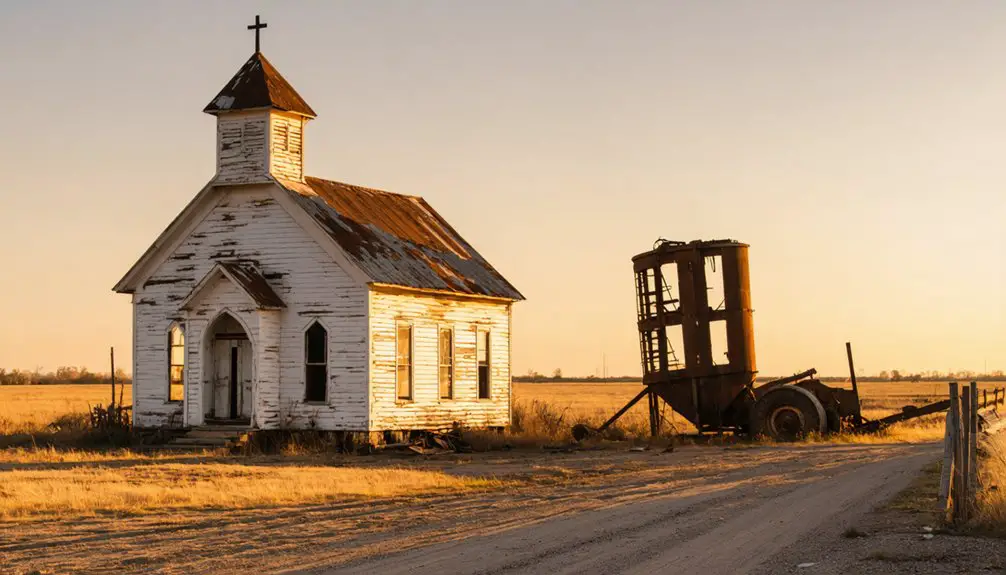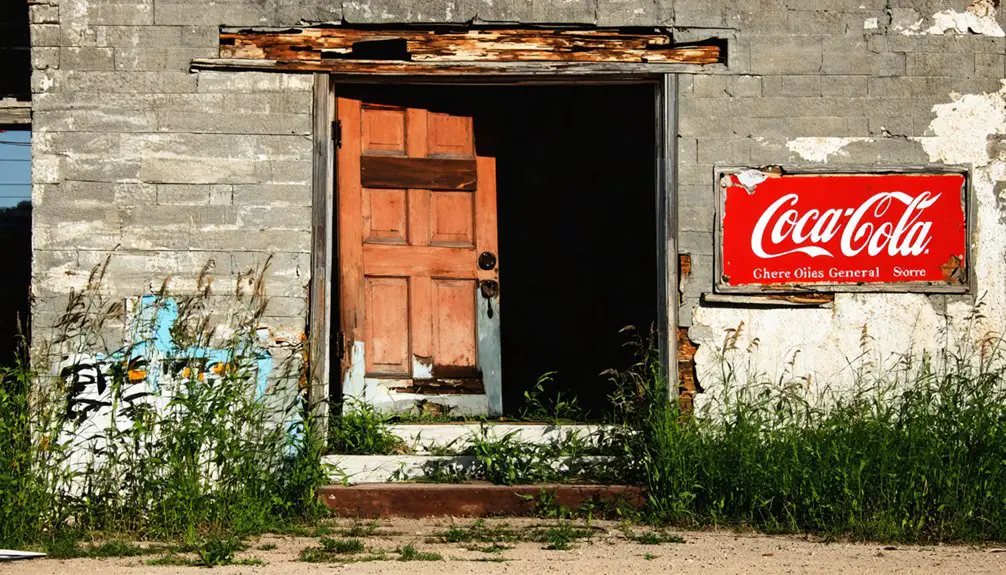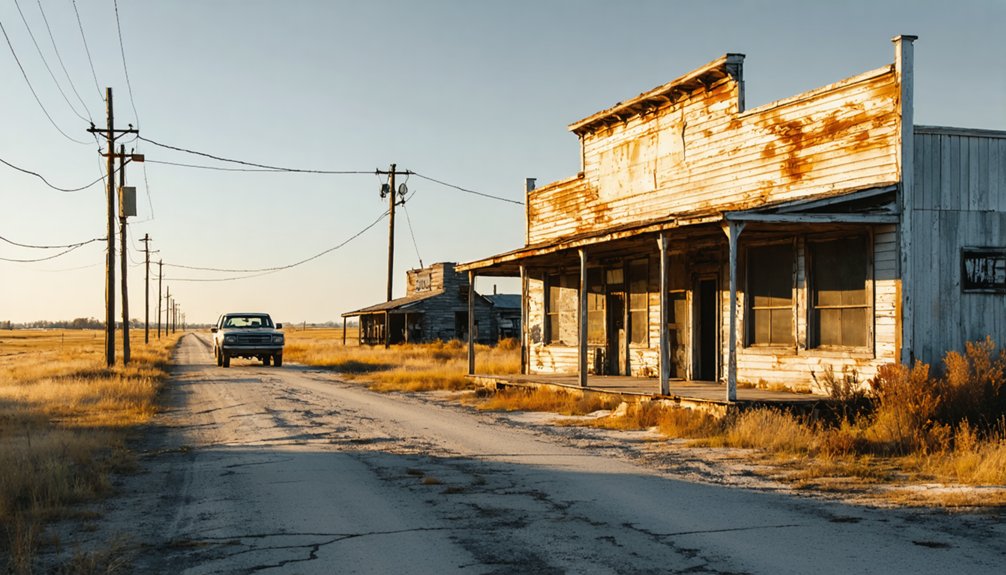
Planning a ghost town road trip to Orr, Oklahoma means heading east on Route 66 about 25 miles from Oklahoma City into Lincoln County, where partially standing 1920s brick structures, weathered frontier cabins, and a remarkably preserved cemetery await your camera. You’ll find no fuel, food, or cell signal out here, so pack accordingly and start early. Stick to visible paths to protect what’s left — and there’s plenty more to know before you go.
Key Takeaways
- Orr sits along Route 66 in Lincoln County, roughly 25 miles east of Oklahoma City and 10 miles west of Prague.
- Key ruins include 1920s brick structures, 1910s wooden cabins, railroad foundations, a reconstructed post office, and a preserved 1920s cemetery.
- Fuel up in Oklahoma City, pack water and snacks, and download offline maps before arriving, as Orr has no amenities.
- Visit on spring or fall weekdays to avoid summer heat exceeding 100°F and secure uninterrupted access to the site.
- Stay on marked paths, avoid touching unstable walls, and never disturb grave plots or headstones within the cemetery.
What’s Left to See in Orr’s Ghost Town Ruins?
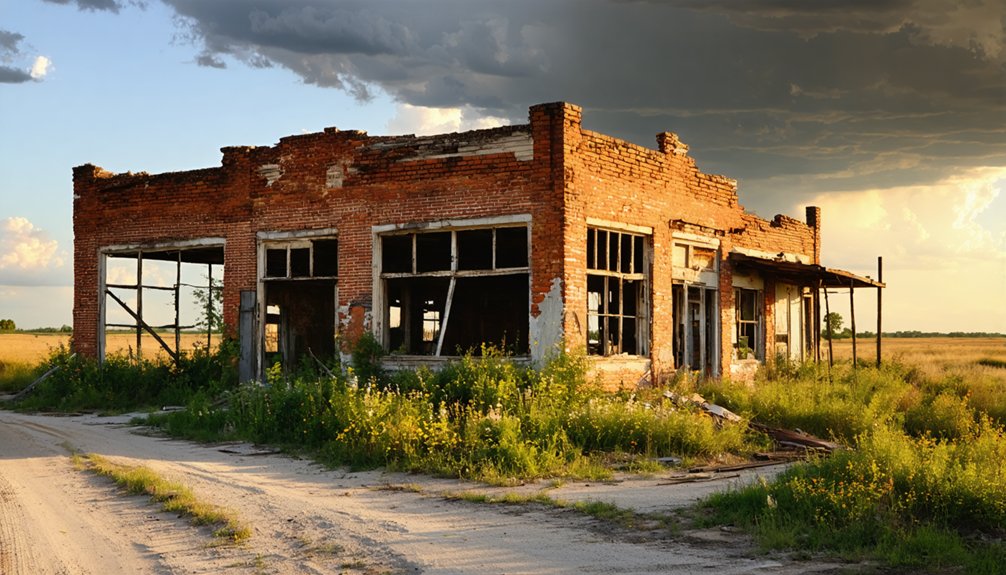
Stepping into Orr feels like walking straight into a frozen moment in Oklahoma history.
Orr stands frozen in time, a ghostly snapshot of Oklahoma’s past waiting to be rediscovered.
You’ll find brick structures from the 1920s still standing, weathered but proud against the Oklahoma sky.
Wooden cabins from the 1910s dot the landscape, offering incredible photography spots that capture genuine frontier decay.
The reconstructed post office marks what was once the town’s beating heart, while old railroad foundations near the dried riverbank tell stories of commerce long gone.
Cemetery plots with headstones from the 1920s remain remarkably preserved, adding weight to any ghost tours you organize through the site.
Every crumbling wall and rusted rail invites you to piece together Orr’s forgotten past.
Bring your camera, your curiosity, and enough time to explore each remnant carefully.
How to Get to Orr on Route 66
If you’re starting from Oklahoma City, you’ll head east on Route 66 for about 25 miles through Lincoln County until Orr comes into view.
Watch for the Route 66 road signs along the highway that point you toward Orr and other ghost town stops on this historic corridor.
Once you arrive, you’ll find parking areas near the historic site where you can leave your vehicle and explore the ruins on foot.
Starting From Oklahoma City
Heading east out of Oklahoma City on Route 66, you’ll find Orr sitting about 25 miles down the road in Lincoln County — a quick drive that feels longer once the urban sprawl fades and the open Oklahoma landscape takes over.
Handle your Oklahoma departure and urban logistics before leaving the city:
- Fuel up in Oklahoma City; no reliable stations exist near Orr
- Download offline maps since cell service gets spotty along the rural stretch
- Pack water and snacks — Orr has zero commercial amenities
- Start early to maximize daylight for exploring the ruins and cemetery
Once you clear the city limits, Route 66 opens wide and wild.
Road signs along the highway guide you straight toward Orr, making navigation straightforward for any freedom-seeking traveler.
Route 66 Road Signs
Once Route 66 stretches out ahead of you past Oklahoma City’s edge, the road signs become your best navigation tool for tracking down Orr. The historic signage along this legendary corridor doesn’t just point you forward — it connects you to decades of American road culture.
Watch for directional symbols marking Lincoln County’s eastern approach, roughly 25 miles out from Oklahoma City and about 10 miles west of Prague. These markers guide you toward Orr without confusion, so you can keep your focus on the open road rather than a screen.
State-maintained Route 66 signs and ghost town indicators appear at key intersections, signaling your turn toward Orr’s quiet ruins. Trust the signs, follow the corridor, and let the road deliver you there.
Parking At Orr
Pulling off Route 66 into Orr is straightforward — designated parking areas sit near the historic site, giving you easy foot access to the ruins, cemetery plots, and old railroad foundations.
No crowds, no meters, just open road freedom.
Before you arrive, keep these essentials in mind:
- Overnight parking isn’t officially sanctioned without checking local Lincoln County permit options first
- Parking areas accommodate standard vehicles and small trailers comfortably
- No fees currently apply during daytime exploration hours
- Road signs along Route 66 clearly mark where to pull off
Respect the site, leave nothing behind, and you’ll have uninterrupted access to Orr’s haunting beauty.
Whether you’re stopping briefly or lingering until dusk, parking here keeps the experience simple and the adventure entirely yours.
How to Walk the Site Without Damaging What’s Left
Once you’re on-site, stick to the marked paths that wind through Orr’s remnants, since straying onto unstable ground can disturb fragile foundations and erode the soil beneath century-old structures.
You’ll notice rope barriers and posted signs near the brick buildings and wooden cabins — respect them, and keep your hands off the walls, headstones, and railroad remnants.
Even a small amount of pressure can accelerate the deterioration of materials that have already survived over a hundred years of Oklahoma weather.
Stick To Marked Paths
Maneuvering Orr’s grounds carefully makes all the difference between preserving what’s left and accelerating its deterioration. You’ll notice marked historic pathways threading through the site — follow them deliberately. Erosion monitoring efforts depend on visitors staying within designated routes, preventing soil displacement around fragile foundations and cemetery plots.
Keep your exploration intentional by remembering these guidelines:
- Stay on marked trails running past brick structures and railroad remnants
- Avoid stepping on grave plots within the preserved cemetery boundaries
- Don’t lean against or climb partially ruined 1920s brick walls
- Keep pets leashed and away from wooden cabin remains scattered across the grounds
You’re free to explore every corner of Orr’s history — just do it without leaving a destructive mark behind.
Avoid Touching Old Structures
Staying on marked paths protects the ground beneath your feet — but what about everything standing at eye level? Orr’s 1920s brick structures and weathered wooden cabins are fragile survivors, and touching them accelerates their collapse. Structural hazards aren’t always obvious — a wall that looks solid can shift without warning when disturbed. Keep your hands to yourself, even when curiosity pulls you closer.
Resist the urge to carve initials or leave marks. Historic graffiti already scars some of Orr’s remaining walls, erasing original details that historians and preservationists work hard to document. Every scratch shortens the story these ruins still tell.
Photograph, observe, and absorb — but leave the structures exactly as you find them. Your restraint keeps Orr standing for every traveler who follows your route.
When to Visit Orr on Route 66?
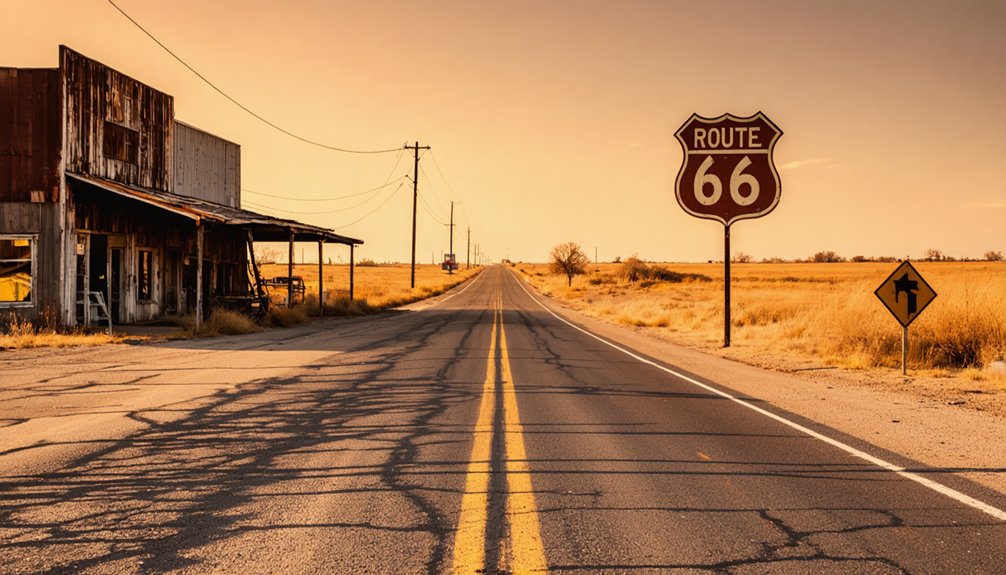
Spring and fall are typically the best seasons to visit Orr, when mild temperatures make exploring the crumbling brick structures and overgrown cemetery plots far more comfortable.
Spring and fall offer the most comfortable conditions for wandering Orr’s crumbling structures and overgrown cemetery plots.
You’ll find the lighting ideal for photography workshops during golden-hour mornings, and seasonal festivals along Route 66 occasionally draw fellow road-trip enthusiasts nearby.
Plan your visit around these tips:
- Spring (March–May): Wildflowers frame the ruins beautifully, perfect for capturing dramatic shots.
- Fall (September–November): Cooler air and golden foliage enhance Orr’s eerie atmosphere.
- Weekdays: You’ll encounter fewer crowds, giving you uninterrupted access to the site.
- Avoid summer midday heat: Oklahoma summers push past 100°F, making outdoor exploration exhausting.
Check local Route 66 event calendars before heading out so you can combine your visit with nearby seasonal festivals.
What to Bring for a Day Trip to Orr?
Since Orr offers no modern amenities or public transit access, you’ll need to pack smart before hitting Route 66. Load up on water, snacks, and sunscreen essentials, since Oklahoma’s open terrain offers little shade between ruins.
Comfortable walking shoes help you navigate uneven ground around the old brick structures, wooden cabins, and cemetery plots without injury.
Bring a fully charged camera to document the architectural remnants, but practice proper camera etiquette by staying on visible paths and avoiding disturbance to preserved headstones or fragile structures. A paper map or downloaded offline GPS guarantees you won’t lose your way in areas with weak cell signal.
Pack a first aid kit, extra fuel, and a portable charger. You’re exploring freely, so prepare like it matters.
Keystone Dam, Council Oak, and Other Stops Within 60 Miles
After exploring Orr’s ruins, you’ve got several worthwhile stops within striking distance along and just off Route 66. Keystone recreation opportunities await just 15 miles away, where Kerr Dam and Keystone Forest let you stretch your legs and take in Oklahoma’s open landscape. Head northeast and Council tours at Tulsa’s Council Oak connect you to powerful antebellum history just 40 miles out.
Here are four stops worth adding to your route:
- Keystone Forest – hiking and wildlife viewing near the dam
- Kerr Dam – dramatic water infrastructure worth photographing
- Council Oak, Tulsa – a living landmark tied to Creek Nation history
- Hunter’s Home, Park Hill – a preserved Cherokee estate 60 miles southeast
Each stop deepens your understanding of Oklahoma’s layered past.
How Orr Fits Into a Broader Route 66 Oklahoma Road Trip
Nestled along Route 66‘s east-west corridor through Lincoln County, Orr fits naturally into a longer Oklahoma road trip that connects Oklahoma City on the west to Tulsa on the northeast.
Your route planning becomes straightforward when you treat Orr as a central anchor point. From Oklahoma City, you’ll drive roughly 25 miles east before reaching Orr’s historic ruins. Continue northeast toward Tulsa, and you’ll encounter cultural intersections worth exploring — the Council Oak antebellum landmark sits 40 miles away, while Cherokee Nation heritage sites in Park Hill lie 60 miles southeast.
Orr isn’t just a detour; it’s a natural pivot between frontier history, Native American heritage, and classic American highway culture. Traveling Route 66 through Oklahoma becomes far richer when Orr anchors your journey.
The Ruins, Cemetery, and Route 66 History That Define Orr
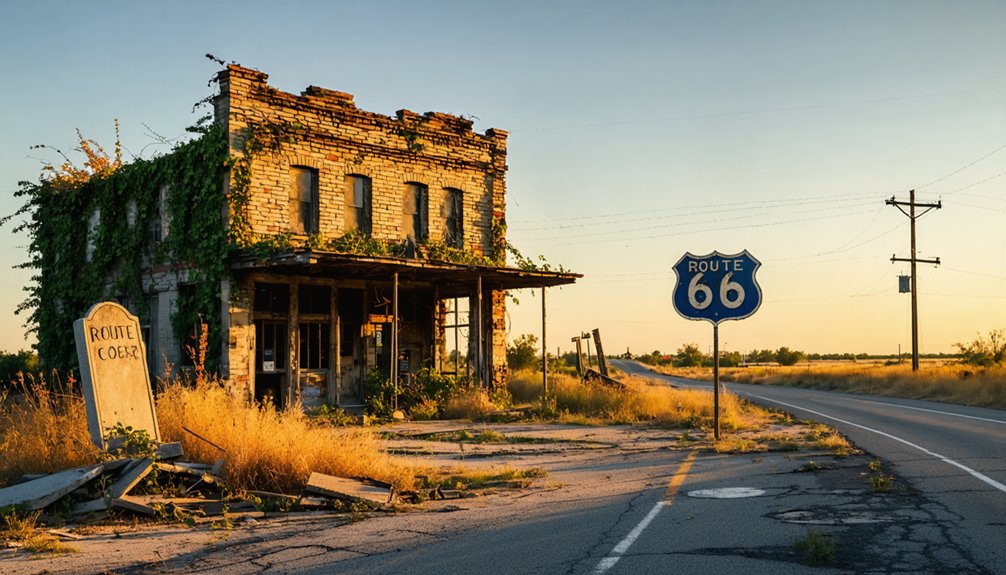
What remains of Orr tells its story more vividly than any historical record could. You’ll find brick ruins, weathered wooden cabins, and a cemetery with headstones dating to the 1920s — each one a touchstone for ghost town folklore that keeps adventurers coming back.
Route 66 runs straight through Orr’s heart, and railroad lore echoes from the old station foundations near the dried riverbank. Here’s what defines the experience:
- Partially standing 1920s brick structures frozen in time
- Original 1910s wooden cabins scattered across the site
- A preserved cemetery holding decades of quiet history
- Railroad track remnants and station foundations near the riverbank
Walk these grounds and you’re not just sightseeing — you’re reading a landscape that refused to be forgotten.
Frequently Asked Questions
Is Orr, Oklahoma Officially Recognized as a Route 66 Heritage Site?
Yes, you’ll find that the National Trust for Historic Preservation officially recognizes Orr’s route designation as a Route 66 heritage site, making it a prime spot for cultural tourism and free-spirited exploration!
What Was Orr’s Peak Population During Its Most Prosperous Period?
Like a flame that burned bright before fading, Orr’s peak population hit roughly 150 residents during its prosperous era in the 1920s — you’d have found a thriving community buzzing with Route 66 travelers and agricultural activity.
Is There Any Public Transportation Available to Reach Orr, Oklahoma?
You won’t find shuttle services or public transit reaching Orr due to its rural accessibility challenges. You’ll need your own vehicle to freely explore this fascinating ghost town along historic Route 66 in Lincoln County.
What County Is the Orr Ghost Town Located In?
Ironically, even a ghost town can’t escape county location and legal jurisdiction! You’ll find Orr nestled within Lincoln County, Oklahoma — where abandoned streets still quietly answer to the region’s governing boundaries, whether residents exist or not.
Are Local Historical Groups Currently Working to Preserve Orr’s Structures?
Yes, local preservation groups are actively working to protect Orr’s brick and wooden remnants! You’ll discover their efforts firsthand during historic tours, where you’re free to explore documented structures and archived stories celebrating this fascinating ghost town’s enduring legacy.
References
- https://www.youtube.com/watch?v=LNAm0sZuNyw
- https://www.youtube.com/watch?v=bpb3rpk8V-U
- https://www.youtube.com/watch?v=V0TWPUBvJZk
- https://www.ghosttowns.com/states/ok/orr.html
- http://sites.rootsweb.com/~oktttp/ghost_towns/ghost_towns.htm
- https://www.onlyinyourstate.com/trip-ideas/oklahoma/ghost-towns-road-trip-ok
- https://www.rideok.com/category/destinations/ghost-towns/
- https://herbagemag.com/creepy-things-to-experience-in-oklahoma-series-ghost-towns/
- https://1073popcrush.com/this-oklahoma-farm-needs-your-help-dispatching-a-zombie-hoard/
- https://www.youtube.com/watch?v=5XQUmVjjrZw