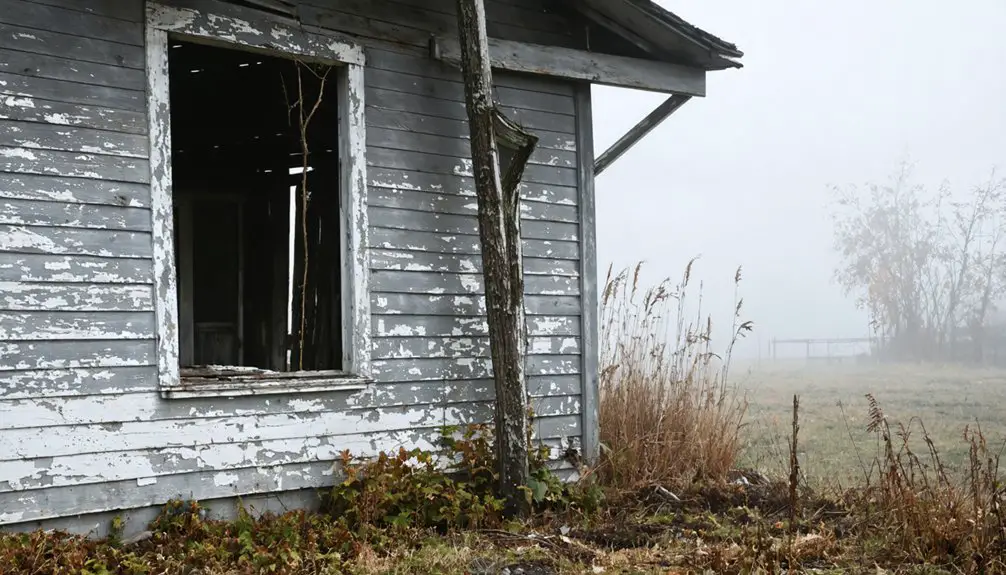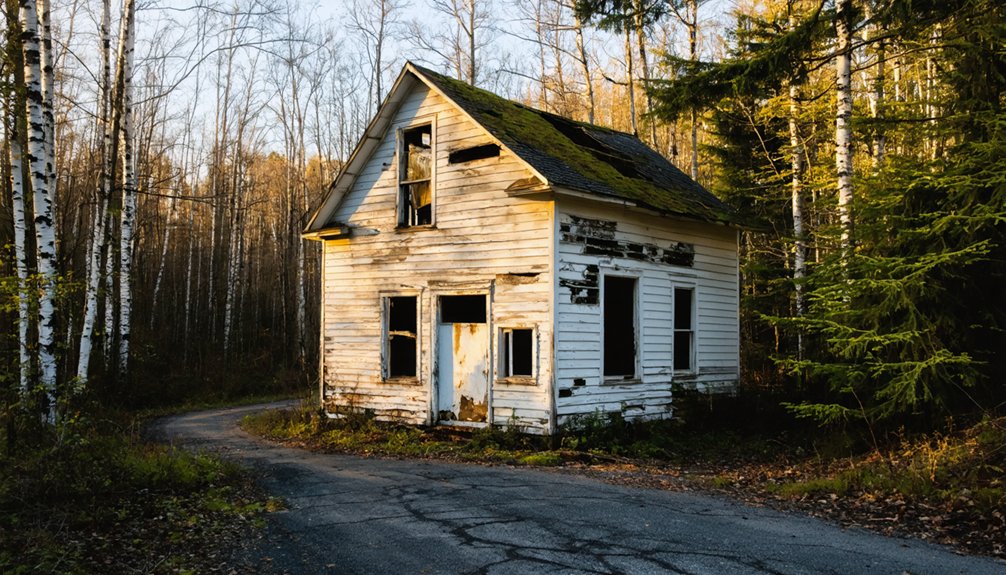
Planning a ghost town road trip to Mandan, Michigan starts with heading twelve miles south of Copper Harbor on Highway 41, where you’ll turn onto an unmarked dirt road leading deep into the Upper Peninsula forest. You’ll discover crumbling houses, a towering smokestack, rusted mining equipment, and hidden brick coke ovens left behind after copper mining collapsed in 1909. Pack sturdy boots, physical maps, and extra water before you go. There’s much more to uncover about this forgotten copper town ahead.
Key Takeaways
- Mandan is located off US Highway 41, twelve miles south of Copper Harbor, with no markers at the turnoff.
- Bring physical maps, as GPS may fail and cell service is likely unavailable along the route.
- Wear sturdy boots and pack water, insect repellent, and a first aid kit for the uneven terrain.
- Key remains include two crumbling houses, a massive smokestack, rusted mining equipment, and hidden brick coke ovens.
- Nearby sites like Delaware Mine and Hungarian Falls complement the ghost town visit with added historical context.
What Is Mandan, Michigan’s Ghost Town?
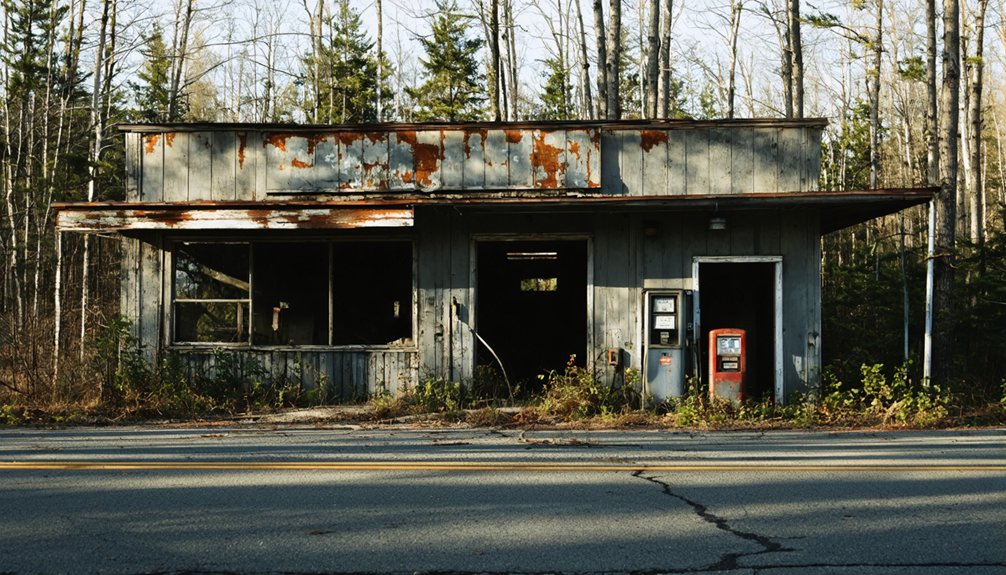
Deep in Michigan’s Upper Peninsula, hidden within the forests of Keweenaw County, sits Mandan — a true ghost town with no residents, crumbling houses, and ruins that tell the story of a once-bustling copper mining community.
Mandan history stretches back to 1864, when miners organized the town to extract copper from the rich but difficult terrain beneath sandy soil layers.
The mines closed in 1866, reopened briefly in the early 1900s, and finally shut down in 1909 — leaving behind empty streets now reclaimed by deer paths and tangled roots.
Closed, abandoned, reclaimed — Mandan’s streets now belong to deer paths and tangled roots.
Ghost town significance runs deep here, representing the classic boom-and-bust cycle that defined Upper Peninsula copper country.
You’ll find a towering smokestack, scattered ruins, and crumbling structures that preserve Michigan’s copper mining legacy in raw, unfiltered form.
How to Find Mandan Off Highway 41
To find Mandan, you’ll watch for a sign along US Highway 41 marking the turnoff, located roughly twelve miles south of Copper Harbor.
Don’t expect anything welcoming at the intersection — there’s no marker announcing the ghost town, just a one-lane dirt road disappearing into the forest.
Once you’ve made the turn onto Mandan Road, you’ll navigate a slightly overgrown path that winds deep into the woods, keeping the ruins completely hidden from the highway.
Locating The Turnoff
Finding Mandan’s turnoff isn’t exactly straightforward — there’s no welcome sign, no grand marker, nothing to signal that you’re about to leave civilization behind. Your only real turnoff markers are a modest sign along US Highway 41 and your own preparation.
Here’s what to keep in mind before you turn off the pavement:
- Watch for the signed dirt road off US-41, roughly twelve miles south of Copper Harbor.
- Download offline maps before leaving — cell service dies without warning out here.
- Expect rough driving conditions — frost heaves, overgrowth, and a narrow one-lane road demand a cautious speed.
- Note your GPS coordinates (approximately 45.95°N, 86.85°W) as a reliable backup reference.
Miss the turnoff and you’ll drive right past history.
Navigating The Dirt Road
Once you’ve turned off US-41, the one-lane dirt road immediately makes its intentions clear — this isn’t a maintained thoroughfare, it’s a wilderness corridor slowly being reclaimed by the forest.
Dirt road conditions include frost heaves, overgrown vegetation brushing your vehicle’s sides, and roots pushing through what once passed for a roadbed. Drive slowly and stay alert.
The reward justifies the rough passage. Mandan Road ranks among the most scenic detours in the entire Keweenaw Peninsula, pulling you deep into cathedral-like forest before delivering you to the ghost town’s edge.
Cell service will likely vanish here, so have your physical map ready before you leave the highway. The forest doesn’t care about your GPS signal — and honestly, that’s part of the freedom this place offers.
Why Did Mandan Boom and Then Go Silent?
Mandan’s story follows a pattern you’ll recognize if you’ve studied Michigan’s copper country: boom, bust, brief revival, then silence.
Mining cycles here were brutal, shaped by geology and economics working against each other.
Mining cycles were merciless here — geology and economics locked in a battle that communities rarely survived.
Four factors drove Mandan’s economic decline:
- Sand layers buried the copper veins, making extraction costly and inefficient.
- First closure came in 1866, just two years after the 1864 founding.
- Brief revival occurred when the Keweenaw Copper Company modernized operations around 1905.
- Final abandonment arrived in 1909 when even modern equipment couldn’t justify the costs.
You’re looking at a place where nature ultimately won.
The copper was real, the effort was genuine, but the math never worked long enough to sustain a permanent community.
What’s Left to See at the Mandan Ruins?
When you wander through Mandan today, you’ll find two crumbling houses still standing amid the forest overgrowth, their weathered frames reclaimed by roots and silence.
A massive smokestack towers above the tree line, serving as the most striking reminder that an entire industrial operation once hummed with life here.
Scattered throughout the woods, you’ll also stumble across rusted equipment, brick coke ovens, and railroad ties that paint a vivid picture of the town’s copper mining past.
Crumbling Houses Still Standing
Though nature has spent over a century reclaiming Mandan, a few stubborn remnants still push back against the forest.
Two abandoned houses retain enough crumbling architecture to spark your imagination about the lives once lived inside them. Their historical significance connects you directly to the copper mining boom that defined this entire region.
When you wander the site, watch for:
- Two standing houses — deteriorating but recognizable among the tree cover
- A towering smokestack — rising dramatically above the forest canopy near old mill ruins
- Rusted mining equipment — scattered artifacts frozen in time since 1909
- Brick coke ovens — remnants of industrial operations hidden throughout the undergrowth
Each structure tells a story that no museum could replicate.
Towering Smokestack Remains
Rising above the forest canopy like a monument to industrial ambition, the old smokestack is one of the most striking things you’ll spot at Mandan.
It’s a powerful piece of smokestack history, standing tall while everything around it crumbles back into the earth.
This industrial heritage landmark once served the copper mines and mills that defined the town’s existence during its peak years.
Today, it punctuates the tree line with unmistakable authority, giving you an immediate sense of the scale this operation once reached.
You won’t need to search for it — it finds you first.
Let it anchor your exploration of the site.
Standing beneath it, you’ll feel the weight of what this remote corner of Michigan’s Upper Peninsula once meant to American copper production.
Scattered Mining Artifacts
Beyond the smokestack, dozens of scattered artifacts tell the quieter parts of Mandan’s story. These mining relics and historical artifacts sit exactly where workers left them, slowly surrendering to the forest floor.
As you wander the site, watch for:
- Rusted equipment half-buried beneath decades of leaf litter and root growth
- Brick coke ovens weathered but still recognizable among the trees
- Railroad ties from the old Keweenaw Central line slowly decomposing into the soil
- Pocket watches and small personal items discovered near collapsed mine shafts
Each piece connects you directly to the men who once worked these grounds.
You’re not just observing history here — you’re standing inside it, free to explore on your own terms without guided tours or admission fees.
What Should You Bring for a Remote Ghost Town Visit?
Visiting a remote ghost town like Mandan means leaving modern conveniences far behind, so packing smart is essential. Cell service dies unexpectedly out here, so bring detailed physical maps alongside your GPS. Load up on exploration gear including sturdy boots, insect repellent, and extra water since there are zero amenities nearby.
For photography tips, pack extra batteries and memory cards because you’ll want to capture that towering smokestack, the crumbling houses swallowed by forest, and rusted equipment scattered among the trees. Natural light filtering through the canopy creates stunning shots, especially during autumn’s peak color season.
Don’t forget a first aid kit and emergency supplies. Frost heaves, root-covered paths, and structurally compromised ruins demand careful footing.
Come prepared, and Mandan rewards you with an unforgettable, completely untamed historical experience.
Which Nearby Sites Are Worth Adding to Your Mandan Road Trip?

Once your pack is loaded and Mandan is crossed off the list, the surrounding Keweenaw Peninsula offers several stops that make the drive even more worthwhile.
Mandan is just the beginning — the Keweenaw Peninsula has plenty more history waiting down the road.
These nearby sites deepen your understanding of copper mining history while rewarding you with unforgettable scenic drives.
- Delaware Mine – Explore self-guided tours through authentic mine shafts just miles away.
- Copper Harbor – Head twelve miles north for lakeside views and a well-earned meal.
- Hungarian Falls – Discover this stunning natural waterfall tucked into the wilderness.
- Quincy Dredge on Torch Lake – Examine a massive industrial relic that processed copper mining tailings directly from the water.
Each stop adds texture to your road trip, turning a single ghost town visit into a full historical expedition through Michigan’s Upper Peninsula.
Frequently Asked Questions
Is It Legal to Visit and Explore the Mandan Ghost Town Ruins?
You can freely explore Mandan’s ghost town history, as it’s publicly accessible. Embrace urban exploration along its overgrown paths, rusted ruins, and crumbling structures — just respect the site’s fragile remnants and leave everything as you’ve found it.
What Is the Best Time of Year to Visit Mandan?
Autumn’s a painter’s dream—visit Mandan in fall when vibrant foliage frames its historical significance beautifully. You’ll enjoy local attractions like the Delaware Mine nearby, and the scenic loop drive transforms into an unforgettable, freedom-fueling adventure.
Are There Any Guided Tours Available at the Mandan Ghost Town?
You won’t find guided tours at Mandan, but that’s the beauty of it! You’re free to explore the local history at your own pace, wandering through crumbling ruins and discovering forgotten artifacts independently.
Can You Camp Overnight Near the Mandan Ghost Town Site?
Like a pioneer claiming wild land, you can camp near Mandan! Check local camping regulations first, then explore nearby campgrounds in Keweenaw County to set up your base for exploring this hauntingly beautiful ghost town.
How Long Does a Typical Visit to Mandan Usually Take?
You’ll typically spend one to two hours exploring Mandan’s haunting ruins. Combine local attractions like Delaware Mine for a fuller day trip. Travel tips suggest arriving early to maximize your freedom wandering this eerily enchanting ghost town.
References
- https://www.facebook.com/groups/688404128396373/posts/1890715218165252/
- https://roadtripsusa.org/2017/12/30/michigan-road-trip-po-upper-peninsula/
- https://upsupply.co/journal/mandan-ghost-town
- https://99wfmk.com/return-to-mandan-michigan/
- https://99wfmk.com/michigan-ghost-towns-mandan/
- https://kdickinsonphotography.com/2016/09/28/urban-exploration-in-the-keweenaw-peninsula/
- https://www.visitkeweenaw.com/listing/mandan-the-ghost-town/517/
- https://travelswithabandon.com/2018/08/22/adventure-10-cliff-phoenix-delaware-mandan/
- https://www.youtube.com/watch?v=PNsiAFMsOpk
- https://www.hourdetroit.com/travel/the-spirit-of-place-u-p-ghost-towns/