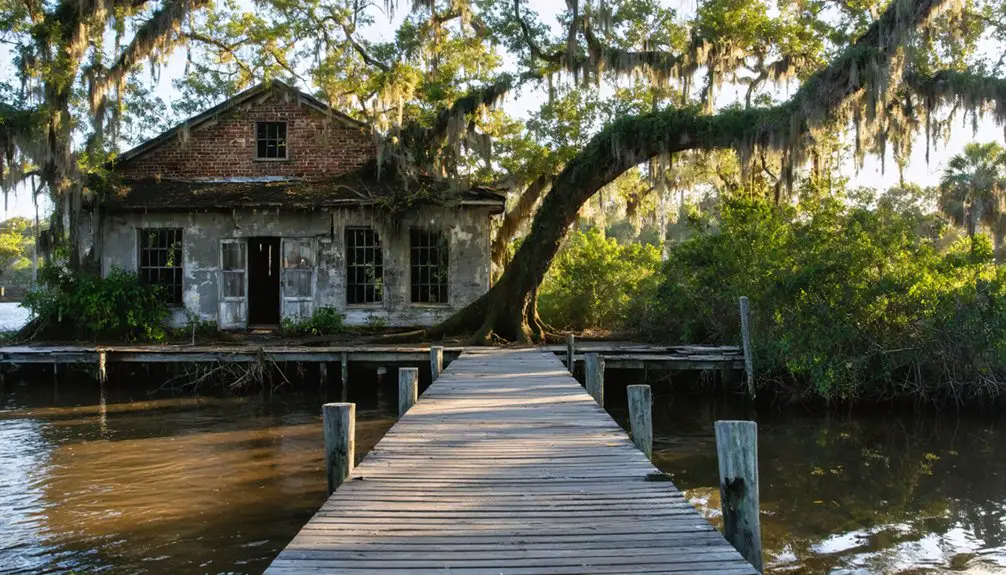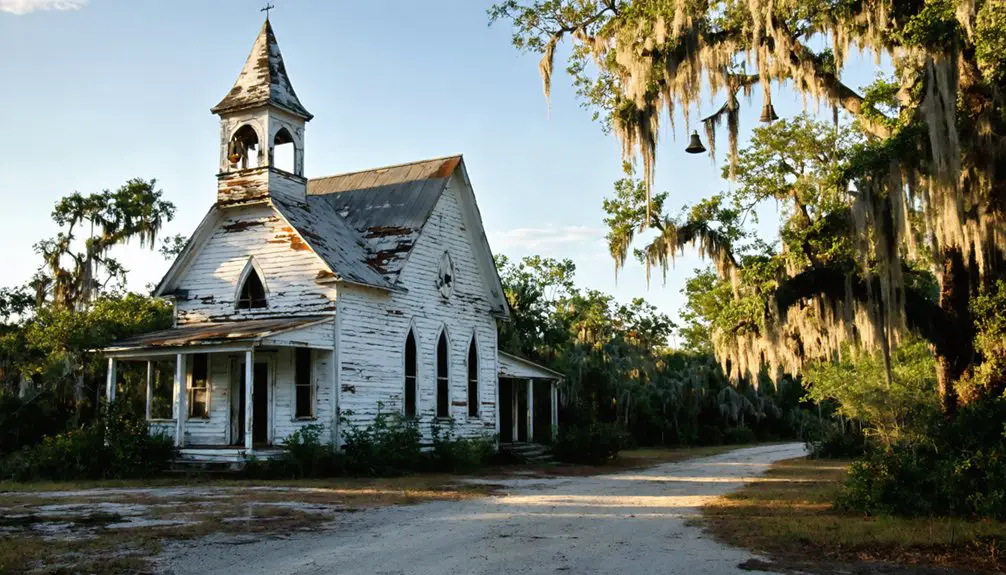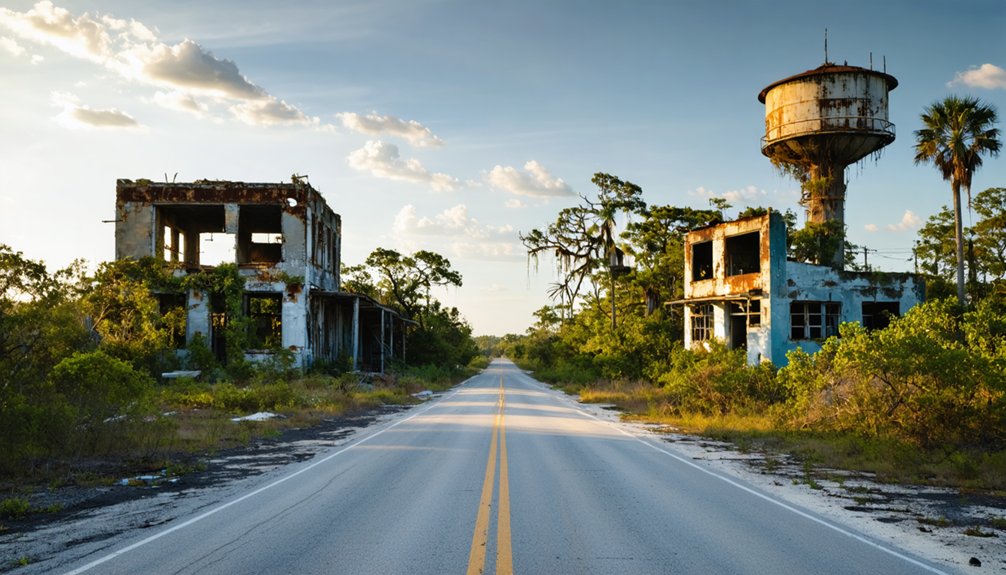
Planning a ghost town road trip to Osceola, Florida means stepping into what’s left of a vanished cypress mill town deep in Seminole County. You’ll walk an old railroad grade, spot a lone bank vault that outlasted an entire community, and follow trails through the Lake Harney Wilderness Area where nature has quietly swallowed the rest. Visit between November and April for the best conditions. Keep going, and you’ll uncover everything you need to explore Osceola like a pro.
Key Takeaways
- Osceola, once a thriving cypress mill town in Seminole County, is now a ghost town with an old bank vault as its sole standing structure.
- Access the site through Lake Harney Wilderness Area, where trails follow an old railroad grade leading to key historical landmarks and river views.
- Historical markers, kiosks, and photographs throughout the area provide visitors with rich context about Osceola’s once-vibrant community.
- Pack water, snacks, insect repellent, and sturdy footwear, as the remote site offers no resupply options and features uneven terrain.
- Visit between November and April for cooler temperatures, lower humidity, and ideal morning light that enhance the overall experience.
What Was Osceola, Florida?
Deep in Seminole County‘s rural landscape, Osceola, Florida was once a thriving cypress mill town that housed up to 200 workers and their families at its peak.
Named in tribute to Seminole culture, the site carries layers of Osceola history stretching back to 1837, when Chief King Philip established a Seminole camp here during the Second Seminole War.
What’s Left to See at the Osceola Ghost Town Today?
When you visit the Osceola ghost town today, you’ll find precious little left of the 350-acre mill town that once housed 200 workers and their families.
The most striking survivor is the old bank vault, still standing along the road from the trailhead like a stubborn sentinel refusing to surrender to time.
Historical markers and kiosks at the Lake Harney Wilderness Area parking area fill in the gaps, offering photos and context that bring the vanished town back to life.
The Remaining Bank Vault
After 80+ years of abandonment, only one structure endures at the Osceola ghost town site: the old bank vault.
While wooden buildings were dismantled and scrapped by 1940, this vault’s architectural significance kept it standing through decades of wilderness reclamation.
Standing before it, you’re connecting with genuine vault history — a tangible remnant of a thriving 200-person community.
Here’s what makes this ruin worth your stop:
- It protected the Osceola Cypress Company’s finances at peak operations
- It survived complete town demolition through sheer material durability
- It sits visible along the road from the Lake Harney Wilderness Area trailhead
- It anchors the historical narrative told at nearby informational kiosks
You won’t find much else standing, but this vault speaks volumes about what once was.
Historical Markers And Kiosks
Beyond the vault, the historical markers and kiosks at the Lake Harney Wilderness Area trailhead carry much of Osceola’s story. You’ll find photographs and written accounts that resurrect what’s long since vanished — the commissary, the boarding house, the sawmill humming with activity.
These installations anchor the site’s historical significance, giving context to the silence surrounding you. The visitor experience here isn’t passive. You’re standing where 200 workers once built lives inside a cypress empire that flourished and folded within a single generation.
The kiosks frame that arc clearly and honestly. You don’t need crumbling walls when the words and images do the heavy lifting. Let the markers orient you before you follow the old railroad grade toward the river and whatever personal reckoning waits there.
Where Is the Osceola Ghost Town Located?
You’ll find the Osceola ghost town tucked into rural Seminole County, north of Geneva along Osceola Road near the banks of the St. Johns River — the same waterway that once defined the town’s logging economy.
The Lake Harney Wilderness Area serves as your gateway, placing you within steps of the historical marker and kiosk that anchor the site.
Park at the wilderness area trailhead, where the paths fan out toward the old railroad grade, the surviving vault, and the river views that outlasted everything the Osceola Cypress Company built.
Seminole County Rural Setting
Tucked into the rural heart of Seminole County, the ghost town of Osceola sits north of Geneva along Osceola Road, near the winding banks of the St. Johns River. This forgotten corner of rural history rewards those who seek it.
Here’s what defines its remote setting:
- Osceola Road winds north of Geneva, guiding you toward the site.
- The St. Johns River flanks the area, shaping its wild atmosphere.
- Lake Harney Wilderness Area borders the ghost town’s footprint.
- The Florida East Coast Railway once crossed the river here, connecting this isolated community to the outside world.
You’ll feel the weight of abandonment the moment you arrive.
This ghost town doesn’t announce itself loudly — it whispers through cypress shadows and overgrown silence.
Nearby Landmarks And Access
Knowing where to find Osceola is half the journey. Head north of Geneva along Osceola Road in rural Seminole County, and you’ll reach the Lake Harney Wilderness Area, your gateway to this forgotten world.
The St. Johns River flanks the site, lending it both historical significance and raw, untamed beauty. Local wildlife thrives here — herons, deer, and river creatures reclaiming land once cleared by cypress loggers.
Park at the Lake Harney trailhead, where a historical marker and kiosk orient you before you step into the wilderness. The old Florida East Coast Railway grade still cuts through the landscape, guiding you toward the former river crossing.
Freedom-seekers will find this place rewards curiosity, patience, and a willingness to read the land itself.
Finding The Trailhead
Finding the ghost town of Osceola starts with a drive north of Geneva along Osceola Road in rural Seminole County, Florida.
Your trailhead access begins at the Lake Harney Wilderness Area parking area, where history meets open wilderness.
Follow these steps for smooth ghost town exploration:
- Park at the Lake Harney Wilderness Area trailhead
- Check the historical marker and kiosk featuring original photographs
- Walk the road from the trailhead to spot the old bank vault ruins
- Follow the trail along the former railroad grade toward the historic bridge site
The wilderness surrounding you once hummed with sawmill operations and 200 workers’ daily lives.
That silence you’re hearing now? It’s the echo of a community that vanished completely by 1940.
How Do You Actually Get There?
Getting to Osceola feels like retracing a path time has nearly erased. Head north of Geneva in Seminole County and follow Osceola Road toward the St. Johns River.
You’re traveling ground steeped in Seminole history — land where King Philip once camped during the Second Seminole War and where ghost town legends still echo through the cypress shadows.
Park at the Lake Harney Wilderness Area trailhead. You’ll spot the historical marker and kiosk immediately — they’re your orientation point before venturing further.
From there, trails branch toward the ruins, the old railroad grade, and the observation tower overlooking the St. Johns River floodplain. The roads are rural and unhurried, exactly the kind of open stretch that rewards those chasing forgotten American history on their own terms.
Where Does the Old Railroad Grade Lead?
Once you’ve found your footing at the trailhead, the old railroad grade pulls you further into Osceola’s past. This elevated path once carried cypress logs straight to the mill, and walking it connects you directly to the cypress industry that built this town.
Follow it and you’ll discover:
- The ghost of a rail corridor that defined Florida’s railroad history
- Dense floodplain wilderness reclaiming what industry once carved out
- The former bridge site where trains crossed the St. Johns River
- Sweeping river views from the observation tower at trail’s end
Each step forward is a step backward in time. The grade doesn’t just lead somewhere — it reveals how an entire community rose, worked, and quietly vanished into the Florida wilderness.
Which Lake Harney Wilderness Trails Pass Through the Ghost Town Site?
Where exactly do the trails of Lake Harney Wilderness Area thread through Osceola’s vanished streets?
You’ll find the main path departing from the trailhead parking area, cutting directly through what once housed 200 workers and their families. The trail follows the old railroad grade, tracing the same corridor that once hauled cypress logs to the sawmill.
The main trail departs from the parking area, threading through grounds where 200 workers once lived, along the old railroad grade.
As you walk, you’re crossing ground where a commissary, school, and barber shop once stood. The Ghost Town’s lone surviving vault appears roadside, anchoring your sense of place amid the overgrowth.
The path ultimately leads toward the former bridge crossing on the St. Johns River.
At Lake Harney, an observation tower rewards your exploration with sweeping floodplain views, connecting wilderness and history into one unforgettable journey.
What to Bring for the Osceola Ghost Town and Lake Harney Trails
Packing smart means the difference between a memorable trek and a miserable one on these remote Seminole County trails. Before you wander where cypress workers once lived, nail down your trail essentials and what to pack:
- Water and snacks – No commissary store remains to resupply you.
- Sturdy footwear – The old railroad grade and floodplain terrain demand solid footing.
- Insect repellent – You’re tracing St. Johns River wilderness, not a manicured park.
- Camera and charged phone – The vault ruins, historical kiosk, and river views deserve documentation.
You’re stepping into land that swallowed an entire town whole. Respect the remoteness, move deliberately through the wilderness, and let the history speak without distraction pulling you back to civilization unprepared.
When Is the Best Time to Visit Osceola Ghost Town?
When you visit Osceola ghost town shapes the entire experience. Florida’s brutal summer heat and afternoon thunderstorms make trail walking genuinely miserable from June through September, so plan accordingly.
The best seasons fall between November and April, when cooler temperatures and lower humidity let you move freely through the wilderness without exhaustion clouding the journey.
Plan your visit between November and April, when cooler temperatures and lower humidity make exploring the wilderness genuinely pleasant.
Weather considerations matter most near the St. Johns River floodplain, where moisture lingers year-round. Winter mornings carry a quiet stillness that feels almost haunted, perfectly suited to a site where 200 souls once worked and then vanished entirely by 1940.
Arrive early regardless of season. Morning light filters through the tree canopy beautifully, and you’ll want clear eyes when you’re standing beside that old vault, imagining the town that once surrounded it.
Frequently Asked Questions
Was Osceola, Florida Ever Officially Incorporated as a Town?
Osceola never gained official incorporation, yet its historic significance runs deep. You’ll find no record of formal town governance — it existed as a company mill town, thriving briefly before vanishing into Florida’s wild, untamed landscape.
How Long Did the Cypress Logging Industry Operate in Seminole County?
Cypress history captivated Seminole County for roughly 24 years, as you’ll find logging techniques drove operations from 1916 until 1940, when the last workers finally abandoned Osceola’s once-thriving mills for Port Everglades’ open horizons.
Did the Osceola Cypress Company Operate Other Mills Besides Port Everglades?
The knowledge doesn’t confirm other mill locations beyond Osceola and Port Everglades. You’ll find that Cypress operations shifted from Seminole County’s wild riverbanks to Port Everglades, but additional Mill locations remain historically undocumented here.
Are There Any Photographs of Osceola Town During Its Peak Years?
You can find historic images of Osceola’s town architecture at the trailhead kiosk, where photos breathe life into this vanished cypress boomtown. Those snapshots capture the freedom and raw frontier spirit of its peak years.
What Happened to the Workers and Families When Osceola Closed?
Though records are scarce, you can feel the weight of worker displacement here — by 1940, every family relocation was complete, as families packed their lives and quietly vanished into Florida’s vast, free wilderness forever.
References
- https://www.youtube.com/watch?v=8kLEqw1Ft24
- https://floridatrailblazer.com/2018/01/26/osceola-ghost-town-in-seminole-county/
- https://www.natalijaugrina.com/post/florida-s-forgotten-cowtown-the-ghost-town-of-kenansville-its-heartbreak-hotel-legend
- https://www.positivelyosceola.com/event/historic-walking-and-ghost-tours/
- http://www.gribblenation.org/2018/03/ghost-town-tuesday-osceola-fl.html
- https://www.shakaguide.com/tours/nevada/great-basin-national-park-tour/stops/osceola-ghost-town
- https://www.oneworld365.org/blog/florida-ghost-towns
- https://www.youtube.com/watch?v=sPynq7QLFPU
- https://floridahistoryblog.com/osceola-ghost-town/