Plan your Pandale ghost town adventure between October and March when temperatures hover in the comfortable 60s-70s range. You’ll need a high-clearance vehicle for the unpaved Langtry-Pandale Road, plus emergency supplies since there’s no cell service or nearby gas stations. Fill up at Ozona or Langtry before tackling the caliche roads. The two-story stone Mills house and weathered general store await exploration, while the Pecos River offers challenging rapids through Painted Canyon. Discover what else this remote settlement holds beyond its abandoned buildings.
Key Takeaways
- Fill up on gas at Ozona or Langtry before arriving, as no services exist for dozens of miles.
- Visit October through early March for comfortable temperatures ranging from 60s to 70s degrees Fahrenheit.
- Bring a high-clearance vehicle to navigate unpaved caliche roads with washboard corrugations and rough terrain.
- Pack emergency supplies including water, food, first-aid kit, and spare tire due to zero cell service.
- Explore the two-story stone Mills house, old general store, schoolhouse, and canyon caves with prehistoric artifacts.
What Makes Pandale a True Texas Ghost Town
Tucked into a pan-shaped valley where Howard Draw meets the Pecos River, Pandale earned its name from the very land that cradled it—a natural depression in the rugged Texas terrain that once drew prehistoric people to its canyon caves.
You’ll find yourself standing where ancient hunters left behind arrowheads so distinctive they’re classified as “Pandale points” in local archaeology projects. This ghost town authenticity runs deeper than abandoned buildings.
The post office shuttered in 1977, the school merged with Comstock ISD in 1969, and today you won’t find a single shop or service for miles. What remains is raw desert solitude in northwestern Val Verde County—natural landscape features unchanged since those first inhabitants sought shelter here centuries ago.
You’ll leave civilization behind at Ozona or Langtry, where I-10’s last gas stations fade into your rearview mirror and the pavement eventually surrenders to caliche roads that stretch across empty desert.
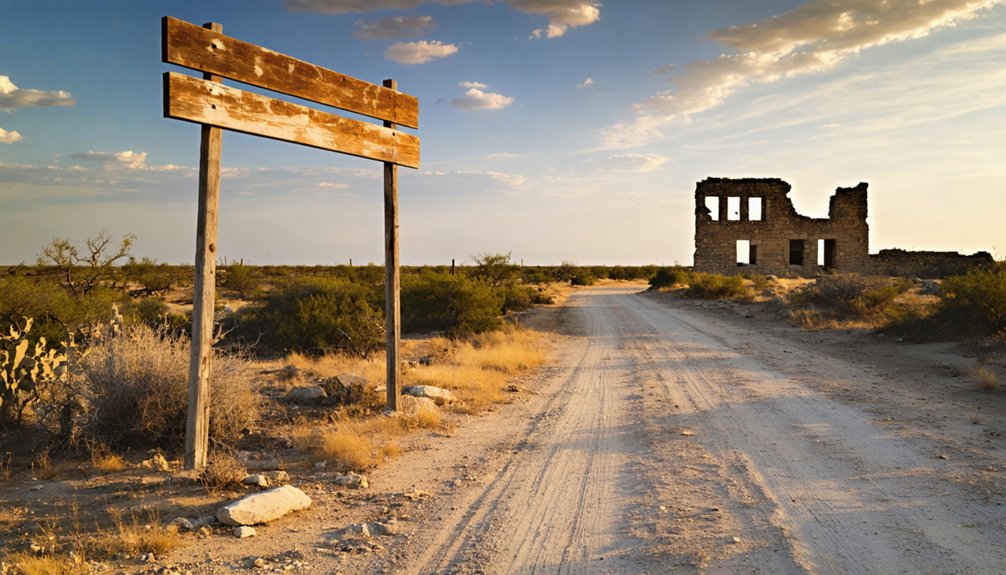
The route south on RM 2083 transforms from asphalt to bone-white gravel at the Crockett-Val Verde county line, while the Langtry-Pandale Road maintains its unpaved surface for the entire journey—both demanding high-clearance vehicles and patience with washboard corrugations.
Stock your vehicle with extra water, fuel, food, and a full-size spare tire before heading into this roadless expanse where the nearest service station lies dozens of miles behind you and cell towers don’t exist.
Routes and Road Conditions
The journey to Pandale begins 48 miles southwest of Ozona, where the last vestiges of civilization fade into the vast emptiness of West Texas ranchland. You’ll cruise 31 miles of smooth pavement on FM 2083 before hitting the Crockett-Val Verde county line, where asphalt surrenders to gravel.
Those final 13 miles demand patience—unpaved road conditions turn your steering wheel into a workout. There’s an alternate route from Langtry via unpaved caliche county roads, though it’s equally rugged. Either way, you’re committed once you start.
Pack plenty of water; there’s no water source availability for 50 miles, and summer heat shows no mercy. Cell service? Forget it. This is true backcountry driving—just you, the desert, and endless horizons.
Essential Supplies Before Arrival
Surviving this desolate stretch requires more than a full gas tank and blind optimism. You’ll need emergency preparedness planning that accounts for vanishing cell service and nonexistent remote medical resources.
Pack one gallon of water per person daily, plus purification tablets—I’ve watched travelers ration their last drops under the merciless sun. Stash high-energy bars, canned goods, and a manual opener.
Your first-aid kit becomes your clinic: bandages, antibiotic ointment, pain relievers, and gauze pads for handling anything from road rash to heat exhaustion. Battery-powered radios and extra flashlights keep you connected when technology fails.
Don’t forget waterproof gear storage, spare tire essentials, and blankets. Out here, self-reliance isn’t philosophical—it’s survival. The desert punishes the unprepared without mercy.
Best Times to Visit This Pecos River Settlement
You’ll find Pandale most enjoyable from October through early March, when daytime temperatures hover in the comfortable 60s and 70s rather than the brutal mid-90s of summer.
The ghost town transforms during hunting season from November through January—the permanent population of fewer than 20 swells with hunters in raised blinds near feeders, so you’ll sacrifice solitude for the chance to witness this annual tradition.
I discovered that visiting in late February offers the sweet spot: mild days for exploring crumbling structures, crystal-clear nights perfect for stargazing above the Pecos River canyon, and trails empty enough to hear only wind whistling through abandoned buildings.
Mild Weather Months
When planning your ghost town adventure to Pandale, you’ll find that spring and fall offer the sweet spot between the Pecos River valley‘s scorching summers and occasionally brisk winter nights. March through April delivers mild weather experiences with comfortable highs ranging from 70°F to 78°F—perfect for exploring abandoned structures without breaking a sweat.
November stands out equally well, providing ideal camping conditions as temperatures hover between 62°F and 73°F during daylight hours.
These shoulder seasons let you wander freely through crumbling homesteads and weathered ranch buildings without July’s oppressive 90°F+ heat beating down. You’ll appreciate the lower rainfall during these months, keeping dirt roads passable and your tent dry. Pack layers for evening temperatures that dip into the 40s, but you’ll rarely face the harsh extremes that define this rugged region’s summer inferno or winter chill.
Peak Hunting Season
Beyond weather considerations, Pandale transforms into a hunter’s outpost each fall, when trucks with rifle racks rumble down FM 2083 and campfire smoke drifts from lease cabins that sit dark the rest of the year. The seasonal hunting influx swells this twenty-person settlement tenfold from November through January, when South Zone white-tailed deer season runs hot.
You’ll find deer hunting activity peaks hardest during the November 1 to January 18 general season, with archery enthusiasts arriving as early as late September. Mule deer hunters push into the nearby Trans-Pecos country late November through mid-December. Quail hunters work the brush November through February, and javelina remain fair game nearly year-round in South Zone. If you’re seeking solitude, visit outside these windows—but expect shuttered blinds and empty feeders across the private ranches.
Historic Sites and Landmarks Worth Exploring
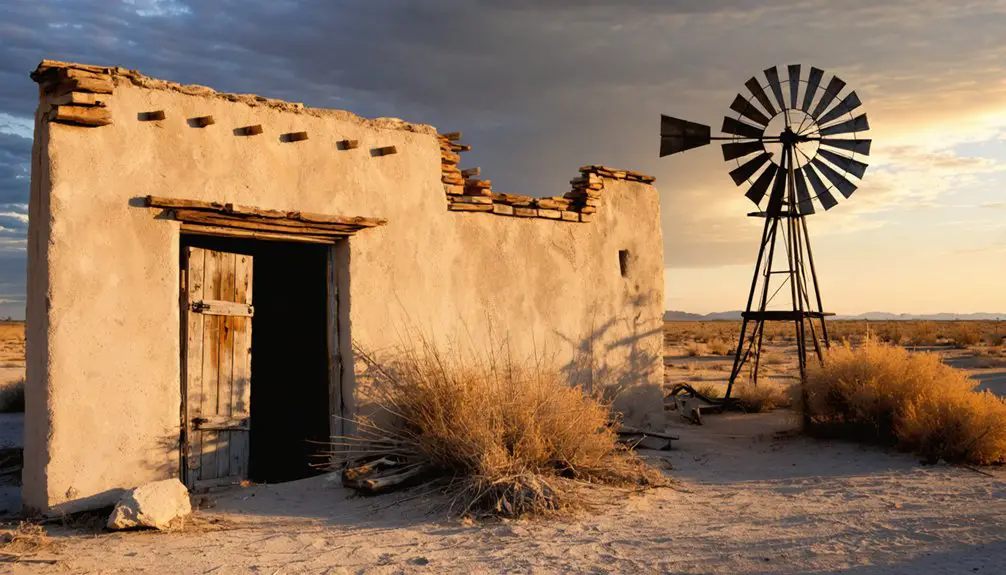
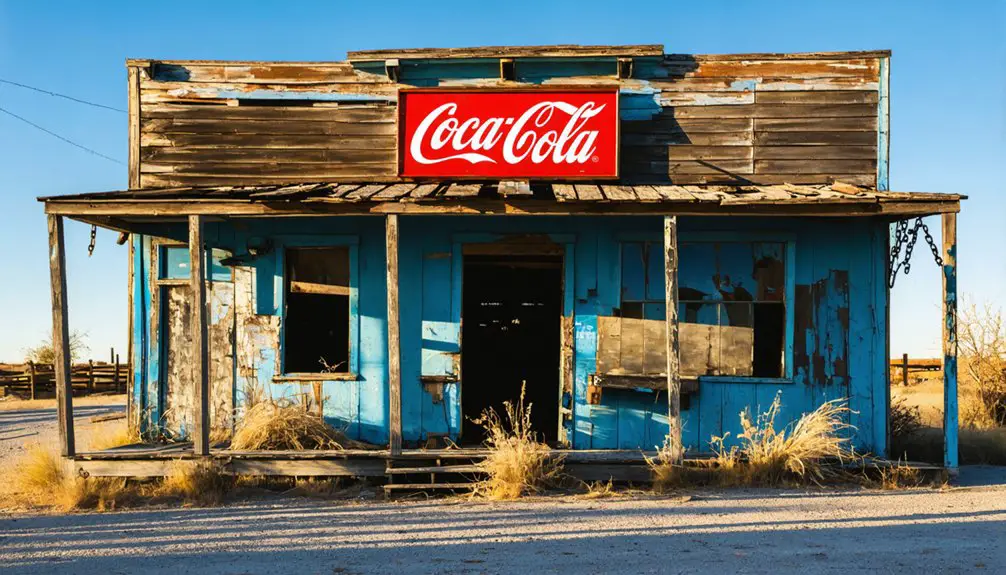
Standing against the relentless West Texas sun, the two-story stone house built by Henry James Young Mills anchors Pandale’s scattered ruins like a monument to stubborn permanence. You’ll find the old general store and garage nearby, their weathered facades still whispering tales of frontier commerce.
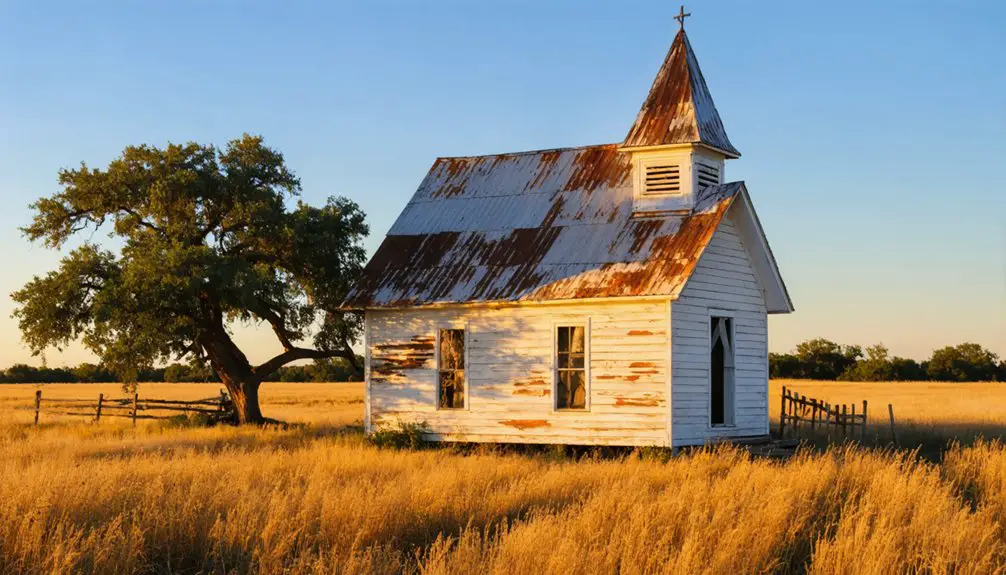
The single-room schoolhouse stands commemoration to community preservation efforts—settlers who refused to send their children away established their own educational hub here.
Wander beyond town limits and you’ll discover canyon caves where prehistoric inhabitants left arrow points scattered like breadcrumbs through time. The post office migrated six times across this landscape, each relocation marking shifts in fortune and population.
Limited architectural restoration projects mean you’re exploring raw history, unvarnished and unfiltered—exactly how ghost towns should be experienced.
Paddling Adventures on the Pecos River
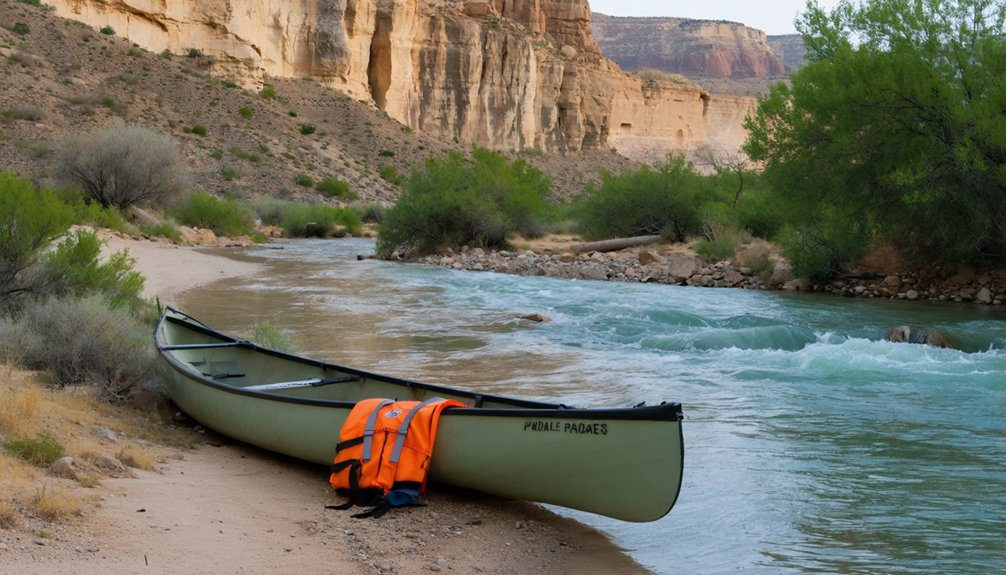
The Pecos River carves through limestone canyons fifty-nine miles from Pandale to the US-90 High Bridge, offering paddlers a week-long journey through country so remote your cell phone becomes a paperweight. You’ll need equipment for serious paddlers—this isn’t a casual float. Class III-IV rapids roar through Painted Canyon at mile 44, while Pin Rock Rapids demands technical precision. The river’s pool-and-drop character creates moments of tranquility between challenges.
Ancient pictographs wait in side canyons, rewarding those who explore beyond the main channel. Launch early fall through winter when flows cooperate and temperatures stay reasonable. Spring brings relentless headwinds. Watch for dangers of inclement weather—flash floods have trapped paddlers here, requiring helicopter rescues. Emilio Hinojosa in Comstock arranges shuttles. Pack a gravity filter; springs hide themselves well in these limestone walls.
Where to Stay Near the Pandale Crossing
After a long day traversing rapids and canyon walls, Pandale Crossing River Resort offers eight rustic cabins where you can collapse onto a real bed while air conditioning drives out the desert heat. These cabin accommodations sit at 120 Opal Lane in Ozona, perched between river views and rolling desert hills. Guest amenities include grilling areas, bathhouse access, and one roll of toilet paper to start your stay—pack extras.
If cabins don’t appeal, pitch your tent at one of seven primitive campsites or park your rig at two RV sites. The resort rents kayaks and maintains hunting leases for those chasing different adventures.
When Pandale Crossing’s booked solid, Comstock Motel in nearby Comstock provides clean rooms, friendly owners, and 4.6 stars across 49 reviews—solid backup headquarters for your Pecos River explorations.
Essential Supplies and Gear for Your Trip
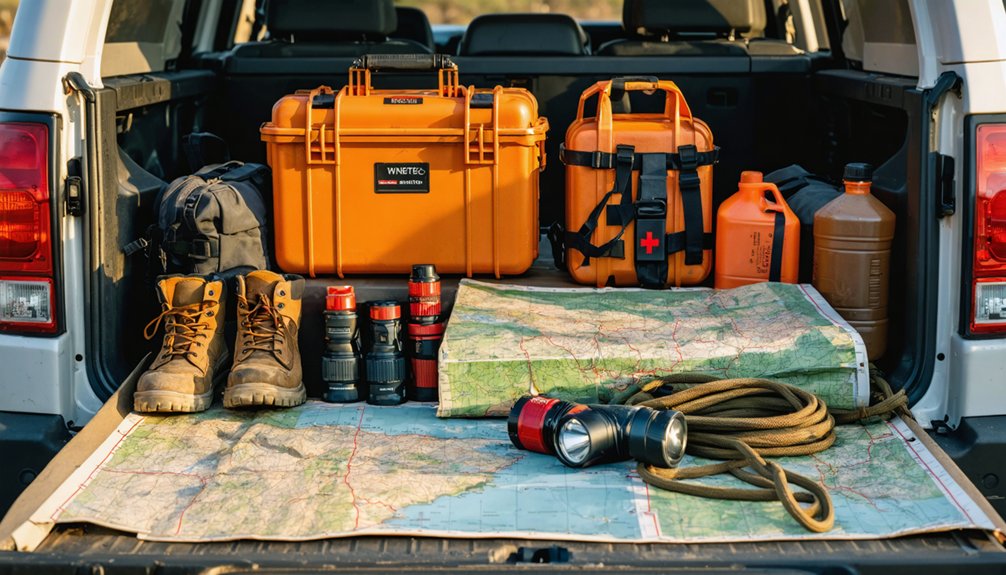
Remote ghost towns don’t forgive poor planning—I learned this lesson when my truck’s radiator hose split thirty miles from the nearest water source, leaving me stranded under a merciless August sun near the Pecos River crossing. That breakdown taught me what every Pandale explorer needs:
- Vehicle maintenance essentials: spare tires, jumper cables, basic tools, and extra radiator fluid for four-wheel drive adventures
- Portable power sources: satellite communicator and backup batteries when cell towers vanish beyond the horizon
- Survival basics: one gallon of water per person daily, high-SPF sunscreen, and first-aid supplies including snake bite treatments
Pack GPS with offline maps, paper backups, and emergency flares. West Texas doesn’t care about your schedule—respect its isolation with proper preparation, and you’ll taste genuine freedom.
Hunting Season and Seasonal Visitor Considerations
Every autumn, Pandale’s empty landscape transforms into contested territory as hunters converge on the surrounding ranchlands, their spotlights sweeping the caliche roads I’d driven alone just months earlier. White-tailed deer season runs November through mid-January, while mule deer hunters arrive late November through mid-December.
Dove hunters fill South Zone fields September through late October, returning again in December.
You’ll navigate different terrain during these periods. Public safety considerations include wearing blaze orange when hiking near ranch boundaries and avoiding dawn-dusk road travel when hunters are most active. Texas hunting license requirements don’t apply to ghost town explorers, but understanding the rhythms matters—campsite availability shrinks, truck traffic increases, and that profound solitude you’re seeking becomes harder to find. Plan accordingly or embrace the off-season’s deeper silence.
If you’re looking for unique adventures, consider the ghost towns to explore in Texas. Each location offers a glimpse into the past, with remnants of history waiting to be uncovered. From abandoned buildings to deserted streets, these towns provide an atmosphere that invites both reflection and exploration.
Frequently Asked Questions
Are There Gas Stations or Fuel Available in or Near Pandale?
You won’t find fuel availability in Pandale’s dusty emptiness—it’s a ghost town without stations. Your nearest gas stations lie miles away along US-90 or FM roads, so you’ll need to fill up before chasing that wide-open Texas horizon.
Can I Find Cell Phone Service or Internet Connectivity in Pandale?
Cell phone service remains extremely limited due to remote connectivity challenges and sparse cell tower availability. You’ll likely find no reliable signal in Pandale itself, so download maps offline and embrace disconnecting from the digital world beforehand.
Is the Water From the Pecos River Safe for Drinking?
No, don’t drink Pecos River water—it’s liquid disappointment with salinity reaching 25,000 mg/L. Water quality testing reveals toxic levels unsuitable for consumption. Pack your own fresh water; environmental conservation doesn’t make this river drinkable yet.
Do I Need Permits for Camping Along the Pecos River Near Pandale?
You don’t need permits for camping at Pandale Crossing’s public access, though private land requires owner permission. Campsite availability is limited—mostly private resorts. Check if campfires permitted, as burn bans often restrict open flames in this arid country.
Are There Medical Facilities or Emergency Services Accessible From Pandale?
Pandale’s remote, so you’ll need self-reliance. The nearest hospital locations are hours away in Carrizo Springs or Del Rio. Pack thorough, extensive, or exhaustive first aid supplies, satellite communication, and emergency provisions—out here, you’re your own rescue until air evacuation arrives.