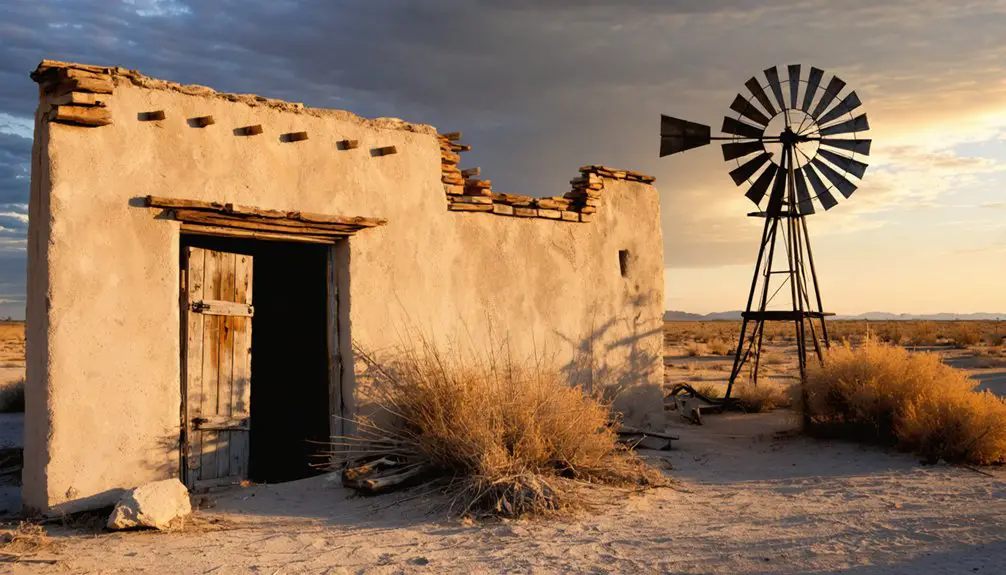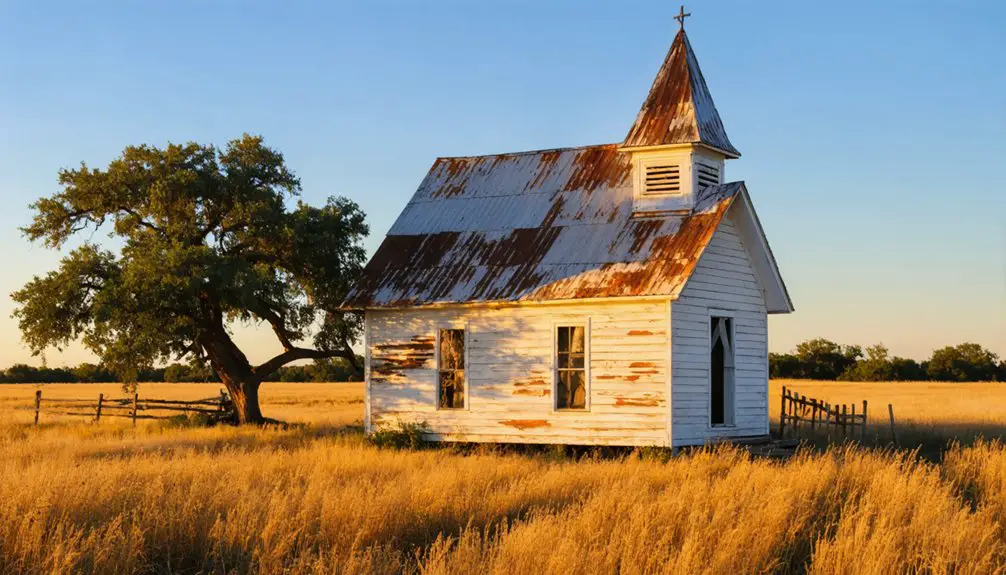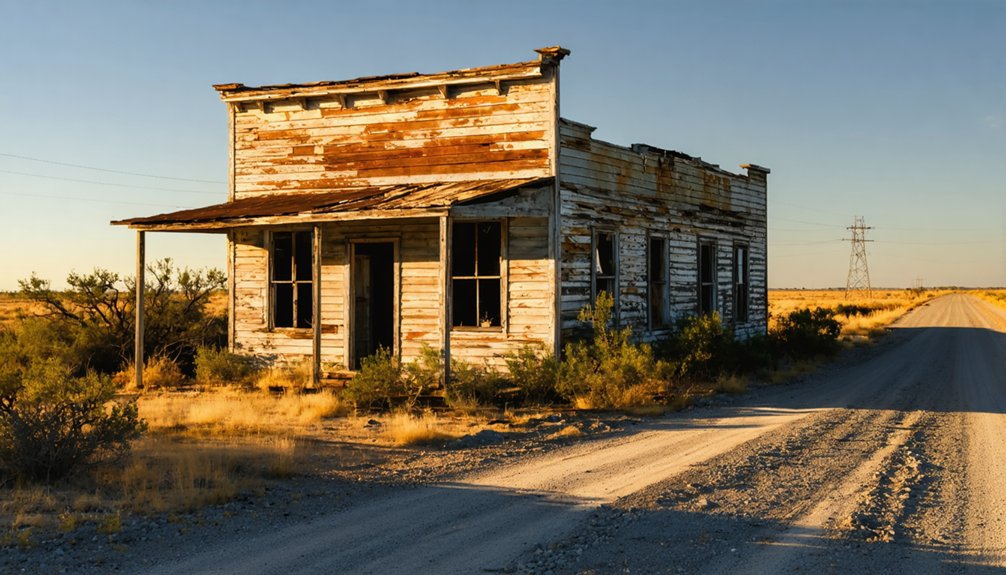
Planning a ghost town road trip to Park Springs, Texas means stepping into the quiet remains of a once-thriving Wise County farming community that natural springs helped build and time slowly swallowed. You’ll wander uncrowded ruins, breathe in wildflower-scented air, and feel the weight of a vanished rural Texas way of life. Visit in spring or fall for the best conditions, bring sturdy shoes and plenty of water, and there’s so much more waiting for you just ahead.
Key Takeaways
- Park Springs is a ghost town in Wise County, Texas, featuring scattered ruins of an abandoned farming community from the late 19th century.
- Visit in spring or fall for mild temperatures, wildflower blooms, and optimal photography lighting during morning hours.
- The site is accessible via standard 2WD roads, but watch for crumbling foundations and uneven terrain while exploring.
- Bring water, sunscreen, sturdy shoes, a first aid kit, and a charged GPS device for safe navigation.
- Combine your trip with nearby Decatur’s historic courthouse square and Bridgeport’s waterfront for a complete regional experience.
What Is Park Springs, Texas?
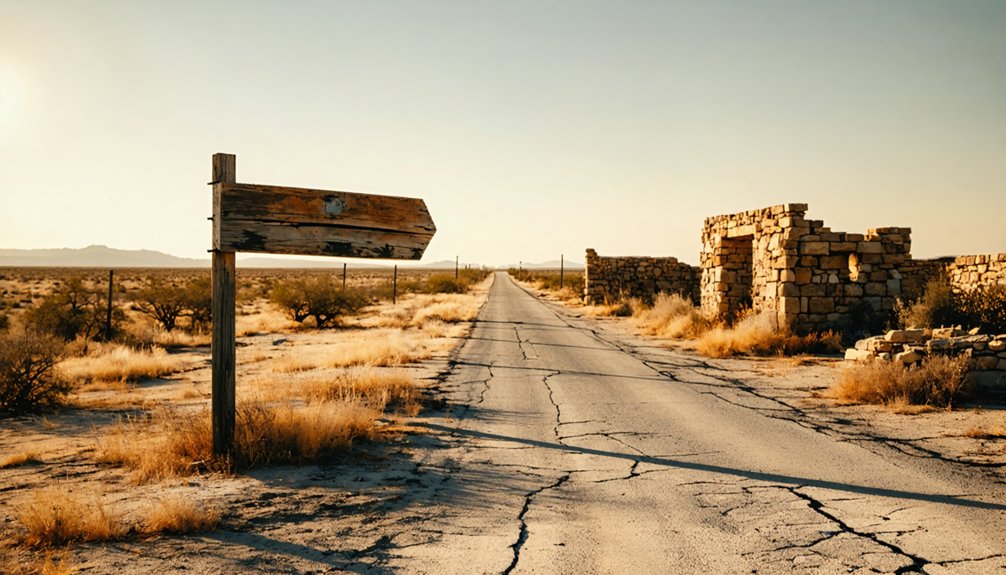
Park Springs, Texas, is a ghost town tucked away in Wise County, once a thriving farming community that took root in the late 19th century. Its name reflects the natural springs that drew early homesteaders, farmers, and merchants seeking opportunity on the open Texas frontier.
Park Springs history tells a story of resilience and eventual decline, as the settlement served cattle routes and sustained active agricultural operations for decades.
Resilience defined Park Springs — a settlement that endured through cattle drives and generations of determined agricultural labor.
Park Springs agriculture shaped the identity of this rural community, connecting its people to the land through hard work and determination.
Today, you’ll find little more than scattered ruins reclaimed by nature — a quiet reminder of lives once lived here.
If you crave wide-open spaces and authentic history, Park Springs delivers both in equal measure.
The History Behind This Forgotten Wise County Farming Town
Tucked into the rural landscape of Wise County, Park Springs grew from humble beginnings in the late 19th century, when homesteaders, farmers, and merchants staked their claims on land fed by natural springs.
This farming community thrived as an agricultural hub, drawing settlers who recognized the value of reliable water sources in the Texas terrain.
The town also served travelers moving livestock along regional cattle routes, making it a practical stop across the open landscape. You can almost picture the dust rising as ranchers pushed their herds through, while local merchants kept the community alive.
Today, the historical significance of Park Springs lies in what it represents — a vanished way of life that shaped rural Texas.
Visiting reminds you how quickly thriving communities can fade into forgotten ground.
What’s Left to See at Park Springs Today?
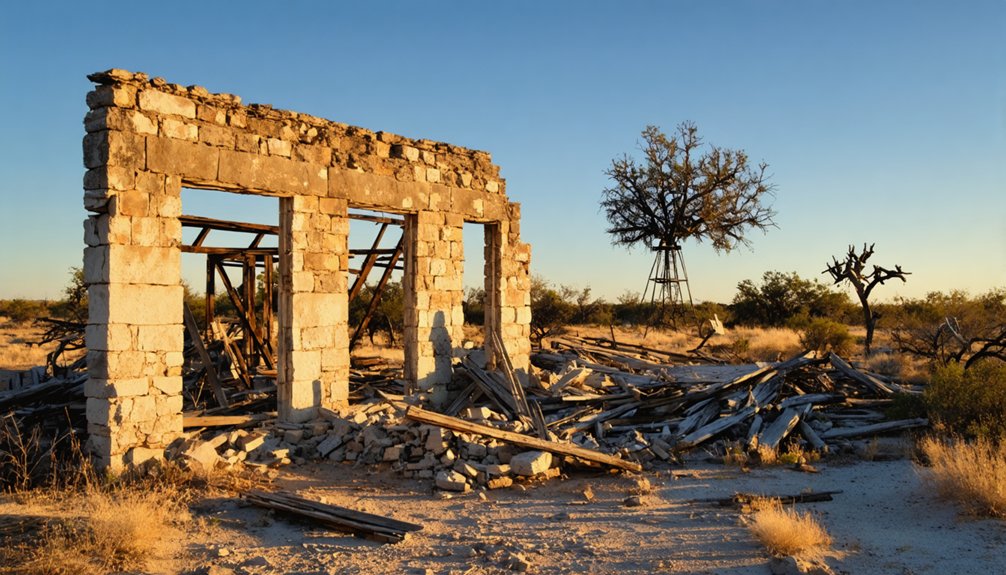
What remains at Park Springs today tells a quiet, sobering story. You’ll find mostly ruins — abandoned structures slowly surrendering to the land that once sustained them.
Old residences and farm outbuildings stand partially collapsed, reclaimed by brush and time. Nature has moved back in without hesitation.
The old buildings don’t fight it anymore — they simply lean into the earth and let go.
The natural springs that drew settlers here still exist nearby, a rare constant in a place where nearly everything else has faded. Standing beside them, you can almost understand why people chose this spot to build their lives.
There’s no crowd, no signage, no curated experience — just open terrain and honest decay.
For those who value unfiltered history and wide-open spaces, that rawness is exactly the point. Park Springs rewards the curious, not the comfortable.
When Is the Best Time to Visit Park Springs?
Spring and fall are your best windows for visiting Park Springs, when mild temperatures make the open terrain far more forgiving to explore.
Wildflowers push through cracked foundations in spring, softening the ruins and adding unexpected color to an otherwise weathered landscape.
Fall brings cooler air and golden light that feels almost cinematic against abandoned structures.
Summer heat in Wise County can be unforgiving, and winter mud occasionally makes rural roads less predictable, even on 2WD-accessible routes.
These seasonal highlights matter when you’re planning a meaningful visit rather than a rushed one.
Among the best visiting tips: arrive in the morning for cooler conditions and better photography light.
Give yourself time to wander slowly — Park Springs rewards those who aren’t rushing anywhere.
Pack These Essentials Before Visiting Park Springs
Once you’ve settled on your season, what you bring can make or break the experience. Ghost town essentials start with sturdy walking shoes since the terrain around Park Springs is uneven and overgrown.
Pack plenty of water, sunscreen, and a first aid kit because you’re exploring a remote rural site with no services nearby.
Bring a charged phone or GPS device for navigation, and download offline maps before leaving home. A camera helps you capture the haunting beauty of weathered ruins reclaimed by nature.
These visiting tips will sharpen your trip: carry insect repellent, especially in warmer months, and wear layers since rural Texas weather shifts quickly.
A small notebook lets you document what you discover among the remnants of this forgotten farming community.
How to Get to Park Springs in Wise County
You’ll find Park Springs tucked away in Wise County, Texas, roughly 20 miles north of the county border, where the western edge of the county gives way to open rural farmland.
The roads leading to the site are 2WD-accessible, so you won’t need a special vehicle to make the journey out to this forgotten piece of Texas history.
Plan your visit during spring or fall, when the weather cooperates and the landscape feels alive enough to contrast beautifully with the quiet ruins waiting ahead.
Wise County Location Details
Nestled in Wise County, Texas, Park Springs sits roughly 20 miles north of the county border, where rural farmland stretches wide and open skies remind you of a quieter era.
You’ll find this forgotten settlement near the county’s western edge, close to the natural springs that once drew early homesteaders seeking fertile land and fresh water.
The area carries genuine ghost town legends rooted in the historical significance of late 19th-century Texas agriculture.
Getting here is straightforward — standard 2WD roads handle the route without trouble, so you won’t need a specialized vehicle.
Spring and fall offer the most comfortable visiting conditions, letting you explore the landscape freely without extreme heat slowing you down.
The open terrain makes navigation simple and the journey itself worth every mile.
Roads And Access Routes
Getting to Park Springs takes you along a handful of rural 2WD roads that cut through open farmland in Wise County, and your standard vehicle handles the route without any trouble.
Road conditions stay manageable throughout the year, though spring and fall offer the smoothest drives when weather cooperates. You won’t face significant access challenges reaching the site, making it an easy detour on any open-road itinerary.
The surrounding landscape unfolds gradually as you drive deeper into the county’s western edge, rolling farmland stretching out in every direction. These quiet back roads carry a certain weight to them, tracing the same general paths that settlers and cattle drivers once traveled.
Follow current county road maps to pinpoint the exact route before you head out.
Best Visiting Seasons
Once you’ve sorted out your route along those quiet county roads, timing your visit makes all the difference in what you actually experience out there.
Spring and fall deliver the best visitor experiences — mild temperatures let you wander the ruins without the punishing Texas heat beating down on you.
Spring brings wildflowers across the surrounding farmland, adding unexpected color to the decaying structures and open terrain.
Fall cools everything down and strips away heavy vegetation, revealing more of the hidden ruins beneath the overgrowth.
Summer heat can make seasonal activities genuinely uncomfortable, and winter weather occasionally makes rural roads unpredictable.
Plan your trip between March and May or September and November, and you’ll find Park Springs far more rewarding and navigable than during the extreme months.
Is Park Springs Easy to Reach and Safe to Walk Around?
Park Springs is relatively easy to reach, sitting off 2WD roads that don’t require a truck or SUV to navigate — your standard vehicle will do just fine.
Once you’re there, walking the grounds is straightforward, though you’ll want to keep these safety concerns and walking tips in mind:
- Watch your step around crumbling foundations and uneven terrain
- Wear sturdy, closed-toe shoes for rough ground
- Bring water, especially during warmer months
- Stay aware of your surroundings in open rural areas
- Don’t enter unstable structures — admire them from a safe distance
The site’s quiet, open landscape gives you room to roam freely and soak in the remnants of a community that once thrived.
Respect the ruins, stay alert, and you’ll have a rewarding visit.
Wise County Attractions Near Park Springs Worth the Detour
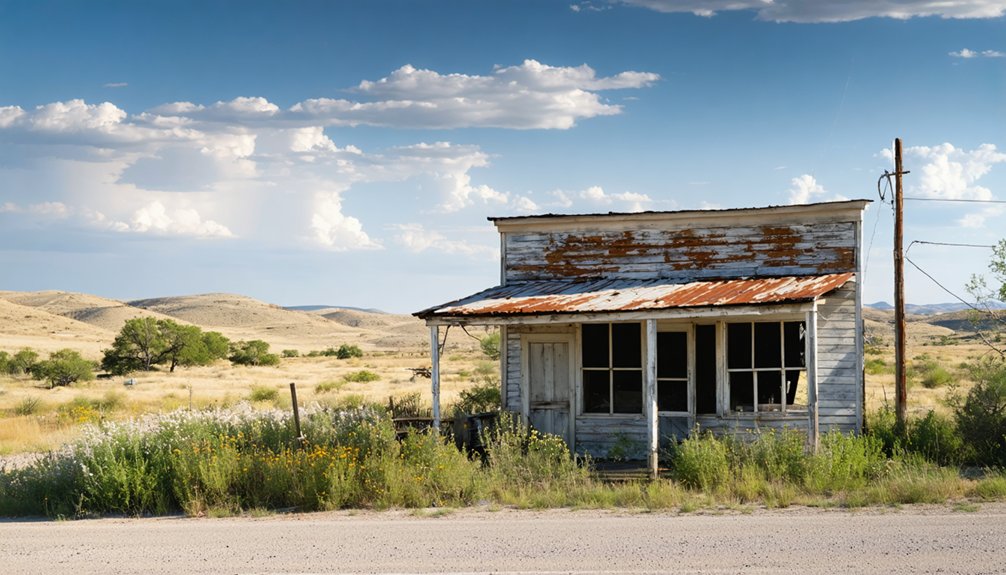
After you’ve walked the grounds of Park Springs and soaked in its quiet, crumbling legacy, Wise County has more to offer before you head home.
Decatur, the county seat, delivers genuine Texas charm with its historic courthouse square, local diners, and small shops worth browsing.
If ghost town legends and rural exploration fuel your travels, check out nearby abandoned farm sites scattered across the county’s backroads — each one carrying its own forgotten story.
The rolling farmland between destinations rewards patient drivers who slow down and look closer.
Bridgeport’s waterfront along Lake Bridgeport offers a natural contrast to Park Springs’ dusty ruins, giving you a peaceful stop to decompress.
Wise County rewards curiosity, and you’ll leave feeling like you’ve genuinely earned every mile.
How to Explore Park Springs Without Damaging the Site
When you walk through the crumbling remnants of Park Springs, you’re stepping into a fragile piece of 19th-century Texas that can’t be rebuilt once it’s gone.
Respect the ruins by keeping your hands off unstable structures, staying on established paths, and leaving every artifact exactly where you find it.
You’ll carry the memory of this weathered ghost town home with you — and that’s the only thing you should take.
Respecting Historical Ruins
Exploring a ghost town like Park Springs is a privilege, not a right, and it’s worth remembering that every crumbling wall and weathered foundation you encounter is an irreplaceable piece of Texas history.
Historical preservation depends on visitors like you making mindful choices. Community engagement means leaving this site intact for future explorers.
Follow these simple guidelines:
- Don’t remove artifacts, stones, or structural fragments
- Stay off weakened walls and deteriorating foundations
- Pack out everything you bring in
- Photograph instead of touching fragile remnants
- Stick to established paths around ruins
These ruins aren’t just debris — they’re the skeletal remains of real lives and livelihoods.
Treat them accordingly, and Park Springs will continue telling its story long after your visit ends.
Leave No Trace
Respecting the ruins is only half the equation — how you move through Park Springs matters just as much as what you leave behind.
Stick to established paths, and don’t disturb loose stones, timber fragments, or any remnants that still hold their ground. Eco friendly practices start before you arrive — pack out everything you bring in, including food wrappers and water bottles.
Sustainable tourism means leaving the site exactly as you found it, so future explorers can experience the same quiet history you did.
Don’t carve names into weathered wood or shift structural pieces for a better photo. Park Springs survived more than a century of Texas weather — your visit shouldn’t be what finally breaks it down.
What Makes Park Springs Different From Other Texas Ghost Towns?
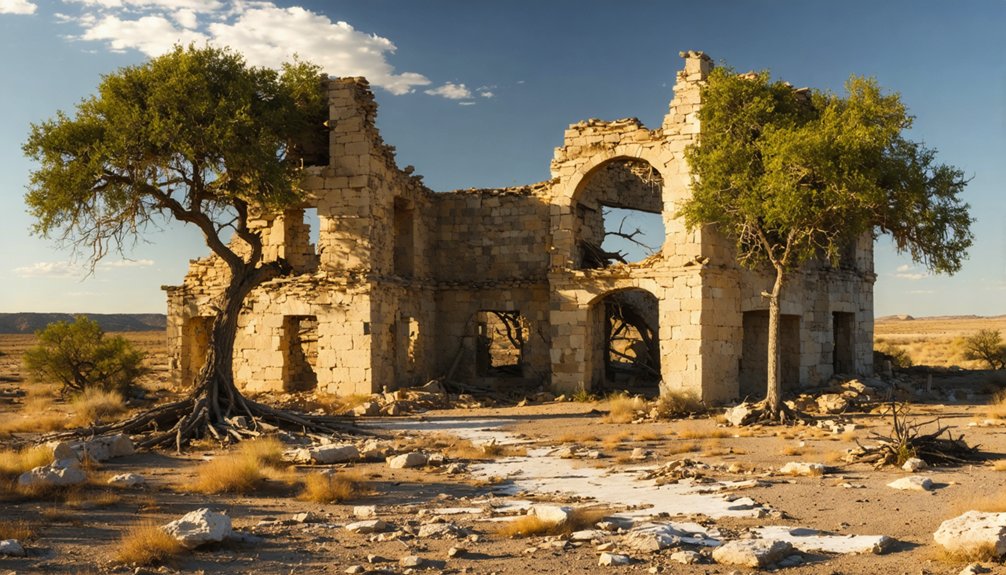
Though Texas has no shortage of ghost towns, Park Springs stands apart in a few quiet but meaningful ways. Its unique features aren’t dramatic or commercialized — they’re raw, honest, and deeply tied to local folklore and the land itself.
Here’s what sets it apart:
- Natural springs still exist nearby, connecting you directly to why settlers chose this spot.
- It sits off the beaten path in Wise County, untouched by tourism infrastructure.
- The ruins reflect authentic 19th-century agricultural life, not curated preservation.
- Local folklore surrounding the settlement adds mystery you won’t find in guidebooks.
- The surrounding rural landscape remains largely unchanged, giving you a genuine sense of stepping back in time.
Park Springs doesn’t perform history — it simply holds it.
Frequently Asked Questions
Are There Any Guided Tours Available at Park Springs Ghost Town?
Over 90% of ghost towns lack formal tours! You won’t find official guided exploration at Park Springs, but you’re free to independently discover its historical significance, wandering through hauntingly beautiful ruins that’ll transport you back to 19th-century Texas farming life.
Can Visitors Legally Take Artifacts or Souvenirs From Park Springs?
You shouldn’t take artifacts from Park Springs. Respecting artifact preservation honors the site’s historical significance, keeping these nostalgic remnants alive for future explorers. Leave everything as you find it, protecting your freedom to enjoy ghost towns responsibly.
Is Camping Overnight Permitted at the Park Springs Ghost Town Site?
Imagine setting up camp under Texas stars, but you can’t stay overnight at Park Springs. No official camping regulations permit overnight accommodations here. You’d need to seek nearby campgrounds for your freedom-filled ghost town adventure.
Are Pets Allowed When Visiting the Park Springs Ghost Town Ruins?
No specific pet-friendly policies are confirmed for Park Springs. If you bring your furry companion, keep them leashed to respect the local wildlife and preserve the nostalgic, wide-open spirit of this historic Texas ghost town.
Has Park Springs Ever Been Featured in Any Texas Ghost Town Documentaries?
We don’t have confirmed records of Park Springs appearing in Texas ghost town documentaries, but its rich ghost town history and mysterious Park Springs legends make it a compelling subject you’d love exploring firsthand.
References
- https://www.ghosttowns.com/states/tx/pringle.html
- https://en.wikipedia.org/wiki/List_of_ghost_towns_in_Texas
- https://www.ghosttowns.com/states/tx/tx.html
- https://www.tshaonline.org/handbook/entries/park-springs-tx
- https://books.google.com/books/about/Ghost_Towns_of_Texas.html?id=-OxnaXdxjgkC
- https://en.wikipedia.org/wiki/Park
- https://www.hipcamp.com/journal/camping/texas-ghost-towns/
- https://www.tripadvisor.com/Attractions-g28964-Activities-c47-t14-Texas.html
- https://www.texasescapes.com/MikeCoxTexasTales/151SipeSpringsGhostTownNCemetery.htm
- https://takingthekids.com/eerie-texas-ghost-towns-where-time-seems-to-stand-still/