When planning your ghost town road trip to Ulysses, Kansas, you’re in for a one-of-a-kind experience. Unlike typical ghost towns, Ulysses didn’t fade away — it relocated entirely in 1921, leaving the original site frozen in time. You can explore foundation outlines, weathered headstones, and abandoned streets from the town’s earliest days. Visit in spring or fall for the best conditions. There’s far more to this remarkable story than meets the eye.
Key Takeaways
- Ulysses uniquely relocated its entire town in 1921, leaving the original 1885 settlement as an explorable ghost town site a few miles away.
- Visit the old site to explore foundation outlines, abandoned street traces, and a cemetery with weathered headstones connecting you to early settlers.
- Spring and fall offer the most comfortable exploration conditions, with wildflowers in spring and ideal photography lighting in fall.
- Time your visit around Heritage Days for reenactments of the town’s relocation story or the Grant County Fair for local culture.
- New Ulysses, with 5,800 residents, serves as a convenient base with lodging, dining, and historical resources at the Grant County Heritage Center.
The Strange History Behind Old Ulysses, Kansas
When most towns die, they stay dead — but Old Ulysses, Kansas, didn’t get that memo. Established in June 1885 as Grant County’s first settlement, it carried real promise before financial burdens slowly crushed its residents.
Rather than surrender quietly to ghost town legends, the community made a bold move — literally. In 1921, the entire town packed up and rebuilt itself a couple miles away, creating a new, thriving Ulysses.
In 1921, Ulysses didn’t fade into history — it picked up and moved, refusing to become a ghost town.
The Ulysses relocation stands as the only event of its kind in Kansas history. Today, the abandoned original site sits frozen in time, while new Ulysses grew into one of Western Kansas’s most prosperous communities.
You’re not just visiting a ghost town — you’re standing at the birthplace of an extraordinary second chance.
Why Ulysses Is Unlike Any Other Kansas Ghost Town
Most Kansas ghost towns died quietly — erased by economics, politics, or time — but Ulysses did something no other Kansas town has ever done: it picked itself up and moved.
Economic decline had quietly strangled Old Ulysses, leaving residents buried under financial burdens they couldn’t escape. Rather than surrendering, the community made a bold choice: relocate entirely.
That Ulysses relocation in 1921 created something rare — a ghost town born not from abandonment, but from reinvention.
The old site still sits frozen in time, while the new Ulysses thrives just miles away as one of Western Kansas’s most prosperous communities.
You won’t find this story anywhere else in Kansas. It’s a reflection of what people can accomplish when they refuse to let a place simply disappear.
What’s Left to See at the Old Ulysses Ghost Town Site?
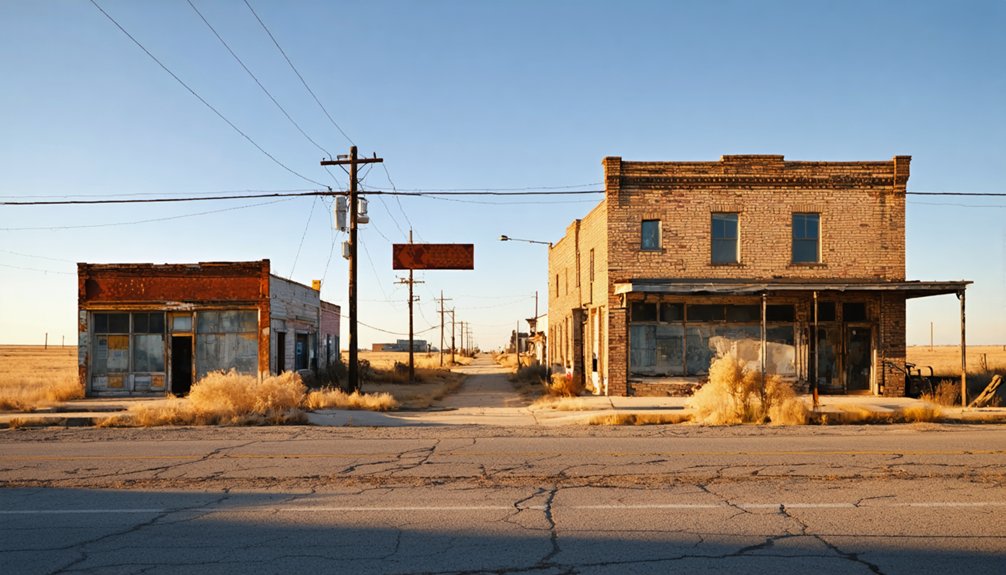
Scattered across the old townsite, remnants of early structures quietly mark where Ulysses once stood before residents packed up and moved on in 1921.
You’ll find ghost town remnants that carry real historical significance if you know what to look for. Explore these highlights during your visit:
- Foundation outlines – crumbling stone and brick foundations reveal the original layout of homes and businesses.
- Cemetery grounds – weathered headstones remain, connecting you directly to the families who built this community.
- Abandoned landscape features – worn pathways and depressions in the earth trace streets that once buzzed with daily life.
Bring a camera, wear sturdy shoes, and take your time walking the site.
Pack your camera, lace up sturdy shoes, and let the site reveal its story at your own pace.
This ground tells a story no museum can fully recreate.
When’s the Best Time to Visit Ulysses, Kansas?
You’ll find Ulysses most welcoming in spring and fall, when mild temperatures make exploring the open plains and ghost town remnants far more comfortable than the brutal summer heat or icy winter winds.
If you’re planning your trip around local culture, check the Grant County event calendar ahead of time, since festivals and community gatherings can add a rich layer to your visit.
Pack layers regardless of the season, because southwest Kansas weather can shift quickly and leave unprepared travelers scrambling.
Ideal Seasons for Visiting
Spring and fall offer the most comfortable conditions for exploring Ulysses and its surrounding ghost town remnants, when mild temperatures make walking the old abandoned sites far more enjoyable than the region’s brutal summer heat.
Plan your trip around these best travel times to fully experience the area’s seasonal attractions:
- Spring (March–May): Wildflowers blanket the Kansas plains, adding striking contrast to the desolate ghost town landscape.
- Fall (September–November): Cooler air and golden prairie light create ideal photography conditions at Old Ulysses.
- Winter (December–February): Fewer crowds give you uninterrupted access to historical sites, though cold winds can be unforgiving.
Avoid July and August—extreme heat turns outdoor exploration into a genuine endurance test across Grant County’s open terrain.
Weather Considerations for Travelers
Whether you’re planning a quick day trip or an extended ghost town road trip through Grant County, Ulysses weather can make or break your experience.
Southwest Kansas weather patterns shift dramatically across seasons, so knowing what to expect keeps you in control of your adventure.
Summers bake the high plains, with temperatures regularly exceeding 100°F — brutal for exploring exposed ghost town sites like Old Ulysses.
Winter brings biting winds and occasional snow, limiting road access. Seasonal variations make spring and fall the clear winners for travelers.
April through May offers mild temperatures and blooming landscapes, while September and October deliver cooler days with stunning prairie skies.
Pack water, sunscreen, and layered clothing regardless of when you visit.
The open plains respect no one unprepared.
Local Events and Festivals
Timing your Ulysses visit around local events transforms a simple ghost town road trip into a fuller cultural experience. Grant County’s calendar offers reasons to plan strategically, letting you layer history with community connection.
- Grant County Fair – Held annually in summer, it showcases local cuisine, livestock traditions, and the agricultural roots that define Western Kansas identity.
- Heritage Days – A celebration honoring Ulysses’s remarkable relocation story, offering cultural experiences through historical reenactments and guided tours of the old townsite.
- Harvest Festivals – Autumn events tied to farming culture give you authentic glimpses into the community’s prosperous agricultural present.
Each event deepens your understanding of why residents chose to rebuild rather than abandon their dreams entirely. You won’t just visit history — you’ll feel it.
Why the Grant County Heritage Center Should Be Your First Stop
Before you hit the road to explore Old Ulysses, make the Grant County Heritage Center your first stop. This resource-rich hub gives you the context you’ll need to truly appreciate the heritage significance of a town that packed up and moved miles down the road in 1921.
Inside, you’ll find historical artifacts that bring Ulysses’ remarkable relocation story to life, from documents tracing the original 1885 settlement to records detailing the financial struggles that forced residents to start fresh.
Staff members can point you toward research guides that map out both the abandoned ghost town site and the thriving new community.
Walking in unprepared wastes your time. Walking in informed transforms the experience into something genuinely memorable and meaningful.
How to Plan Your Ghost Town Drive Around Ulysses
Once you’ve gathered your bearings at the Grant County Heritage Center, mapping out your drive becomes straightforward.
The route connects history, open roads, and ghost town photography opportunities you won’t find anywhere else.
The route connects history, open roads, and ghost town photography you simply cannot find anywhere else in Kansas.
Follow these three stops for a focused, rewarding drive:
- Old Ulysses Site – Photograph the abandoned remnants and locate historical markers explaining the 1921 relocation story.
- New Ulysses Community – Contrast the ghost town with the thriving modern city built just miles away.
- Viola – Swing through this near-ghost town for additional ghost town photography that captures Kansas’s quiet decline.
You’ll cover meaningful ground without backtracking.
Each stop builds on the last, giving you a clear, unfiltered picture of how economics and time reshape communities across Western Kansas.
Near-Ghost Towns Worth Visiting Around Ulysses
While you’re exploring the Ulysses area, you’ll find that several nearby near-ghost towns offer their own haunting glimpses into Kansas’s past.
Viola still exists with a shrinking population, making it a fascinating stop where you can witness a community caught between survival and abandonment in real time.
Michigan Valley tells a similar story, and together these fading towns paint a broader picture of the economic forces that have quietly erased countless communities across western Kansas.
Viola’s Shrinking Community
Although Ulysses itself tells a remarkable story of rebirth, the surrounding area offers another kind of tale — one of slow, quiet disappearance.
Viola’s shrinking community reflects the community challenges facing countless small Kansas towns today. Viola demographics reveal a population barely holding on, shaped by economics, migration, and time.
When you visit, you’ll notice:
- Fading infrastructure — buildings that once served thriving residents now stand weathered and quiet.
- Shrinking services — fewer businesses remain open, signaling deeper economic strain.
- Aging population — younger generations have moved toward opportunity elsewhere, leaving gaps behind.
Viola isn’t dramatic in its decline — it’s subtle.
That quiet honestly makes it more compelling. You’re witnessing history unfolding in real time, one empty storefront at a time.
Michigan Valley Today
Much like Viola, Michigan Valley carries the quiet weight of a community that time has gently set aside. You’ll find its historical significance etched into every weathered structure still standing.
Economic shifts reshaped its community dynamics, pulling younger generations toward opportunity elsewhere and leaving demographic changes that tell a sobering story.
Yet Michigan Valley isn’t entirely silent. Local legends breathe life into its streets, giving visitor experiences a richness that polished tourist destinations rarely offer.
You’re not just passing through a shrinking town — you’re walking through living cultural heritage, where every detail rewards your curiosity.
Add Michigan Valley to your road trip itinerary and let its understated character complement your broader journey through Kansas’s near-ghost towns.
Sometimes the quietest places speak the loudest.
Nearby Towns Worth Exploring
Stepping beyond Michigan Valley, your road trip through Grant County opens up into a wider constellation of near-ghost towns that each carry their own quietly compelling stories.
Economic shifts reshaped these communities quietly but permanently, leaving behind ghost town legends worth chasing.
Three nearby stops deserve your attention:
- Viola — Still breathing with minimal activity, this shrinking community offers an authentic glimpse into rural Kansas decline.
- Saffordville — Farming mechanization slowly erased this once-active settlement, leaving scattered remnants across the landscape.
- Bonita — Young residents departed as agriculture modernized, stripping this town of its future.
Each location rewards curious travelers willing to wander off main roads.
You’ll find that Kansas doesn’t surrender its history dramatically — it simply lets it fade, quietly and honestly.
Where to Base Your Ghost Town Trip in New Ulysses
When you’re planning a ghost town road trip to Old Ulysses, the new Ulysses community makes an ideal base camp. With roughly 5,800 residents, this prosperous Western Kansas hub offers solid ghost town accommodations and a welcoming small-town atmosphere.
Planning a ghost town road trip? New Ulysses, with 5,800 residents, makes the perfect Western Kansas base camp.
You’ll find comfortable lodging options that let you unwind after a day of exploring abandoned sites and dusty backroads.
Ulysses dining options range from casual local eateries to quick stops perfect for fueling up before heading out to the old abandoned site.
The Grant County Heritage Center is also conveniently located here, giving you access to historical research guides and relocation stories before you hit the road.
Using new Ulysses as your home base keeps everything within easy reach throughout your trip.
Frequently Asked Questions
Is There an Admission Fee to Visit the Old Ulysses Ghost Town Site?
You won’t pay ghost town fees to explore Old Ulysses—history’s yours for free! Once thriving, now abandoned, this haunt lets you walk through Ulysses history, connecting past struggles with today’s freedom to roam.
Are Pets Allowed When Exploring the Old Ulysses Abandoned Town Area?
The available knowledge doesn’t confirm pet friendly policies for Old Ulysses, so you’ll want to check with the Grant County Heritage Center before exploring with pets to make sure you’re following any current guidelines.
How Long Does a Typical Ghost Town Road Trip Around Ulysses Take?
Like a wanderer tracing ancient footsteps, you’ll spend a full day uncovering ghost town history here. Road trip tips suggest starting early — exploring Old and New Ulysses rewards you with freedom-filled adventures across Kansas’s fascinating, storied landscapes.
Is the Old Ulysses Ghost Town Site Accessible for Visitors With Disabilities?
You’ll find Old Ulysses accessible for visitors, but it’s wise to check on accessible pathways and visitor accommodations beforehand. Contact the Grant County Heritage Center to confirm your adventure meets your specific accessibility needs before you explore!
Are Guided Ghost Town Tours Available for Groups Visiting Ulysses, Kansas?
Like stepping through a time portal, you’ll find tour guides ready to walk your group through ghost town history and local legends that breathe life into Old Ulysses’ haunting, unforgettable story.
References
- https://www.youtube.com/watch?v=wocJ7F-jdrs
- https://esirc.emporia.edu/server/api/core/bitstreams/eee1d0eb-8529-4e95-a732-12dc55fd687d/content
- https://fhsuguides.fhsu.edu/kansasheritage/grantcounty
- https://digging-history.com/2014/10/15/ghost-town-wednesday-old-ulysses-kansas/
- https://www.legendsofamerica.com/ks-ulysses/
- https://www.youtube.com/watch?v=dy7nLwjHkbY
- https://www.nytimes.com/1929/07/21/archives/buried-cities-of-kansas-lie-beneath-wheat-fields.html
- https://valleyfallshistoricalsociety.blogspot.com/2016/04/ulysses-only-kansas-town-to-leave-town.html
- https://legendsofkansas.com/everywhere-in-kansas-u-v/
- http://www.grantcoks.org/600/Explore-Our-History