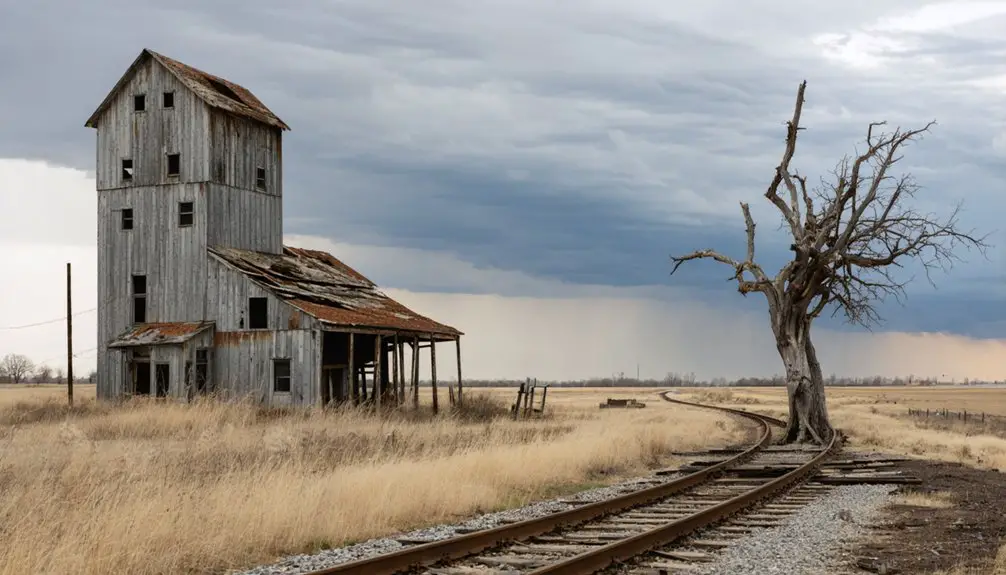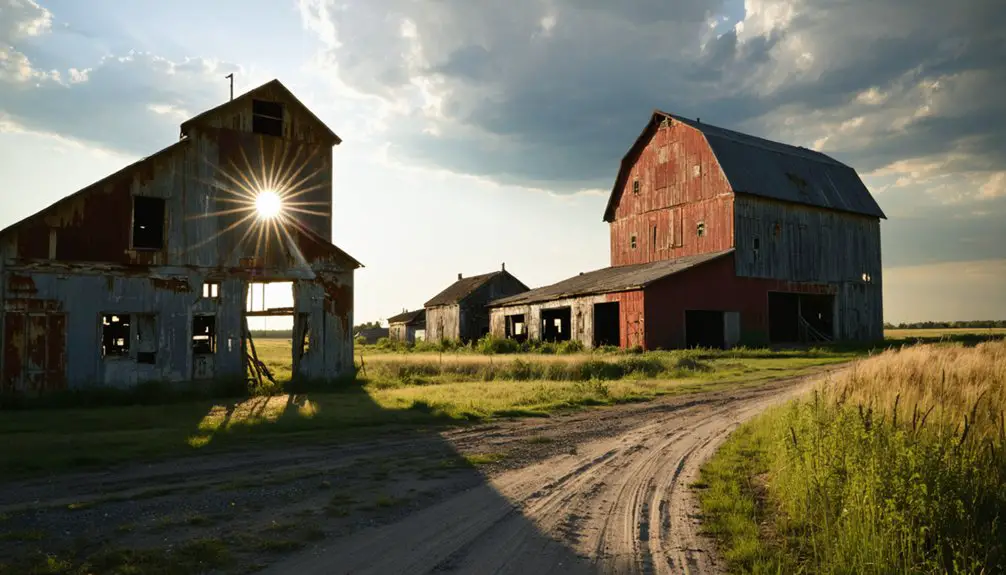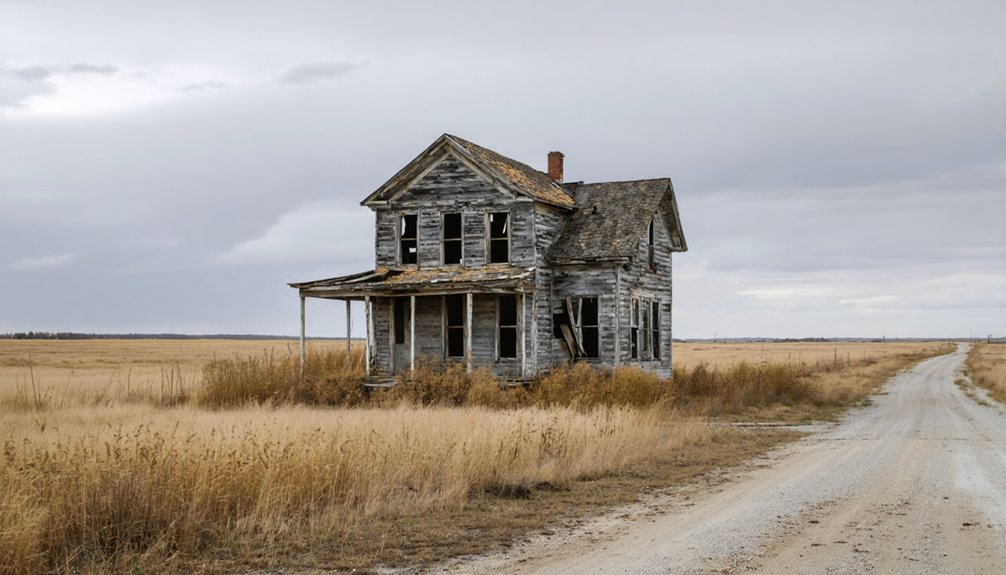
Planning a ghost town road trip to Spina, Minnesota means heading roughly 70 miles northwest of Duluth along US-53 N into Minnesota’s Iron Range, where a forgotten iron ore community waits beneath reclaimed forest. You’ll navigate unmarked terrain to find crumbling foundations, rusted relics, and traces of a Great Northern Railway station. Visit between June and August for the best access. Pack sturdy boots, water, and a compass — there’s far more to this haunting landscape than first appears.
Key Takeaways
- Spina, Minnesota, is a ghost town located about 70 miles northwest of Duluth, reachable via US-53 N through Virginia, Minnesota.
- The best time to visit is June through August, as summer conditions allow easier navigation through the reclaimed forest terrain.
- No marked roads lead to the townsite, so bring a GPS, printed topographic maps, compass, water, and sturdy boots.
- Watch for mine hazards including unstable terrain, collapse zones, and unsafe shafts; carry a first-aid kit and inform someone of your route.
- Leave no trace, avoid entering crumbling structures, and respect the site’s historical significance while exploring abandoned foundations and artifacts.
What Makes Spina, Minnesota Worth the Drive?
Tucked into the remote forests of Minnesota’s Iron Range, Spina rewards curious travelers with something most ghost towns can’t offer—an almost completely untouched sense of abandonment.
Its Spina history traces back to 1909, when iron ore extraction built an entire community from scratch, complete with homes, shops, and a Great Northern Railway station. That mining legacy shaped every foundation still scattered beneath the encroaching trees today.
You won’t find tourist signs or paved pulloffs here. What you’ll find instead is raw, unfiltered history reclaimed by nature—crumbling structures, forgotten artifacts, and silence thick enough to feel.
For travelers who crave discovery over convenience, Spina delivers a rare, honest encounter with the past that no restored historical site ever could.
How Spina Went From Iron Range Boom Town to Ghost Town
When W.J. Power took control of the Kinney Mine around 1909, Spina exploded into existence. Iron ore flowed freely, and with it came workers, families, shops, and a Great Northern Railway station connecting this remote corner of Minnesota to the wider world.
You can almost hear the dynamite echoes and locomotive whistles if you stand quietly among the trees today.
But mining legacies are fragile. Once the ore ran thin, the jobs vanished, and Spina’s population quietly dissolved.
No dramatic disaster — just the slow, inevitable exhale of a community that had nothing left to hold it together. Buildings emptied, foundations cracked, and the forest reclaimed what men had built.
What remains is haunting, honest, and worth every mile you’ll travel to find it.
What You’ll Actually Find at the Spina Townsite Today
Stepping into the Spina townsite feels like reading the last chapter of a book someone else left behind. Foundations push through the earth like memories refusing to stay buried.
You’ll find scattered abandoned artifacts — rusted metal, broken masonry, remnants of daily lives cut short when the ore ran dry.
The surrounding forest has quietly reclaimed most structures, threading roots through floors where families once gathered. Traces of the railway station hint at movement and purpose now gone silent.
This place rewards the curious. Every fragment tells a story rooted in mining history — the ambition, the labor, the inevitable quiet.
You’re not walking through ruins. You’re walking through decisions, consequences, and time. Bring your camera. Let the site speak without interruption.
How to Get to Spina From Duluth
From Duluth, you’ll head northwest roughly 70 miles, picking up US-53 N and cutting through Virginia, Minnesota, deep into the Iron Range‘s haunted industrial heart.
The drive takes about 1.5 to 2 hours one way, carrying you through landscapes that once hummed with ore trains and shift whistles.
From there, you’ll trace what remains of the Great Northern Railway‘s path to reach Spina’s remote, forest-swallowed townsite.
Starting Point: Duluth
Duluth serves as your natural gateway to Spina, a forgotten iron town roughly 70 miles to the northwest. From Duluth’s harbor district, head north on US-53 through Virginia, Minnesota, and you’ll feel the landscape shift — civilization thinning, forests thickening, the Iron Range reclaiming its identity mile by mile.
Plan roughly two hours each way, though summer offers the most forgiving conditions for traversing the final stretch near Great Scott Township.
Spina history emerges slowly here; there are no welcome signs or maintained roads leading directly to the townsite. What remains are foundations, scattered mining artifacts, and forest-swallowed silence.
Pack water, wear sturdy boots, and bring a compass. Spina doesn’t meet you halfway — you earn the discovery, which makes it worth every mile.
Route Via US-53
Your route to Spina begins on US-53 North, a two-lane artery that cuts through the heart of Minnesota’s Iron Range like a scar that never quite healed.
From Duluth, you’ll push northwest through Virginia, Minnesota, where US 53 scenery shifts dramatically — pine forests thickening, taconite-stained hillsides emerging, and historic landmarks like old mine headframes standing sentinel against slate-grey skies.
You’re not just driving here; you’re tracing the same corridor that once carried iron ore workers toward uncertain futures. The road demands about 70 miles and roughly two hours of your time.
Past Virginia, the landscape grows wilder, more honest. Eventually, you’ll abandon pavement entirely, following remnants of the old Great Northern Railway path toward Spina’s forgotten coordinates: 47°31′37″N, 92°44′27″W.
Travel Time Expectations
Once you leave Duluth’s harbor behind, you’re looking at roughly 70 miles and one and a half to two hours of drive time before Spina’s ghost coordinates materialize from the treeline — and that’s assuming summer roads are cooperative.
Winter visits aren’t recommended; seasonal closures and unpaved stretches can swallow your timeline completely.
The travel time feels earned rather than wasted. These scenic routes carry you through Virginia, Minnesota, where US-53 threads past Iron Range towns that barely survived the same mining collapse that swallowed Spina whole.
You’re not just covering miles — you’re tracing an industrial obituary written across the northern landscape.
Build in extra time for the final approach. No current roads lead directly to the townsite, so the last stretch requires some independent navigation through reclaimed forest.
When Is the Best Time to Visit Spina?
If you’re planning a trip to Spina, you’ll want to aim for summer, when the old Great Northern Railway paths are most navigable and the forest hasn’t yet swallowed what little remains of the townsite.
The Iron Range winters are brutal, burying foundations and artifacts under heavy snow that makes exploration both difficult and potentially dangerous.
Late June through August gives you the longest daylight hours and the best chance of actually finding the scattered remnants of this forgotten mining village before nature reclaims them entirely.
Summer Offers Best Access
Although Spina sits frozen in time year-round, summer is your best window to actually reach it. Snow and mud seal off the old Great Northern Railway path from late fall through early spring, making ghost town exploration genuinely difficult or impossible.
Summer accessibility opens that corridor, letting you hike through reclaimed forest to foundations and scattered mining artifacts without fighting northern Minnesota’s brutal seasonal conditions.
June through August delivers longer daylight hours, drier trail conditions, and clearer sightlines before heavy foliage thickens. You’ll want every advantage traversing a site with no marked roads or maintained paths.
Pack water, sturdy boots, and a compass. Spina doesn’t welcome casual visitors — it rewards prepared ones. Come summer, that reward feels earned in the best possible way.
Seasonal Weather Considerations
Northern Minnesota doesn’t ease you into its seasons — it swings hard between extremes, and Spina feels every shift.
Seasonal challenges shape every visit, so timing matters. Take weather precautions seriously before heading into this remote Iron Range wilderness.
Each season carries its own reality:
- Summer (June–August): Best access, dry trails, long daylight hours
- Fall (September–October): Stunning foliage, cooler temps, early frost risk
- Winter (November–March): Heavy snowfall makes the site virtually unreachable
- Spring (April–May): Thawing ground creates muddy, unstable terrain
You’re chasing a place that time forgot — don’t let the weather chase you out.
Plan smart, pack layers, and respect what Minnesota’s wilderness demands.
Nearby Iron Range Ghost Towns Worth the Detour
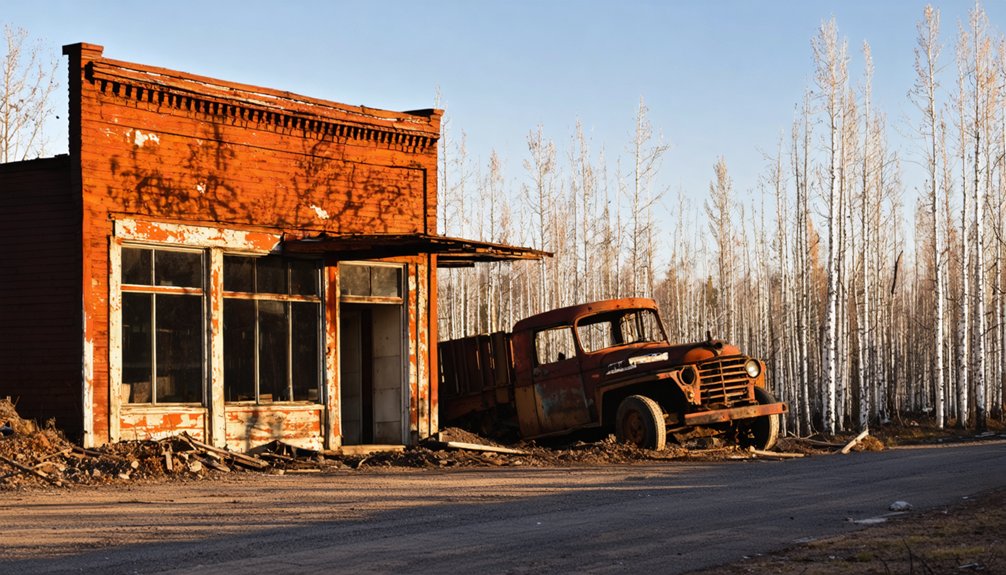
While Spina deserves its own pilgrimage, the surrounding Iron Range hides several ghost towns that’ll reward you for staying on the road a little longer.
Sparta, just 20 miles away, carries iron mine ruins that echo Spina legends of hard labor and harder luck. You’ll find mining heritage etched into collapsed headframes and rusted equipment slowly surrendering to local wildlife reclaiming the landscape.
Hard labor and harder luck haunt Sparta’s iron mine ruins, where collapsed headframes rust quietly back into the land.
Elcor, once called Elba, offers another layer of this region’s industrial past, its remnants standing as quiet monuments to historical preservation efforts that keep these stories alive.
Each stop deepens your understanding of why entire communities vanished when ore ran dry. Together, these towns don’t just tell Minnesota’s story — they let you feel it beneath your boots.
Can You Do the Iron Range Ghost Town Loop in One Day?
Seeing Sparta, Elcor, and Spina in a single day is ambitious but doable if you’re disciplined about your schedule. Leave Duluth by 7 a.m., and you’ll have enough daylight for serious ghost town photography and meaningful mining history exploration across all three sites.
- Hit Sparta first, while morning light softens the iron mine ruins beautifully.
- Reach Elcor by midday, when shadows reveal crumbling foundations with striking contrast.
- Arrive at Spina by early afternoon, giving you time to wander the forest-reclaimed townsite.
- Return to Duluth before dark, ideally before 7 p.m.
You’re not just ticking boxes — you’re tracing a vanished world that once roared with industry.
Pack water, wear boots, and let the silence of these forgotten places speak.
What Mine Hazards to Expect at Spina and How to Prepare
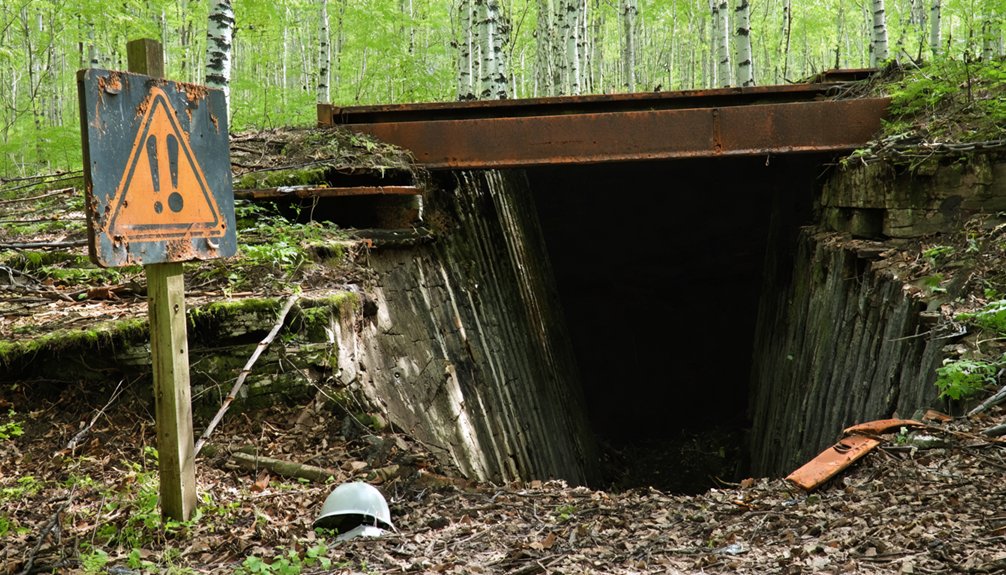
Abandoned mine sites like Spina don’t forgive the unprepared. Mine safety isn’t optional here — it’s survival logic. You’re walking ground that’s been shifting and settling for over a century.
Hazard awareness starts before you arrive: research collapse zones, unstable shafts, and flooded pit areas common to Iron Range sites.
Wear steel-toed boots and carry a headlamp, even in daylight. Watch for subsidence — soft ground that suddenly gives way over old tunnels.
Never enter enclosed structures; rotted timber fails without warning. Bring a first-aid kit, a charged phone, and tell someone your exact route.
The freedom to explore forgotten places like Spina comes with responsibility. Respect what’s left, stay alert, and you’ll walk out with memories instead of regrets.
What to Bring for a Remote Iron Range Ghost Town Visit
Seven essentials separate a miserable Iron Range outing from a memorable one. Spina’s remote exploration demands serious preparation—you’re stepping into forgotten territory with real historical significance and zero infrastructure.
Pack these before you leave:
- Navigation tools: GPS device plus printed topographic maps; cell service fails completely near Great Scott Township
- Water and food: Carry two liters minimum; no services exist within miles of the townsite
- Protective gear: Sturdy boots, long pants, and gloves guard against unstable foundations and overgrowth
- Documentation kit: Camera, field notebook, and extra batteries capture architectural remnants worth preserving
The forest reclaims Spina quietly and quickly. You’re walking ground where miners once built entire lives around iron ore extraction.
Respect that weight by arriving ready for whatever the wilderness offers.
Frequently Asked Questions
Is There Cell Phone Coverage Available Near the Spina Townsite?
Cell service is unreliable near Spina’s remote townsite, so you’ll likely face connectivity issues deep in Minnesota’s forgotten Iron Range. Embrace the freedom—disconnect from the digital world and let the echoes of 1909 surround you.
Are There Any Restroom Facilities Accessible Along the Route to Spina?
Restroom locations remain rural and rare, so plan pit stops purposefully. Your travel tips: fuel up and freshen up in Virginia, MN along US-53 N — it’s your last reliable, freedom-granting gateway before Spina’s untamed wilderness awaits.
Can Visitors Legally Collect Mining Artifacts Found at the Spina Site?
You shouldn’t collect artifacts here — artifact preservation laws and mining regulations protect these remnants. Respect the echoes of those hardworking miners by leaving everything undisturbed, so future wanderers can still feel history’s powerful, rust-dusted pulse beneath their boots.
Is the Spina Site on Public or Privately Owned Land?
Like buried treasure waiting to be claimed, Spina’s ownership remains unclear. You’d want to verify land records before exploring, as its historical significance and local legends make it a contested gem worth researching before your visit.
Are Guided Tours of the Spina Ghost Town Available From Local Operators?
No guided tours exist for Spina, so you’ll forge your own path through its ghost town history. Embrace the freedom of self-guided exploration, uncovering local legends and forgotten echoes that no tour operator could script for you.
References
- https://kids.kiddle.co/Spina
- https://en.wikipedia.org/wiki/Spina
- https://www.cbsnews.com/minnesota/news/forestville-southern-minnesota-ghost-town-still-attracting-summer-visitors/
- https://www.youtube.com/watch?v=C_OxrYFOMYM
- https://www.minnesotahistory.org/post/a-complete-guide-to-the-ghost-towns-of-hennepin-county
- https://thievesriver.com/blogs/articles/ghost-towns-in-minnesota
- http://wikimapia.org/13668904/Spina-MN-Ghost-Town
- https://eastmetrowater.org/2026/01/09/echoes-of-a-ghost-town-at-point-douglas/
- https://www.youtube.com/watch?v=EoOpycaZC00