You’ll find Pescadito at coordinates 27°30’38″N 99°15’27″W in Webb County’s remote southwestern corner, accessible only by rural roads from Laredo where GPS signals fade and paper maps become essential. This abandoned railway town offers nothing but scattered wooden ties and wind-swept earth where 25 souls once lived, so you’ll need landowner permissions, first-aid supplies, and someone tracking your route. Visit between September and February when temperatures drop below summer’s brutal 100°F, and pack everything you’d need if civilization disappeared—because out here, it already has.
Key Takeaways
- Start from Laredo and use GPS coordinates 27.51056°N, 99.25750°W, as no public transportation reaches this remote abandoned settlement.
- Visit between September and March for mild temperatures, avoiding summer heat exceeding 100°F and dangerous weather conditions.
- Bring paper maps since GPS signals fade in rural areas, and verify land access permissions before exploring private parcels.
- Expect no standing structures or markers—only scattered railroad fragments, overgrown tracks, and wind-swept earth remain today.
- Pack first aid supplies, inform someone of your route, and prepare for wildlife encounters and limited infrastructure.
Getting to Pescadito: Routes and Transportation Options

Since Pescadito sits in the remote southwestern corner of Webb County, your journey to this ghost town requires careful navigation to coordinates 27.51056°N, 99.25750°W. I’ve learned that local transportation services don’t reach this abandoned settlement—you’ll need your own vehicle.
Pescadito’s remote coordinates demand self-navigation—no public transport reaches this isolated ghost town in Webb County’s forgotten southwestern wilderness.
Your travel logistics planning starts in Laredo, where Webb County roads branch toward Tios Creek. Apple Maps and MapQuest will guide you through the southwestern sector, though I recommend verifying current road conditions before departing.
This former 1881 Texas Mexican Railway stop now exists as a populated place on maps only. Use the coordinates directly, avoiding confusion with Laredo’s Mariscos El Pescado Del Norte seafood restaurant.
The ghost town’s isolation demands self-reliance—pack provisions and fuel for backcountry exploration where freedom meets forgotten history.
The History Behind the Abandoned Railway Town
Long before I traced my finger across coordinates on a faded map, Pescadito emerged from the dusty rangeland of Webb County as a humble ranching outpost. This forgotten settlement embodied Spanish Texas border traditions until the Texas Mexican Railroad transformed everything.
The railway’s arrival sparked dramatic changes in regional railroad economies:
- Railroad prosperity brought freight handlers, merchants, and families seeking opportunity
- Strategic positioning made Pescadito a critical stop alongside Nye and Mirando City
- Economic dependency on rail traffic created vulnerability to route changes
- Inevitable decline followed when realignments bypassed the town entirely
You’ll find Pescadito’s story mirrors countless rail towns—thriving communities reduced to whispers on the wind. The railroad giveth, the railroad taketh away, leaving only crumbling foundations for wanderers like us.
What Remains: Exploring the Ghost Town Today
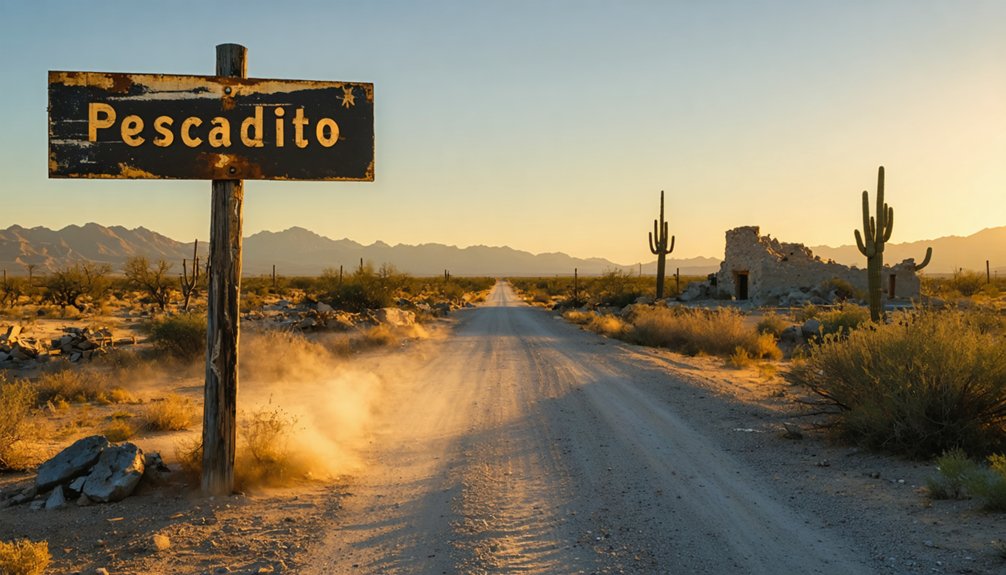
When you arrive at Pescadito’s scattered remains, you’ll find fragments of the Texas Mexican Railroad era slowly surrendering to South Texas brush and relentless sun.
The exact condition of what’s left—whether crumbling foundations, rusted rail infrastructure, or weathered building frames—depends on what time and vandalism haven’t yet claimed.
Before you explore, you’ll need to verify land access permissions and current road conditions, as this remote Webb County site sits far from maintained tourist routes.
Remnants Along Railway Tracks
The coordinates 27°30’38″N 99°15’27″W lead to a barren stretch of southwestern Webb County where Pescadito once hummed with the rhythm of railway commerce. You’ll find the historical significance buried beneath mesquite and time, where the Texas Mexican Railway once carved progress through South Texas wilderness.
As you search for railway remnants, watch for:
- Overgrown track alignments cutting through scrubland
- Weathered wooden ties scattered among native vegetation
- Graded earthworks marking the former rail corridor
- Metal fragments from 1881-era railway infrastructure
The landscape offers little else—no structures, no markers, just wind-swept earth where 25 souls once traded mesquite wood for survival. You’re standing where enterprise died when coal replaced wood in 1946, leaving only ghost-whispers of prosperity.
Safety and Access Tips
Reaching Pescadito demands calculated preparation—this isn’t a roadside attraction with parking lots and gift shops. You’ll navigate rural roads where GPS signals fade, making paper maps essential. Webb County’s private land parcels require permission before entry, and abandoned structures here crumble dangerously from decades of weather exposure.
The border terrain brings wildlife encounters—rattlesnakes, coyotes—while unmarked hazards hide beneath overgrown vegetation. Flash floods strike suddenly during South Texas storms, and emergency services remain hours away with spotty cell coverage. Summer heat exceeds 100°F, demanding serious hydration.
You’re responsible for your own safety: pack first aid supplies, inform someone of your route, and respect what’s left standing. This forgotten railroad settlement rewards the self-reliant explorer who understands freedom means accepting risk.
Best Time to Visit and Safety Considerations
Planning your ghost town road trip to Pescadito requires more than marking coordinates on a map—timing shapes everything from the quality of light filtering through abandoned doorways to whether you’ll have those crumbling structures all to yourself.
Timing transforms ghost town visits—the right season determines whether you capture haunting solitude or share ruins with crowds.
Optimal visiting windows:
- Fall through winter delivers mild temperatures, golden light perfect for photography, and virtually no off season crowds
- Early mornings reveal frosty stillness against weathered wood, prime for exploration before midday heat
- Regional weather patterns bring cooler evenings September through February—ideal for camping near ruins
- Late February to early March offers comfortable hiking weather while avoiding spring tourism spikes
You’ll want proper footwear for unstable structures, plenty of water regardless of season, and respectful awareness that you’re walking through someone’s abandoned dreams. Book nearby accommodations early during wildflower months.
Combining Your Trip With Laredo Attractions
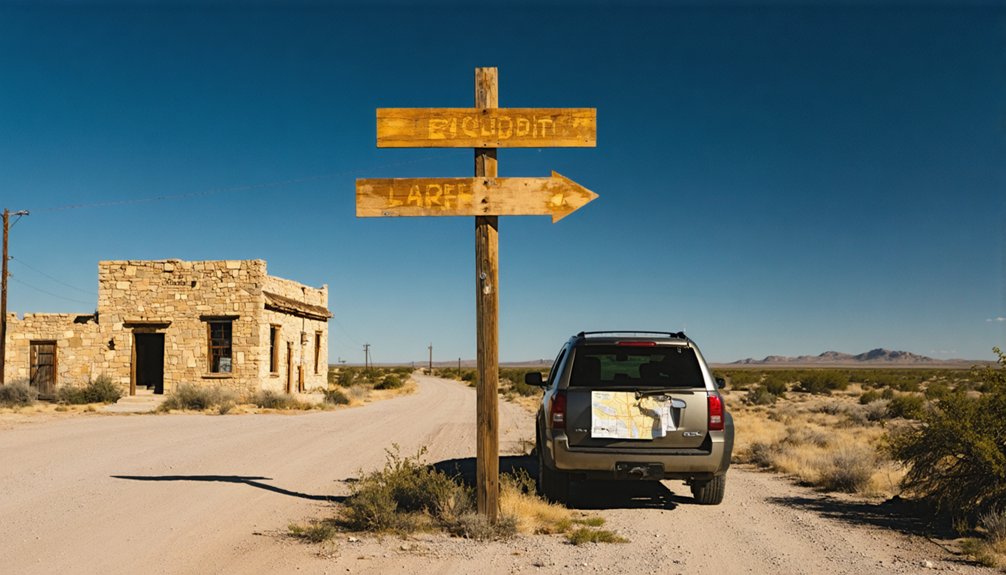
Since Laredo serves as your gateway to Pescadito, you’ll find the city’s historic downtown plaza and San Agustín Cathedral anchoring a rich tapestry of borderland culture that spans three centuries.
The Republic of the Rio Grande Museum and Laredo Center for the Arts offer intimate glimpses into the region’s contested past, while the nearby Border Heritage Museum chronicles the unique fusion of Texan and Mexican identities.
After exploring the ghost town’s weathered remnants, you can retreat to Laredo’s authentic taquerías and comfortable hotels that line both sides of the international bridges.
Historic Downtown Laredo Sites
While Pescadito may have surrendered to time, nearby Laredo pulses with centuries of living history concentrated within the San Agustín de Laredo Historic District. Founded in 1755 by Tomás Sánchez, this National Register treasure showcases authentic Spanish Colonial architecture through district revitalization efforts that’ve transformed it into a Texas Main Street city.
You’ll discover freedom in wandering these brick streets lined with swaying palms:
- San Agustín Cathedral – Gothic Revival spires tower over the 1755 plaza, evolving from humble hut to stone masterpiece
- Republic of the Rio Grande Museum – Walk through the 1830s capitol of a short-lived rebellion against Santa Anna
- Historic haciendas – Casa Vidaurri and La Posada Hotel preserve early Hispanic living quarters
- Laredo Center for the Arts – Former City Hall showcasing historic preservation initiatives
Everything’s within walking distance, free from tourist crowds.
Border Culture and Museums
After wandering Laredo’s historic streets, I found myself drawn to the restored brick Italianate facade of Villa Antigua Border Heritage Museum at 810 Zaragoza Street. This early 20th-century residence, saved through museum partnerships between Webb County Heritage Foundation and the county itself, stands as an embodiment of cultural preservation along the Rio Grande.
Inside, exhibits trace indigenous peoples, Spanish colonizers, railroad boom, and the evolution of Tex-Mex cuisine—that delicious fusion born from centuries of cross-border exchange.
Just steps away, the Republic of the Rio Grande Museum occupies the alleged capitol of a short-lived 1830s nation. Nearby, Laredo Center for the Arts pulses with contemporary creativity. Together, these institutions form a walking tour through borderland identity, where independence means embracing heritage without borders.
Dining and Lodging Options
Pescadito exists now only as a whisper along abandoned rail beds, so your base camp becomes Laredo itself, twenty miles south where the hotels have running water and the restaurants serve something beyond memories. You’ll find unexpected sophistication here—farm to table cuisine blending Tex-Mex traditions with border innovation, while local vineyards dot the surrounding ranchland, producing wines that taste of limestone and freedom.
Smart travelers anchor themselves in:
- Historic downtown hotels where ceiling fans spin lazy circles above wrought-iron beds
- Riverside cantinas serving carne asada that’s been perfected across generations
- Border breweries crafting beers with mesquite and prickly pear
- Family-run posadas offering homemade tortillas at breakfast
From this living town, you’ll chase Pescadito‘s ghost at dawn, returning each evening to civilization’s comforts.
Photography Tips for Capturing Abandoned Structures
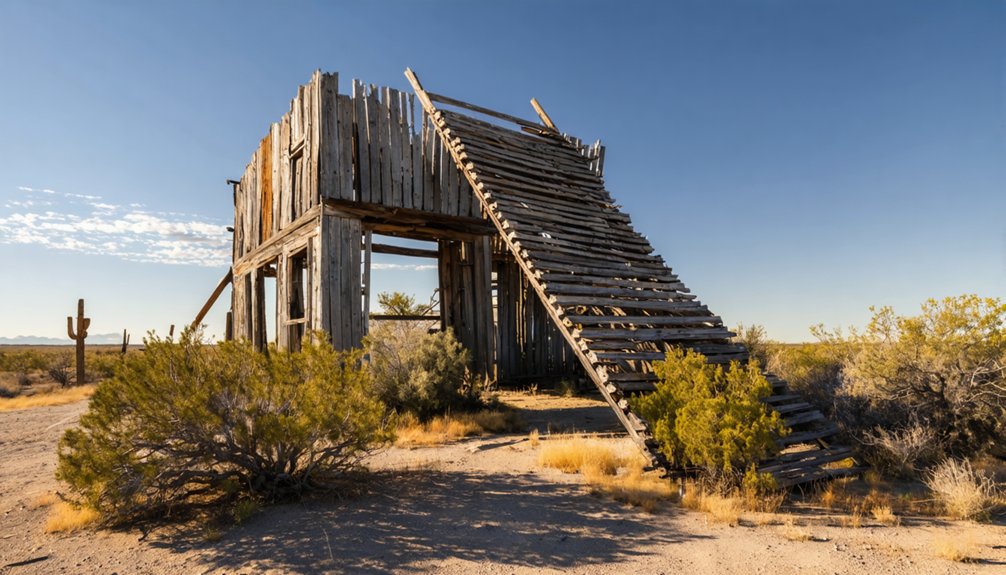
Before I raised my camera to Pescadito’s crumbling facades, I learned that abandoned structures demand a different visual language than conventional subjects. Leveraging natural lighting became essential—I arrived during early morning’s golden hour, when angled sunlight streamed through collapsed roofs and shattered windows, illuminating wildflowers thriving in decay.
My 24mm wide-angle lens emphasized the haunting emptiness. I positioned boulders as corner anchors, letting staircases form leading lines into darkened corridors. Capturing texture and contrast meant pairing rust-streaked metal against new vine growth, cracked concrete embraced by moss.
I avoided flash entirely, instead using long exposures at f/8 to preserve authentic textures. Low ground angles shooting upward heightened the disorientation these ghost town structures naturally evoke. A single discarded chair became my centerpiece—more powerful than photographing entire buildings.
Essential Gear and Supplies for Remote Exploration
When venturing into Pescadito’s skeletal remains, I couldn’t rely on corner stores or cell service—every item in my pack became critical to survival. Contingency planning meant doubling everything: two MagLite flashlights, spare batteries, backup headlamps. Unexpected challenges lurked in collapsed structures and contaminated debris.
In Pescadito’s ruins, every piece of gear became a lifeline—redundancy wasn’t optional, it was survival doctrine.
My essential loadout included:
- Protective armor: Thick-soled boots, heavy-duty gloves, dust respirator for toxin-laden air
- Navigation tools: Multi-tool, full-tang knife, 200 feet of paracord, carabiner clips
- Emergency provisions: Extensive first-aid kit, Sawyer Mini filter, 40 oz metal water container
- Sustenance gear: Freeze-dried meals, high-energy snacks, ferro rod fire starter
For overnight expeditions into Texas’s unforgiving terrain, I packed a zero-degree sleeping bag and ground pad—creature comforts that separated adventure from catastrophe in Pescadito’s abandoned wasteland.
Frequently Asked Questions
Are There Any Guided Tours Available for Pescadito Ghost Town?
I haven’t found private guided tours for Pescadito, so you’ll need to forge your own path. Create self-guided walking tours through the crumbling ruins—I’ve discovered that exploring freely, without schedules or crowds, captures the town’s haunting essence best.
Is Camping Allowed Near Pescadito or on the Abandoned Property?
Better safe than sorry—camping directly on Pescadito’s abandoned property isn’t advisable due to unclear local land ownership laws. You’ll find nearby camping options at established campgrounds where you’re free to explore legally without trespassing concerns.
Can I Legally Enter the Remaining Structures in Pescadito?
You can’t legally enter Pescadito’s structures without permission. Ownership legalities still apply to abandoned buildings, and trespassing concerns are real—even ghost towns have landowners. I’ve learned respecting private property prevents legal trouble while exploring Texas’s forgotten places.
Are There Any Local Legends or Ghost Stories About Pescadito?
While Pescadito lacks widely documented haunting apparitions or local folklore myths, I’ve heard whispers from old-timers about shadowy figures wandering the abandoned buildings at dusk—stories passed down through generations that you’ll discover exploring independently.
What Happened to the Original Residents After the Town Declined?
After the decline, you’ll find the original residents quietly drifted toward relocatable job opportunities in nearby Laredo. They abandoned communal living arrangements, seeking fresh starts where coal-powered progress promised liberation from Pescadito’s fading mesquite economy.