Planning a ghost town road trip to Prairie Bluff, Alabama means exploring a town that’s literally underwater. Founded in 1819 in Wilcox County, Prairie Bluff thrived on river commerce before railroads killed its economy and a 1963 dam buried its streets beneath the William “Bill” Dannelly Reservoir. Today, only its cemetery survives, with graves dating to the 1830s. You’ll want comfortable temperatures between October and April for the best experience—and there’s far more to this forgotten story than you’d expect.
Key Takeaways
- Prairie Bluff, founded in 1819 in Wilcox County, Alabama, is now submerged under William “Bill” Dannelly Reservoir, with only its cemetery remaining visible.
- Visit between October and April for comfortable temperatures, with fall offering ideal photography and spring showcasing wildflowers and local folklore.
- Pack offline maps, water, sturdy footwear, and bug spray, as the cemetery is the only accessible landmark at the site.
- The Prairie Bluff Loop connects six ghost towns, including Old Cahawba and Claiborne, covering approximately 400 miles across South Alabama.
- Access to the original townsite road requires a security code through a gated subdivision; use GPS coordinates 32°8′3.52″N, 87°24′12.99″W for navigation.
Why Prairie Bluff Is Alabama’s Most Overlooked Ghost Town?
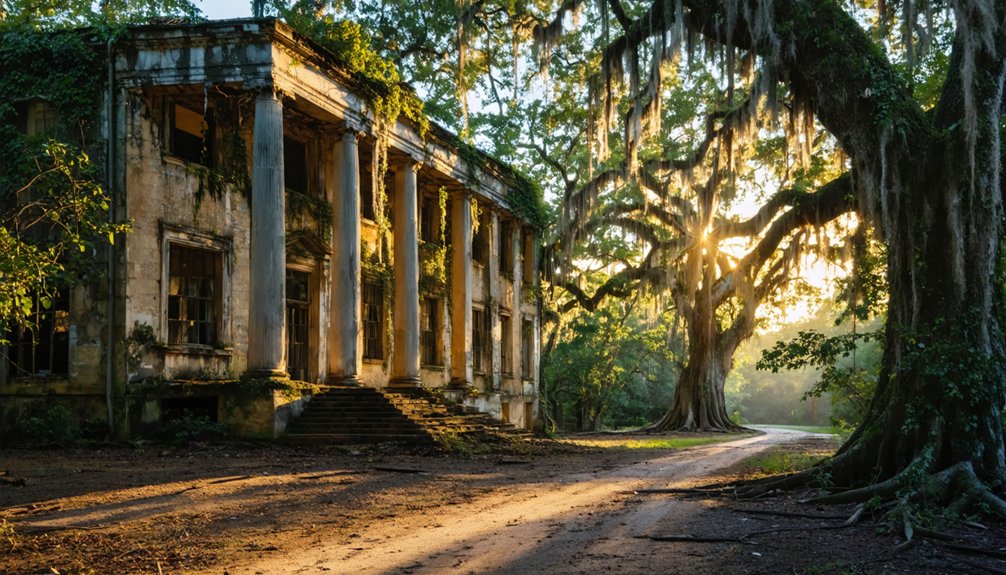
When most people think of Alabama ghost towns, Old Cahawba gets all the attention — but Prairie Bluff has it beat in sheer mystery. Founded in 1819, this Wilcox County river town thrived for decades before quietly vanishing from maps around 1900.
No dramatic collapse. No headline event. It simply ran out of reasons to exist.
That’s exactly what makes it compelling. Prairie Bluff represents the kind of hidden histories that mainstream tourism ignores — forgotten communities swallowed by time, water, and shifting trade routes.
The William “Bill” Dannelly Reservoir now covers much of what once stood there, and a gated subdivision guards the original road.
Much of Prairie Bluff now sleeps beneath reservoir waters, its original road sealed behind subdivision gates.
Yet the Prairie Bluff Cemetery remains, its headstones dating back to the 1830s, silently proving this place was real.
How Does Prairie Bluff Compare to Alabama’s Other Lost Towns?
Prairie Bluff wasn’t the only Alabama river town that quietly blinked out of existence — it’s one of at least six notable South Alabama ghost towns, each with its own story of rise and abandonment.
When you make Prairie Bluff comparisons, the differences become revealing. Claiborne, founded in 1816, once swelled to 5,000 citizens before shrinking to just 350 by 1872 — a dramatic, measurable collapse.
Prairie Bluff simply faded. Vienna in Sumter County tells a similar quieter story, left behind as trade moved on.
Among Alabama ghost towns, Prairie Bluff stands out not for a dramatic downfall but for its gradual disappearance. No catastrophe ended it — just shifting economics.
That distinction makes exploring Prairie Bluff feel less like visiting ruins and more like uncovering something the world forgot on purpose.
How Did Prairie Bluff Go From River Boomtown to Ghost Town?
At its peak in 1861, Prairie Bluff hummed with river trade along the original St. Stephens-to-Cahaba road. River commerce fueled its growth, and the Alabama River kept goods and people moving through town.
Then the Civil War ended, and everything shifted.
Then the war ended. And Prairie Bluff was never the same again.
Railroads arrived and rewrote the rules of trade overnight. Economic shifts pulled merchants, families, and opportunity away from river towns like Prairie Bluff toward faster, cheaper rail connections.
Without commerce, there’s no reason to stay.
What’s Actually Left at Prairie Bluff Today?
So what did time and water leave behind? Honestly, not much — but what remains carries serious weight. Prairie Bluff Cemetery stands as the sole surviving physical feature of this once-thriving river town. Your cemetery exploration here uncovers marked graves dating from the 1830s through the 1860s, each headstone quietly confirming that real people built real lives in this place.
Don’t expect historical artifacts scattered across open ground. The 1963 construction of Millers Ferry Lock and Dam submerged much of the original townsite beneath the William “Bill” Dannelly Reservoir.
The original road into town now runs through a gated subdivision, requiring a security code for access.
What you’re left with is a graveyard, some submerged history, and the satisfying knowledge that you’ve tracked down something most people never knew existed.
How to Find Prairie Bluff in Wilcox County
If you’re ready to track down Prairie Bluff yourself, plug these coordinates into your GPS: 32°8′3.52″N, 87°24′12.99″W in Wilcox County, Alabama.
You’ll approach the site via the original river road that once connected St. Stephens to Cahaba, though today that historic route runs through a gated subdivision requiring a security code.
Plan your visit with the cemetery as your landmark, since it’s the only visible remnant that’ll confirm you’ve found the right spot.
Prairie Bluff’s Exact Coordinates
Finding Prairie Bluff in Wilcox County, Alabama, starts with one set of precise coordinates: 32°8′3.52″N 87°24′12.99″W.
These coordinates’ significance goes beyond simple navigation — they anchor you to a community that thrived, faded, and quietly disappeared from maps around 1900.
For serious ghost town exploration, knowing exactly where you’re headed makes all the difference.
Before you arrive, confirm these three details:
- Area code — You’re working within 334, Central Time Zone territory
- River position — Prairie Bluff sits directly along the Alabama River
- Access point — The original road entering the site now runs through a gated subdivision requiring a security code
Drop those coordinates into your GPS and let them guide you toward one of Alabama’s most hauntingly forgotten river towns.
Once you’ve locked in those coordinates, charting a course to Prairie Bluff means tracing what remains of one of Alabama’s oldest roads — the original route connecting St. Stephens to Cahaba.
This road once carried the river trade that kept Prairie Bluff alive, and its historical significance still echoes in every mile you drive.
Here’s the catch: the original road now runs through a private subdivision, complete with a gate and security code.
You won’t be driving straight through. Instead, use the coordinates to get close, then navigate the surrounding area on foot or by alternative access points.
The Alabama River flanks the site, so plan accordingly.
Pack your curiosity, respect private property, and you’ll find the journey itself rewarding.
What to Expect at the Prairie Bluff Cemetery?
The Prairie Bluff Cemetery stands as the sole surviving physical remnant of what was once a thriving river town, and it’s worth knowing what you’ll find before making the trip.
The site carries deep historical significance, with headstones dating from the 1830s to the 1860s marking the lives of Prairie Bluff’s original settlers.
Here’s what to expect:
- Marked graves from the town’s peak decades, offering tangible proof of a real community.
- Quiet, undisturbed grounds that reward respectful, curious visitors.
- No formal facilities, so come prepared with water and sturdy footwear.
Cemetery etiquette matters here — walk carefully, photograph respectfully, and leave everything as you found it.
This ground represents 200 years of Alabama history that deserves your full reverence.
When Is the Best Time to Visit Prairie Bluff?
You’ll find the most rewarding visits to Prairie Bluff happen in the cooler months between October and April, when mild temperatures make cemetery exploration and outdoor photography far more comfortable.
Summer heat and humidity in Wilcox County can be brutal, and seasonal rain turns the unpaved stretches of the old river road into a muddy challenge for standard vehicles.
If you’re planning the 400-mile multi-ghost-town loop starting from Cahaba, a dry autumn or early spring weekend gives you the best combination of passable roads and manageable daylight hours.
Ideal Visiting Seasons
Although Prairie Bluff sits quietly in Wilcox County year-round, timing your visit matters more than you might expect.
- Fall (September–November): Cooler temperatures make cemetery walks comfortable, and thinning foliage reveals the best photography spots around Prairie Bluff Cemetery’s oldest headstones.
- Spring (March–May): Wildflowers frame the historic grave markers beautifully, and locals are more willing to share local folklore about the town’s river-trading past before summer heat drives everyone indoors.
- Avoid Summer: High humidity and dense vegetation along the Alabama River make navigation miserable and obscure what little remains visible at the site.
You’re chasing a town that vanished around 1900, so give yourself every advantage. Choose a season that lets the landscape work *with* you, not against you.
Weather and Road Conditions
Weather shapes every ghost town visit, and Prairie Bluff’s location deep in Wilcox County makes conditions especially decisive. Alabama’s summer heat and humidity can make outdoor exploration brutal, while afternoon thunderstorms frequently turn unpaved rural roads into muddy obstacles that’ll stop even capable vehicles cold.
Spring and fall deliver the most favorable weather patterns, offering cooler temperatures and drier ground. You’ll move freely through the site without battling oppressive heat or slippery conditions.
Winter visits remain possible, though occasional ice and fog create real road safety concerns on the county’s winding back roads.
Always check local forecasts before departing and carry emergency supplies. The original river road’s remote character means help won’t arrive quickly if conditions turn against you. Preparation guarantees your freedom to explore fully.
What to Bring Before Driving Out to Prairie Bluff?
Before heading out to Prairie Bluff, pack smart — this is a remote stretch of Wilcox County where convenience stores and cell service aren’t guaranteed.
These road trip tips and packing essentials will keep your adventure on track:
- Navigation tools — Download offline maps before leaving. GPS signals drop in rural Alabama, and you don’t want to miss the cemetery turnoff.
- Water and snacks — You’re covering rough backroads with no services nearby. Bring more than you think you’ll need.
- Sturdy footwear and bug spray — The cemetery sits in overgrown terrain where ticks and uneven ground are real concerns.
Travel light, but travel prepared. Prairie Bluff rewards curious explorers who respect its remoteness.
Which Ghost Towns Belong on the Prairie Bluff Loop?
Your Prairie Bluff loop covers roughly 400 miles and connects you to some of South Alabama’s most compelling forgotten communities.
Old Cahawba anchors the route as both your starting point and a ghost town in its own right, while Vienna in Sumter County offers another quiet example of a river-trade settlement that time simply left behind.
Claiborne adds a dramatic contrast, since it once swelled to nearly 5,000 residents before shrinking to a fraction of that by 1872, making its rise and fall far more documented than Prairie Bluff’s quiet disappearance.
Old Cahawba’s Haunting Presence
Old Cahawba looms over any South Alabama ghost town road trip like a headliner at a concert — you can build the whole loop around it. Its historical significance runs deep, serving as Alabama’s first state capital before the Alabama River swallowed its ambitions.
The ghostly legends here aren’t manufactured — they’re earned through 200 years of abandonment and whispered stories.
When you visit, expect:
- Eerie atmosphere — crumbling foundations and overgrown streets that once bustled with political power
- Genuine historical weight — documented records connecting Cahawba directly to Prairie Bluff’s own founding era
- Freedom to explore — the site welcomes independent wanderers without rigid tour structures
Cahawba anchors your loop perfectly, giving Prairie Bluff’s quieter story the dramatic backdrop it deserves.
Vienna’s Forgotten Sumter Legacy
Tucked inside Sumter County, Vienna shares Prairie Bluff’s quiet obituary — a river town that didn’t burn down or flood out, but simply ran out of reasons to exist once trade routes shifted away from the water.
The Vienna legacy mirrors what you’ll witness throughout this entire loop: communities that thrived during Alabama’s early statehood, then quietly dissolved when railroads rewrote commerce.
Sumter history doesn’t announce itself loudly here. You won’t find dramatic ruins or famous battlefields — just the same patient silence that follows economic abandonment.
Vienna reminds you that ghost towns aren’t always victims of catastrophe. Sometimes they’re victims of irrelevance. Recognizing that pattern sharpens your understanding of Prairie Bluff and every forgotten community you’ll encounter along this route.
Claiborne’s Rise And Fall
Claiborne tells a different ghost town story than Vienna — louder, more dramatic, and built on a scale that makes its collapse harder to ignore. Founded in 1816, Claiborne history peaked at roughly 5,000 citizens before economic shifts gutted its momentum. By 1872, only 350 people remained.
Three forces drove that collapse:
- Railroad expansion rerouted commerce away from river-dependent towns overnight.
- Trade route abandonment stripped Claiborne of its economic identity.
- Population flight followed as opportunity vanished faster than residents could adapt.
You’ll feel that weight when you visit. Unlike Prairie Bluff’s quiet fade, Claiborne burned bright and crashed hard.
Both towns belong on your loop — because together, they show you every way a river town can die.
How Prairie Bluff Anchors the 400-Mile South Alabama Ghost Town Loop?
Prairie Bluff anchors one end of a roughly 400-mile driving loop that connects six of South Alabama’s most compelling ghost towns, all starting and ending in Cahaba.
This eight-hour route lets you trace Alabama’s ghost town significance firsthand, moving through communities that once thrived on river commerce decline shaped into quiet abandonment.
You’ll pass through Wilcox County’s forgotten landscapes, stopping where railroads replaced rivers and ambition slowly surrendered to economics.
Prairie Bluff sits at the heart of this story — a town that grew with Alabama’s statehood in 1819 and disappeared by 1900 without fanfare.
The loop gives you context.
Each stop reinforces why these towns vanished, making Prairie Bluff feel less like an isolated curiosity and more like the defining anchor of a larger, untold Alabama narrative.
Frequently Asked Questions
Is Prairie Bluff Cemetery Open to the Public Year-Round?
With graves dating back 190+ years, Prairie Bluff Cemetery’s rich cemetery history and whispered ghost stories welcome you year-round. You’ll explore this hauntingly beautiful site freely, connecting with Alabama’s forgotten past anytime you choose to visit.
What Is the Security Code Needed to Access the Gated Subdivision Road?
The security code for the gated access isn’t publicly available information. You’ll need to contact local authorities or residents directly, as the security measures protecting this subdivision are privately controlled and not meant for general distribution.
Can Visitors Legally Access Prairie Bluff’s Underwater Archaeological Remains Today?
Like sunken treasure locked beneath the waves, you can’t freely plunge into Prairie Bluff’s underwater exploration—archaeological preservation laws protect these submerged remains, restricting unauthorized access to guarantee the site’s historical integrity stays intact.
Are There Guided Tours Available Specifically for Prairie Bluff Ghost Town Visits?
No dedicated guided tours exist for Prairie Bluff, but you’ll uncover ghost town history independently by exploring the cemetery and surrounding area, where local legends breathe life into this hauntingly beautiful, forgotten Alabama river community.
What Area Code and Time Zone Should Travelers Use When Planning Their Trip?
With 200 years of history awaiting you, you’ll want to use area code 334 and set your clocks to Central Time Zone (UTC-6 CST / UTC-5 CDT) when planning your Prairie Bluff adventure!
References
- https://en.wikipedia.org/wiki/Prairie_Bluff
- https://www.youtube.com/watch?v=EdIGphQum-Q
- https://deepsouthurbex.com/2020/01/02/6-south-alabama-ghost-towns/
- https://www.onlyinyourstate.com/experiences/alabama/alabama-ghost-towns
- https://www.ezhomesearch.com/blog/11-ghost-towns-in-alabama-that-bridge-the-distance-between-yesterday-and-today/
- https://www.blueridgeoutdoors.com/go-outside/ghost-towns-of-old-cahawba/
- https://kids.kiddle.co/List_of_ghost_towns_in_Alabama