Planning a ghost town road trip to Proctor, North Carolina means stepping into a hauntingly beautiful place where nature has swallowed an entire community whole. Once a thriving lumber town of over 1,000 residents, Proctor was displaced by Fontana Lake’s rising waters in the 1940s. You’ll access the ruins by boat, trail, or the infamous Road to Nowhere. Crumbling foundations, forgotten cemeteries, and world-class fishing await you — and there’s far more to this lost town’s story than meets the eye.
Key Takeaways
- Proctor, a ghost town submerged under Fontana Lake, is accessible primarily by boat across the lake or through Great Smoky Mountains National Park trails.
- Key remnants to explore include the Ritter Lumber Mill ruins, Calhoun House, and over 1,000 graves remaining above the waterline.
- Spring and fall offer the best visiting conditions, with mild temperatures, fewer crowds, and optimal exploration opportunities.
- Plan for two to three days, packing sturdy hiking boots, water filtration systems, and a topographic map, as no resupply points exist.
- Arrange boat transport in advance, as seasonal availability varies, and research recommended local boat services before your trip.
How Proctor Went From Booming Lumber Town to Ghost Town
Nestled deep in the Smoky Mountains of North Carolina, Proctor wasn’t always the eerie, overgrown ghost town it’s today. Founded in 1886 as a thriving logging hub, the town once supported over 1,000 residents who built homes, schools, churches, and a post office—a fully self-sufficient mountain community.
Proctor’s decline began in the 1930s when the Great Depression crashed the lumber market, stripping the town of its economic lifeline.
The Great Depression gutted Proctor’s lumber economy in the 1930s, leaving the once-thriving town economically lifeless.
Then came the final blow: the Tennessee Valley Authority constructed Fontana Dam between 1943 and 1944, flooding the Hazel Creek valley to generate wartime electricity. Community displacement reached devastating proportions, uprooting 1,200 families.
Most of Proctor disappeared beneath Fontana Lake’s rising waters, and Highway 288 washed out, cutting off whatever remained from the outside world.
How Fontana Lake Swallowed an Entire Community
When the Tennessee Valley Authority finished Fontana Dam in 1944, it didn’t just redirect water—it erased a living, breathing community from the map. The rising lake swallowed Proctor’s valley, carrying enormous historical significance for everyone who’d built a life there.
The community displacement affected over 1,200 families, stripping them of:
- Homes, churches, and schoolhouses their families had occupied for generations
- Cemetery connections to ancestors buried throughout the Hazel Creek valley
- A self-sufficient way of life the outside world couldn’t replicate
The TVA needed electricity to power WWII aluminum production and Oak Ridge’s atomic research. Proctor paid that price.
Highway 288 washed out completely, cutting off remaining residents. What you’ll explore today exists because the lake couldn’t swallow everything—only most of it.
What’s Left of Proctor, NC Today?
When you arrive at Proctor today, you’ll find a hauntingly beautiful landscape where nature has slowly reclaimed what the lake didn’t swallow.
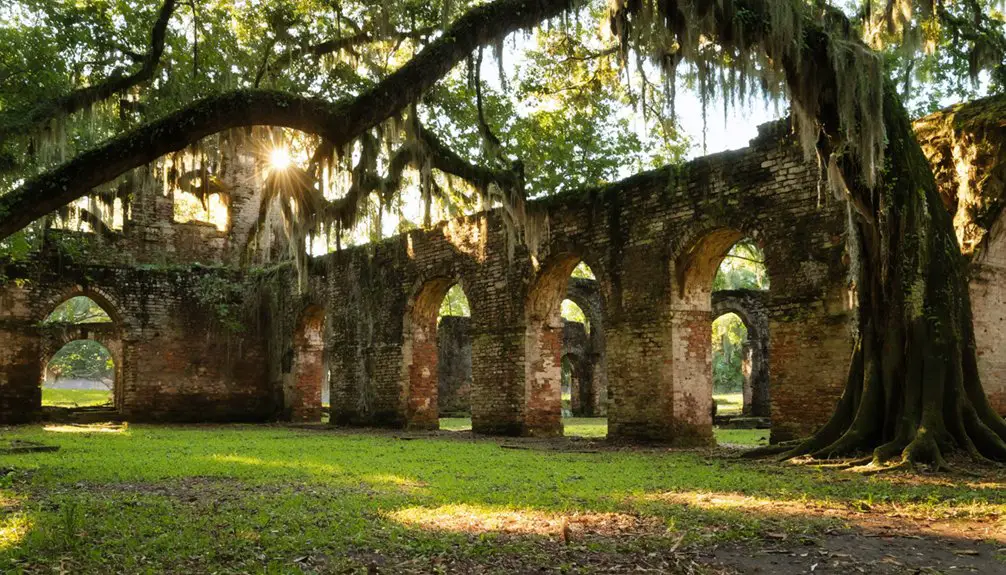
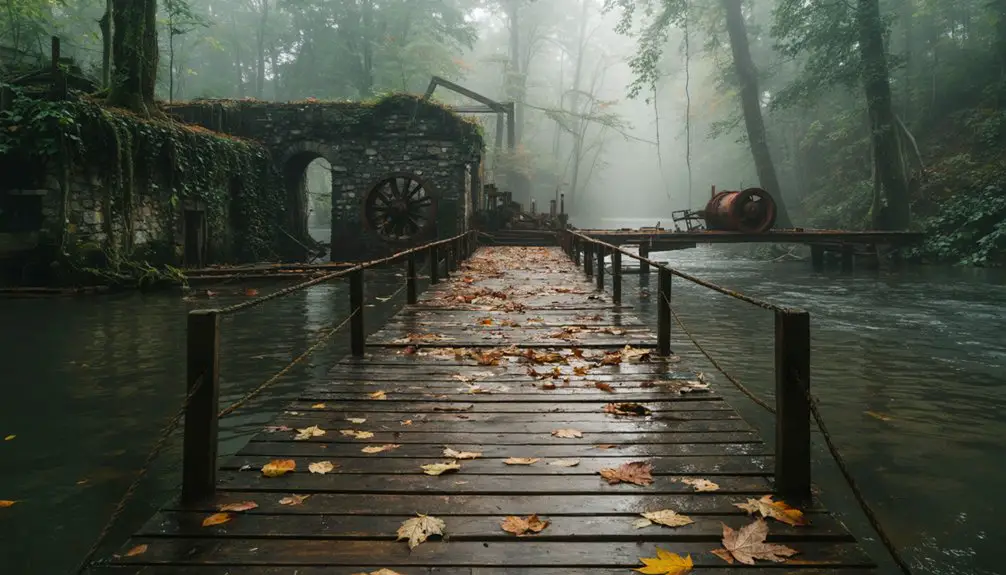
The Ritter Lumber Mill ruins and the Calhoun House — now used by the National Park Service — stand as tangible reminders of the town’s industrial past.
Above the waterline, over 1,000 graves rest in cemeteries that survived the flooding, connecting you directly to the families who once called this remote valley home.
Surviving Structures And Ruins
Despite being swallowed by time, water, and forest, Proctor still holds onto a few tangible remnants of its past.
You’ll find abandoned architecture and historical artifacts that paint a vivid picture of what life once looked like here:
- Ritter Lumber Mill ruins – crumbling foundations that defined the town’s industrial heartbeat
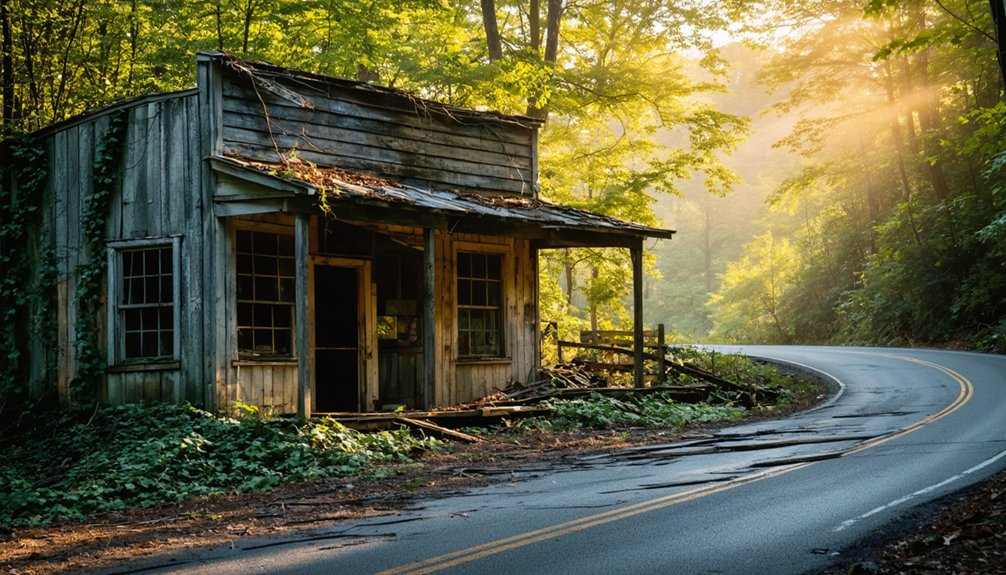
- Calhoun House – one of the last standing structures, now used by the National Park Service
- Cemetery above the waterline – over 1,000 graves belonging to displaced families who once called this valley home
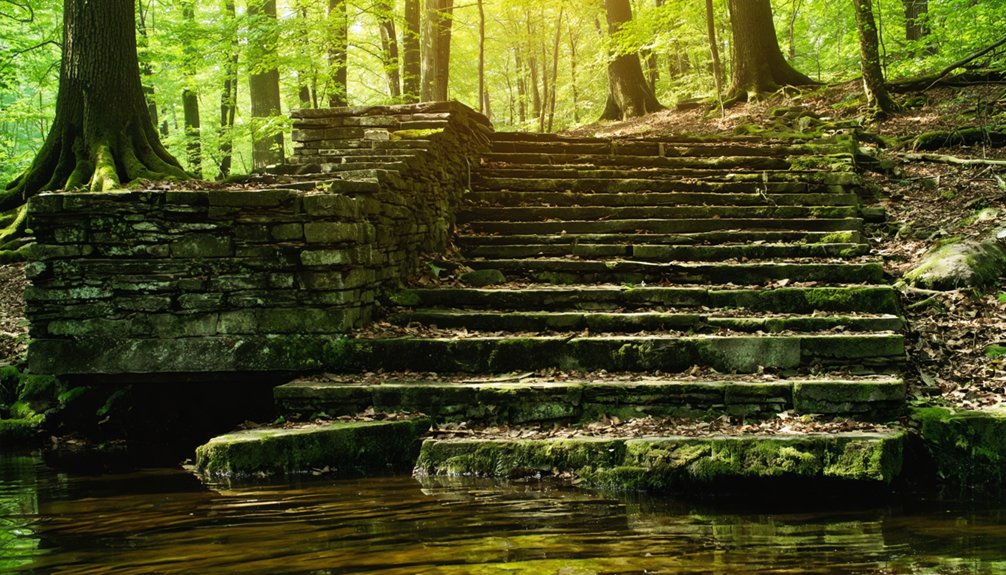
When Fontana Lake’s water levels drop, additional town structures occasionally resurface, offering rare glimpses into Proctor’s submerged story.
The forest has reclaimed most everything else, but what remains is absolutely worth the journey.
Cemeteries Above Water
Above the waterline, where Fontana Lake couldn’t reach, 26 cemeteries stand as Proctor’s most enduring legacy. These burial grounds hold over 1,000 graves, representing generations of families who built their lives in Hazel Creek valley before the TVA forever altered the landscape.
Their cemetery significance goes beyond simple memorials. Each headstone preserves a name, a date, and a story that the rising waters couldn’t erase.
You’ll find markers weathered by decades of mountain seasons, yet still standing as quiet reminders of historical preservation in its most personal form.
For descendants of displaced families, these cemeteries remain sacred ground worth the challenging journey across Fontana Lake. When you visit, you’re not just exploring a ghost town — you’re walking through an open-air archive of lives fully lived.
How to Reach Proctor: Boat, Trail, or the Road to Nowhere
Reaching Proctor isn’t as simple as punching an address into your GPS — the ghost town’s isolation is part of what makes it so compelling.
You’ve got three ways in, each offering its own adventure:
- Boat access across Fontana Lake drops you directly into Hazel Creek territory.
- Trail navigation through Great Smoky Mountains National Park rewards hikers with backcountry solitude.
- The Road to Nowhere ends abruptly at an unfinished tunnel — a fascinating detour worth exploring.
The federal government promised displaced families a north shore road from Bryson City to Deals Gap.
Construction stopped in the 1970s after just seven miles, leaving behind a haunting, half-finished monument to broken promises.
Ruins, Cemeteries, and Remnants Still Standing in Proctor
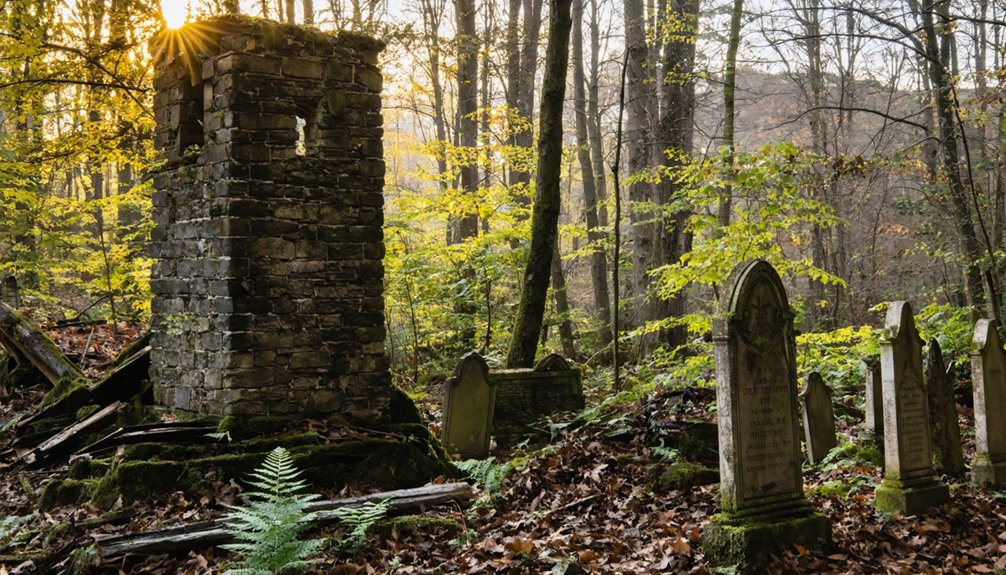
What the forest couldn’t swallow, time preserved. Scattered across Proctor’s reclaimed landscape, you’ll discover ruins carrying real historical significance — the skeletal remains of Ritter Lumber Mill, the weathered Calhoun House still standing above the waterline, and structures occasionally resurfacing when Fontana Lake’s levels drop low enough to reveal submerged secrets.
Ghost town exploration here means walking among 26 cemeteries holding over 1,000 graves, each headstone representing a displaced family forced to abandon everything for wartime electricity.
These burial grounds sit deliberately above water level, silent witnesses to a community erased almost overnight.
The forest has reclaimed most of Proctor’s bones, but what remains feels raw and honest.
The mountains don’t mourn what they’ve consumed — they simply grow over it, and keep growing.
You’re not visiting a curated museum — you’re reading a landscape that remembers exactly what happened here.
Backcountry Camping and Fishing in the Hazel Creek Area
Hazel Creek earned its reputation as one of Great Smoky Mountains National Park’s premier backcountry destinations long before most hikers discovered it.
You’ll find solitude here that’s genuinely rare, with world-class fishing spots and designated campsites tucked beneath old-growth canopy.
Essential camping tips before you go:
- Secure a backcountry permit through the park’s reservation system before arriving
- Bring lightweight gear since you’re either hiking miles of trail or arriving by boat across Fontana Lake
- Practice leave-no-trace principles to preserve this fragile ecosystem
The creek itself draws serious anglers chasing wild brown and rainbow trout through crystal-clear pools.
You’re not just camping here — you’re sleeping inside living history, where displaced families once built entire lives before the water rose.
When to Go, What to Bring, and How Long to Plan For
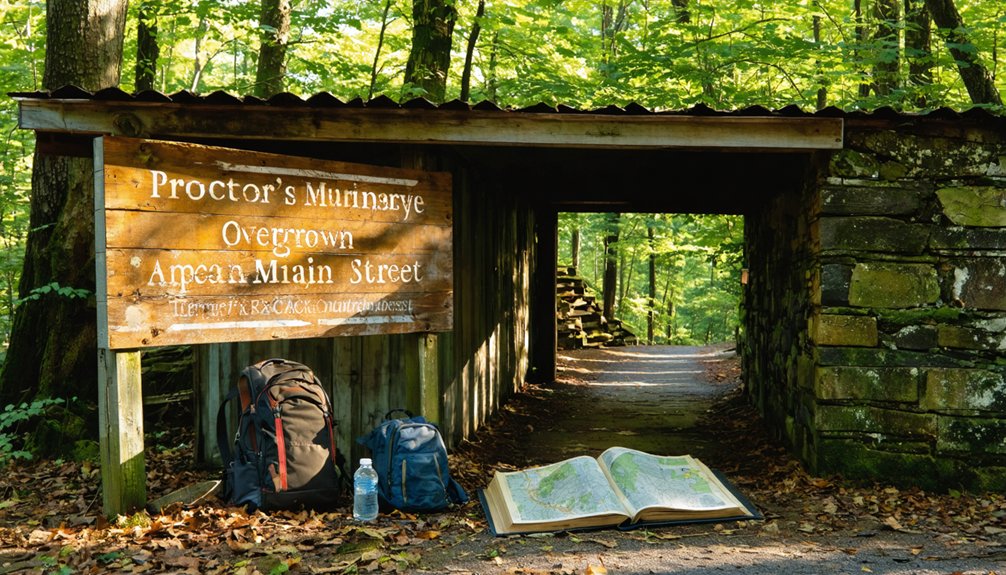
Planning your trip to Proctor requires as much thought as packing your gear, since timing and preparation can make or break this remote adventure. The best seasons to visit are spring and fall, when temperatures stay mild and crowds thin out.
Summer brings humidity and heavy rainfall, while winter can make trails treacherous.
Essential gear includes sturdy hiking boots, water filtration equipment, a topographic map, and enough food for your entire stay since no resupply points exist nearby.
Pack everything you need before you go — there are no resupply points waiting for you at Proctor.
Pack layers regardless of season.
Plan for at least two to three days to fully explore the ruins, fish Hazel Creek, and visit the cemeteries without rushing.
Arrange your boat transport across Fontana Lake in advance, as availability varies seasonally.
Frequently Asked Questions
Is a Permit Required to Visit Proctor’s Backcountry Cemeteries?
You’ll need a backcountry permit to access Proctor’s remote cemeteries within Great Smoky Mountains National Park. Practice proper cemetery etiquette by respecting the graves of over 1,000 displaced residents who once called this hauntingly beautiful valley home.
Are There Guided Tours Available Specifically for Proctor Ghost Town?
Like a hidden gem waiting to be discovered, no official guided tours exist for Proctor’s ghost town history, but you’ll uncover local legends independently through backcountry trails, boat trips, and the park’s informational resources.
Can Families With Young Children Safely Explore Proctor’s Remote Trails?
Yes, you can safely explore Proctor’s remote trails with young children if you’re prepared! Follow essential trail safety tips, pack plenty of water, and enjoy family friendly activities like fishing, ghost town exploration, and discovering fascinating history together.
Is Swimming Allowed in Fontana Lake Near the Submerged Town?
You’ll want to check Fontana Lake’s current swimming regulations before diving in, as rules can vary by zone. Always prioritize lake safety, since submerged structures and boat traffic create unique underwater hazards worth respecting.
Are Drones Permitted for Photography Over Proctor’s Historical Remnants?
You’ll need to check Great Smoky Mountains National Park’s drone regulations before flying over Proctor’s remnants. The park strictly enforces historical preservation rules, so getting proper permits guarantees you’re capturing these haunting, century-old ruins responsibly and legally.
References
- https://www.atlasobscura.com/places/proctor-lost-ghost-town-hazel-creek
- https://www.islands.com/1977921/proctor-north-carolina-great-smoky-mountains-ghost-town-war-history-fishing-destination/
- https://www.wanderingsmokymountains.com/proctor-north-carolina/
- https://www.youtube.com/watch?v=xj9s3GC2_2Q
- https://www.thewanderingappalachian.com/post/the-underwater-towns-of-appalachia
- https://wlos.com/news/local/north-carolina-fontana-lake-proctor-town-submerged-underwater-history-100-years-ancestors-families-shorelines-world-war-2-lee-woods-historian
- https://www.lilblueboo.com/2014/07/the-ghost-towns-of-hazel-creek.html
- https://blindpigandtheacorn.com/proctor-nc/