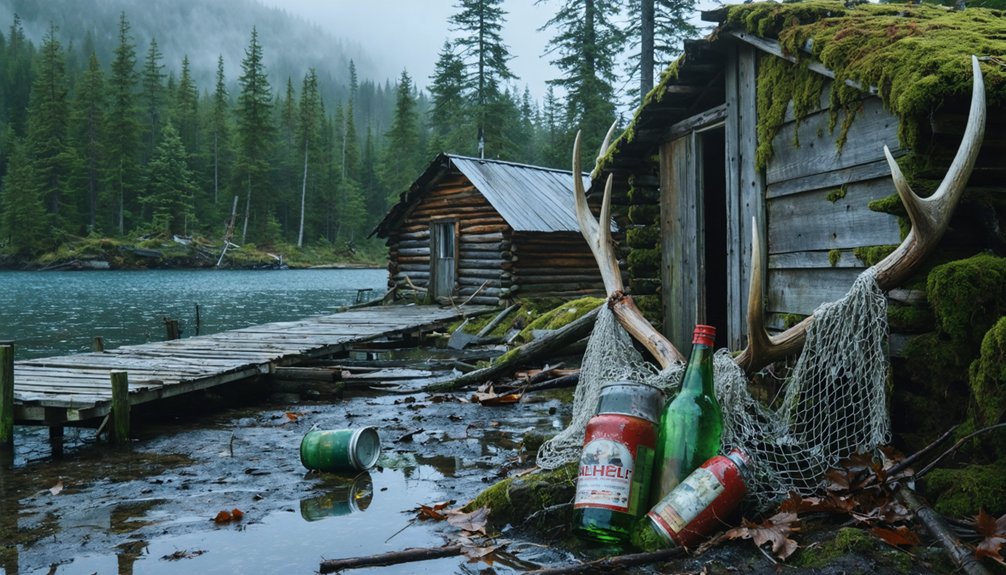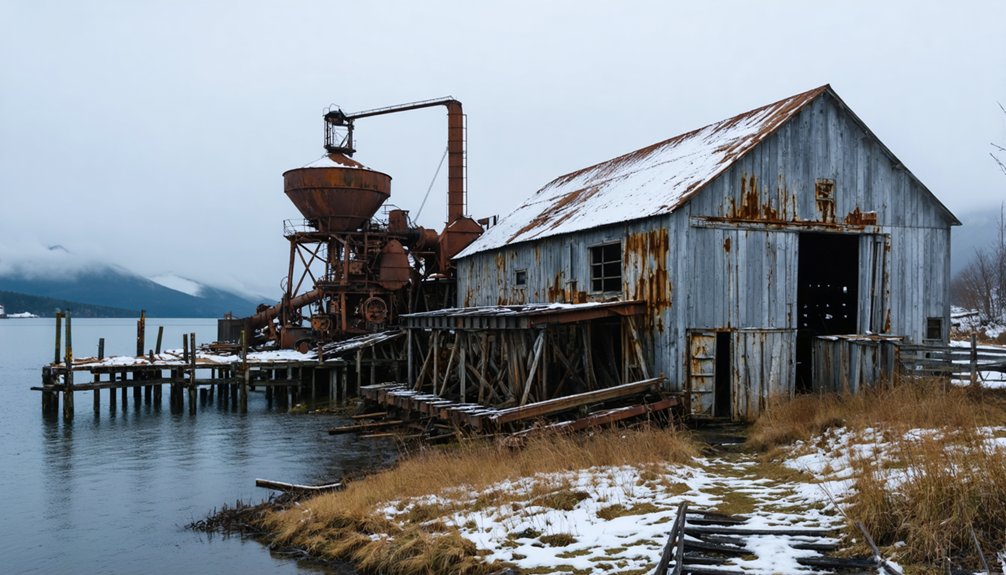
You can’t road trip to Katalla — there’s no highway connecting this forgotten Alaska ghost town to the outside world. You’ll charter a bush plane from Cordova, flying roughly 47 miles to a dirt airstrip, or navigate unpredictable Gulf waters by boat. What awaits is Alaska’s original oil boomtown, abandoned since the 1940s, with century-old refinery remnants still visible in the overgrowth. Keep going to uncover everything you need to plan this adventure right.
Key Takeaways
- Katalla has no road access; travelers must charter a small plane from Cordova (47 miles) or navigate by boat across Controller Bay.
- Gulf storms can ground planes and delay boats for days, so obsessively checking weather conditions before departure is essential.
- Visitors must be completely self-sufficient, as no services, fuel, or emergency assistance are available upon arrival in Katalla.
- Explore remnants of Alaska’s first oil discovery, including Chilkat Oil Company ruins, historic seepages, and subtle depressions marking 44 abandoned wells.
- Carry emergency gear, navigation tools, and contingency plans, as tidal windows and unpredictable swells create serious safety risks during travel.
Alaska’s First Oil Rush: What Made Katalla Worth the Trip?
Before Alaska meant pipelines and Prudhoe Bay, it meant Katalla — a wind-battered stretch of Gulf Coast where drillers struck oil in September 1902 and ignited the territory’s first petroleum rush. That oil discovery turned a remote shoreline into a roaring boomtown almost overnight, pulling thousands of fortune-seekers into a place that barely existed on maps.
By 1907, Katalla boasted saloons, a refinery, and dreams of becoming a major port. Then the storms hit, the railroad rerouted, and the crowds vanished.
Today, this ghost town holds Alaska’s oldest petroleum legacy — 44 drilled wells, refinery ruins, and oil seepages still visible in the earth. You’re not just visiting a forgotten place; you’re standing at the birthplace of Alaska’s oil industry.
How Katalla Alaska Sparked the State’s First Oil Boom
Oil exploration ramped up quickly — 44 wells drilled, a refinery built, and over 50,000 gallons of gasoline produced by 1921.
You’re walking into ground zero of Alaska’s petroleum story when you visit today. The boom was brief but seismic, reshaping how America viewed this wild northern territory.
Nothing here happened quietly.
How to Actually Get to Katalla Alaska by Water or Air
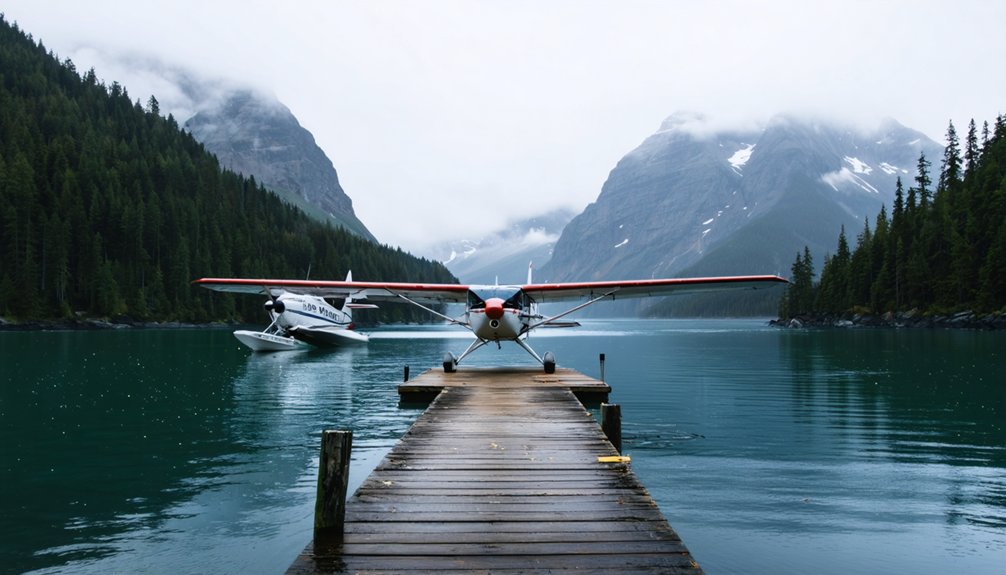
You won’t find a highway leading to Katalla — reaching this remote Gulf of Alaska ghost town means you’re either chartering a small plane onto a dirt airstrip or traversing 47 miles of rough coastal water southeast of Cordova.
Weather on Controller Bay can turn hostile fast, so your window for arrival by boat or floatplane is never guaranteed.
Either way, the journey itself sets the tone for what awaits: a place that the modern world never bothered to reclaim.
Flying Into Katalla
Getting to Katalla means embracing the same wild remoteness that doomed it as a boomtown. If you’re flying in, you’ll land on a diminutive dirt airstrip — compact, unforgiving, and thrilling.
Charter a small plane from Cordova, roughly 47 miles northwest, and follow these flying tips: check weather conditions obsessively, since Gulf of Alaska storms materialize without mercy. The scenic views alone justify the flight — glaciated peaks, Controller Bay’s steel-grey waters, and coastline untouched by modern sprawl.
You’ll see no visible structures from the air, just wilderness reclaiming what ambition once built. That disappearing act below you tells Katalla’s story better than any photograph.
Touch down prepared: fuel, supplies, and a contingency plan belong in your kit before wheels leave Cordova’s runway.
Arriving By Water
For those who’d rather let the water carry them, arriving by boat trades the airstrip’s adrenaline for a slower, rawer confrontation with Katalla’s geography.
Water routes along the Gulf of Alaska coast demand respect — Controller Bay earns its rough reputation, and weather dictates your schedule, not the other way around.
You’ll cover roughly 47 miles southeast of Cordova, reading swells and watching the coastline shift from civilization into something older.
The scenic views reward your patience: glaciated peaks, wild shoreline, the mouth of the Katalla River opening up like a secret.
This was once a harbor that dreamers called the future metropolis of Alaska.
The broken dock they built here didn’t survive the 1907 gales.
Arriving by water, you’ll understand exactly why.
Weather And Access Challenges
Katalla doesn’t make itself easy to reach, and that’s part of the deal. Weather patterns along the Gulf of Alaska shift fast, turning calm water into something dangerous within hours. Your access routes are limited, raw, and unforgiving.
Before you commit, know these four realities:
- Gulf storms can ground planes and pin boats at Cordova for days.
- The dirt airstrip is short, rough, and demands a skilled bush pilot.
- Controller Bay’s coastline offers no protected harbors if conditions deteriorate.
- No services exist once you land — fuel, shelter, and help are your responsibility.
This isn’t a warning to stop you. It’s the honest contract Katalla offers every visitor: arrive prepared, respect the coast, and you’ll earn something most travelers never find.
What the Journey Across Controller Bay Really Looks Like?
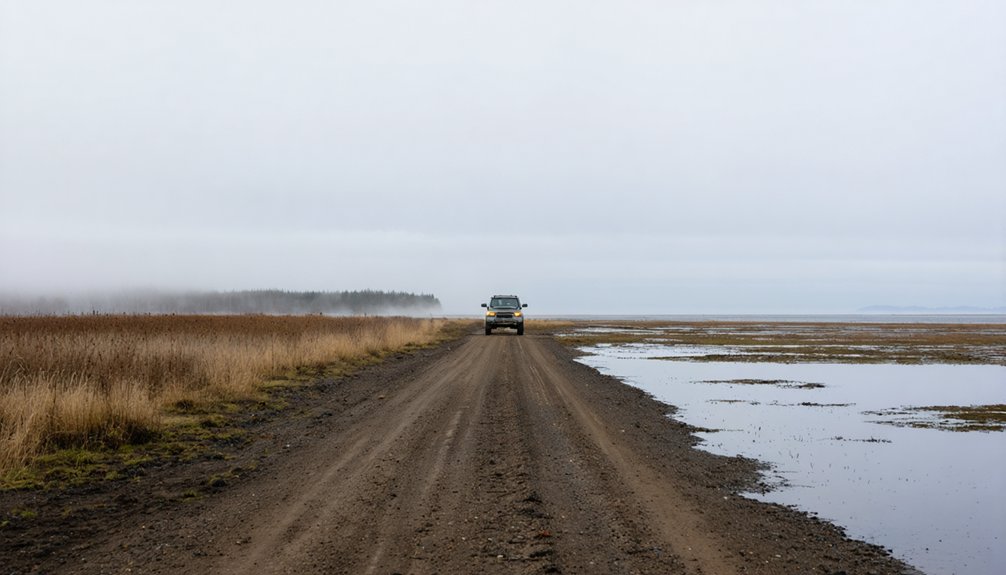
Once you push off from Cordova and head southeast across Controller Bay, you’re crossing the same rough Gulf of Alaska waters that battered and ultimately destroyed Katalla’s dock, trestle, and breakwater in the brutal gales of 1907.
You’ll feel the bay’s unpredictability firsthand — swells build fast here, weather shifts without warning, and the remote coastline offers little shelter if conditions turn against you.
Respect the water, watch the sky, and you’ll understand exactly why this ghost town stayed forgotten.
Whether you’re arriving by small plane or skiff, the journey across Controller Bay sets the tone for everything Katalla represents—remote, unforgiving, and stubbornly worth the effort.
Steering through currents here demands respect; Gulf of Alaska weather shifts without warning.
Before you commit to the crossing, know these essentials:
- Check tidal windows — steering through currents runs strongest during tidal exchanges; time your approach carefully.
- File a float plan — someone onshore must know your route and expected arrival.
- Pack safety precautions — flares, emergency gear, and dry bags aren’t optional luxuries.
- Monitor VHF Channel 16 — Coast Guard broadcasts critical weather updates for Controller Bay.
You’re chasing Alaska’s first oil rush ghost town.
That freedom comes with personal responsibility baked in.
Weather Challenges En Route
Crossing Controller Bay isn’t a scenic cruise—it’s a weather gauntlet that’s humbled far more experienced mariners than most ghost town seekers.
The Gulf of Alaska writes its own rules here, and weather patterns shift without mercy or warning. Winds that seem manageable at dawn can churn the bay into something unrecognizable by noon.
The same 1907 gales that destroyed Katalla’s dock, trestle, and breakwater—effectively killing the town’s future—still echo in the storms that sweep this coastline today.
Travel safety demands you respect that history. Check forecasts obsessively, talk to locals in Cordova, and build flexible days into your itinerary.
Freedom out here isn’t about ignoring the elements—it’s about reading them well enough to arrive on your own terms.
What’s Left of Katalla and Where to Find It Today?
Ghosts don’t vanish completely, and Katalla proves it. You won’t find standing buildings, but the oil legacy and abandoned structures leave undeniable marks across this wild landscape.
Here’s what you can still discover:
- Chilkat Oil Company remnants — crumbling foundations near the original refinery site, Alaska’s first commercial petroleum operation
- Historic oil seepages and shale beds — the same geological formations that triggered the 1902 rush still surface naturally
- Katalla Slough traces — scattered debris and earthworks from the boom town era line the shoreline
- 44-well oil field evidence — subtle depressions and industrial scarring mark where drillers once chased fortune
Walk carefully. History hides beneath overgrown terrain, rewarding explorers willing to look beyond what’s immediately visible.
Weather, Supplies, and Access: What to Arrange Before You Go
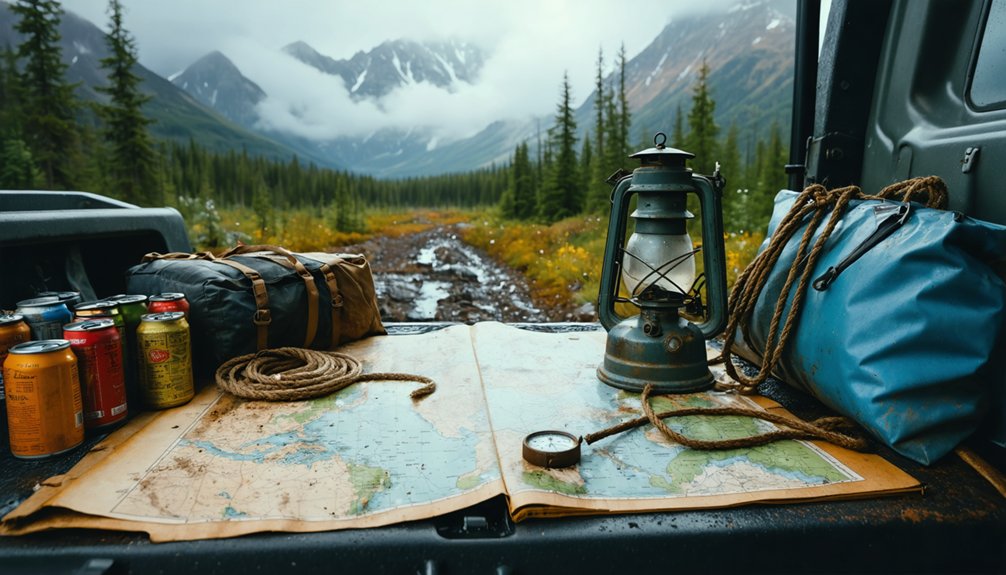
Reaching Katalla demands real preparation, because this remote Gulf of Alaska coast doesn’t forgive careless planning. You’ll fly or travel by water, landing on a diminutive dirt airstrip or traversing Controller Bay’s rough swells.
Check weather conditions obsessively before departure — Gulf storms materialize fast, and you won’t want to be stranded where the post office closed in 1943 and nobody’s coming to help.
Pack essential supplies: food, water, first aid, navigation tools, and rain gear suited for Alaska’s unpredictable coastal climate. No services exist here. No telegraph, no railroad, no infrastructure — just the ghost of a boom town that once dreamed of becoming a metropolis.
Embrace that freedom, but respect the isolation. Katalla rewards the prepared adventurer and punishes the reckless one.
Frequently Asked Questions
Can You Camp Overnight Near the Katalla Ghost Town Site?
Sure, you can camp overnight near Katalla’s ghost town! Check camping regulations first, but nearby campsites let you sleep where Alaska’s oil rushers once dreamed big — trading saloons for starlit skies and silent, haunting wilderness freedom.
Are There Guided Tours Available for Visiting Katalla, Alaska?
No formal guided tours exist, but you can arrange guided exploration through local Cordova outfitters who’ll bring Alaska’s local history alive as you uncover Katalla’s forgotten oil rush legacy across its wild, remote shores.
What Wildlife Might You Encounter While Traveling to Katalla?
Ironically, Katalla’s wildest residents aren’t human anymore! You’ll encounter bears, eagles, and marine wildlife along the remote Gulf coast. Capture stunning wildlife sightings with photography tips: shoot early morning light while adventuring toward Alaska’s forgotten oil frontier.
Is a Special Permit Required to Explore the Katalla Ruins?
The knowledge doesn’t confirm you’ll need a special permit, but respect Katalla’s historical significance by following exploration guidelines. You’re free to wander its ghostly ruins, uncover Alaska’s first oil rush legacy, and embrace this untamed adventure responsibly.
What Is the Best Time of Year to Visit Katalla?
Summer’s your best season—you’ll find calmer weather conditions, clearer skies, and accessible waterways. Plan your adventure between June and August, when Katalla’s haunted shores welcome explorers chasing Alaska’s legendary first oil rush.
References
- https://www.peninsulaclarion.com/2017/03/09/an-outdoor-view-fishing-at-a-ghost-town/
- https://en.wikipedia.org/wiki/Katalla
- https://www.fs.usda.gov/r10/natural-resources/arch-cultural/chilkat-oil-company-refinery
- https://akoghs.org/territory-boom-town-where-rails-meet-sails/
- https://www.alaska.org/detail/katalla
- https://www.thealaskalife.com/blogs/news/alaska-ghost-towns-youve-probably-never-heard-of
- https://www.seniorvoicealaska.com/story/2025/09/01/local/first-oil-rush-fueled-the-rise-and-demise-of-katalla/4035.html
- https://www.youtube.com/watch?v=GNjMpM6b58o